
About a year ago I found the YouTube channel of Rick Surowicz, and artist of considerable talent, and a formidably talented teacher. In the space of just over a year, he has garnered 25K followers, and I am one of them. Check him out if you don’t know who he is!
Anyway, I did two of his videos, both of which make use of frisket. In general, I like to “travel light” – meaning, I like the idea of spontaneity for success, not thoughtful pre-planning. The result for me is usually disaster and disappointment. Rick’s videos are clear. He explains what he does and why. The results speak for themselves. I decided to get off my don’t-panic-I’m-organic high horse and follow along. These next two paintings are from his lessons, which I followed. I can honestly say I enjoyed doing them, even in the moments of terror – that frisket! those colors! 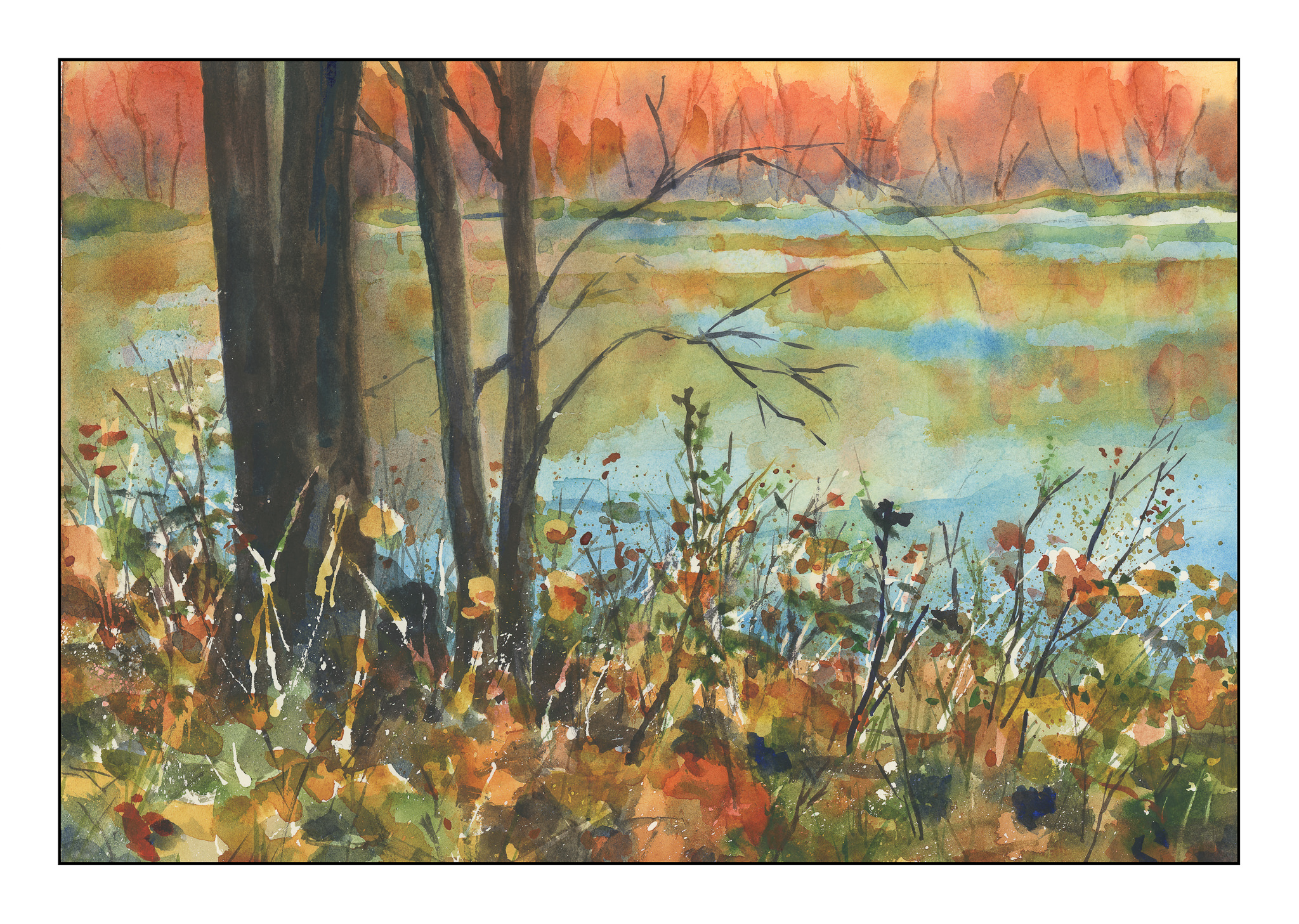

Each one of these paintings required the usage of liquid frisket. I applied it, let it dry, and got to work. The beauty of the liquid frisket is that it allows the application of broad washes across the paper without the loss of white paper, or having to do in painting or negative painting. This actually gives a bit more ability to be spontaneous and splashy than not using it! (Surprise lesson here.) I did each of these paintings over a two or three hour period, watching the steps in each video a number of times.
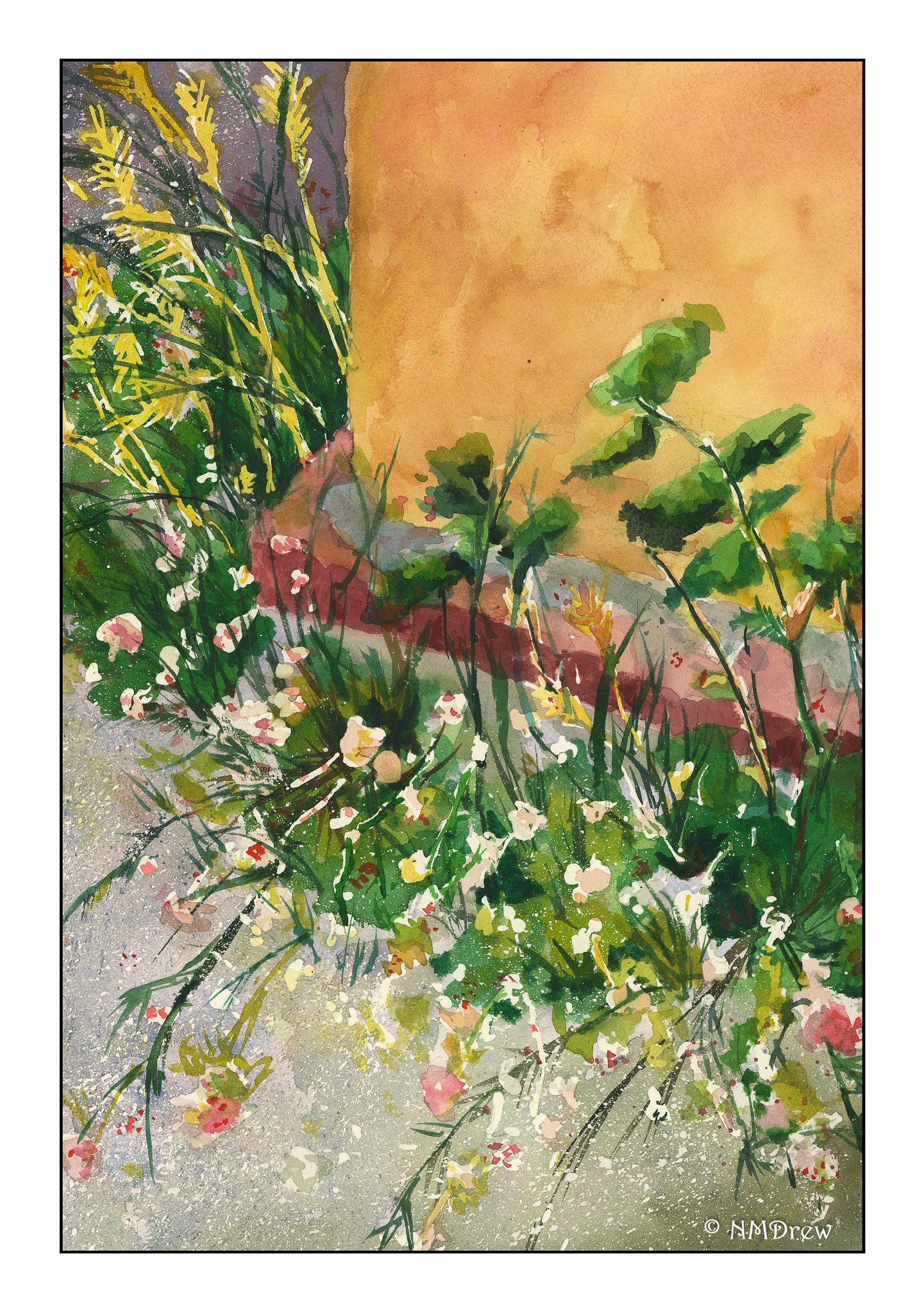
At some point, we all have to try our wings. I took a photo of a weed patch behind La Purisima Mission in Lompoc, California, last summer during a visit. There were white flowers – perfect for frisket – and yellowish grasses – also good for painted-over frisket after it was removed. This painting held a lot of terror, let me tell you! However, I am fairly pleased with the end result – simplification coupled with detail.
This morning, I did this painting, derived from a public-domain photo of an aspen grove. In the photo, light was shining from the right, and in looking at the picture carefully, the trunks of the aspens, which are a brilliant white, much as birch trunks are, were actually darker than the brilliant yellow-green foliage in the distance. I used frisket for the white areas on the right of the trees, and then, as I laid down layers of color, added more frisket here and there to protect areas of color. I did this for three or four layers until I finally removed it all, and then painted in areas needing more detail or contrast.

By following Rick Surowicz’s tutorials, I finally learned something. Frisket is not scary and can be an aid to a spontaneous or splashy wash as it helps preserve white paper. In the process of copying Rick’s process, I learned a bit about color, reworking areas, contrast, and whatever. I was also able to paint a representative of a bush or leaves rather than hankering to paint the details and losing the overall effect. I am thinking about redoing the last two paintings without frisket, just to work at white space without an aid. That will be more of a challenge I think than not using frisket!
 Ink, Yarn & Beer
I have no idea what frisket is ( sounds like a cat’s toy!) but these are gorgeous, so rich in tones, my faves of yours so far!
P.s. That first one is worthy of wall space I think.
Frisket is a liquid rubber resist that is applied like paint. It seals the paper from the watercolor. You remove it and it leaves white paper behind. I don’t know if you have rubber cement in your neck of the woods, but it is a lot like that, but much better. Check out Rick’s YouTube channel and you can see it in action! (We have “Friskies” here in the US – it’s a brand of cat food.)
Thanks, Fraggy. I feel like I finally turned a corner in my painting. The rest is, overall, rubbish, but ya gotta keep doing it to get anywhere. ;-P
You certainly expanded your horizons, stunning watercolor!
Thanks, Sharon. It’s called “self-control” I think!
Lovely fresh watercolours. Not using the frisket will slow you down with your washes as you preserve the whites and can lead to problems such as drying during applications and create inhibited brushstrokes. Some watercolourists regain the whites by using gouache which allows them to focus on the initial washes. Anyway have a go and see for yourself.
I like them all. I especially like the third one. I can feel the spontaneity of the moment you noticed them.