
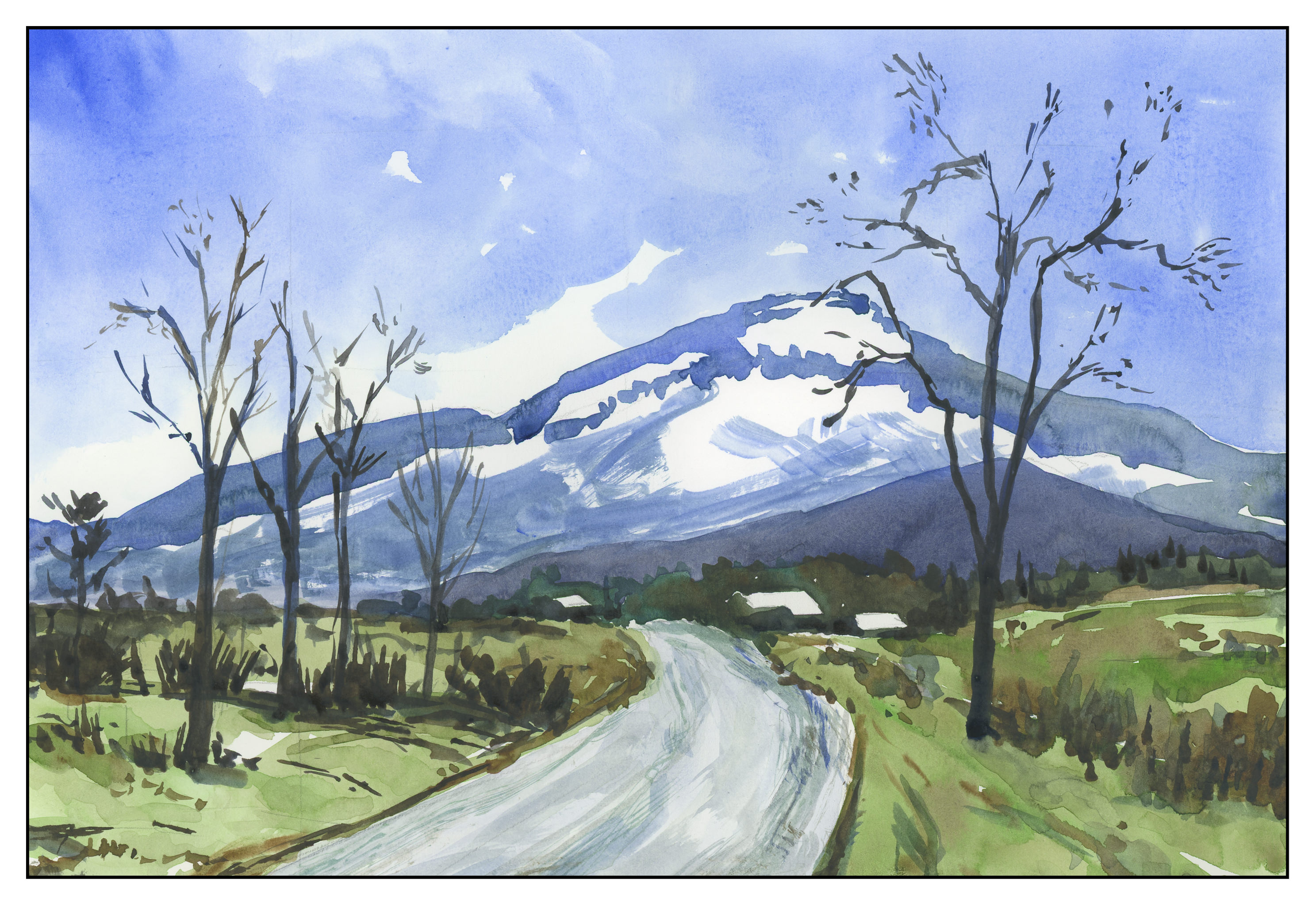
I’ve returned to watercolor in the past year, trying a lot of things, and realizing that some things are just not “me” and others are “me.” This means there are styles of painting I just don’t care for – and ones I do – and what to do?
First, I think it is important to try something. This way you gain a working knowledge. This means repeat the situation a few times to learn the subtleties. The brain works on an unconscious level and incorporates that knowledge. Whether or not you continue down that path, you learn something and it is stored away somewhere in the mystery of the brain.
The painting above is a study I did out of Ted Kautzky’s classical work, Ways with Watercolor, which I bought when I was 16 with babysitting money. Three colors only, and the variety of colors is amazing. Restraint, self-control, forethought, execution, results, experience and knowledge.
And then, think about the experience. Worthwhile? Did you like it? Were you a klutz? Did you hate it? Did you like it? Do you want to move on? My philosophy about work comes into play here: learn what you hate about your job and what you love – then decide if you want to continue. That applies to painting and art in general. I like certain things and find other things not to my liking.
What I don’t like is a sense of constraint. I like painting to be an experience – but to get good at something, you have to work. So, I like free-flowing painterly watercolors. To get there requires practice and experience.

When I was doing a lot of sumi-e, I hated the brushes and the paper – they had their own qualities which, one mistake, could ruin an attempt. Eventually, though, I found some mastery over paper and ink and brush. Part of that came from knowing my materials – which paper I liked, which brushes I liked, which ink and ink stone I liked. Then I could begin mastery. Poor quality brushes shed hairs; too-porous paper spread the ink to quickly.
The same is to be said for watercolor, which I have been drawn to since whenever. However, I have scurried away from it, always annoyed with my style, with my lack of ability, with my lack of control. I still deal with it today, but now that I am on the slippery slope of old age, such things seem like foolish wastes of my time. Just do it! Do it as often as possible! To hell with the results – the experience itself leads to wherever it will lead.
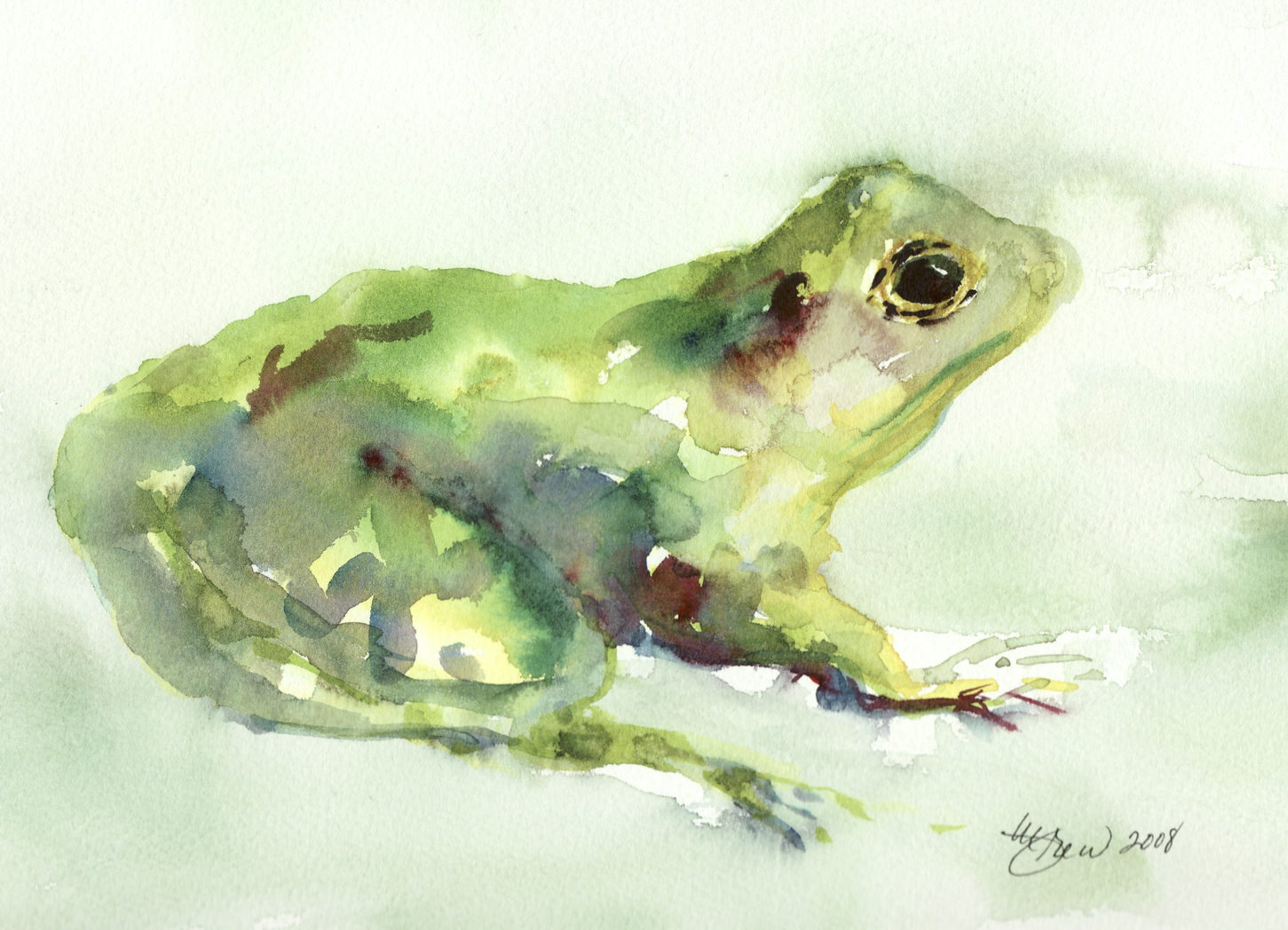
Yes, I do know what I want to be able to produce. I don’t want to rely on lines to contain a bad composition or execution of color. If I do ink and watercolor, there will be a purpose for it – a reach for a particular style. With watercolor, I may need to do (and will do) value studies and use a limited palette of colors to train my eye. This is a form of restraint, but not an onerous one.
 Ink, Yarn & Beer
You are right, my methjod too…just keep doing what you are doing. If I’m not happy with a painting, I cut it up and use for a collage, lots of happy surprises come my way.
Oh my word though, that Sumi B&W flower is to die for!!
Hey Fraggy – yeah, it is pretty damned good, if I do say so myself! Glad you like it. 😉
I know . . . keep on doing to keep on learning. Not being much of a collage person, perhaps I should give it a try some time. I usually just flip the paper over and use its other side, so at least it doesn’t get wasted.
When I did oil painting and ruined a piece, I just painted something completely different over the color and shapes of the ruin, using those as a source of inspiration. I guess each medium would have its own way of being reused.
I keep the ones I like, and set them aside in a portfolio. The other ones are flipped over to be used again, if only to practice colors or strokes. You are right – recycling does occur differently in different media and varies amongst artists.
Nice fresh landscape at the top of the blog. I also often use three colours in my painting and you can get great results. I also try different groups of colours, say a warm red, yellow and blue on one painting and then a cool yellow, cool red and cool blue on another painting – you can get a completely different ambience. I keep meaning to try the different sets of colours on the same scene.
Thanks, Graham. Ted Kautzky’s book is a wonder. Funny you should mention doing the same scene with the same colors but variants – that’s sort of on the agenda for today!
Beautiful work. I have the same approach with photography. I keep doing it over and over until I get it. Some photographers don’t like going back to the same venue; however, I like the challenge and learn something new each time. My block wall is portrait work. The lighting requires technical knowledge that my brain doesn’t seem to want to learn! Your watercolors are inspiring.
Thanks, Anne. As they say in photography, only one photo of 1000 is good. Same with painting!