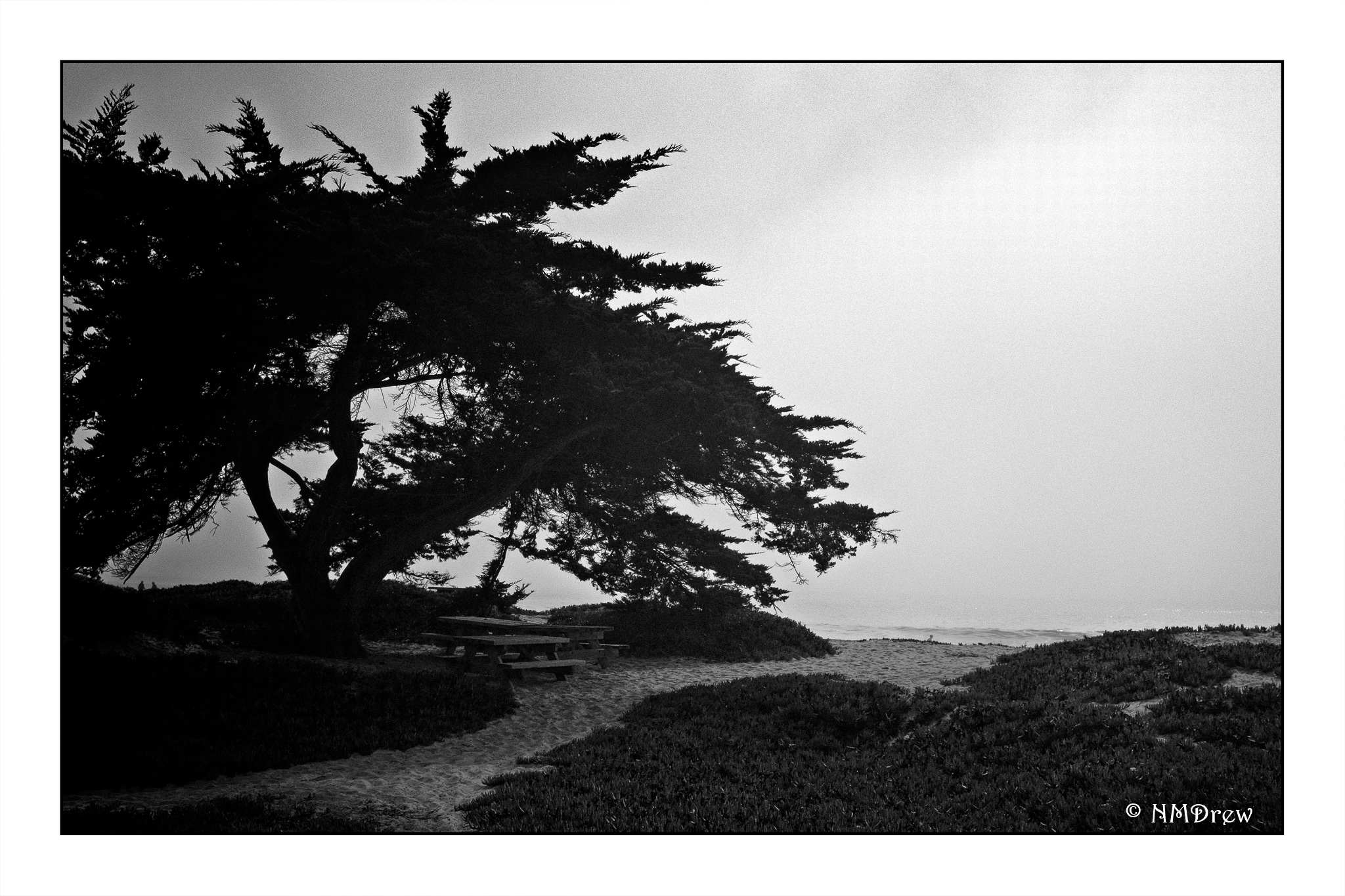
Fog, damp, cold. Best keep moving in this weather!

Fog, damp, cold. Best keep moving in this weather!
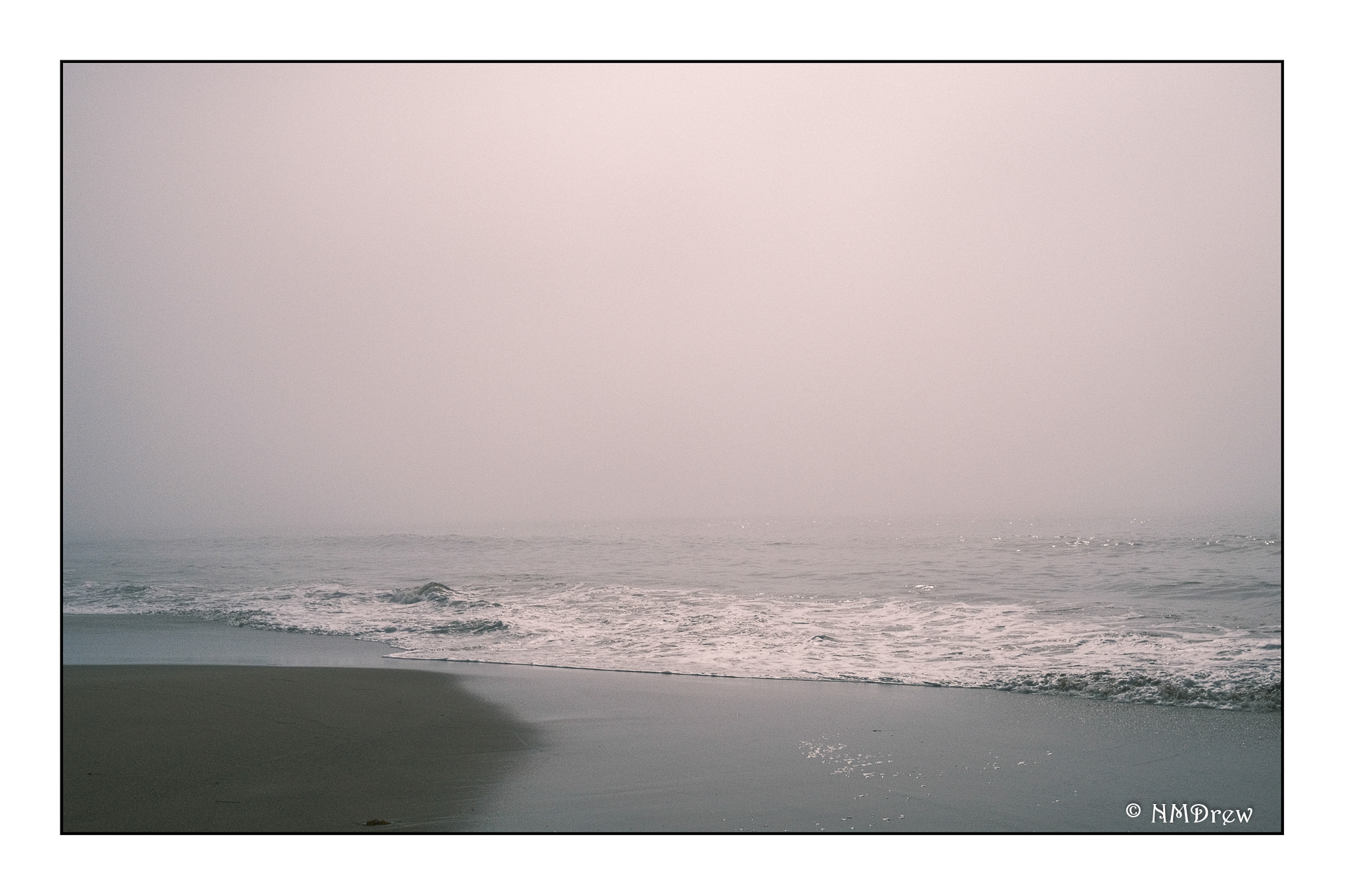
I ran away from home.
 The day after we came back from our jaunt to Monterey I spent editing negatives I had processed while I was there. I scanned them and imported them into Lightroom. The film was Lomography’s Metropolis in 35mm, and I found it interesting to use, rather enjoying the colors it produces. Chances are I will order some more. For the most part, I did little editing in post as I liked what i saw, but a few had weird schmutz on them, probably bubbles that got trapped as the film was developed. Spot removal!
The process of editing images makes me look at them more closely. I worked hard to make some good pictures, and overall I was pleased with the roll. After a day of gardening and cleaning and just organizing life after the chaos of 4 days away, I sat down and just blobbed by watching various YouTube videos. They all seemed to be ones on photography. They included Ted Forbes’ channel and his “assignment” of a month using one lens length. I also watched Frederik Trovatten’s “Shoot Like . . .” series on Vivan Maier, Robert Frank, and Joel Meyerowitz. Totally by accident I came across a video about the Japanese photographer Miyako Ishiuchi.
Up front, I have never really “gotten” photography as an artform for myself. Watching Ishiuchi, I did. She explained her first three series and it made me think about photography as a theme to express emotions by focusing on one thing. That is about as easy a way to explain it. Watching Forbes’ video on one lens length helped me focus (sorry for the pun! Not!) on emotion – which one? – and one lens. Narrowing things down here. Trovatten’s vidoes provided interesting insights on how or why or what various photographers do and did.
Creativity is something that is difficult to find at times – that is, being creative and producing an artwork that is satisfying to me on many levels. These include emotional, intellectual, and proficiency of whatever medium I am using. In general, I can take a decent photo, but I have never been what I would consider to be a creative photographer. I don’t set up still lives or seek out a theme to explore. I like the technical things, such as exposure factors and what I want to see in an image, but I don’t “do” a series of anything. I love landscapes, but the heat limits my wanderings. The pandemic curtails too much travel or traveling with a chauffeur to do a safari.
Yesterday’s video watching pulled a lot of things together for me in the area of making photos. Theme, single lens length, mastery. While I plan to continue to try my daily painting, I am also going to begin a month-long study of image making with a single lens length. The lens will be a 35mm. The Fuji X100V is a fixed lens length at 23mm and a 1.5 crop factor, equating 35mm. I have a 35mm series E lens for my Nikon film cameras. It will also work on my Nikon Df full frame. There is a lot of choice here with what I have. The theme that catches me the most is one that has intrigued me the most over the past several months: my neighborhood at night.
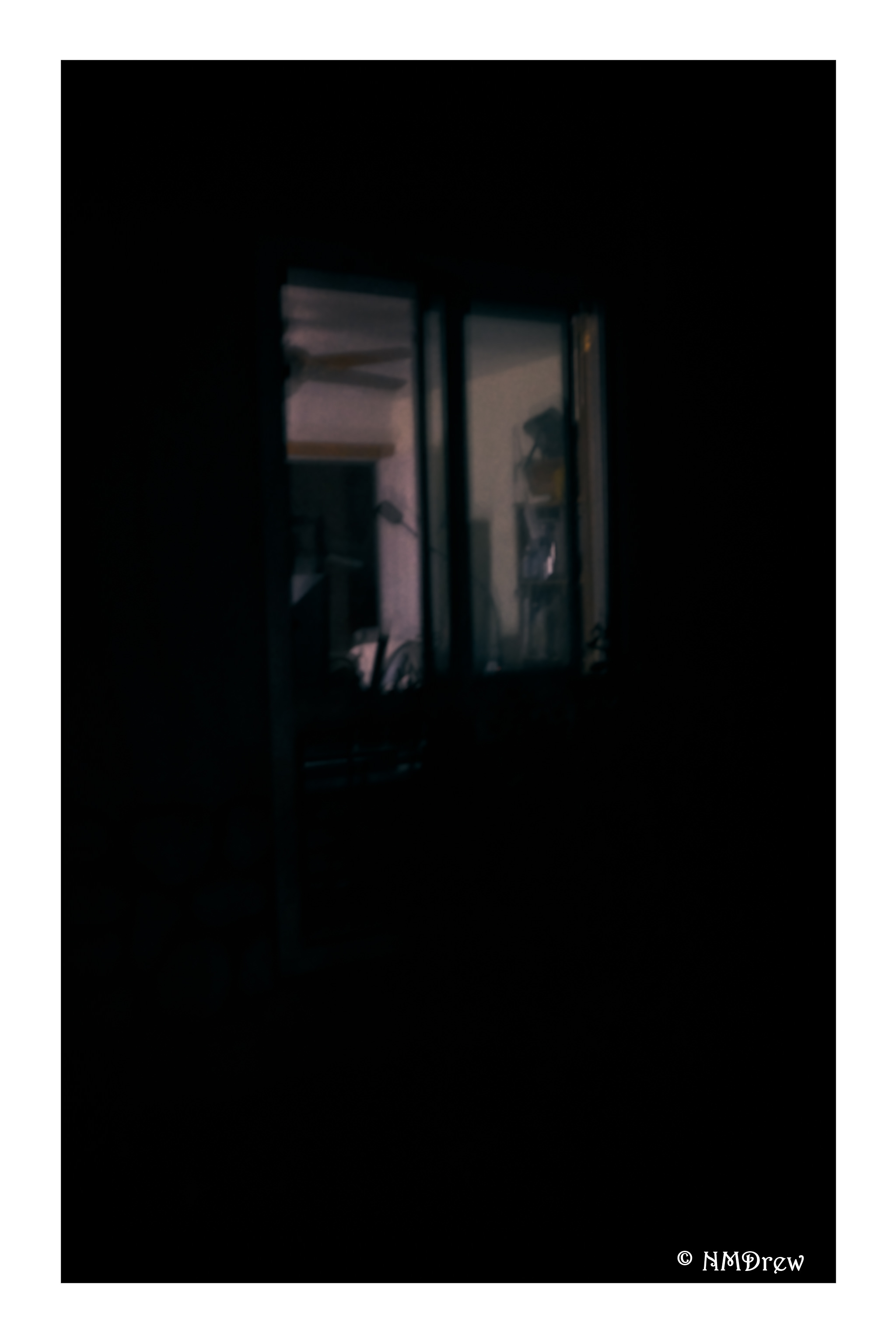
I live in the suburbs. It is a nice neighborhood with nice people, curving streets, greenery, a park with a creek. Nearby is a college. A small strip mall is within walking distance. I consider all these to be within the parameters of My Neighborhood.
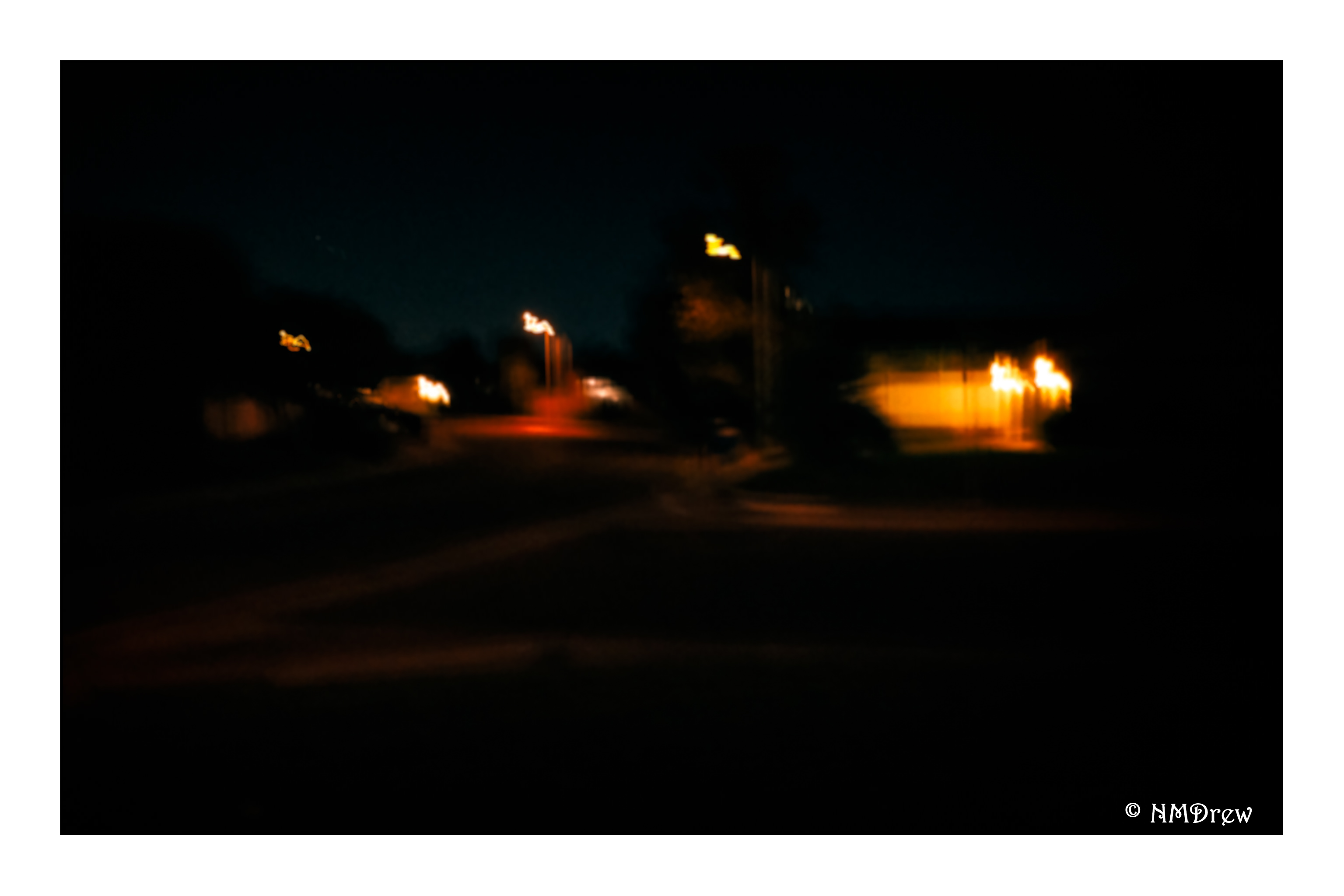
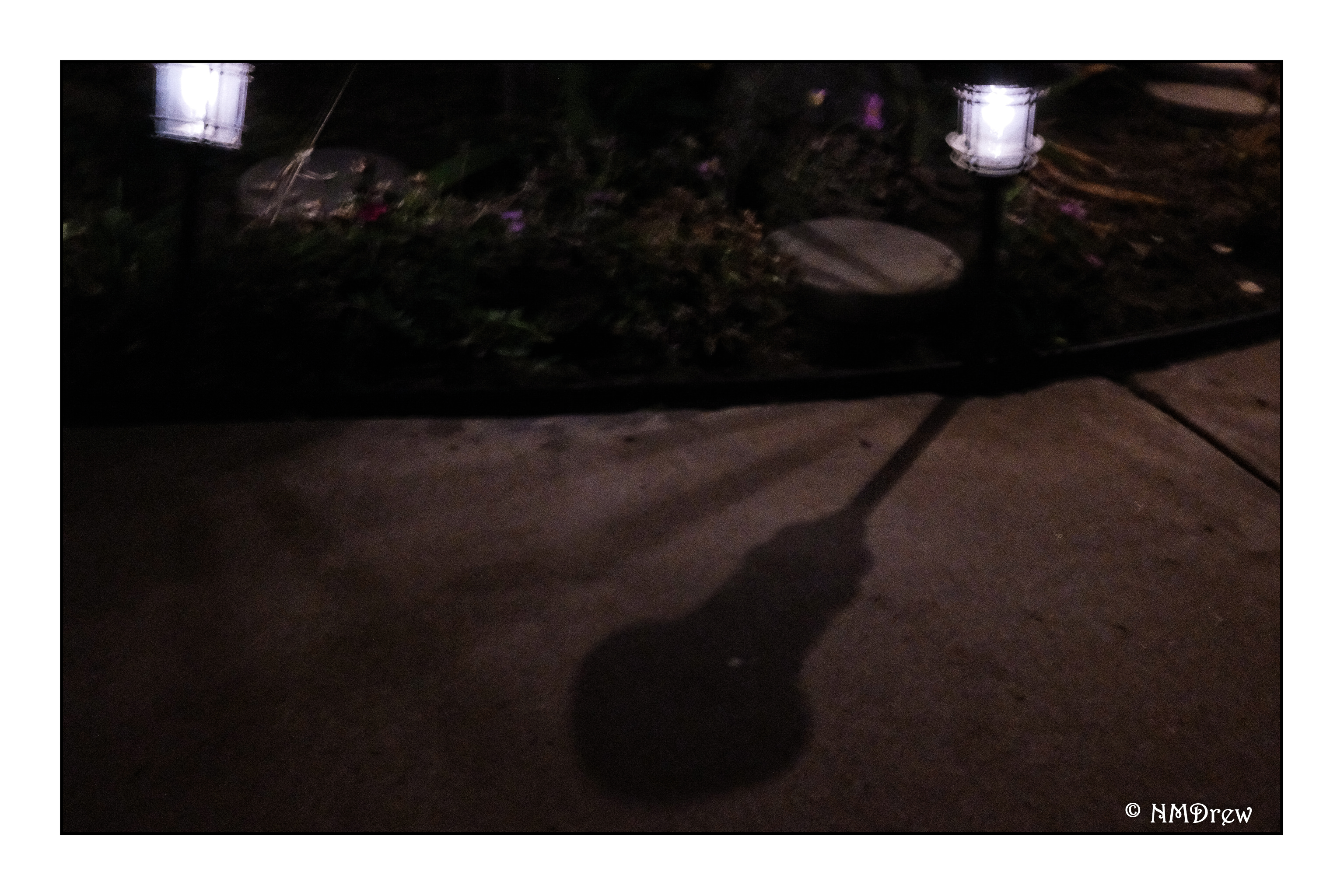
I went out last night with this thought in mind, using the X100V, iso set at its highest and the rest on automatic. Everything was done handheld. I will need a tripod. I will need to use flash at times. This will be a great way to dig into the menus of the X00V as well as learn how to use it on a deeper level. And I will need to dig out a tripod and a shutter release cable. These same things will need to be applied to my film cameras and other digital critters.
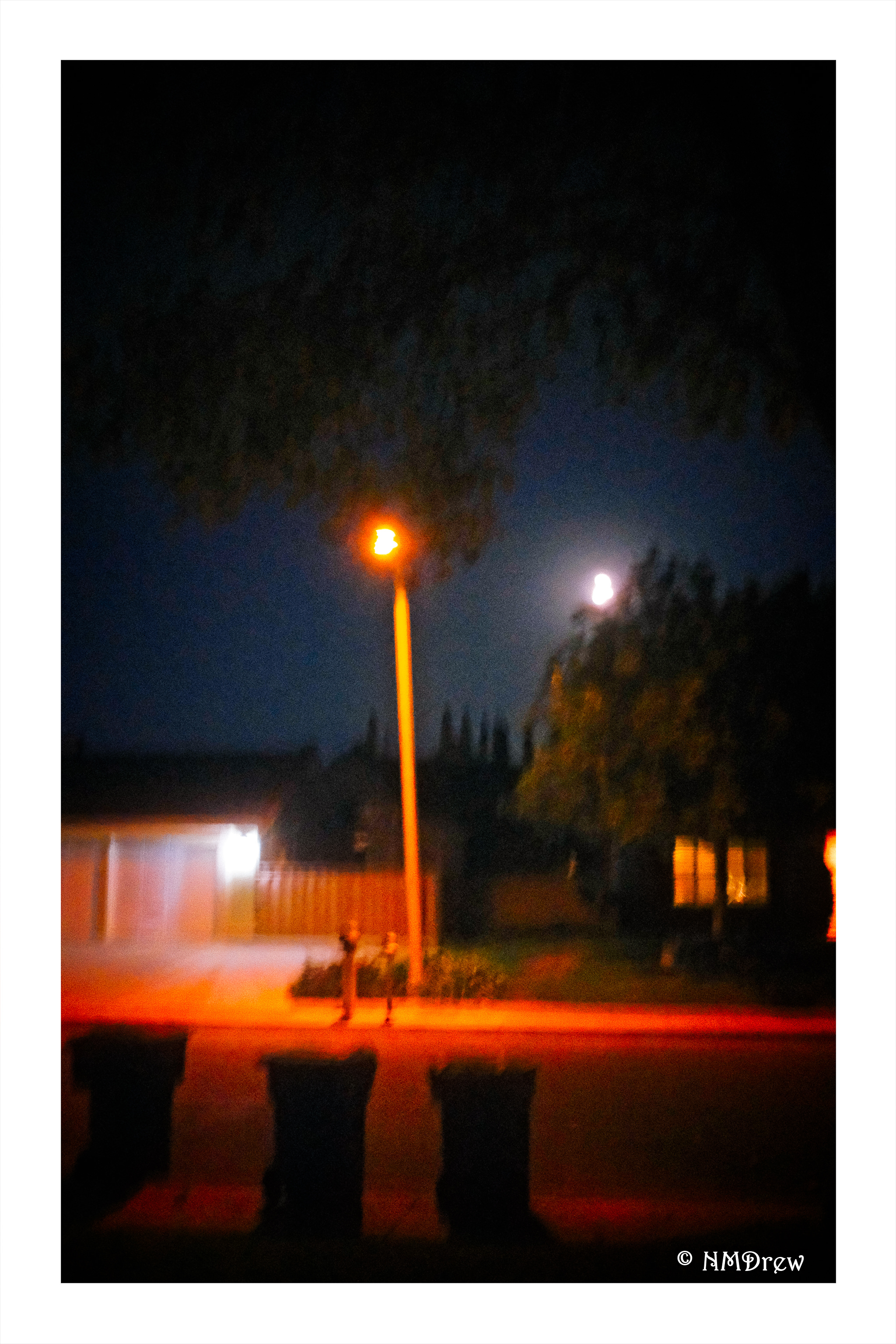
So begins The Neighborhood at Night.
Pardon the outdated slang.
October is birthday month, for which I was well feted and well fed. And I got an Instax SP-3 printer. It’s rather cool. It prints out square format images using the FujiFilm Instax Square film. There are no memory card slots, so it is all wireless. There is an app for both Apple and Android phones called Instax Share. It works quite easily as well as lets you play around with your image. FujiFilm cameras with wireless connectivity in their menus, specifically for the Instax, also work. It is also easy to do, and there are videos on YouTube (of course!) showing you how to use the Instax SP-3 with your phone and camera. I’ll let you delve into that if you are interested.

I printed out 3 images from both my phone and from X100V. Seamless interface, really. The hardest thing was reading the teeny, tiny serial numbers on the bottom of the SP-3 to link it to the camera. The phone just found it and ID’d it readily, bringing up the actual serial number.
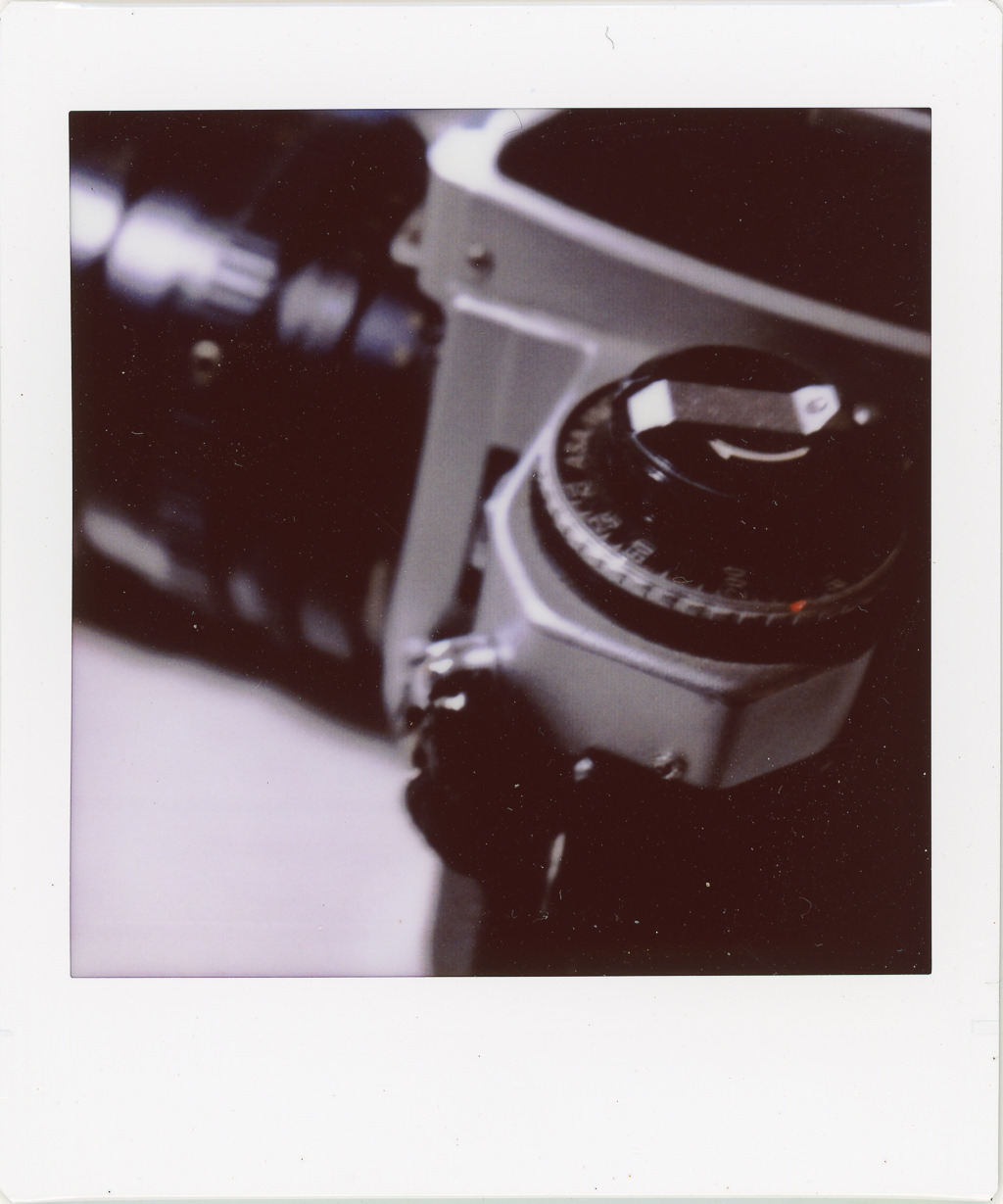
The above is a SOC image from the X100V. I chose it because I wanted to see how a true B&W object taken with color could look. With in-camera and in-phone editing, you can make a monochrome image, and this little color printer will print monochrome. Yay!

I wanted to see the details in the trees here as well as to catch the range of colors that trees and plants give. I pushed the saturation using the Instax phone app. Not displeased by the results.
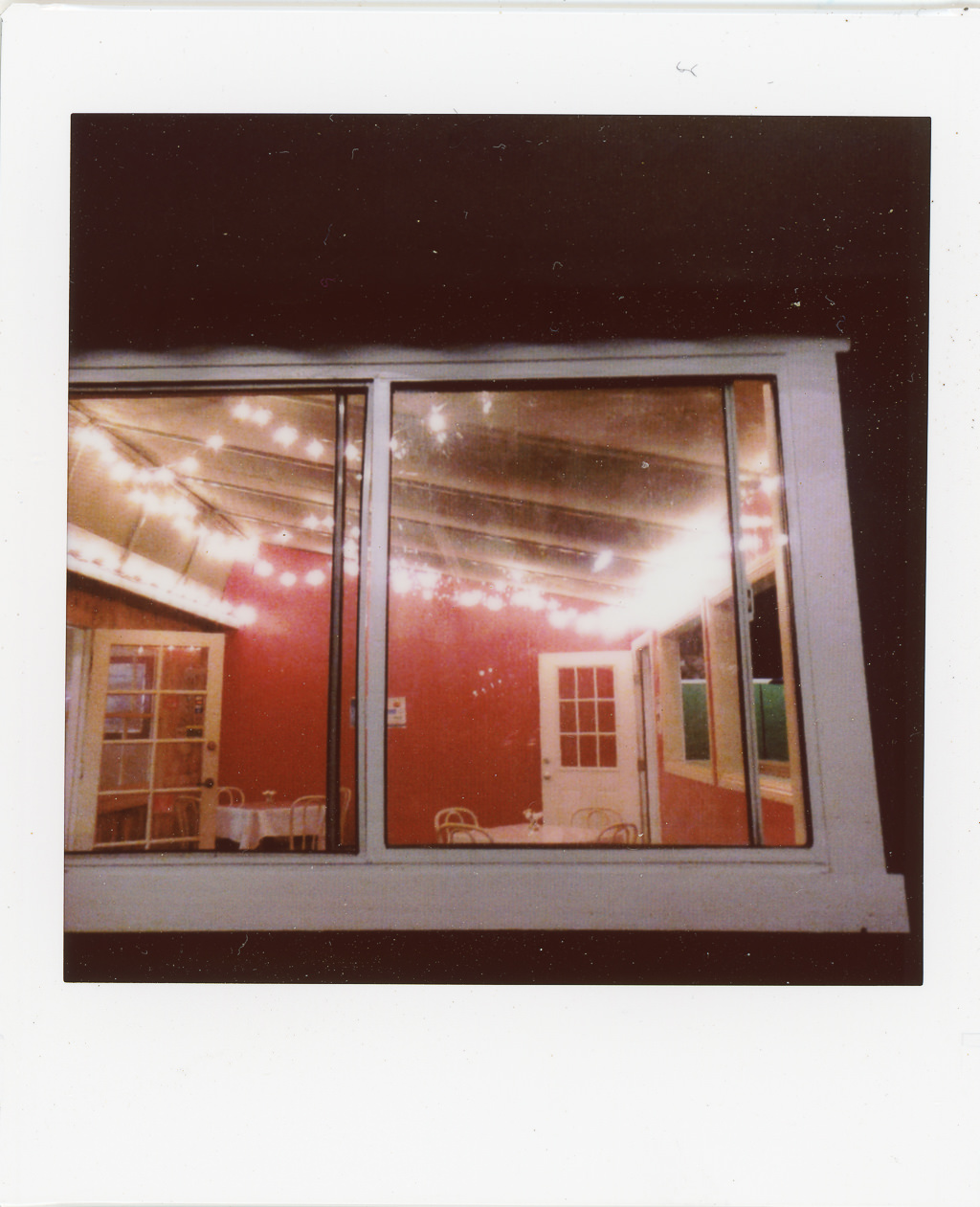
I just printed this one because I liked it, as well as to see how the printer renders reds.

Besides the printer, the Instax SQ6 instant camera came along for the ride. It has been out for a bit, but the reason it was chosen is because it is the most feature rich of the Instax square cameras. You can also get it in different colors – I have the Graphite Grey model.

One of my big complaints about the Instax Wide is the lousy macro system. It’s just poor, and that is that. I never succeed, and really don’t like to spend a lot of time, film, and money doing something that proves worthless each time. However, the SQ6 does really well in this arena. The image above doesn’t really have the appearance of a macro – it’s really a close up. The viewfinder has some weird little thingies in the viewfinder, like a range finder, and you move in close to your subject, being sure to put it in the lower left corner of the viewfinder. The coffee cup was my main subject, and in the end your close-up object is fairly well centered. I will practice with that feature of the camera more.
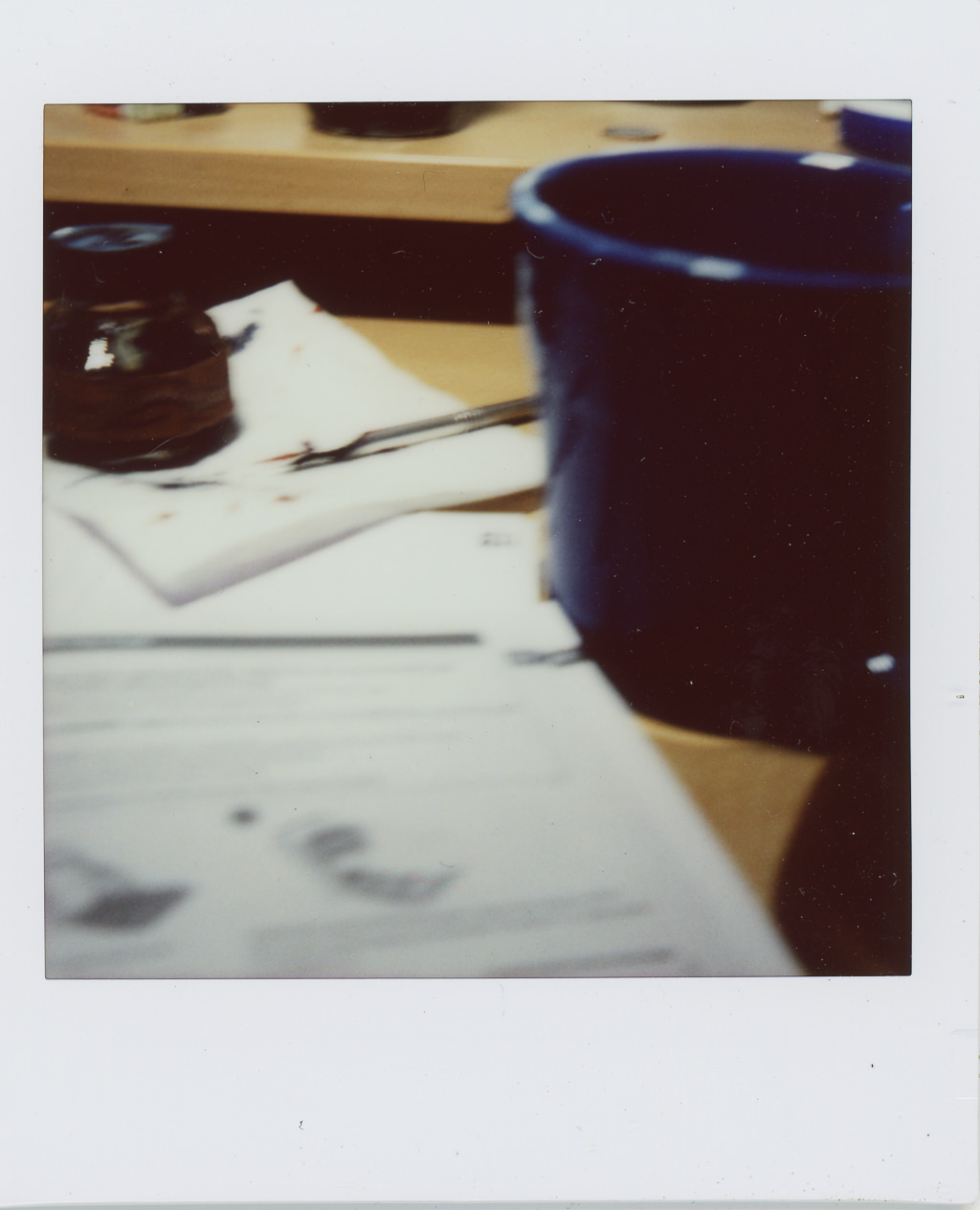
One thing that the Instax Wide doesn’t have is a flash suppression. I use gaffer’s tape over it so I don’t get it. There are light and dark adjustments on the Instax Wide, and these same adjustments are found on the SQ6. There is also a flash suppression button on the SQ6. The above image is with the flash turned off.

Here, the flash is on, on auto mode, and the colors are good, the composition relatively sharp.
Altogether, no complaints about either printer, camera, or film. The nice thing is the square format, which is something I really enjoy working with in both analog and digital photography. The wireless technology of the printer is a real kick, and the its small footprint means it is easily portable. The camera has a good set of features that improve the ease of using it as well as allowing the photog(rapher) just the right amount of control to succeed. The printer is better for “good” images in someways than the camera as the resolution of a digital photo is going to be inherently better than that of the SQ6, but both fill niches for me.
Yeah, good presents to get and give!

Today promises to be frying hot – 91F or more. The house is already closed up to keep it cool – thank goodness for modern insulation! – so we don’t have to use the air conditioning. I took this image not too long ago on a considerably cooler day, and that is what I want to think about rather than suffocating heat! The plus side of the heat is flowers love it and as it is too hot and bright to go outside for strenuous activities, it is a perfect day to do things around the house, like sewing and such. Domestic life suffers in the summer around here.
 Ink, Yarn & Beer