I’ve lived on both coasts of the US as well as been to a few other places. The color of water never ceases to interest me -blue, turquoise, grey, green, fluorescent!
Along with the waters, the intensity of colors is also dependent on where you are and the weather. Here in California, as in other dry climes, when the sun is out and the moisture in the air is very low, the light has its own intensity. This light changes with the seasons and the tilt of the earth. Landscapes without water problems are more abundantly green and often may seem softer simply as the water in the air creates an invisible filter.
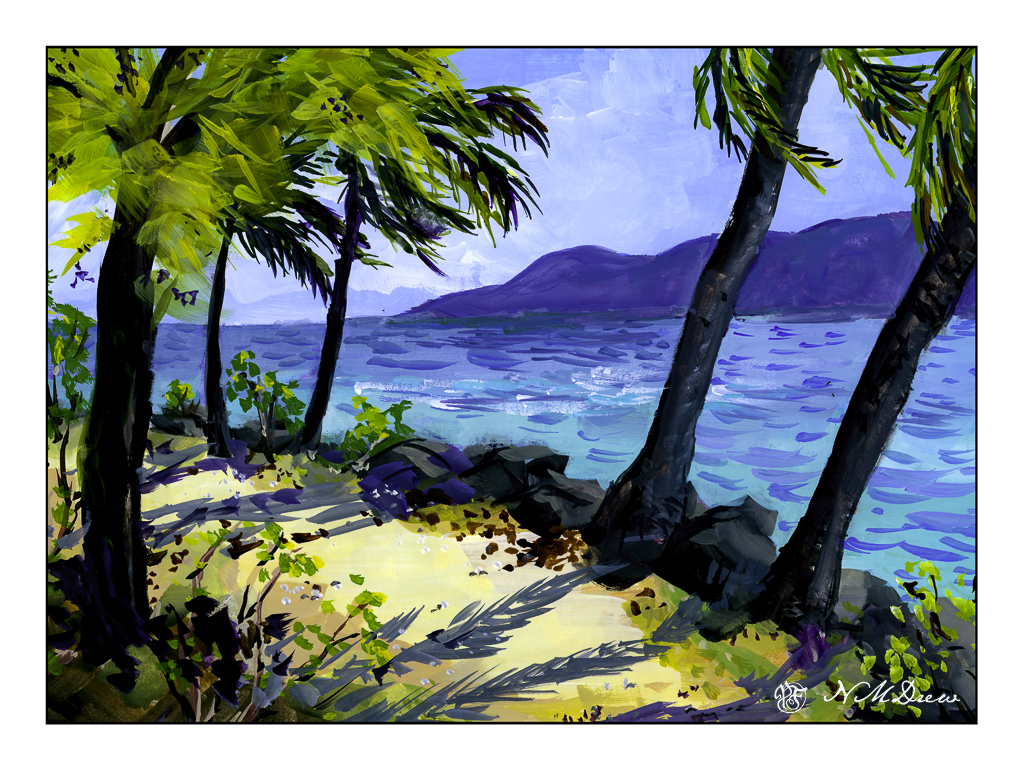
Like many people who have enjoyed harsh winters, tropical scenes with palm trees seem like paradise! And I will leave that thought – paradise – up to your imagination!
Well, that is true for me in the world of trying to make my watercolor paintings more simple in painting style though not necessarily in content. Of late, rocks and plants.
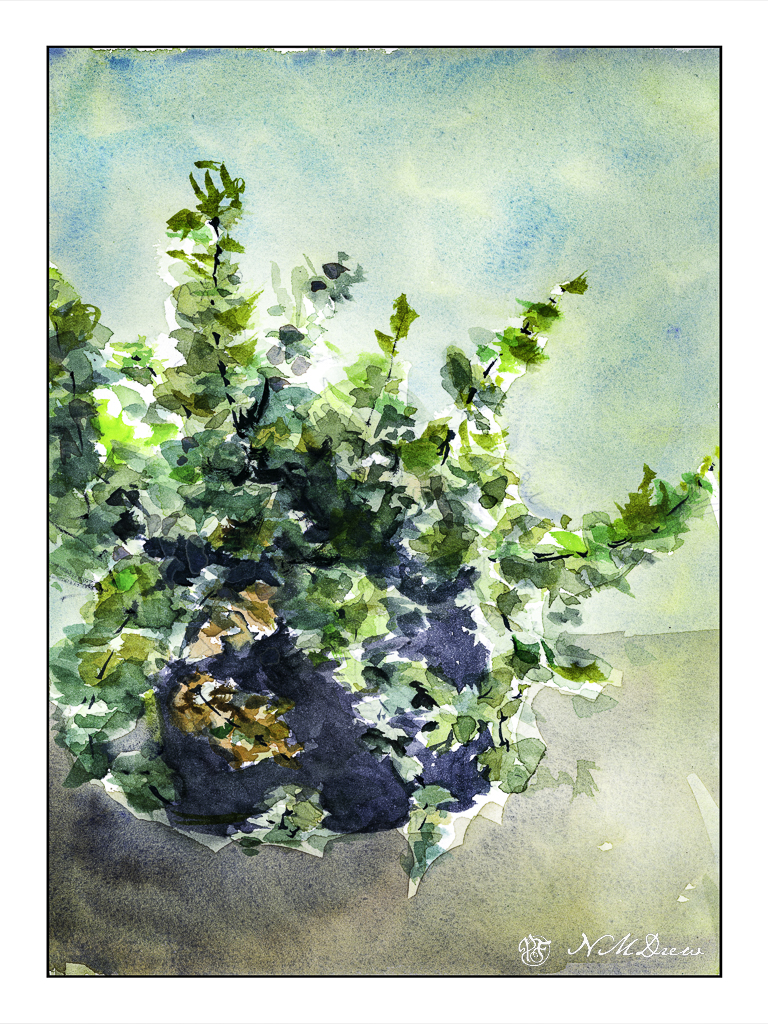
Let’s start with my painting of Greek oregano, growing like a weed in a pot on the patio. The leaves are simple enough, shaped somewhat like an egg (but flatter 🙂 ) on long, straggly stems. The color is sort of that dull, sagey-olive green that plants in the Mediterranean climate often have. In sunlight, a bit of warm yellow shows up. In shade, the greens are darker. Pretty logical, right?
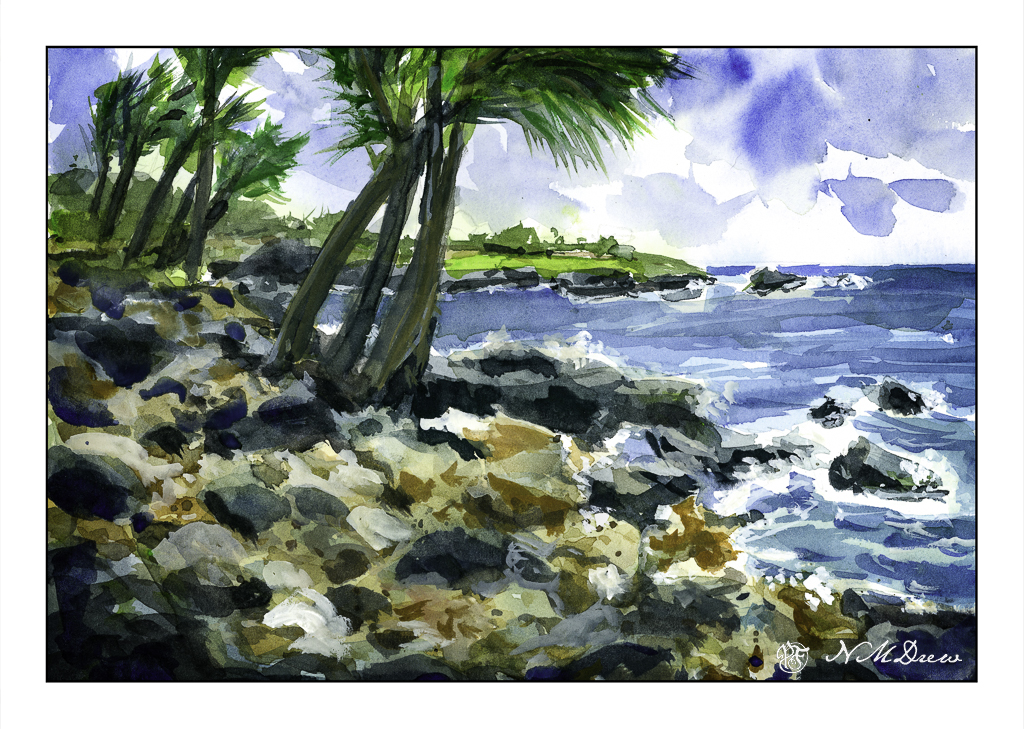
And then there are the rocks I have been thinking about since I did the much more successful cliffs of the other day. The rocks in the fort in the VI was okay as a rock building study, but not so hot as a painting. The beach scene below is of a rocky beach of lava stones – many black ones in particular, but with softer sandy rose colored stones in between. And a few palm trees. And an ocean. And a spit of land sticking out. The rocks were the primary focus as that is the rocky subject I am approaching. Simplification of shape and shadow – some successful, some not.
I sat outside yesterday, using reference photos of lava rock beaches around the world, and then using the oregano plant a few feet away on the concrete. Good to be outside. Good to work on two opposing pages of the sketchbook, waiting for one to dry and working on the other. Back and forth. I was amazed I was out there for at least two hours, with more indoors. I am spending more time on painting a picture than I have before . . .
Success? It comes in steps. A lot of crap with a few successes.
This is a tribute to the African-American painters of Florida known as The Highwaymen. Some of their numbers include Sam Newton, Alfred Hair, and so many others that I cannot name them all. In a time of racial unrest in the U.S., these painters somehow managed to thrive despite the Jim Crow laws of the South, and unfortunately, their work was not appreciated as it should be. However, today we know more about them, and can enjoy their work – the internet is so helpful in that regard.
I love bright colors and cheerful landscapes, and the tropics beckon. Palm trees are alluring and the brilliant light of these areas make colors more alive and intense. The Caribbean is filled with islands and azure seas, trade winds, towering clouds. States such as Florida, on both the Atlantic and Gulf sides, throughout the Gulf of Mexico and down along the coasts of Central and South America have such beauty in common.
The Highwaymen were not untalented amateurs. Some were self-taught, others learned from A.E. Backus. Each painter in this group sought an income otherwise denied them, as well as perhaps a way in which to express the beauty around them. Read up on them – they are a fascinating slice of art history.
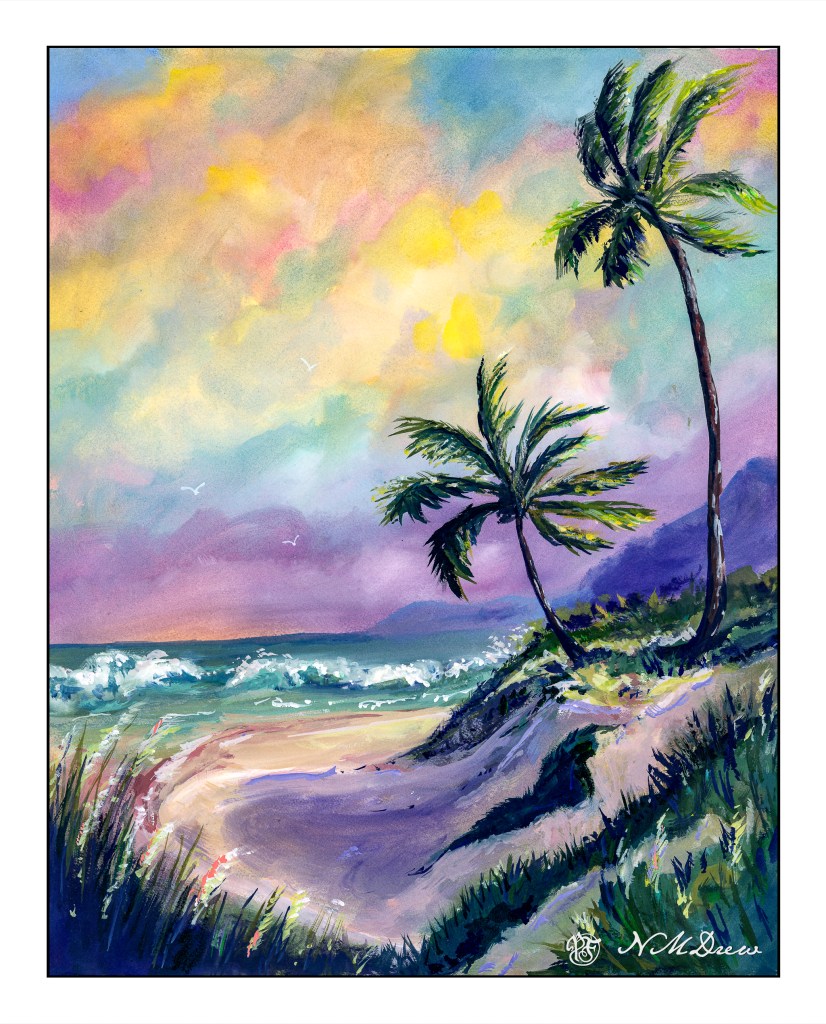
As with the painting I last did, “Swamp,” this one is done with watercolors mixed with gouache on 16×20 inch 140# CP Arches paper. I used more gouache this time than I did with the last painting, and it was quite a challenge. I started out with bright colors and a totally different idea of a painting, but as I started blending the gouache with the watercolor, the gouache became a driving force. However, all color represented is simply toned with white or black gouache.
These artists worked in oil on masonite. Oils lend to blending colors more so than does acrylic paint, and I found that the gouache and watercolor worked similarly. I may try to do something similar in acrylic, and expect it will be a serious challenge as acrylics dry so quickly. Often The Highwaymen sold paintings still wet!
This is perhaps the most fun I ever had with a painting. I referred to paintings by some of the artists to see how they used color, photos from the internet of palm trees and Floridian sunsets. The composition is similar to a number of seaside ones, and I attempted to emulate the colors used by the painters for sand, sea, sky, and palms. I hope I caught some of the liveliness and spirit of The Highwaymen. I know I will be back to visit them, and Florida, again soon.

 Ink, Yarn & Beer