
Potted Flowers without the Pots

I wasn’t interested in the flower pots these potted flowers are in, so I left them out. Now they are unpotted for your perusal.

Above are what are supposed to be little daisies and some lobelia. More negative painting practice, which didn’t really work out, but I did try it, both around the daisies and then painting green onto green in the greenery.

Venery in the greenery anyone?
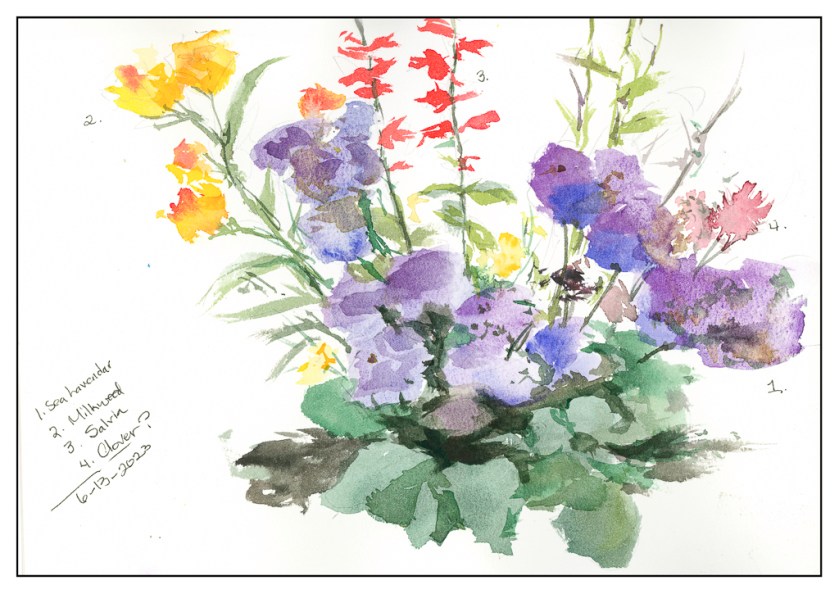
I am much happier with this painting than the first one. Some negative painting, such as in the leaves and in the lavenders of the sea lavenders. With both, but particularly the sea lavender, I also tried to merge colors in the wet washes. There was a cauliflower which occurred in the far right sea lavender, but too much working on it made it a bit more messy. My mind was on painting colors, not really on patience of waiting for things to dry a bit – hence the cauliflower.

I worked on these this morning, painting on the patio in a bit of a gloomy day, but it was certainly pleasant enough. Being outdoors while painting certainly is beginning to have its appeal; now I think I might take a handcrank sewing machine outside to enjoy more of this summery now sunny weather whilst I sew!
Now, For a Bit of Spring Color!!

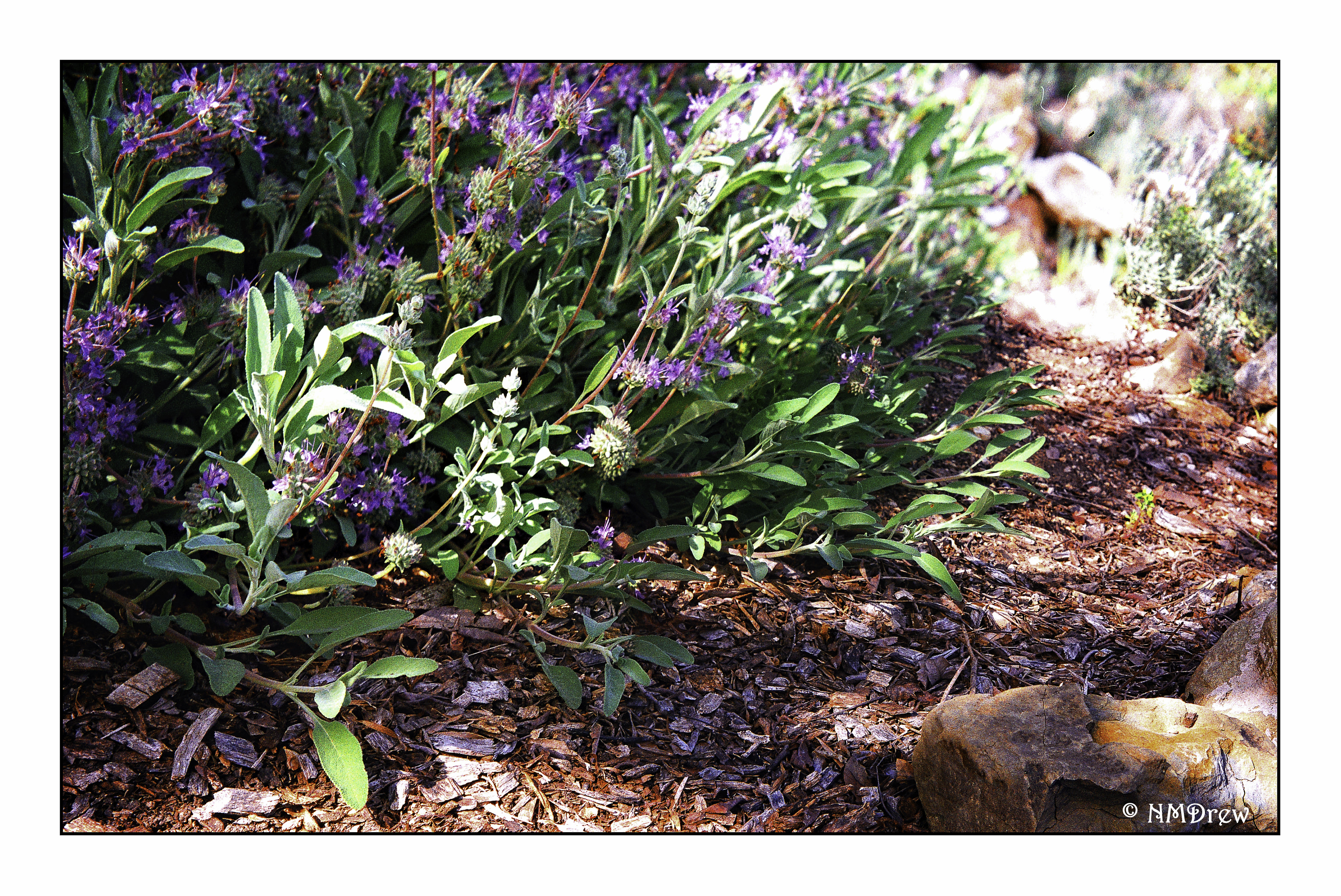
I am doing a 365 wordless black and white project this year, but every now and again the need for color rears its head!  With nothing demanding my time – being retired is so cool! – I am doing a lot of film photography and using some of my vintage cameras.  And, now, I guess vintage film as Agfa Vista 200 is no longer with us . . .

This image was done using Agfa Vista, as stated, and a really interesting camera that I got from the same gentleman who refurbished the Agfa Silette I wrote about earlier.  This is a twin lens reflex (TLR) 35mm camera called the Flexilette, produced from 1960-1961.  The first roll of film I put through it bombed because I pulled the rewind knob out too far and disengaged the canister.  This time I didn’t, and got some really amazing shots.  (Not that I am a great photographer, but the film and camera did a great job!)

I plan to write a review of the Flexilette, but if you want to read about it, do so here.  Meanwhile, a wonderful and colorful spring to you!

In the Garden: Hummingbird Sage

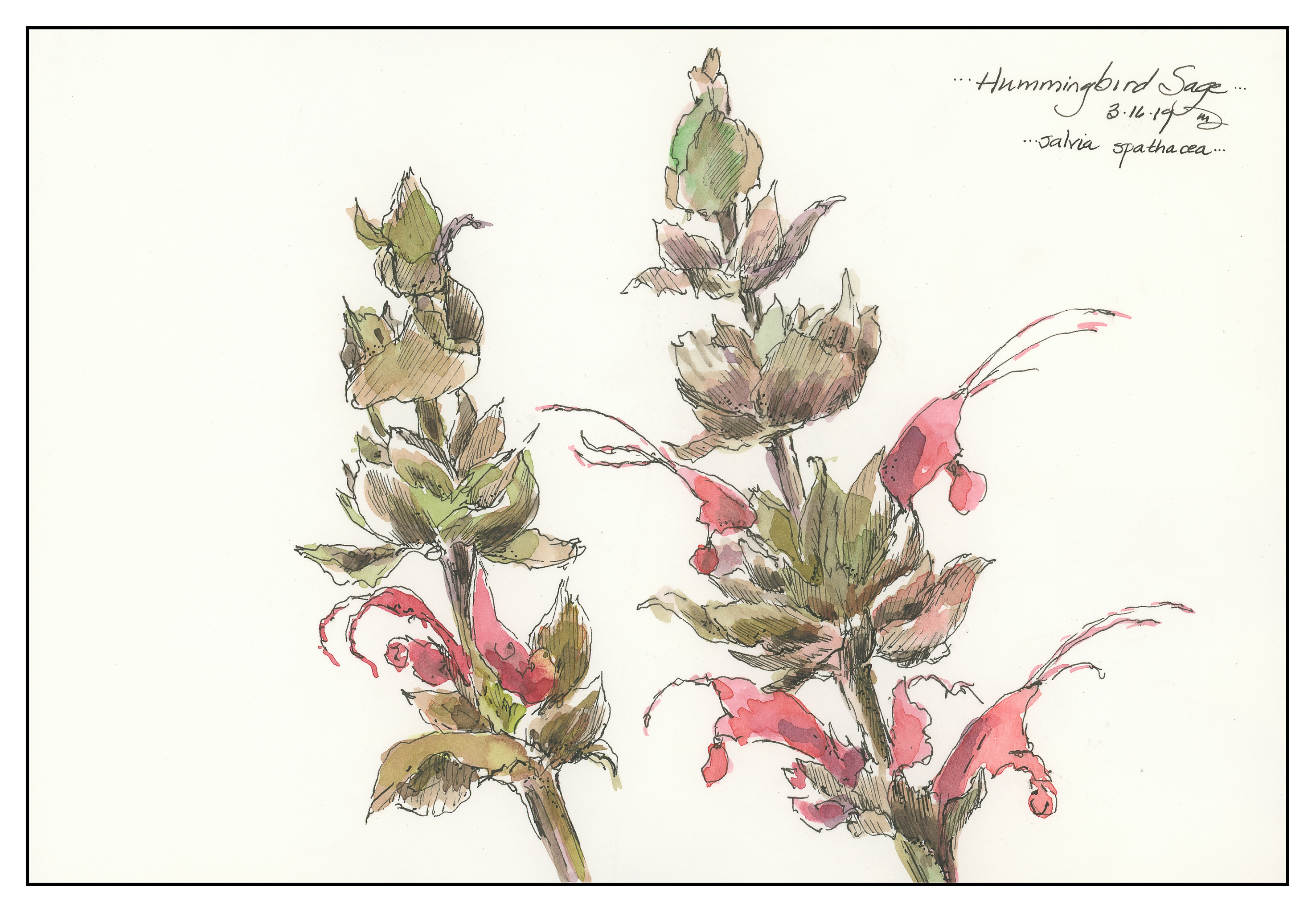
Hummingbird sage – salvia spathacea – is a member of the salvia famnily, and is found throughout the woodland environment of California.  It’s smallish – about a foot tall – and has dark green leaves and the most complex little flowers with the strangest shapes.  Spring is always around the corner when they appear,  In a drought-ridden environment, such as ours, salvia plants add a lot to your garden.  This particular sage may or may not appeal to the gardener on a practical level – propagation is not only by seeds, but underground rhizomes, which could become a bit overwhelming.

Salvia

Salvia is the Latin name for sage.  There are so many kinds!  Russian, Mexican, hummingbird, white, purple . . . the California climate where I live is perfect for so many.  If I could, I would fill my garden with them – the pungent aroma, the colors, the variety are endlessly fascinating.  Additionally, they are easy to grow and don’t need much water.

A Walk in the Garden

Close Up of Buckeye Flower

The weather this spring is so incredible this year.  There are breezes in off the ocean, the skies are blue, we have cool weather.  And we have had rain.  The result is that flowers are in bloom everywhere, and a few miles down the road, we are blessed with 33 acres of an ever-changing and evolving botanical garden, the Conejo Valley Botanic Garden.  I believe all the plants are native to California, and most are drought tolerant – perfect for the xeriscape garden – and incredibly beautiful.

California Buckeye

In the Cactus Garden

Matilija Poppies

Close Up of Matilija Poppy

Close Up of Monkey Flower

Penstemon

California Pepper Tree

One of the Many Varieties in the Salvia Garden

Oak Trees

Mystery Plant