Film . . .

I am beginning to really enjoy taking pictures with film these days.
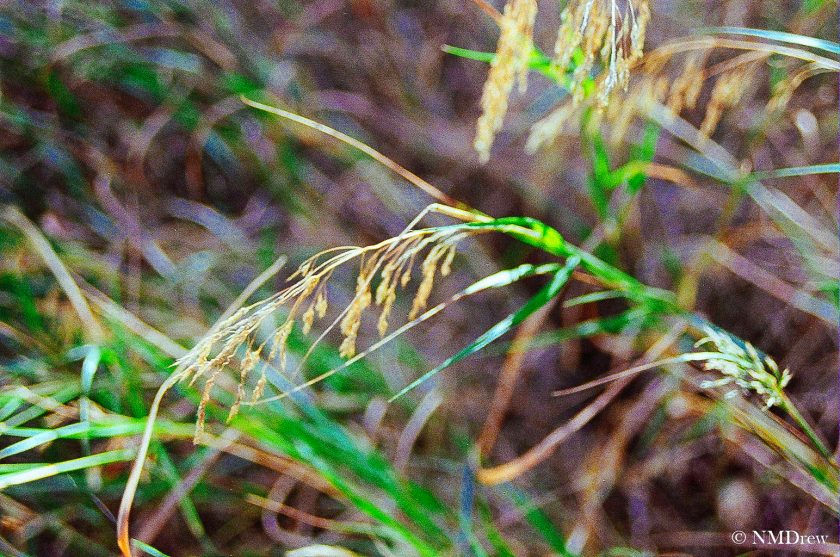
Autumnal Grasses-1

As I’ve said, in my early days of photography – back in the 80s when digital didn’t exist – my experiences were all really bad.  I had no training and no idea what to do.  Maybe it is because my own family didn’t take pictures, so my experience with photography was very, very limited.  I had no idea what made a good picture as far as composition, and no idea how to make a good exposure.  Hundreds of dollars in printed ugliness was no reward, but the best deterrent!
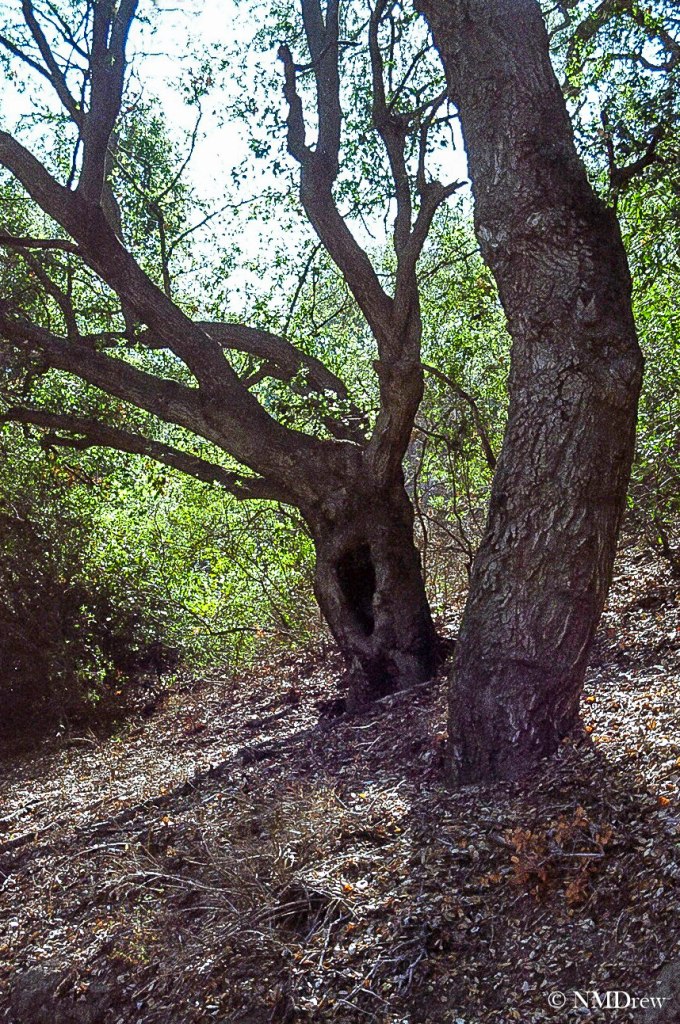
Woodland-1

Enter the digital camera, some classes, lots of reading, and now I think I can go out and take a few shots in film without screaming at the results.  One reason is I can get digital images, rather than prints.  Costs are $10 – $11 / roll of film.  I have my own scanner.  Now, I am learning how to shoot film, such as lowering the iso for richer color and better contrast.  I am learning how to use my software to do post production, which may seem like cheating, but it is simply a digital vs. chemical darkroom.  Film still retains the quality of film, even if digitized – at least, it seems to me it does!

Fallen-1

One of the most fun things about film is trying out different types of film, and finding ones I like.  I have tried Tri-X, T-Max, Superia, Rollei Crossbird, UltraMax, Ektar, and have a few others.  It’s really cool.  Developing B&W is going to happen with greater frequency, and later, developing color.
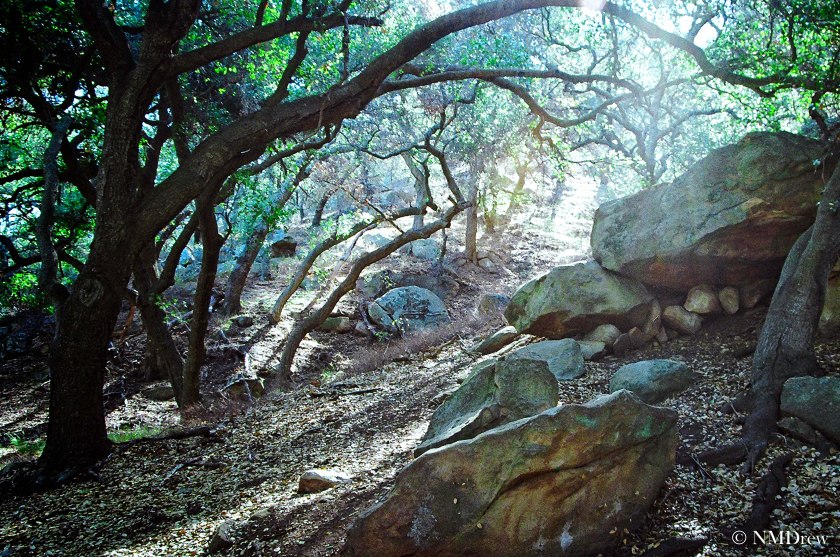
Trees & Rocks-1

What have I gotten out of this?  Patience with composition.  Appreciation of digital and analog film processes.  A sense of success.  And a whole hell of a lot of fun!

Portrait of the Pears

The other day I went shopping deliberately for fruit to shoot.  Food photography can be fun, but it does require more of a set up than I use when I am shooting pictures as I work in the kitchen.  I bought pears, tangerines, and apples from Whole Foods, checking the produce out for perfect fruit, and because I really think they have the best fruits in the autumn and winter months.  I used flash with the MagMod, backlighting from my eastern-facing studio window, a Lastolite scrim, along with silver reflectors and white foam core.  Not everything was used in every shot, but I did enjoy playing around.  Camera was the Nikon Df and the Nikon 24-85mm f2.8-4 lens.

The purpose of this study was to work with equipment and to work with software. Just practicing a studio set up and then working with the light – which was done in the morning given the eastern window – was fun. Shooting outdoors is not the same as shooting indoors. Doing studio work helps me focus on thinking about light, shadow, texture, composition, color, ad infinitum. It is a good way to focus more than just the camera – it creates a consciousness of the environment, one which I can control to a certain degree.

Besides the learning curve of studio work – and the fun – I really enjoy still lives of plants, food, fruit, and vegetables. For me, it brings the beauty of the natural world and an appreciation of its diversity to the forefront – something easy to forget in the face of just the busy-ness of everyday life.

Changing Perspectives

One thing I admire is craftsmanship – the ability to create something beautiful and / or useful – and that mastery of tools to create that item.  By making the decision to understand the photographic software I am using in greater depth, the computer and programs are shifting from just things to play with to make a photograph look better to creative tools in the creative process.  Granted, the physical task is not the same as working in a darkroom – and not as fun. But by plumbing the depths of different software, I am finding a creative outlet I haven’t had before.  Really strange this new mindset . . .

To learn anything, to master anything, to go beyond mastery into artistry, takes time, talent, inspiration, patience, accidents, tangents.  I can honestly say that this change in perspectives occurred when I took the picture below further than I ever conceived possible . . .

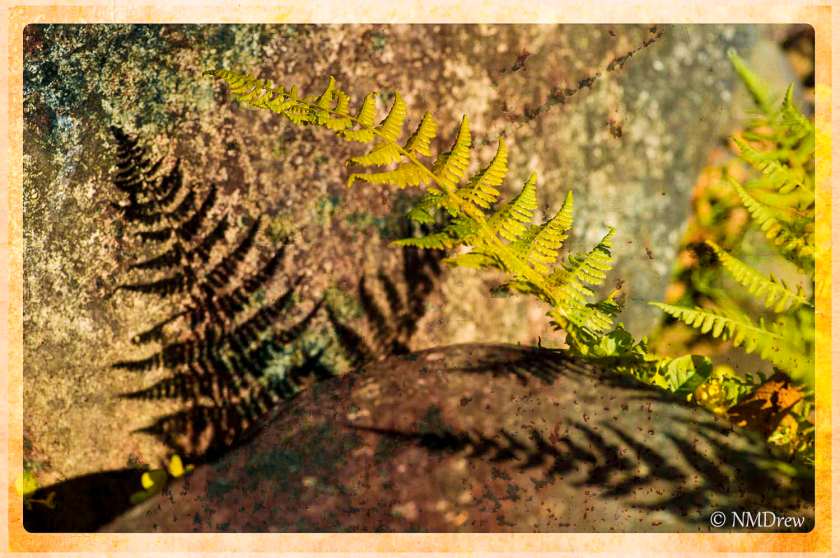
Fern Leaf  - Original

I chose this photo because I like the shadows cast by the fern. I thought initially it would be good in black and white, which I think is something I will eventually do, but I just grabbed it at random to use as a photo in a follow-along of an OnOne Perfect Photo Suite video lesson.

I have never used textures to process an image, but a post by Brian Matiash featuring a picture I really liked, tweaked my interest to the point I looked up this video.  Step by step, I followed Liz, choosing the ferns, importing some textures, working with her as she moved along.  I really didn’t think too much about making a picture I liked, I thought about learning more about Perfect Photo Suite.  Well . . . I did learn more about the program, but I also learned that I really could get something I liked that was not horrifically ugly.

Fern Leaf

I had fun, and better, discovered that I could find a sense of creative satisfaction sitting at a computer working on a photo.

Oh, here it is in black and white . . .

Fern Leaf  - B&W

A Tale of Change

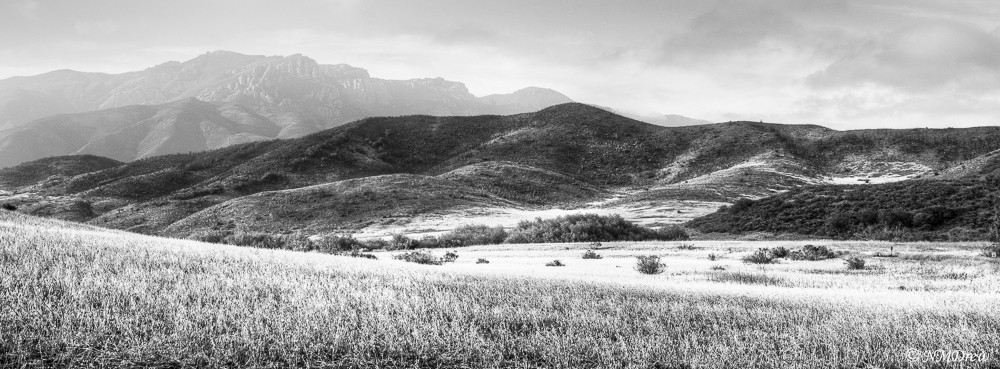
Pano 1 One thing about taking a photo, it becomes a creative process afterwards using software. When I first began digital photography, it seemed like cheating to post-process an image. However, I soon saw – learned – discovered – whatever – that it really was a way to enhance a mood, convey a feeling, evoke a sense of place.

The picture above is a pano, pieced together using two or three images. This is pretty much how they came out of the camera. Not a lot of dynamic “pop” here – and really, not as colorful as I recall the morning I took these images. Moving on, some changes.  I wanted the clouds and sky to be more visible, and yet an overall softness of color be retained.  Already, a different mood. Pano 1_tonemapped   Below, black and white, probably derived from the picture above.  I like to look at anything I take in color in black and white.  This helps me look for gradation and contrast.  At times, I will set my camera to do all jpgs in black and white, and the raw files in color.  (Cannot do anything further than that, anyway!)  When I chimp, then I see the monochrome.  At times, it’s fun to play a game with myself to guess if the picture will be successful before I take it.  This means analyzing contrast and texture before shooting.  More failures than successes at this time, but it is good training for the eye.  The same can be done to consider what a histogram might look like, too. Pano 1_tonemapped-2 Finally, a bit of HDR and specialized filters in use.  I pushed the image a bit in Photomatix Pro and then moved it into Color Efex Pro 2, and used the detail extractor and ND filter overlays. Toward Mount BoneyThere you have it – a tale of changes.  Each has a different visual quality and emotional or intellectual quality.  Some are more a bit more dreamy, others sharper on the eye and evocative of a season or time.