Sliding into Home Plate . . .

It seems that these past two months have been about craziness. Or cascade effects – one thing leading to another.

I got my sewing cabinet by paying for it and leaving 3 weeks between purchase and delivery. To make it work I had to move a book case and a tansu; the book case to the garage, the tansu to the studio. To put the book case into the garage meant at least 5 trips to the Goodwill donation site, and moving around and discarding more crap than anyone else should be allowed to have. To put the tansu into the studio meant moving photography equipment into the garage and into the studio, taking up the space of a displaced book case.

To move stuff into the studio meant moving stuff out of the studio, consolidating art and photography supplies, moving books into the living room.
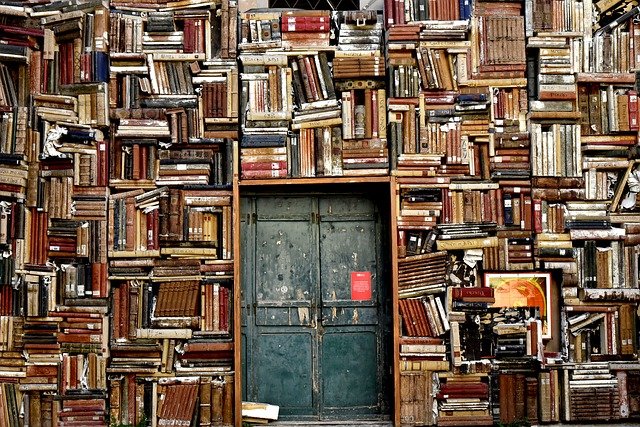
To make more room in the garage for book cases and photography stuff meant moving boxes of books from the garage into the living room. Boxes of books in the bedroom closet leapt out and moved into the living room as well. A call to the book buyer meant setting up a date for him to come by, and sorting out 25 boxes of keep and sell. Most were sell. Two book cases in the living room joined the sell pile, as did 3/4 of a book case in the family room.

The living room became the unliving room.

Meanwhile, the sewing cabinet was delivered and set up. Next, figuring out how to position it – facing the wall? facing the sliding doors? (The latter won out.)

Time for the book buyer. He arrived. He bought. I threw in what he didn’t want to buy. Now the living room is once more a room with room, and only one book case full of books.

In this mix, a quilting class is ongoing, my Pencil Portrait class ended, my painting continues, and a colored pencil drawing class begins tomorrow. I have to put together my drawing box with supplies for a new class, some different things, some new things, some old things. The class begins tomorrow at 9:30 a.m., and like the good kiddie I am, I want to be ready for the first day of school.

The finale came this morning. I took to the road, to a real, live, professional office store 30 miles away and got the last item: the chair for the sewing cabinet. Not some rinky-dink piece of junk, but a real chair that should last a long time, and keep me comfy for hours of sewing. Mine is the one in the middle.

Finally, time for a breath, coffee, step out to admire the flowers, and then tidy up all that was left in chaos these past few days.

I have room on my book shelves, closet space, living room space, sewing space, art space, and enough room in the garage to swing a cat under the full moon.

More still needs be done, such as hanging pictures and more garage purging, but the big struggle is done. Time now to settle in and see how it all works out.

Yay!

Thoughts Before the Big Blow

Politics, weather, pandemic.  I think it is all making me even crazier than before.  We can expect 40 mph winds on Tuesday.  The temperature will be cooler than the 90F of yesterday, so hopefully less chance of fires.  It’s like the end times so many look forward to, but not me – I like my life!  Still, there is an interesting bit of stress going on that I can only equate to living in a war zone of some sort.  We just don’t know what is going to happen.  I wonder if what I am feeling can be equated to what people and families went through when WW2 was beginning – a sense of unease and that the fabric of life is not what you think it is supposed to be.  It’s a very strange feeling.

So, the Big Blow.  Some areas are going to get 80 mph winds – not quite hurricane strength, but certainly strong.  People in the midwest have gotten those just recently along with a lot of snow.  That doesn’t sound pleasant at all.  Can you imagine your roof flying off?  I know that several years ago parts of Great Britain got them and villages were cut off and food supplies and other stuff needed coptering in.  At least here we have a lot of things, and the stores are open.  And no snow.  Even further back, upstate New York had horrific blizzards, and livelihoods were lost amongst the farmers, especially dairies.  Cows died because they couldn’t be milked without electricity.

I’m just blithering around thinking about things.  Nothing profound, but I have finally had a few minutes to sit down to reflect as I have been really busy today.  We had to get some tools for Josh’s car project, so we looked at plants and bulbs and seeds.  Then I talked with Am, our aunt who has been working hard in the hospital caring for Covid patients.  She is doing really well despite it all, and it was good to have a chance to hear how things are.  Then, off to buy some computer stuff – our keyboards are worn out, and as I had to replace my old computer last week, I am still catching up with it, installing software on it, coordinating printers and scanners.  It is a pain but now that things are sorted, this is my first post using the new computer, keyboard, mouse, etc.  No new monitors as I got those awhile back for my birthday.  Luckily, I know a fair amount about computers so it is not challenging, just time consuming.

The studio, though, has been the scene of upheaval.  Computers need cords and such, and while you are down there sorting things out, you better get into the dust and debris that lurks under the desk.  I did, and while it wasn’t awful, it was good to sort stuff out by vacuuming and untangling cables.  Now I need to place things back where they belong so I can find a paint brush or a camera.  Finally, sewing – the new space is working out well.  I’ve made an apron and two pairs of jammy pants for Josh; time for me to get something!

Despite all the external upheaval, things are pleasant around here.  We are fortunate to have good family and friends and good health.  Not much to gripe about at all.

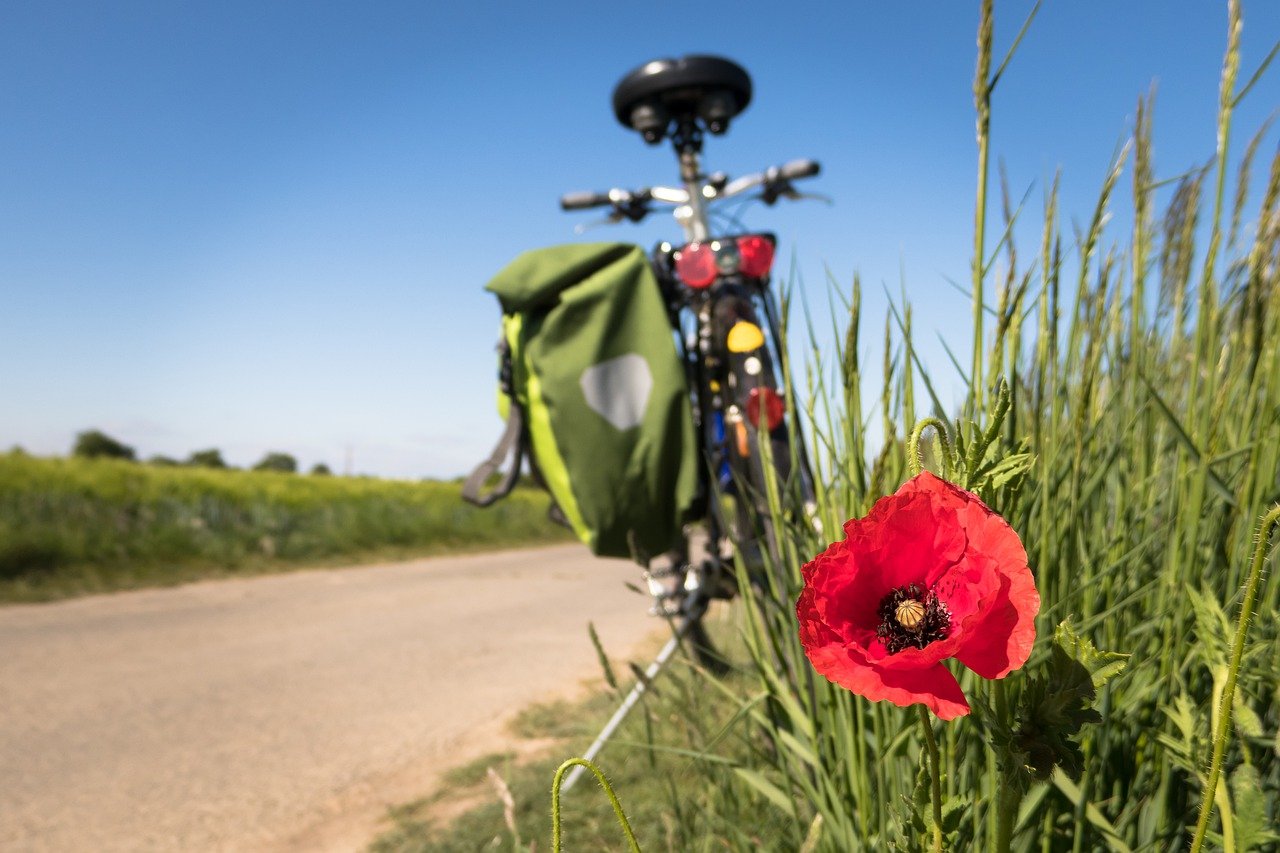
Time to get out on the bike for the next adventure!

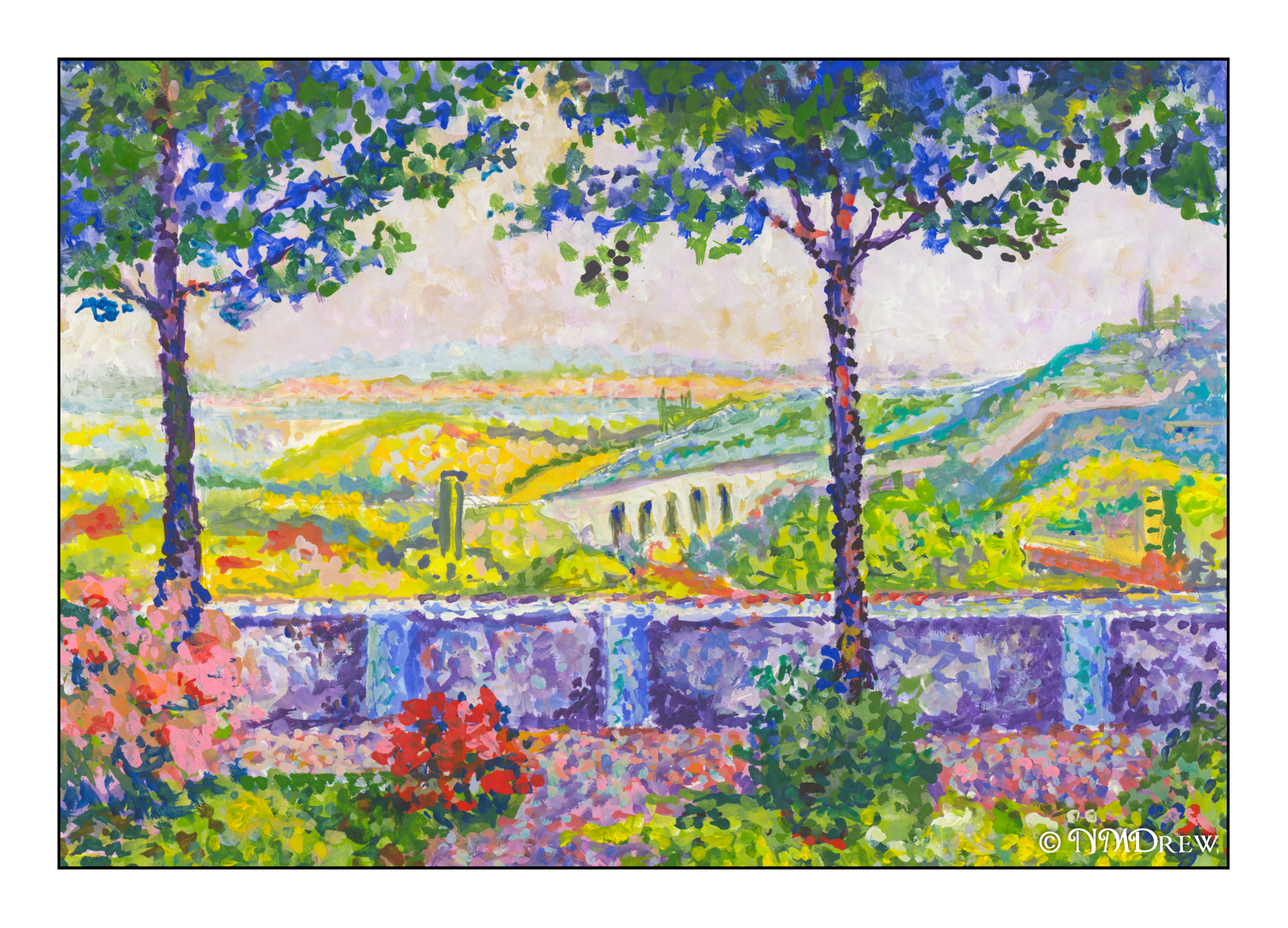
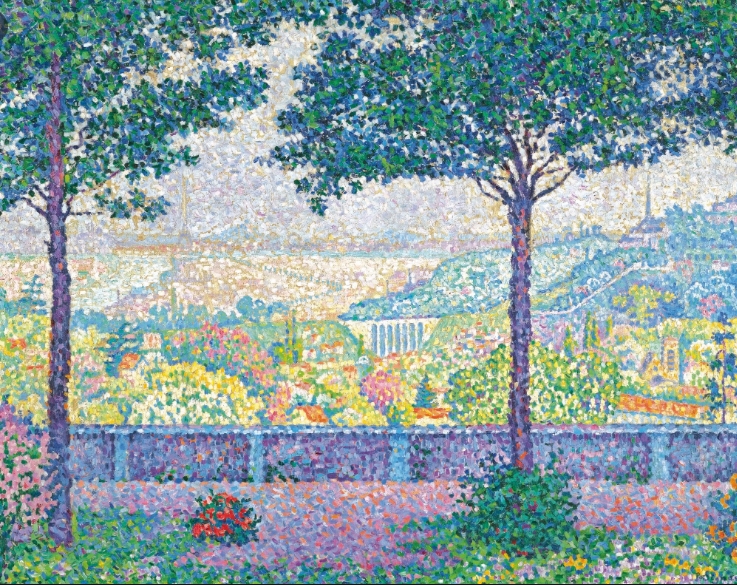
Terrasse de Meudon – Gouache Study After Paul Signac

I must say, Signac does make a lot of cheery, colorful paintings! Not only are his colors great, but his compositions are often so interesting. Here, another study, mine perhaps more colorful than the original.  It is always hard to tell when you look at something on a monitor.  Even my scans are often off, needing some color adjustments before a final jpg is created.  Age can often cause colors to deteriorate in oils, too, as the varnish yellows and dims the original.

What really attracted me in Signac’s work below were the lavenders, greens, and blues.  So many shades!  Additionally, I really tried to look into how he juxtaposed colors, such as the oranges mixed in the blues and lavenders of the paved surfaces of the foreground.  The warmth of the scene in the middle ground plays a pleasant contrast to the cool, shady canopy of the trees at the top of the painting.

I am learning a bit each time I copy a painting in the Pointillistic school.  Colors are distinct from one another.  Even when a work is not a “dot” painting, I am beginning to get a better sense of color and shapes, contrast, and so on.  Much of this is just sitting around in my subconcious, and sometimes, with an original painting, it manages to escape.

Color in Impressionism & Pointillism

For me, color is an excessively important part of my visual world.  I see colors before I see people or things.  I think in colors.  From there, reality intrudes and I can identify what is around me.  Because colors are my primary draw, when I paint, mud has often been the result.  Learning to separate colors and learn how one color works with another in painting has been, and continues to be, a difficult lesson for me.  My emotions want the color, but reality is that all colors do not create better ones.  Thus, “patience, grasshopper”!

According to Wikipedia:

Impressionism is a 19th-century art movement characterized by relatively small, thin, yet visible brush strokes, open composition, emphasis on accurate depiction of light in its changing qualities (often accentuating the effects of the passage of time), ordinary subject matter, inclusion of movement as a crucial element of human perception and experience, and unusual visual angles. Impressionism originated with a group of Paris-based artists whose independent exhibitions brought them to prominence during the 1870s and 1880s.

If you know your art history, Impressionism was ground-breaking and revolutionary.  Smooth blending and invisible brush strokes gave way to a different sense of light and its workings on the world seen by the artist.  As with all things, evolution occurred, and from this first rebellion against the “acceptable” art of Europe came other schools.  A direct off-shoot is Pointillism.  Color still is extraordinarily important, but instead of “impressions” being important, the usage of pure color became more distilled.  According to Wikipedia:

Pointillism (/ˈpɔɪntɪlɪzəm/) is a technique of painting in which small, distinct dots of color are applied in patterns to form an image.

Below is a short, clear video about Pointillism, its derivation and its influence.

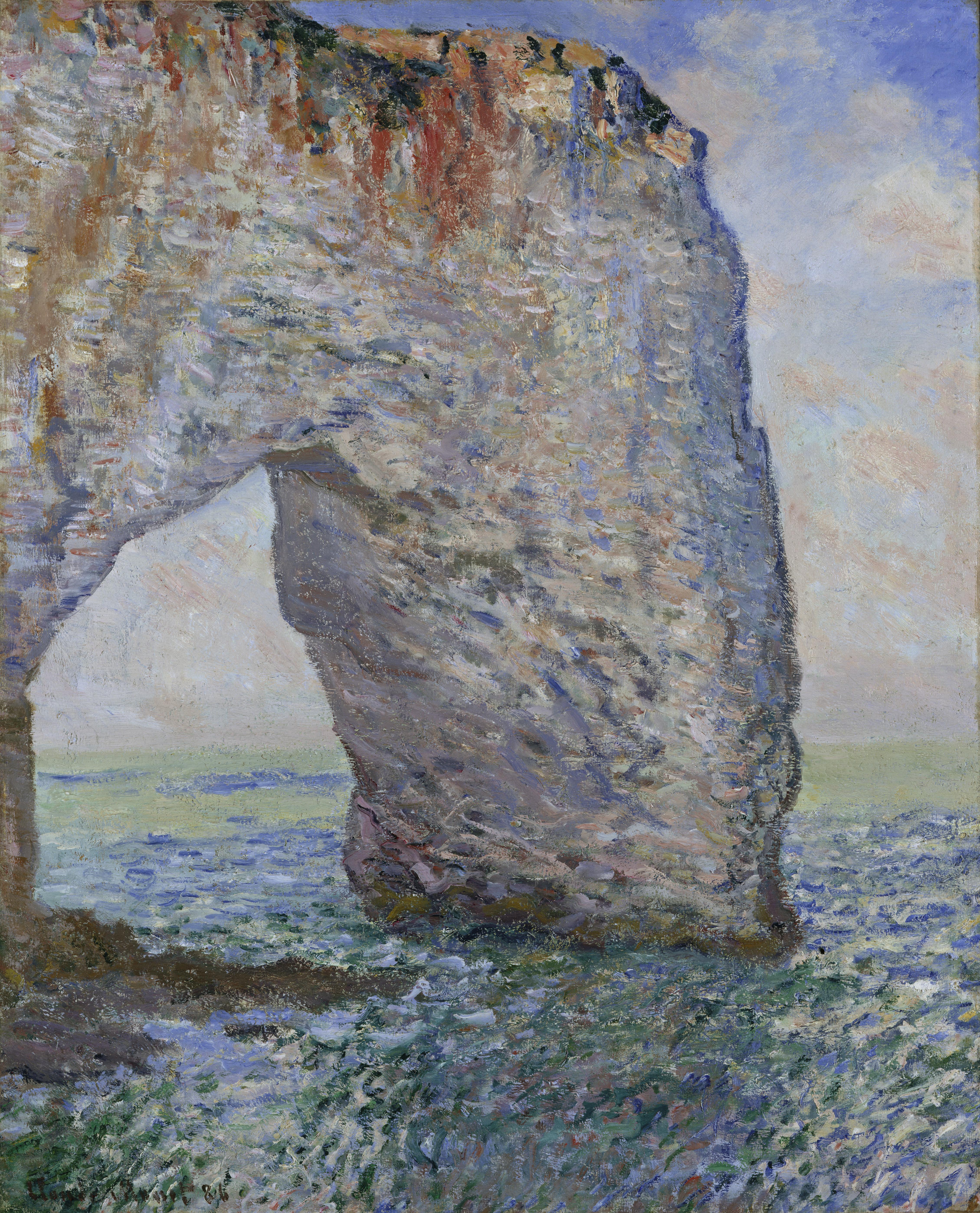
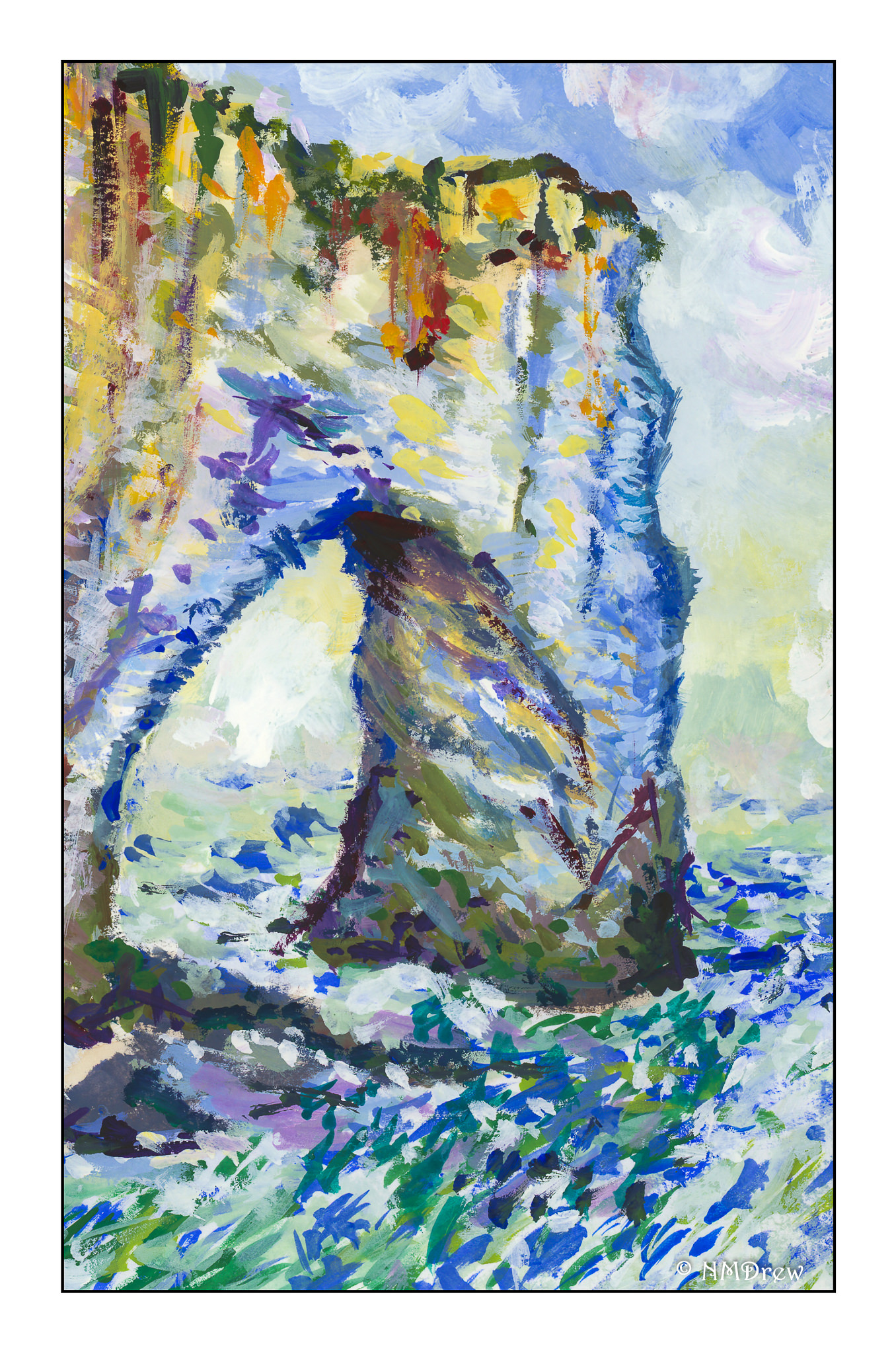
What does this have to do with me? My need to work with color successfully requires a certain amount of intellectualization and rational thought about color – how color works, how colors interact, how Cobalt Teal reacts with Quinacridone Gold, and so on. I find breaking down colors into individuals before combining them helps. So, I decided to turn to the works of Monet and his studies of the ciffs at Etretat. I looked at several Monet studies, but I will use this one in particular:

And here is my interpretation of it:

Obviously, my colors are more intense, but the impact of light on surfaces was the focus. After a few “Monet studies” I realized that this was not quite was what I was looking for. I knew of Georges Seurat but do not care much for the start graphic quality of his work. Exploring other Pointillists, I remembered Paul Signac, and it is here that I found my current muse.

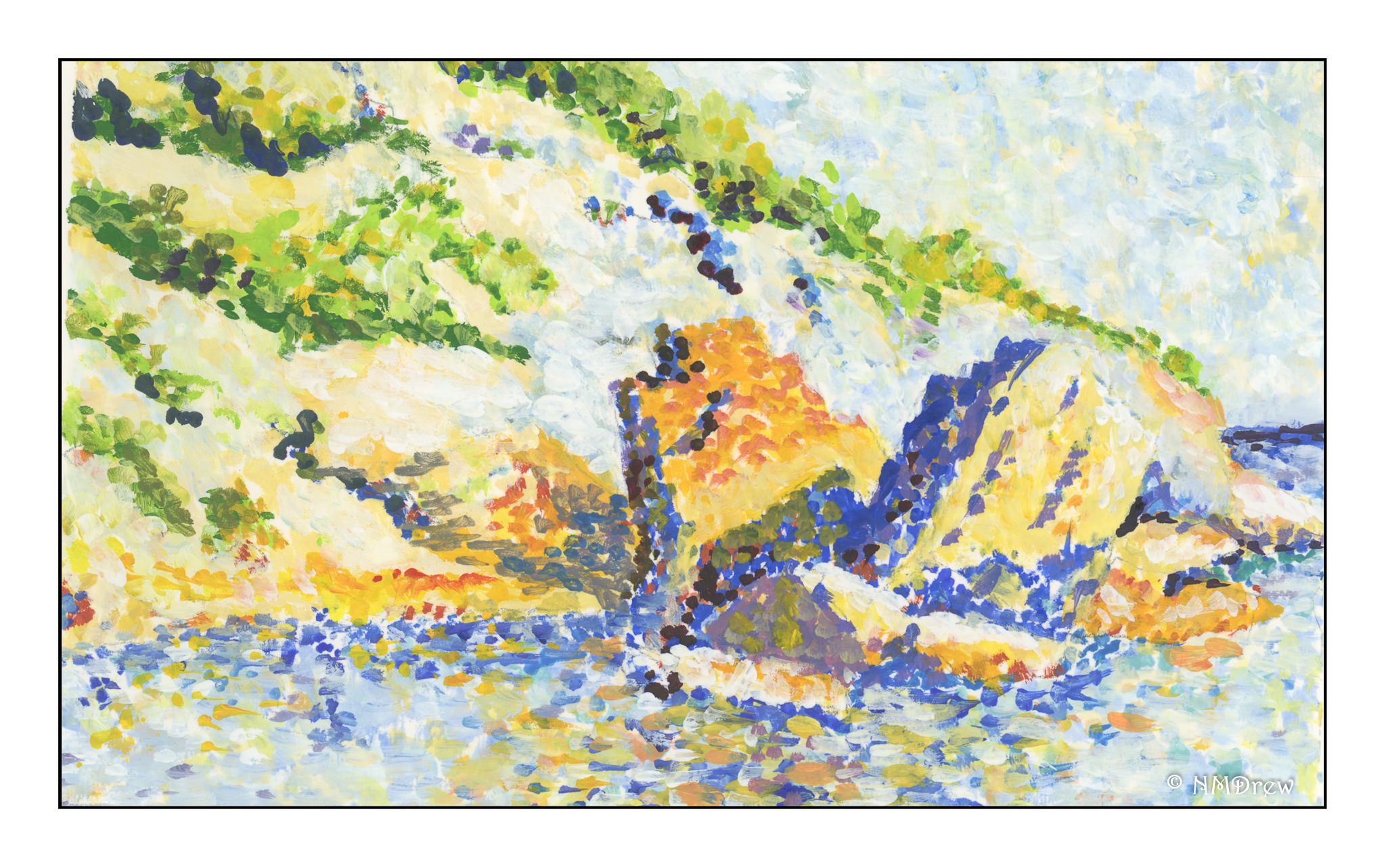
Signac’s works vary from graphic and sharp to blurred and “painterly” (for want of a better term). His more purely Pointilistic works have an energy and vitality I prefer to Seurat’s – more modern, more attractive, and more elegant in composition. He also works with the precepts of Pointillism, but still in a more Impressionistic way. I did my first Pointillistic painting by painting a detail of this painting by Signac, Cassis, Cap Lombard:

I took a small section, enlarged it, and painted a detail of it without following the exact structure of Signac’s painting.  If you click on Signac’s painting above a couple of times, you can enlarge it, and find the blues and oranges together in the shadows, which I studied and used in my sample below.  Additionally, I studied both warm and cold blues and oranges to get a sense of the temperature of the painting, but I will admit at this point I am rather befuddled and cannot describe my observations

My goal was to look at the usage of color, in particular, the juxtapositioning of colors. In the stones along the shore, and in the reflections in the sea, you find blues and oranges, complements of each other, in play to create light, shadow, reflected light, and reflections seen in the lap of the waves.

Did I succeed? As far as color usage, yes, to a degree. In doing this study I also learned about making a Pointillistic painting. I began with just dots and soon learned it took forever! So, in further studies, I laid in the primary background colors in given areas and then applied the dots. I am working in gouache, and so I can blend colors into each other on the paper to create new ones since artists gouache is never permanently “dry” unless sealed. Gouache is the perfect medium for this, but I can also see the value of acrylics as each layer can dry and then be painted over without dissolving the layer beneath. The other beauty of gouache is that it is an opaque medium and so painting over other colors can be done, unlike watercolors.

More studies will follow using the principles of Pointillism, and I know that I will evolve into my own methods. Copying from the works of a master is a time-honored tradition and an important part of any student’s learning, no matter the field.  Such practice causes one to think, analyze, and apply; it is from this one learns.


En Plein Air

We spent  three days in Monterey, California, doing basically nothing but eating and walking miles along the boardwalk in Pacific Grove and the bike path in Monterey. We walked and then ate, and then sometimes walked some more. When we weren’t walking or eating, the activities included simply being blobs, like reading books or knitting or watching “Good Omens”. It was a really hellish vacation.

While walking in Pacific Grove, we admired trees and people and rocks and birds. Then I espied this gentleman, out in the full sun, painting a view behind me. I stopped and looked, and decided to chat him up a bit – it is very seldom I see someone painting directly from the real world. Where I live, you are likely to faint from dehydration these days.

Anyway, he was so friendly and nice! (And he let me take his picture, too.) His name is Ethan Walsh, and he has a lovely website, Ethan Walsh Paintings which I decided to visit. His paintings appear deceptively simple – they look so easy to have done, but you can see the skill and work behind them. His portraits are really amazing, especially in his ability to capture expression. I wish I could do as well. Add to that, he paints the Monterey area, and he catches the light and geography beautifully. Look him up!

This is the view Ethan was painting – Monterey pines on a rocky outcropping into the waters of the Monterey Bay. Here he is painting in oils and was using a fine brush to catch the details. This painting is very different than the ones I saw on his website, and to me this attests to an ability to move in many dimensions when wielding pigment.

Ethan – if you read this, thanks for spending a few minutes with me in the middle of your painting. I really enjoyed it!

And for those of you who are curious, these images were taken using a Nikon FM2n, 100mm Series E f2.8 lens and Lomography Metropolis film.