Eyes and Bottle

I took a few days off from painting and drawing because I needed to work on some sewing and knitting.  Made a couple of masks, and did a major step in a sweater, and those both took a lot more time than I expected.  But, breaking up patterns refreshes you – like a good vacation!

The next lesson in Keys to Drawing is to draw your own eyes!  I can’t see past my nose without my glasses, so it was a bit of a challenge.  Here I am, blindish and glasses-less.

I look pretty darned paranoid here!  My eyes are wide open and I am trying to see what I am looking at in the mirror.

The next one I did with my glasses on.

Hardly stylish, but at least I could see what I was doing!

Then, a tinted bottle.  As it is in the 90s, I have my water bottle everywhere I go.

Both assignments were to use a pencil, here an HB for both, and use lines.  The bottle neck is a bit small compared to the rest of the bottle – it’s really about 1/3 the bottle’s diameter – and a bit misshapen at the top.  I did have my glasses on when I did it.

As in painting, the idea is to go from the general (shape) to smaller details and to focus on line and shapes, not thinking, “I am drawing eyes” or “I am drawing a bottle.”  Overall, it worked.

Drawing Practice

Frustrated with my inabilities to realistically do perspective and depth, which I attribute to my lack of depth perception, I’ve decided to re-edu-um-cate myself!  I signed up for an online gouache class by Lena Rivo, which has been great, as well as bought an eBook version of Bert Dodson’s Keys to Drawing.  I have decided to dedicate part of each day to doing at least one of his exercises if possible.  The hope is to improve my drawing skills, which are the problems behind some of my painting issues.

First exercise is contour drawing.  The purpose of this is to get used to the idea of checking what you see against what you draw, and get the idea into your head that what you see is not what you think.  This means looking at angles and curves as well as relationships of parts to each other.  Here are my exercise examples, diving in feet first!

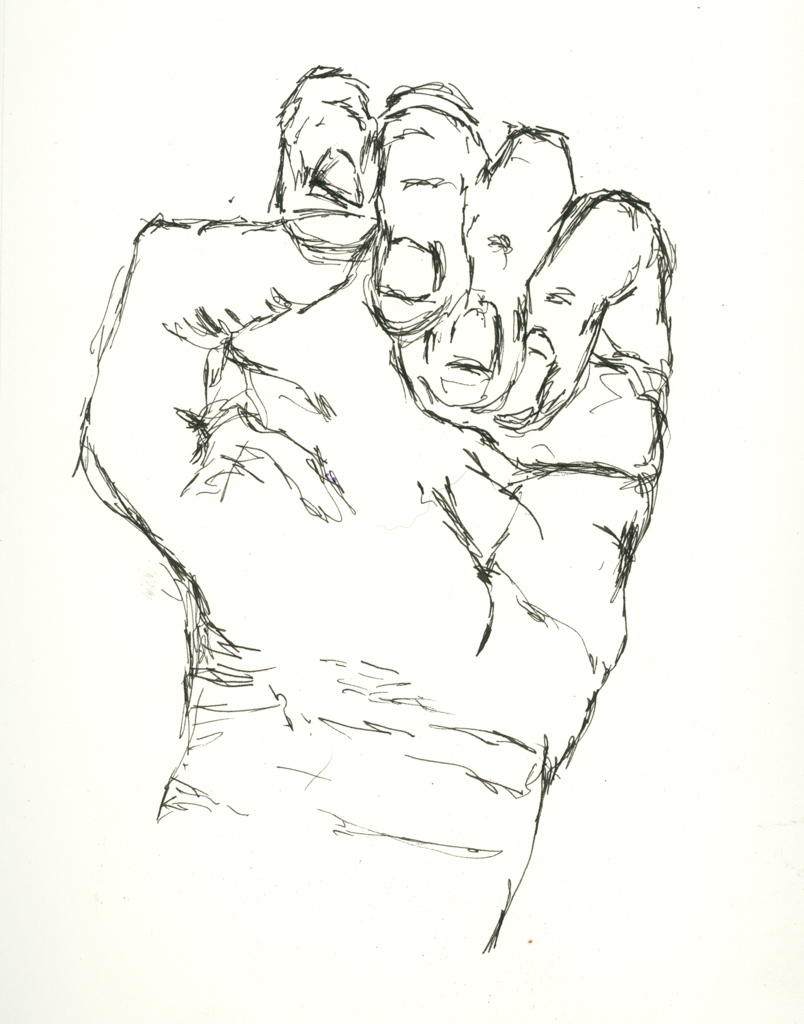
Next was fun – look at your hand face on – that is, fingers in your face!  Close an eye.  Draw!

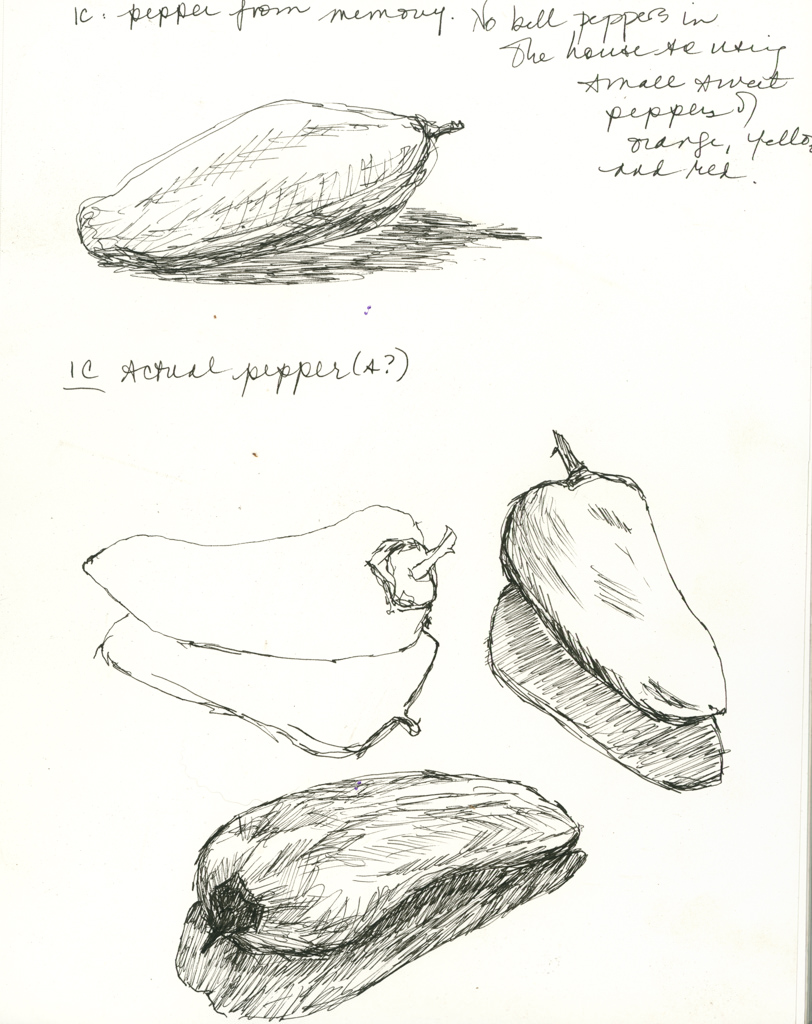
And then, imagine a pepper.  Draw it.  Then get a real pepper and take a good, strong look at it, and draw.  My imaginary pepper is at the top, and the real pepper, in three positions and three variations of drawing style, are below.

Very glad I chose to do this!  More to come.

Time to Be a Student

I have been painting every day for the past two or three weeks. I enrolled in a couple of online courses, both of which I have totally enjoyed. However, my poor drawing skills keep flying in my face. Yes, I can render things realistically quite often, but all too frequently I tumble when it comes to proportion of multiple objects together, and  a lack of ability to convey perspective.

So, after doing a bit of research, I decided to get myself some help.  Not online course here, but a jan-yoo-wine book.  Ebook, admittedly, but nonetheless, a book. The book is called Keys to Drawing by Bert Dodson. I have other books on the basics of drawing, perspective, pen-and-ink, the right side of the brain. I just wanted something that starts out with basics and straight-forward writing.  I think this will be a good choice to rediscover drawing.

I am not going to get into this book in depth here online, but I am planning to follow it and see how my skills evolve. I need to renew my knowledge, and baby steps and exercises are the key. I plan to continue to paint every day, too, so I will be a little nutso I expect – but who isn’t without people to socialize with in person or being able to go for a hike?  This seems like a perfect time.

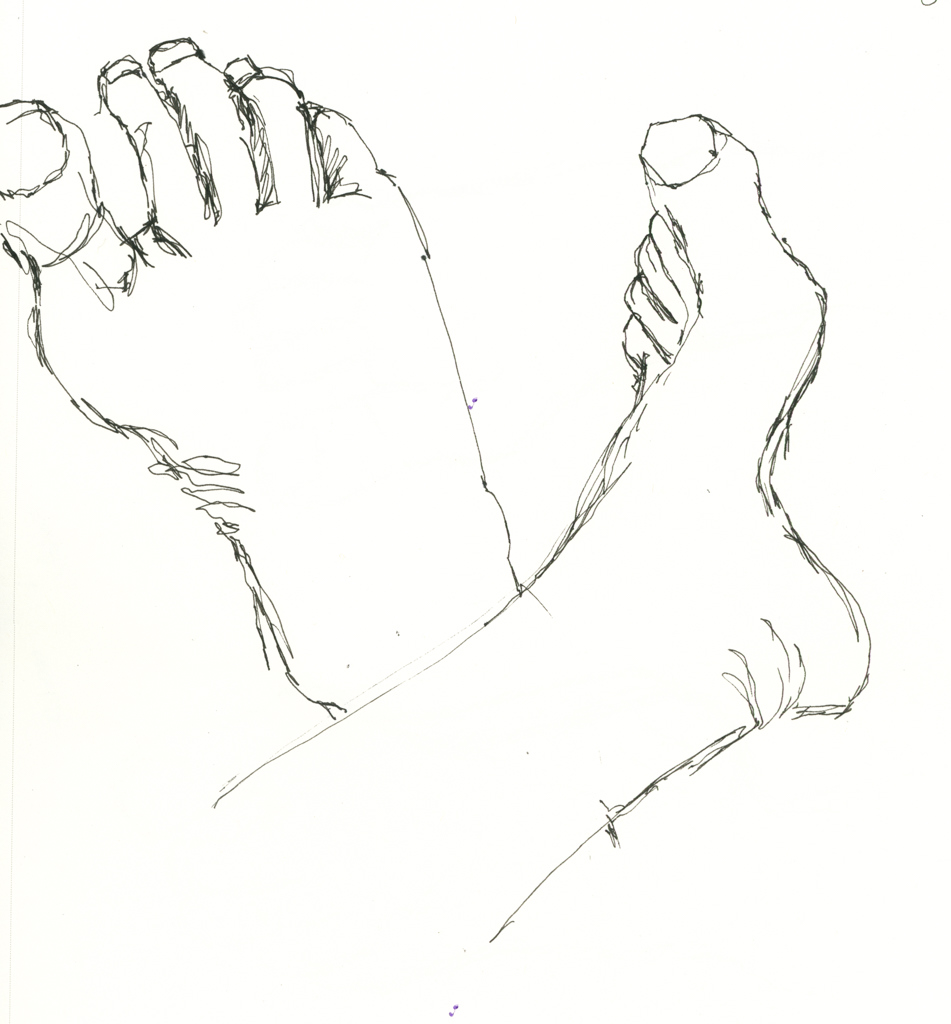
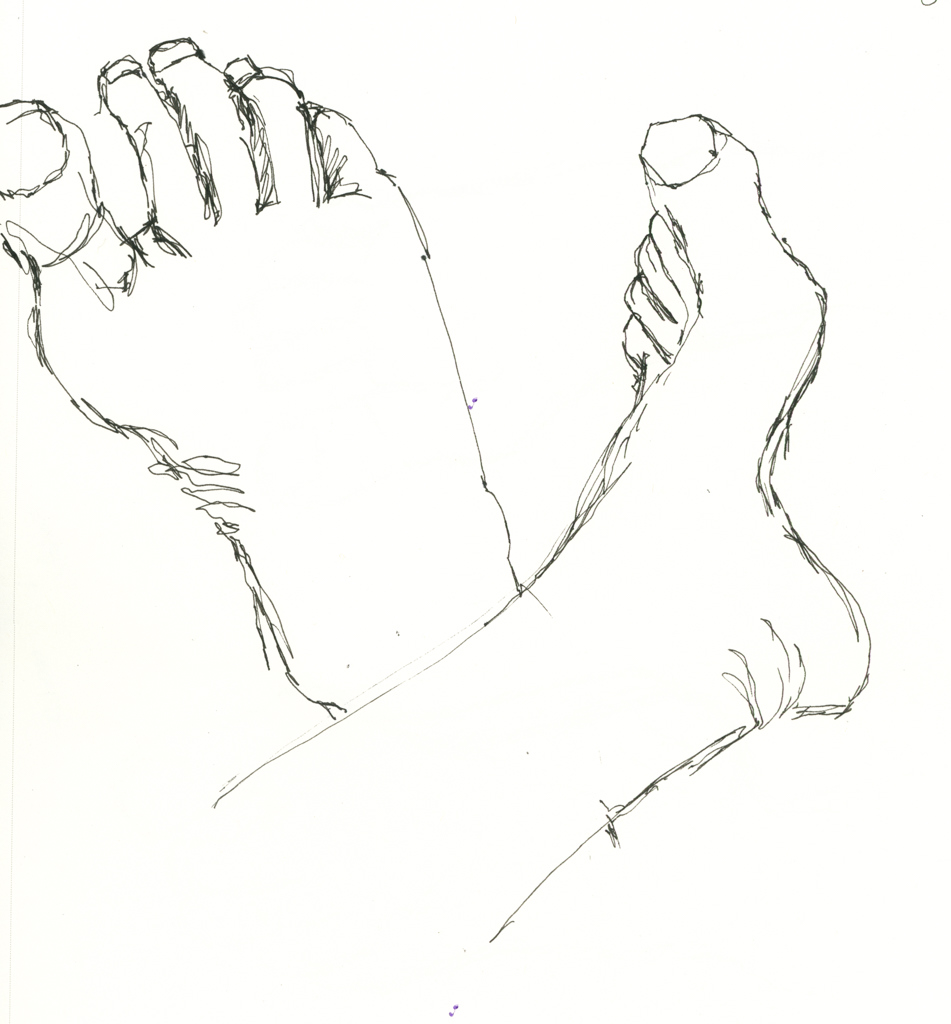
Thus, with no further ado, here are my beginning exercises from Keys to Drawing: Contour drawings of my feet and left hand.

Yeah, I really do have a big gap between my great and second toes!

The first exercise was feet – I did three but did not include the first. Dodson says, “Look, hold, draw.”  Look at whatever you are drawing, observe the curves and angles, and put them down.  Spend more time looking at the subject matter to see if you are getting the lines correct, not if you have a good drawing.  (Ah, monkey mind!) As I progressed, things got better and I began to look at relationships of this to that, and things began to improve. 

And that, she said, is what I want to do.