WWM #1: Primary Palette

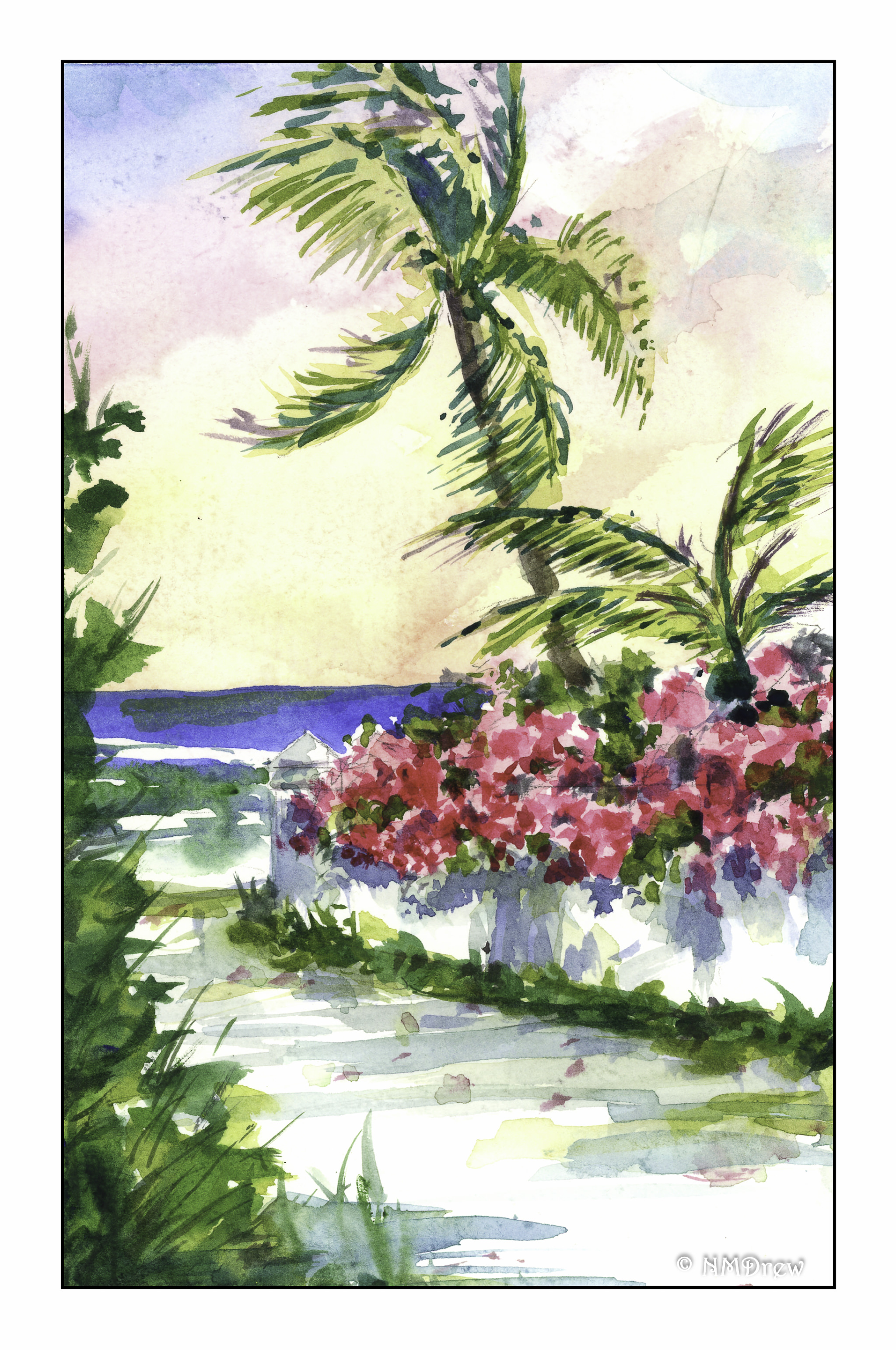
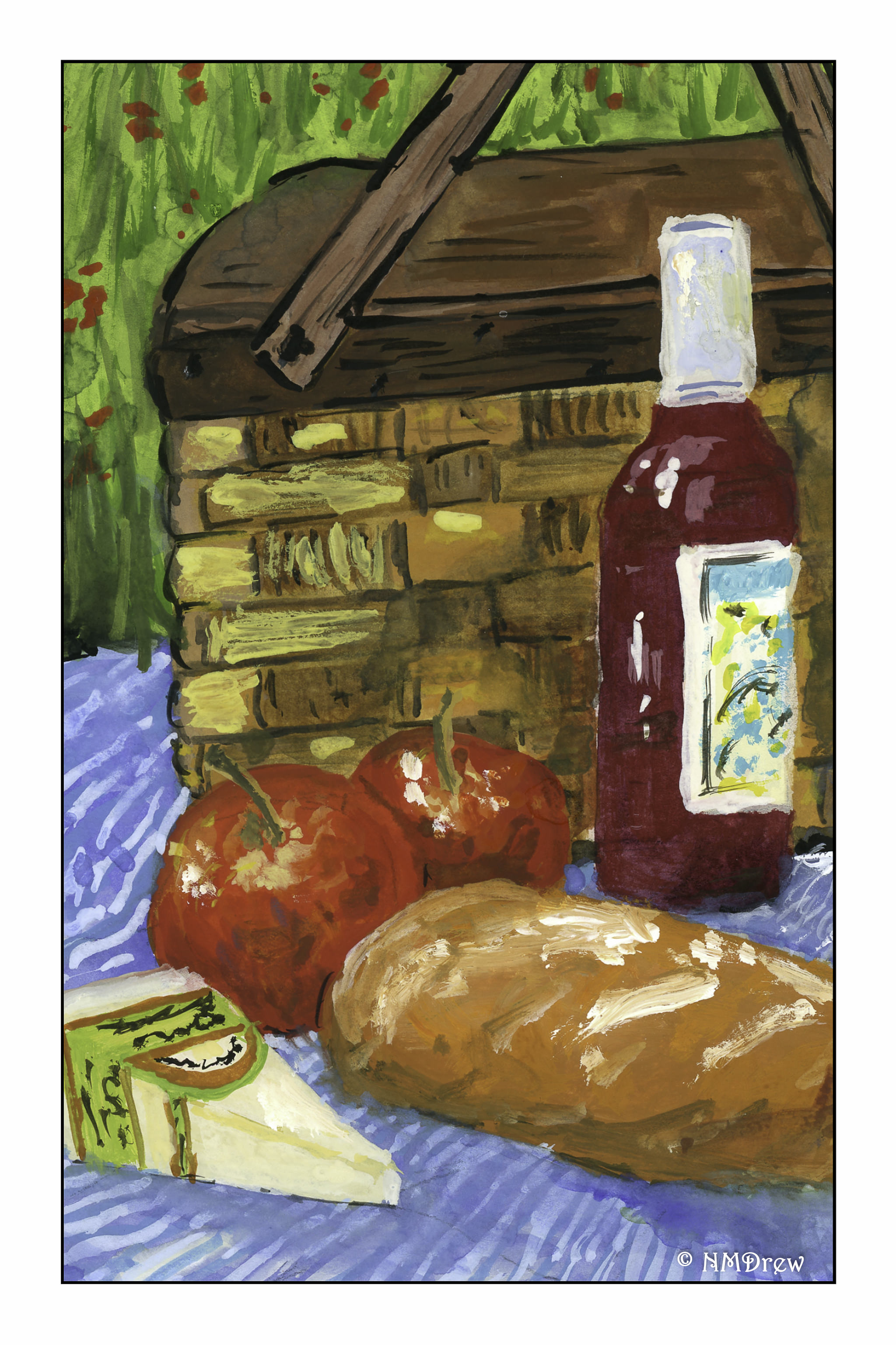
The very first entry of #WorldWatercolorMonth!  The prompt is “primary palette” and so I chose a painting that predominates with the primary colors of red, yellow, and blue.  From there, secondary colors were mixed, such as oranges and greens.  With gouache, water may be used to thin the paints, but white and black are often used to lighten or darken colors as needed.  Given the fact I haven’t done much painting over the past 2 or 3 weeks, this one worked out rather well.  Let’s see what happens tomorrow!

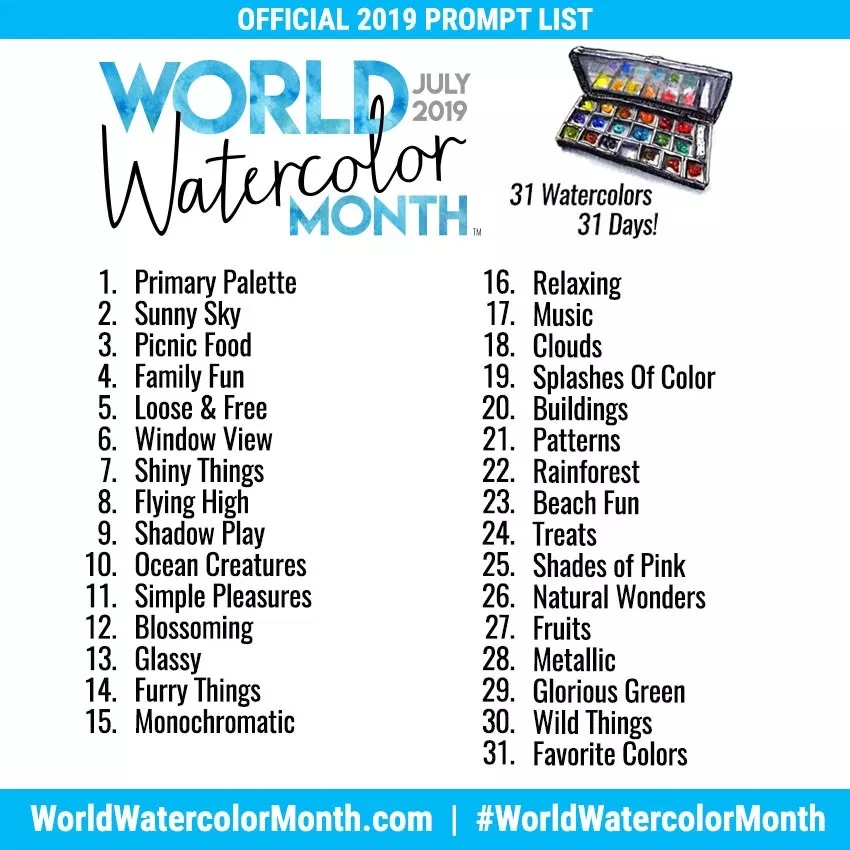
World Watercolor Month: July 2019

Communities sometime just happen, and sometimes it takes the vision of an individual to make the community happen. 

In this case, Charlie O’Shields has done both.  He created Doodlewash, and from there, he has created World Watercolor Month.

This year I am going to try to do a painting every day in July for World Watercolor Month.  In the past few weeks I’ve fallen off as I have veered into ink making and indigo dyeing.  Now, time to return to a good daily habit.  I think daily artwork is like brushing your teeth every day – it makes for a more pleasant start to the day!

I did Inktober for most of the month of October 2018, and it was a wonderful process, and in doing it I learned so much.  Pen and ink is black and white and World Watercolor is with colors, in the form of gouache or watercolor – or probably any other water-based medium.  I expect I will learn a lot by being focused on this as well.  Because I am attempting to learn gouache and improve my poor watercolor skills, maybe I will alternate medium daily – like odds for gouache and evens for watercolor.  What do you think?

Use the hashtag #WorldWatercolorMonth to draw people to your work if you participate.

Under the Oaks

This past spring in California has been one of the most stunning I can recall.  A long period of rain, extending deep into May, produced a situation in which flowers bloomed, and bloomed, and bloomed.  There are still traces of colors – golds and yellows mostly – on the hills when normally the color is beige and dead.  The richness of the wildflowers made the landscape, whether on the hills or under the trees, in the meadows or alongside the freeway, a wonderland of color.  I am still sorting out photos and memories as sources for paintings.

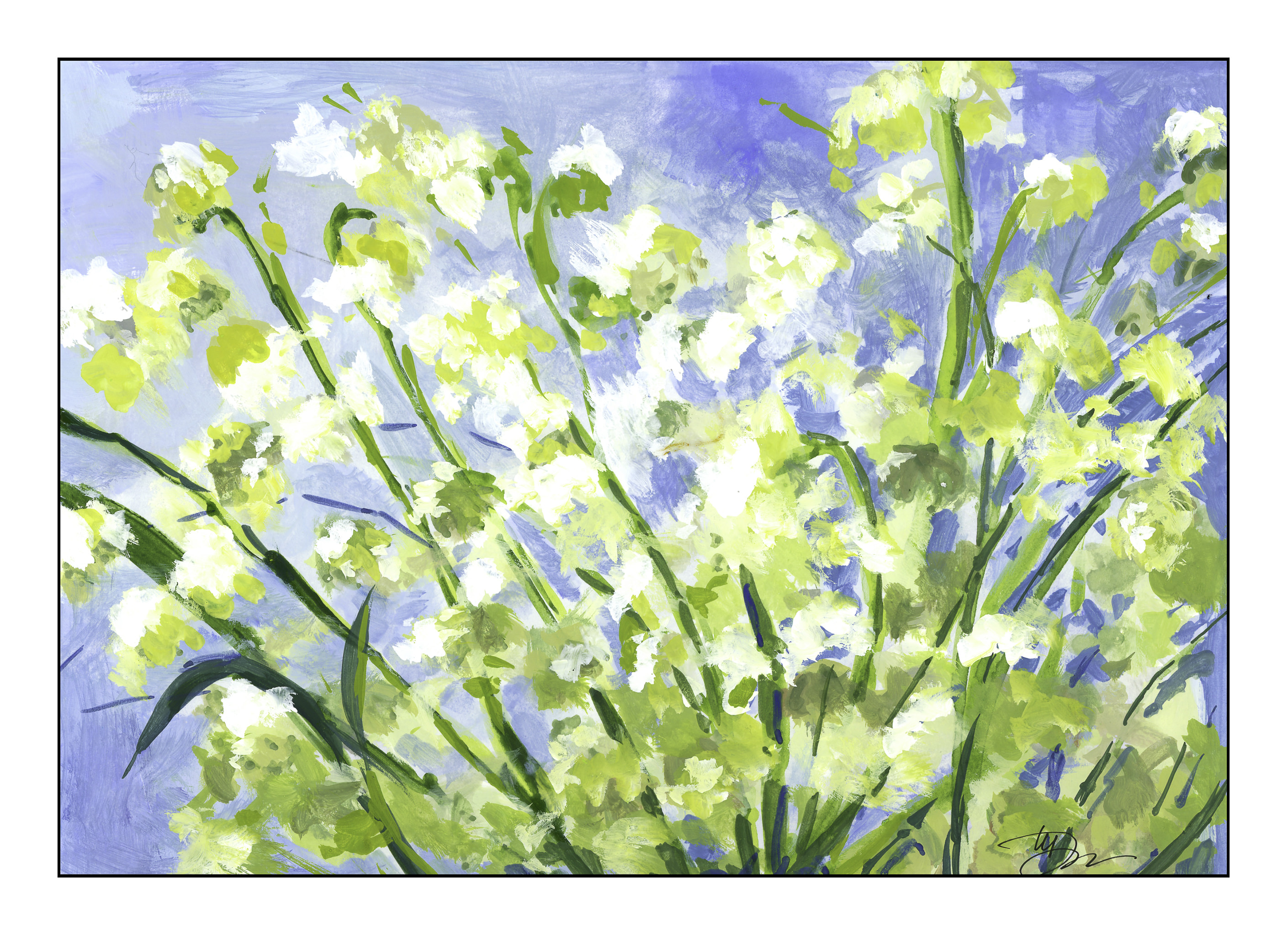
This is an underpainting for the gouache painting I did today.  Wildflowers under the oak trees along a local trial – lupines, wild cucumber, white and yellow flowers of known and unknown species.  Here, a la James Gurney, I decided to do an underpainting using casein paints.  He suggests casein as the underpainting as it cannot be picked up, as can an underpainting of gouache, once it dries.  It primes the paper, too.  While the smell is rather gross, the substrate it creates is stable and I rather liked using it, not just for what it did for the paper, but to lay in some values as well.

From there, I moved into remembering – thin layers to thick in gouache, building to lighter colors and thicker layers as you move along.  I’ve watched a number of videos on YouTube to get a sense of the process.  In particular, I have enjoyed the videos on gouache by Sarah Burns.  It’s rather strange to me, but it worked out.  Below is a painting of blue-eyed grass and white flowers under the oak trees in this stunning California spring.

A View from Above

More gouache!

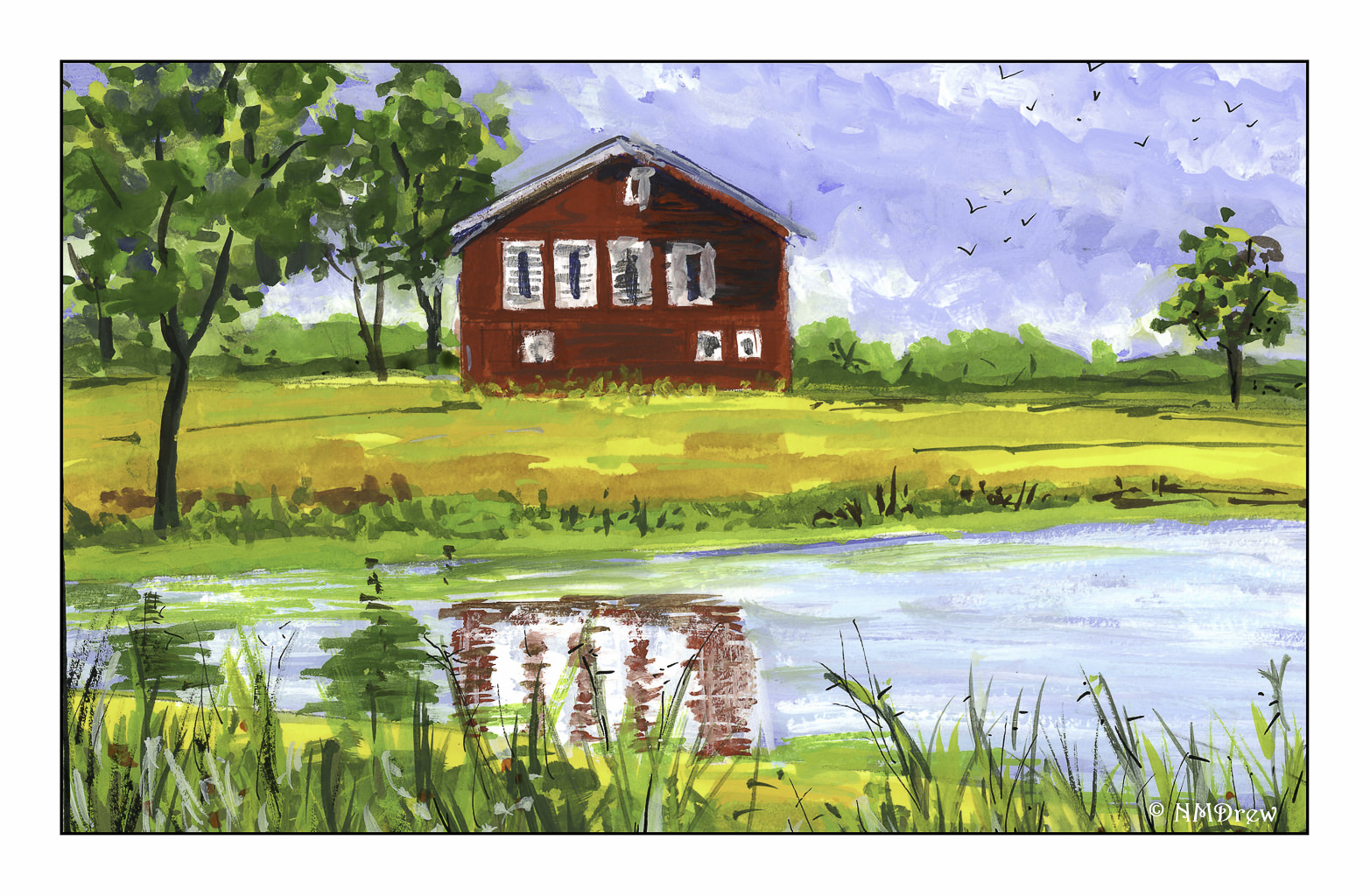
Gouache apparently is best used straight out of the tube.  I put a bit of each color I have into a covered palette, and the result is the gouache dried out fairly quickly.  Today, I managed to make a hybrid painting it seems – rather watercolory and transparent, and rather gouachy and opaquish.  To see if I can rehydrate the gouache, I put a couple of drops of glycerin into each well along with a spray of water.  I’ll test them out tomorrow.  I hate to think of wasting a lot of paint – it’s not cheap, even on sale for 40% off.

There are some “rules” for painting with gouache.  One is thin to thick paint, and dark to light paint.  Each layer of gouache is opaque(ish) depending on how diluted it is.  Thus, you can begin with a watercolor-thin wash and end up with a straight-out-of-the-tube thickness.

To begin with, I laid down thin layers of color for all areas – sky, background, middle ground and foreground.  From there it was playing around.  Ultimately the sky and the foreground are more like gouache insofar I used heavier paints, but the middle to background remain less so and more along the lines of watercolor.

Besides using paint in different manners here, I tried to convey depth using atmospheric perspective.  to some degree it worked.  Being able to paint over things was really helpful.  I’m not really sure if things “worked” or “didn’t work” here – but I do know a bit more about how gouache can be used, and, as with everything, practice helps out a lot.

As fascinated as I am with the gouache, I also know I need to continue working on my other artistic goals of drawing and watercolor and perspective . . . so easy to go down a path and ignore everything else I want to do!