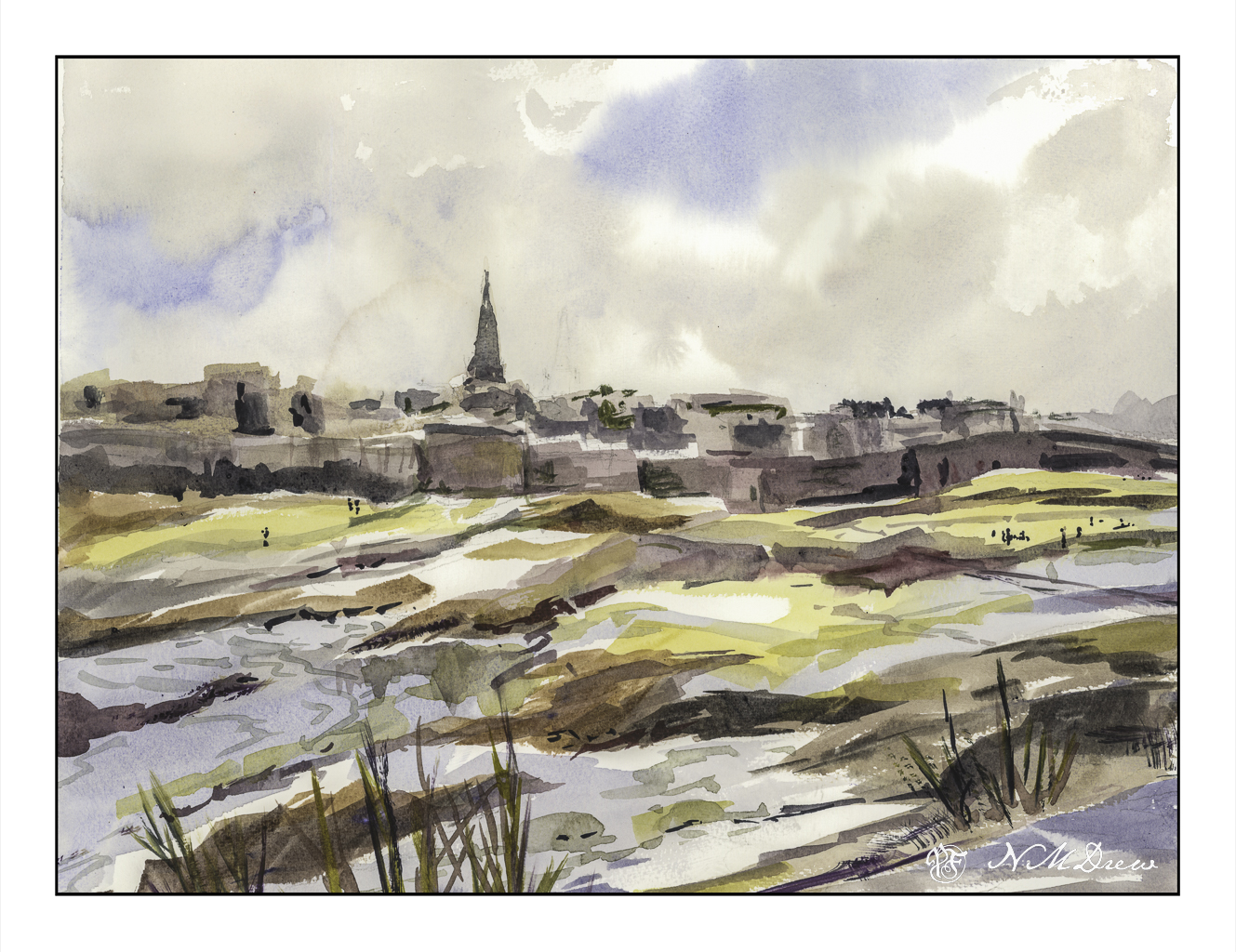
Beach at Saint-Malo

Remember the story All the Light We Cannot See? Ever since, the city has intrigued me. The story is worth reading, and if I remember, the movie was decent as well.

This painting was a quick one, and it turned out pretty good in my opinion. The point was to just paint, as well as to try out a new-to-me watercolor paper. This paper is St. Cuthberts Mill’s Bockingford paper. It seems to be a fairly soft paper as the tape around the edges of the painting pulled up some of the paper even though the tape was on the paper itself for only a short time. Using the heat of a hair dryer solved this problem, like it usually does. I liked this paper, though it does buckle a bit more than I expected when wet, but in the end it has proven to be well behaved.

Initially I scanned this painting on my Epson V600 scanner using the Epson software. Contrast was harsh and the sky barely showed up. I have had issues with watercolors and the software before – not at all pleasant to see – and then I suddenly remembered I have VueScan by Hamrick. I closed out the Epson software and fired up VueScan – and, oh, what a beautiful difference! This software is something I bought years ago, and I never really thought about using it for watercolors – I use it for photos I plan to run through Negative Lab Pro. Well, I guess I will have another use for it as well! Sheesh.

Watercolor, St. Cuthberts Mill Bockingford, 12 x 16, CP 140#.
Manzanar #1

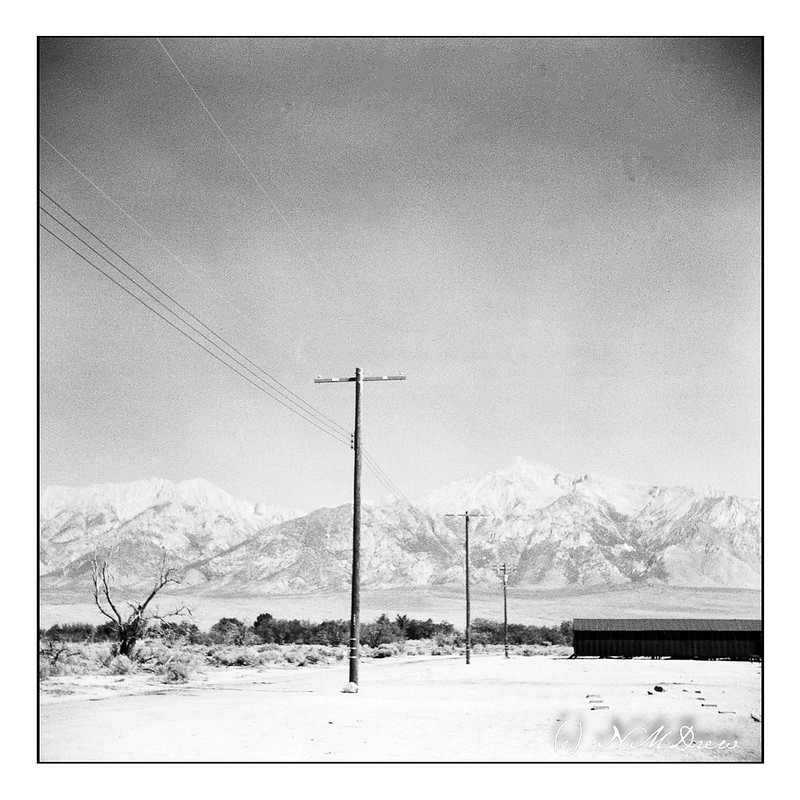
Manzanar 1

In 2021 we headed out on what was to be a 3 week long road trip. The first part was up the Eastern Sierra along Hwy. 395, stopping and staying in Independence, CA. One of the most notable places to see along this route was Manzanar National Historic Site – a not very nice part of US history. It is a Japanese internment camp which was built for imprisoning Japanese Americans, natives of this country, and therefore citizens, as well as immigrants.

I took along a digital camera, and a folding camera, the Zeiss Ikon Ikonta 521/16. Only now am I scanning the film – it took quite some time to finishing up the roll! I used Kodak TriX 400 and got twelve 6×6 images out of the roll, which is 120 film. To process the film, I took it to a local lab and then scanned it myself using the Epson V600 and Negative Lab Pro in Lightroom.

However, the trip ended when we got breakthrough Covid. We headed back home, sadly, but better safe than sorry, eh?

Work to Do

This is really a result of the road trip – more of that in other postings! – a lot of slides being scanned by yours truly in two different systems, with two different results. These slides are from ca. 1951-1960 and were taken in Illinois, in Chicago and the rural area where I grew up. For some reason after that the only family pictures we have are school pictures, and they are not really exciting to look at.

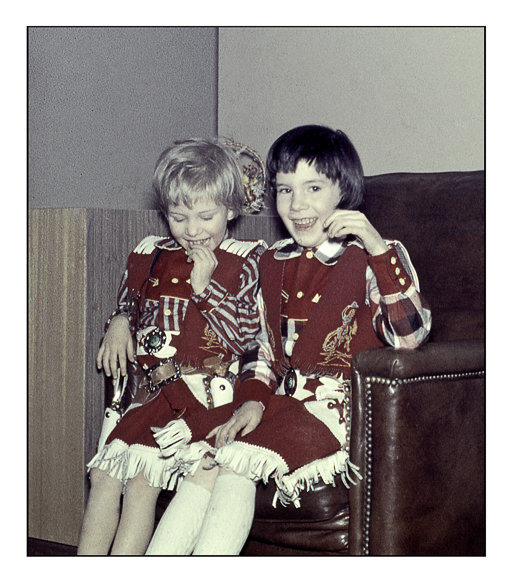
My sister and me

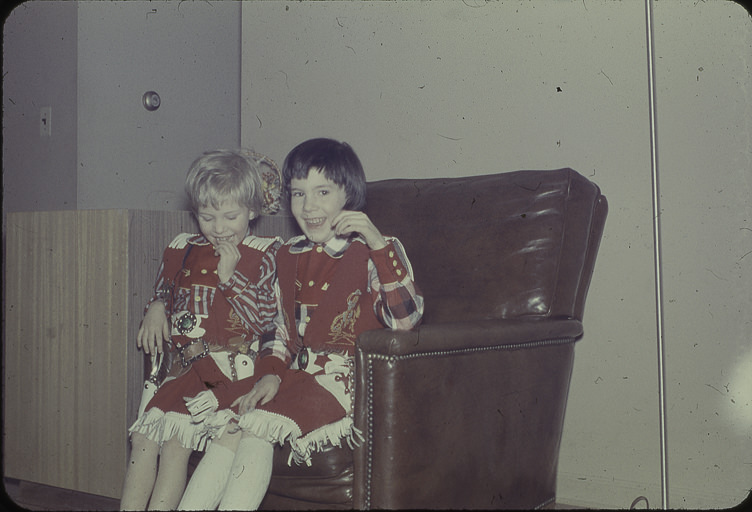
The slides were taken with both Kodachrome and Ansochrome. Both have deteriorated, lost color, collected dust and threads. Cleaning them up is not easy, but software – the right software – helps in that regard. Above is a slide I cleaned up and cropped using the Epson V600 flatbed scanner, Lightroom, Photoshop, and On1 Photo Raw. Dust removal with the Epson software was not really great so I spent a lot of time erasing the debris on the slide. You can see the original slide below.

Dirty slide . . . dust and schmutz everywhere!

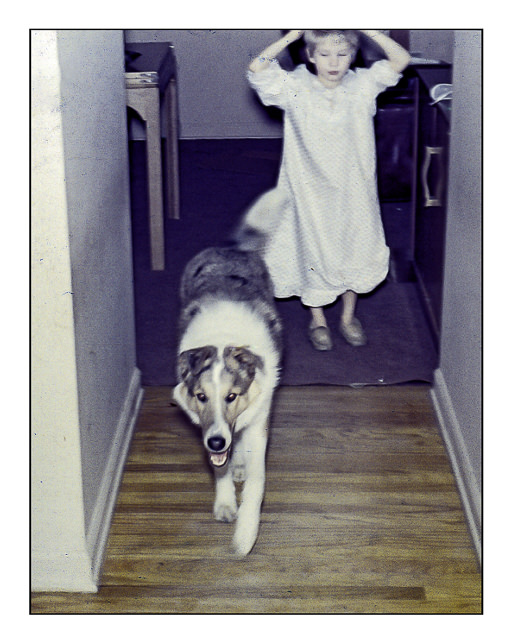
I have no idea what kind of camera my parents used in those days, but I am sure it is a 35mm camera as this is a Kodachrome. This next image is from an Ansochrome slide of yours truly and our dog Siwy (pronounced shee-veh, or as we said, shee-vee). I used SilverFast 8.8 and my PrimeFilm XA Super Edition to scan the slide.

Siwy and Me

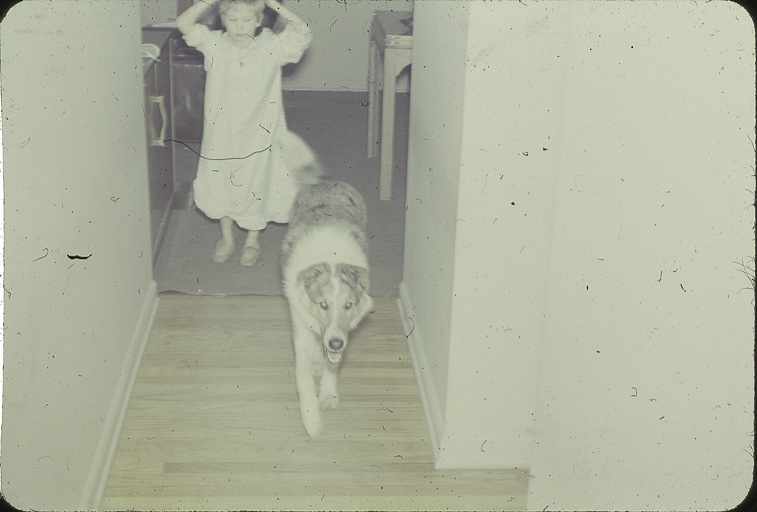
Silverfast has a really good dust and dirt removal in its SE software – you can get this for free with a lot of new scanners. A lot of people think it is hard to use – maybe if you don’t want to play a bit – but I have been really pleased with it. There were still areas after the dust / dirt removal I needed to clean up, such as areas where the slide had deteriorated. Sharpness, too, was difficult to work with. Below is the original scan of the slide so you can see the difference.

Epson V600 Scan

The combo of SilverFast and PrimeFilm scanner create a relatively clean scan – I wanted you to see all the dirt! Finally, I did the color upgrade / modification in On1 Photo Raw using a preset I made.

Our family doesn’t have a lot of photos and little knowledge of family history. My mother’s family were immigrants and their family vanished after WW2. We never had much contact with my father’s family for all sorts of reasons. When we go, our branch of the family tree disappears. Editing and recording these slides is for my pleasure and that of my sibs – if they think it is of any interest.

Am I living in the past and not looking to the present and future? Am I getting mawkish and sentimental? It’s hard to tell. History has always fascinated me, so perhaps our little bit of history and that of the world is impetus enough. Of course, editing photos is a bit of fun, too, so why not?

Modular Medium Format: Mamiya 645 Pro TL, Part II

I am gonna keep the beast! 

The image above has the waist level viewfinder, which I would like to have.  I have the eye-level viewer complete with automatic exposure and a hand grip with film advance.

There is a really good review of this critter over at Emulsive, which is a great website for reviews on older cameras.

Everything worked out really well, auto-exposures and ones from reading of the Sekonic light meter, as well as my own guestimates!  Totally happy!  And what I like even better is the distinctive look of the 80mm f2.8 C lens that came with the beast.  Add to that, the Negative Lab Pro has been a real worthwhile investment for post-processing.

In order to check out the camera, I loaded a roll of Fuji Pro 400H, a film which has great color and latitude.  Its color is not as intense as Ektar, but it comes close with the brilliance of the colors.  I just shot around the house and neighborhood.  There is absolutely nothing outstanding about these images except to prove the camera works, and works well.  The whole point was to learn about the various aspects of the camera, both automatic and manual.

I handheld the camera for all these images. Friday I am expecting some of the proprietary Mamiya lugs to attach to a camera strap so that I won’t be as likely to drop it. The hand grip is a great handle, but I have read of people almost losing the camera from depending on the hand grip – somehow, the grip got disconnected from the body. At some point, I will get the waist level finder as I enjoy using so much on my Yashica D that I know it will be a good accessory. Because it is such a large camera, if I do get any other lenses, I am likely to limit myself to a macro lens. Other than that, at this point I don’t plan to accessorize it too much. I like the way it currently is, but if I want to go hiking, a lighter set-up would be good.

Altogether, I am happy with my decision to go with a modular medium format camera.  However!  G.A.S. is setting in . . . 6×7?  4×5?  Oh, dear me!

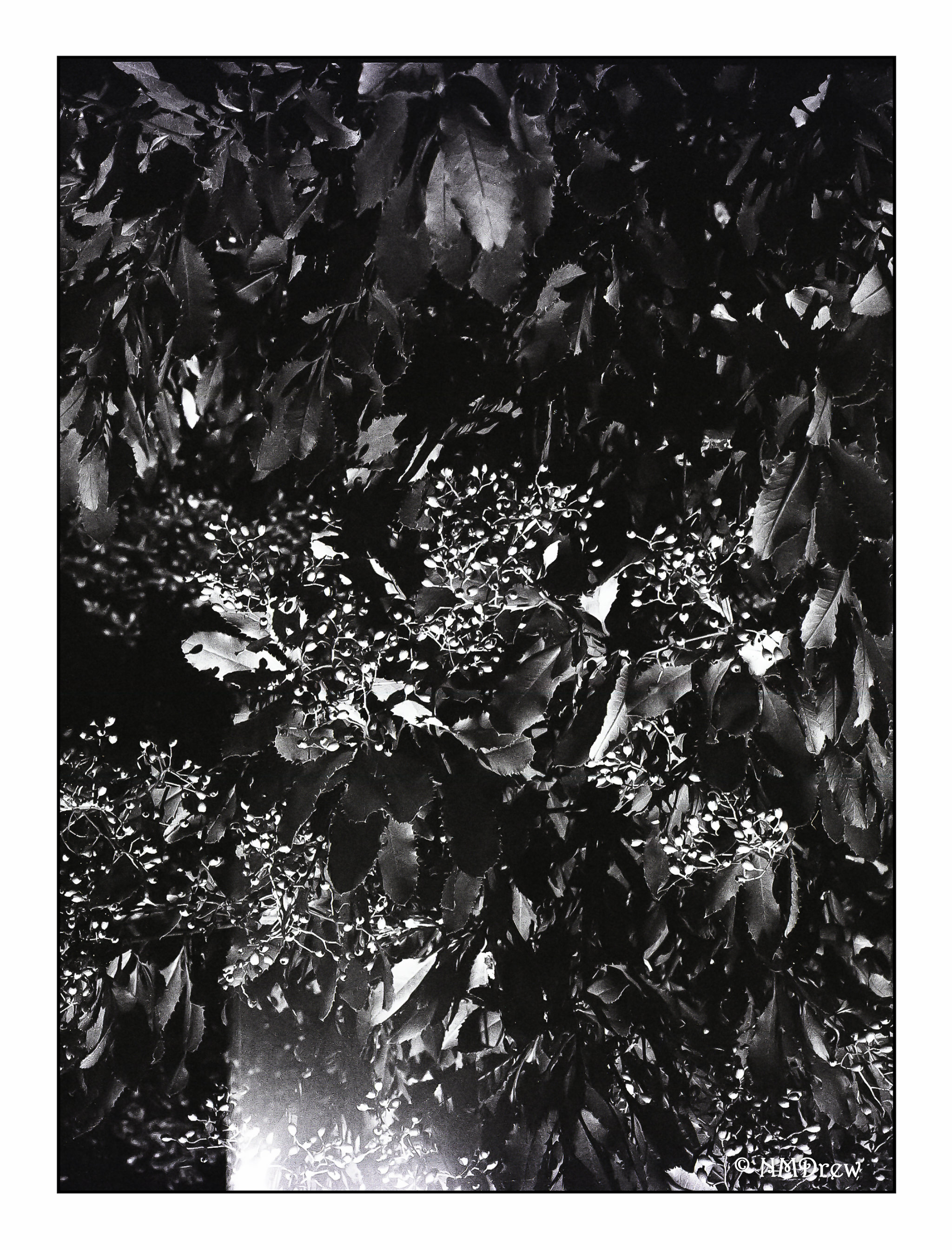
Spiney Leaves, Berries, and a Light Leak

I decided to send the Welta Weltur our for a bit of a CLA.  The rangefinder / viewer is a bit foggy and makes it difficult to focus easily.  That is taken care of by using a smaller f-stop, thus increasing the DOF.  I am not sure how this light leak occurred – perhaps when it was being developed.

Taken with Ilford XP Super 400, Welta Weltur from 1937, Xenar lens.  Guestimated exposures.  Scanned with Epson V600.