
By Flashlight

With winds blowing at 40mph, the fear of fires was intense. Electrical lines spark, grasses and brush catch fire, and before you know it, the world is lit, not with electricity, but with flames. As a result of this – PSPS (Public Safety Power Shut-off) – we had no electricity for about 36 hours. What do you do when the sun goes down, there is no phone, no TV, no electricity? You read, you chat, you play games by candle, and paint by flashlight.

Rather than try to be creative, I got out a couple of art instruction books, one by Geoff Kersey, and one by Ted Kautzky. All of these paintings were done with limited palettes and by following some instruction to create a painting from the book.

The one above is from Geoff Kersey’s book, using only red, blue, and yellow. No more. It was the first one I did, and there was still some daylight, but very little, in my darkish studio. It was evening, and the studio window faces east. I used manganese blue, cadmium lemon, and cadmium red.
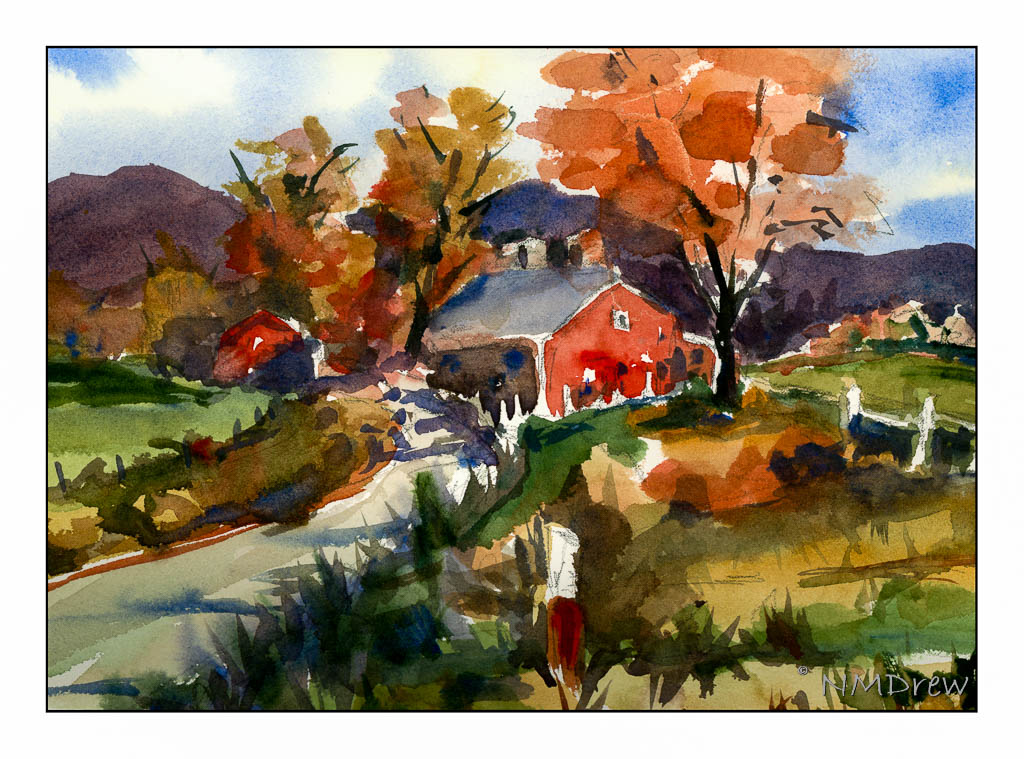
This one is from a Ted Kautzky study. Less light and more moving my little flashlight from book, to watercolor paper and drawing, to palette. Colors were verditer blue, cadmium red, Hooker’s green, and raw sienna. Verditer blue doesn’t seem to mix well with other colors, but is a lovely blue by itself. Four colors!

Now we are moving into big time! Here, five colors. Payne’s grey, ultramarine blue, aureolin yellow, Hooker’s Green, and burnt umber. Another study from Ted Kautzky.

I enjoy doing studies from books – it helps focus a bit. I also realized that daylight is a better way to paint, or using diffused electrical lighting. Flashlights are good to see with, but their light is not diffuse, but sharp and focused. I think I would have had better lighting with a few candles. Anyway, it was a good way to pass some time when the sun set and the vampires weren’t yet out.
Life by Kindle Light

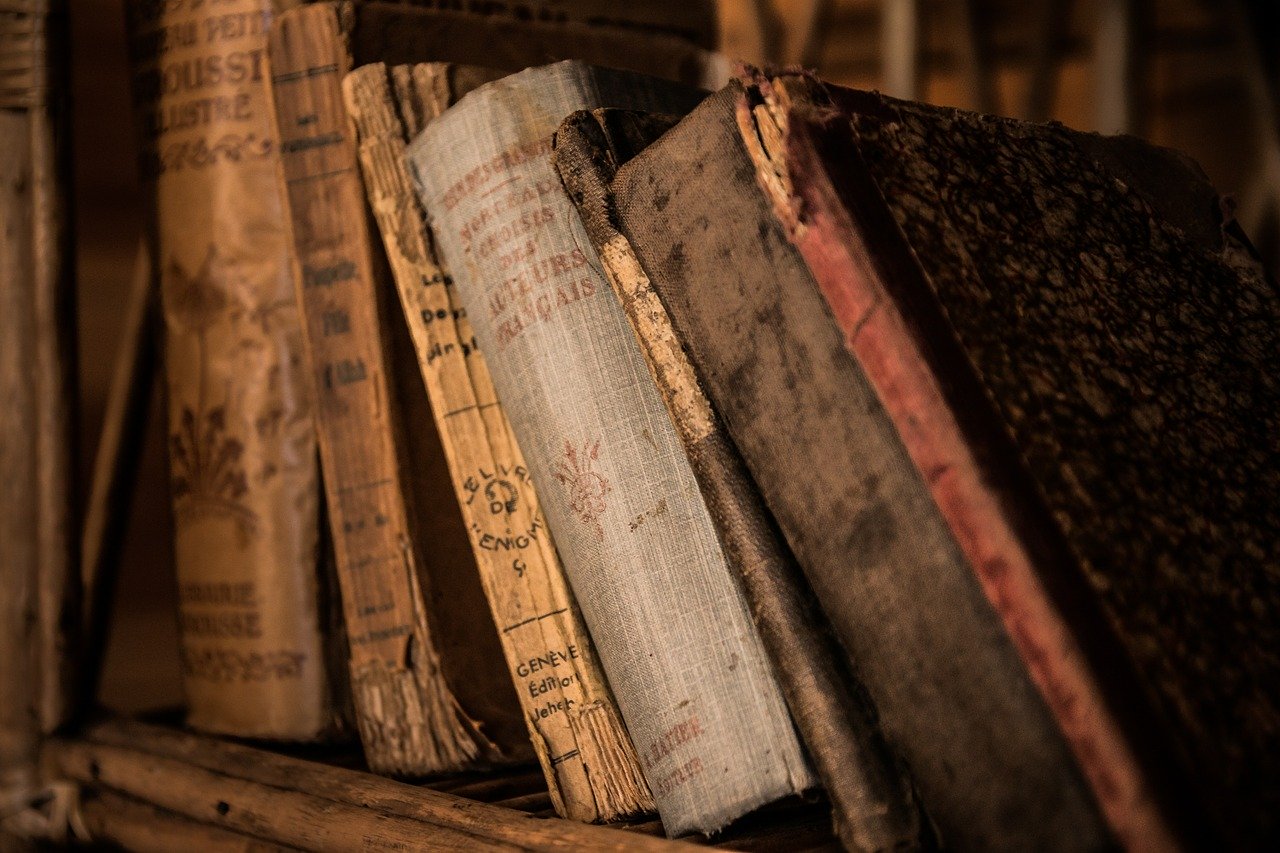
I was an English major in college, specializing in nothing particular, but rather enjoying it as the profs were fascinating.  Have you ever taken a course on Shakespeare taught from a Freudian viewpoint?  Enacted Chaucer in the dialect of the time?  Well, you get the idea.  But if the truth is told, I am truly a reader of modern trash more than classics, and I often wonder about my tastes.  It is only in the past few years that I have returned to more classical literature, admittedly in small doses, and of the early 1800s British variety.  This means Wuthering Heights and Jane Austen and Frankenstein.  The cruelty in Bronte’s book was stunning – I remember the hanging of the puppies, done out of boredom, with horror.  Shelley’s monster is heartbreaking.  And Austen?  She is fluff by comparison, with a lightness that is like a summer breeze that can roll into capricious bursts.

It is quite funny to read Pride and Prejudice on my Kindle.  A novel written with a quill and iron gall ink being read on an electronic device is quite a shift in time.

And then the electricity fails mid-afternoon.  Sewing is out of the question (though I could use the treadle or hand-crank sewing machines), as is baking (I wanted a coffee cake).  I went out to the side patio to listen to an audio book and comb out one of the dogs.

No electricity!

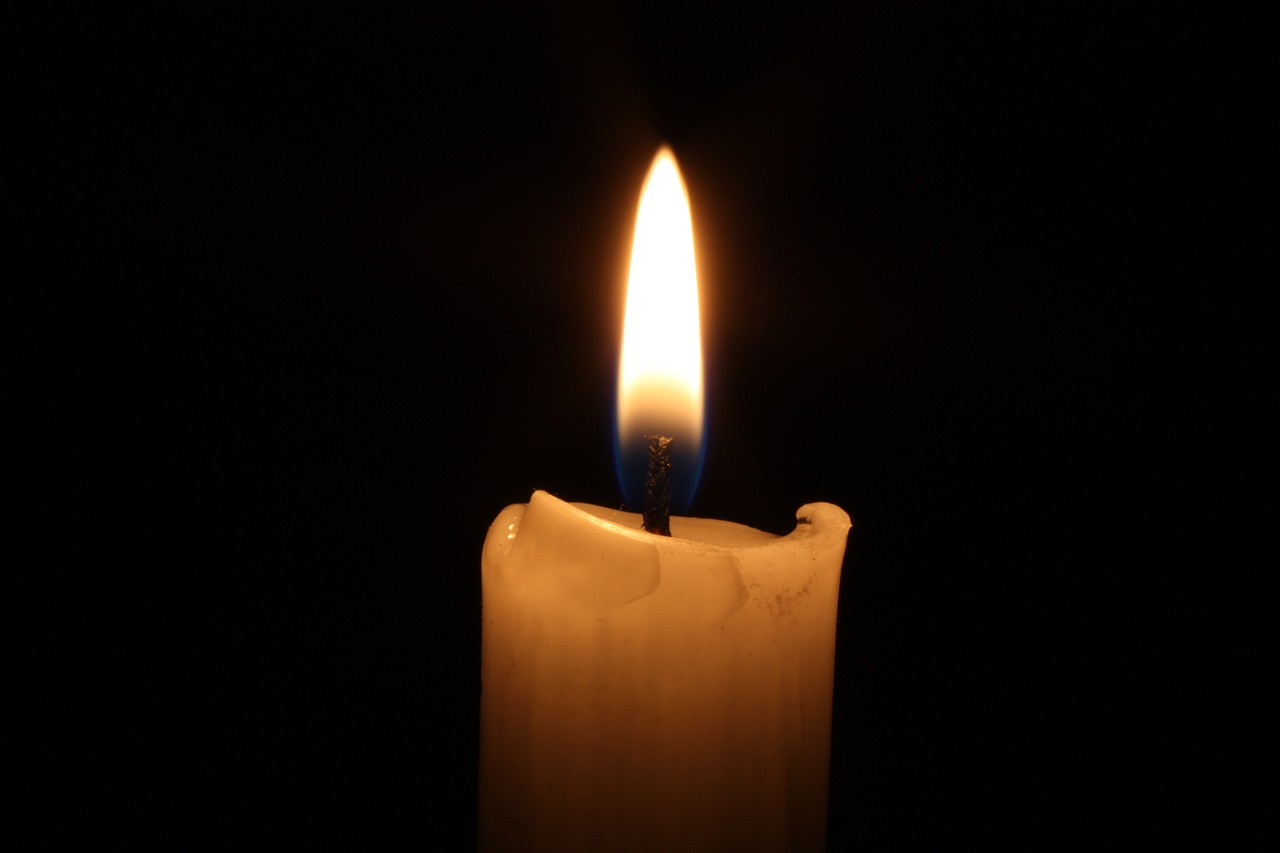
What do you do when it gets dark?  All the USB devices were down to their last jolts of current.  As light faded, I found my little section of town was dark, but two doors down the lamps were bright.  I had a flashlight or two, and I had candles.  Out came the candles, out came the Kindle, and on with Jane Austen, Darcy, and Miss Bennet!   Wandering around the house, I found my way with the light of my Kindle, not wanting to drip wax on the floor or carpet, much less myself.

When the esposo came home, it was pitch black.  We went out to dinner – who wants to scramble eggs using a flashlight to see by (or a candle) over a gas flame? Off to the other world to dine, and then return, once more, to our black hole.

And then to bed with the Kindles, to read Jane Austen and Terry Pratchett, to remember where the flashlights were, and hope there is electricity by dawn after a projection by the electric company that civilization would be restored by noon the next day.

And so it passed . . . the electricity returned in the middle of the night, the lights went on, the devices squawked, and the candles were, once more, obsolete.