Dry Hills in Malibu

Yesterday I started an 8 week course in pastels. Already I am in love with the medium! Add to this, the teacher is a real teacher – she is a professional who teaches full time in an elementary classroom. She is organized, states what she expects, interacts, demonstrates, and all the things that are so important in learning something new. Some teachers just say “have at it” and you stumble along, not knowing what you are doing. Yes, experience is a good teacher, but explanations and clarity really help one understand what is going on. I am looking forward to more classes!

Here is a picture from the Malibu Creek State Park near where I live. We all had a copy of a photograph to use, and then she explained the Rule of Thirds, the Golden Mean, and explained how she changed the composition of the photo to meet the needs of the Rule of Thirds. Value studies, too, were done before even picking up a color.

We used Nupastels, made by Prismacolor. Inexpensive but very nice. I have some Rembrandt soft pastels that I will use later on, or in conjunction with the ones we have in the classroom. As I love colors and drawing, this is a perfect combination of “things” – and these pictures are not “drawings” but “paintings” in the lexicon of the teacher.  I never considered a pastel a painting.

I have not been this excited about a class in a very, very long time.
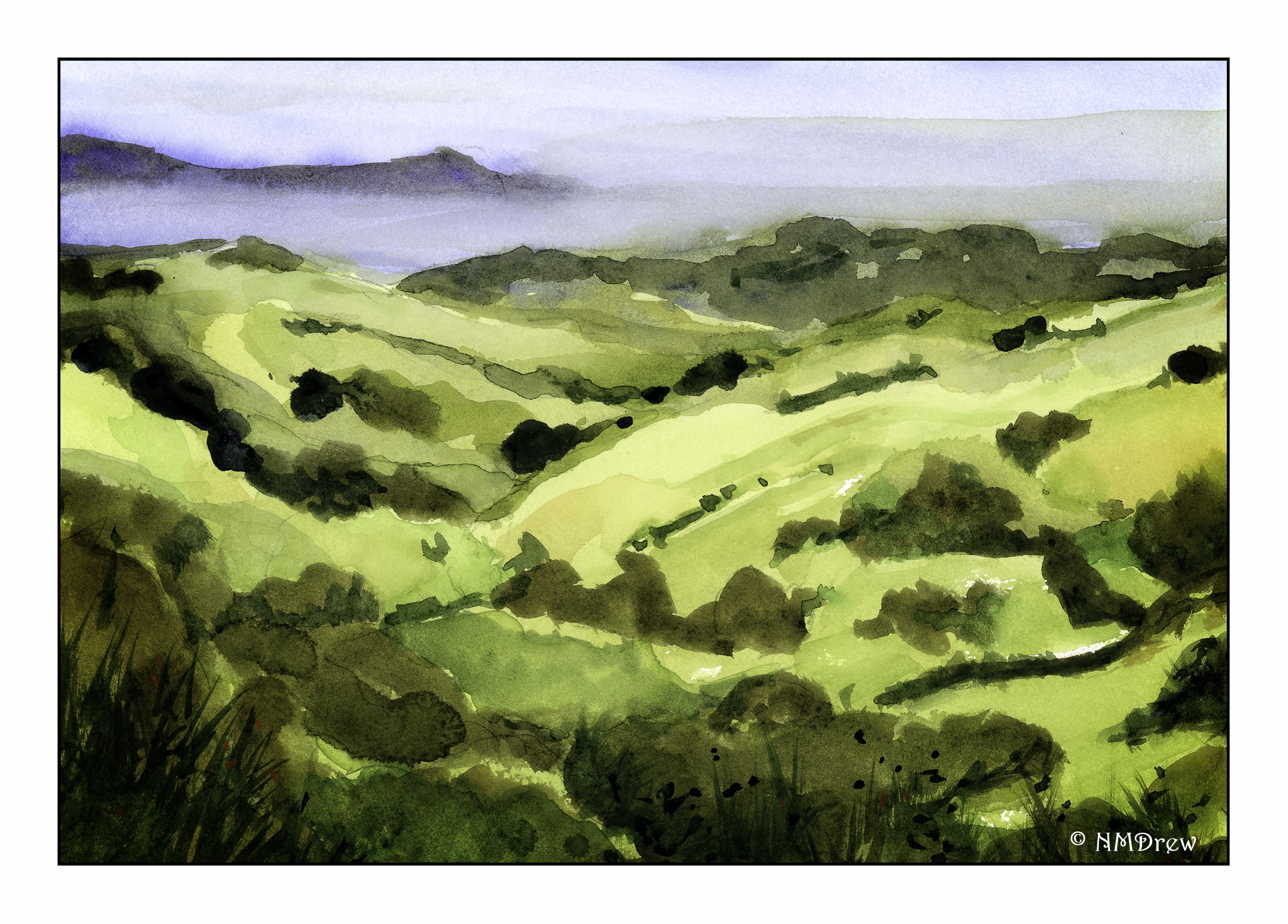
View from the Hills

The miracle of green always happens in the last of the year and the first of the next when the rains come and new growth begins to emerge in the hills of California.  After months of dry weather and fading landscapes. color erupts almost overnight.  Soon, wildflowers will begin to tinge the hills from green to orange and purple and yellow.  Here, a view from the hills toward the Pacific, with the Channel Islands in view, lost in the coastal fog.

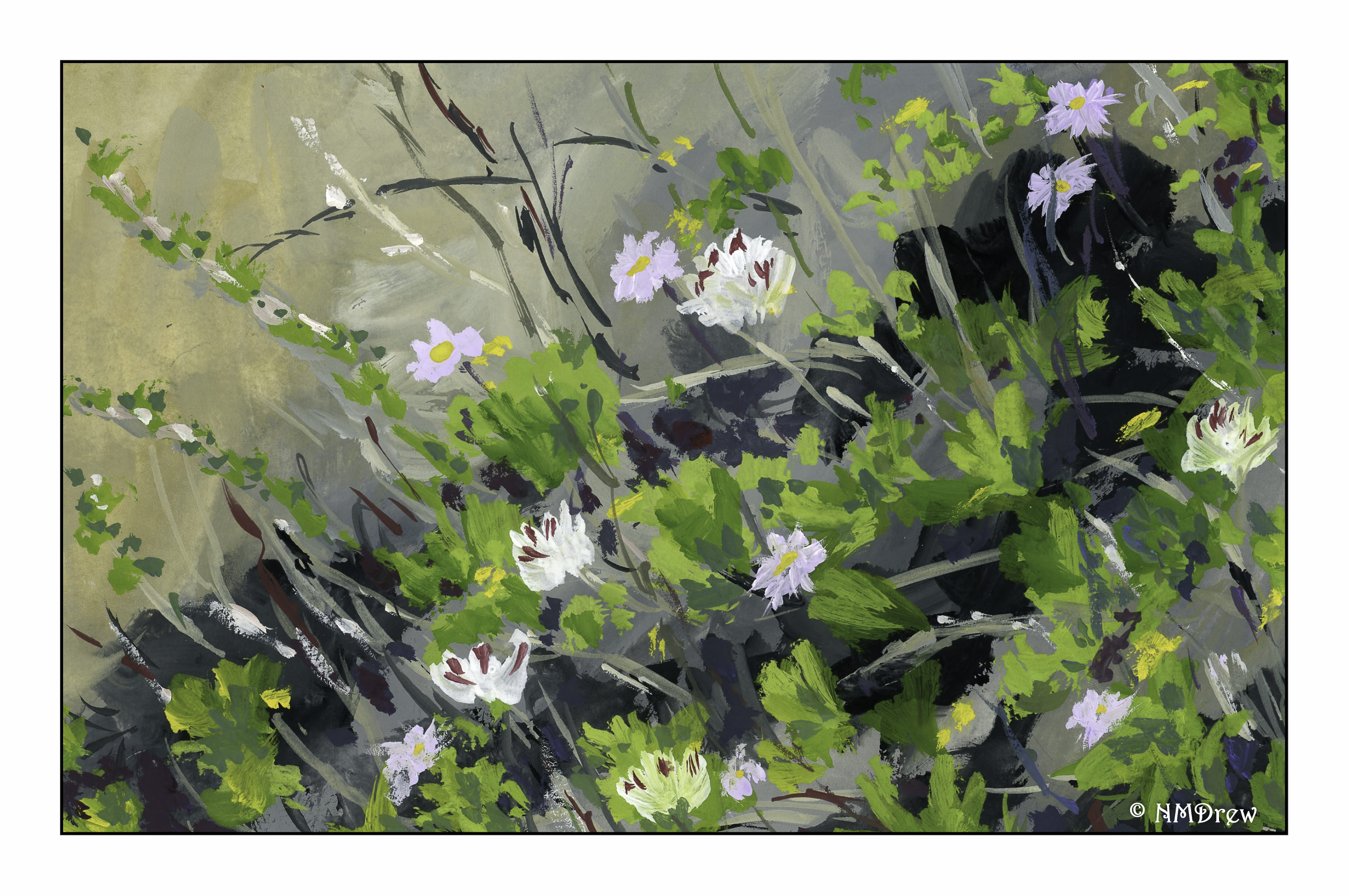
Cliffside Flowers, Pt. Lobos

I took a lot of photos – digital, film – while on vacation in Monterey, California.  Trees, flowers, streets, room.  This is what I saw along the trail at Whalers Cove in Pt. Lobos, California.  The cliffs are sandy and crumbly, but there are bits of very dark dirt, from black to grey.  I wonder if this area had volcanic activity at some point.  The color contrast of the soil and cliffs, along with the tenacious hold of the flowers, made for some rather lovely bits of bright color in late summer.

West of Hwy. 101, Monterey County

We stopped by the roadside to get some gas on our way home from Monterey a few weeks ago.  Rather than taking the main highway, the 101, we ran parallel to it, west, close to the mountains that lie next to the Pacific range.  I’m glad we did.  From the freeway, you can see the fields, the houses, the ranches, but being on a 2-lane bumpy road brings it up close.  The area is vast and flat, a valley between two ranges.  Here, all sorts of crops are grown, and it is really beautiful countryside.

This is from a photo I took with my phone, all with the intention of using it as painting material.  I think it worked out rather well.

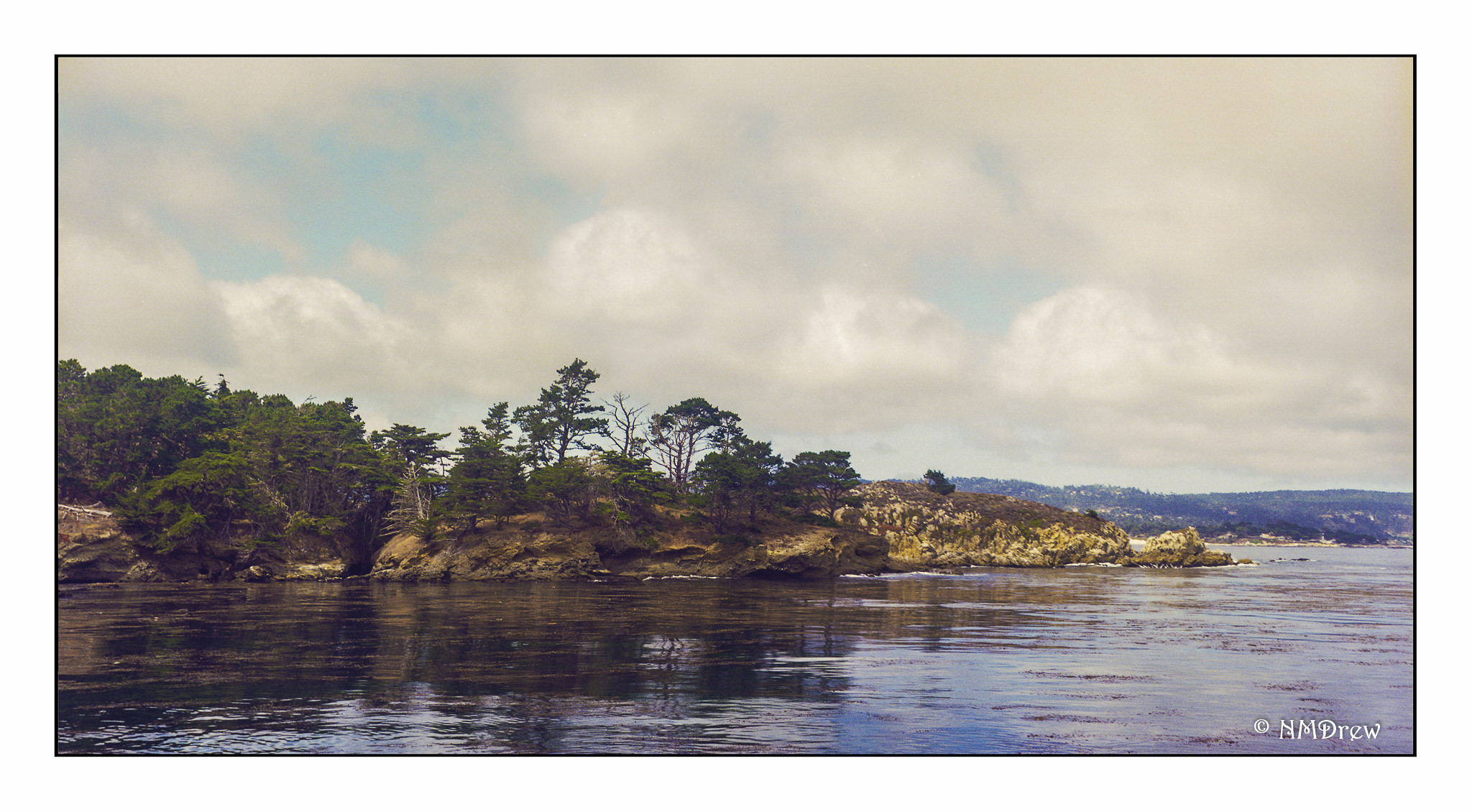
Whaler’s Cove with a 1937 Welta Weltur

There is something so different in the quality of a photo taken with a film camera, rather than a digital camera.  It is apparent even more so when it is done with an uncoated lens from 1937.  The lens in question is a lovely Schneider Kreuznach Xenar 2.8, 75mm, taken using 1937 Welta Weltur camera.  It is a folding camera that takes the still-available 120mm film.  I used Ektar 100 by Kodak, and applied the Sunny 16 rule for manual exposures.

I have a 6×6 version with a 6×4.5 reduction mask.  I thought I had removed the mask – but hadn’t.  All my supposedly square images came out rectangular!  I stitched two images together in PS6 and then tediously removed threads and dots of dust that were apparent even after scanning with Digital Ice on the Epson V600.

This photo makes me think of landscape paintings of the 1700s and 1800s – especially that turquoise sky.  Mayhap a painting will follow.