Along the Shore

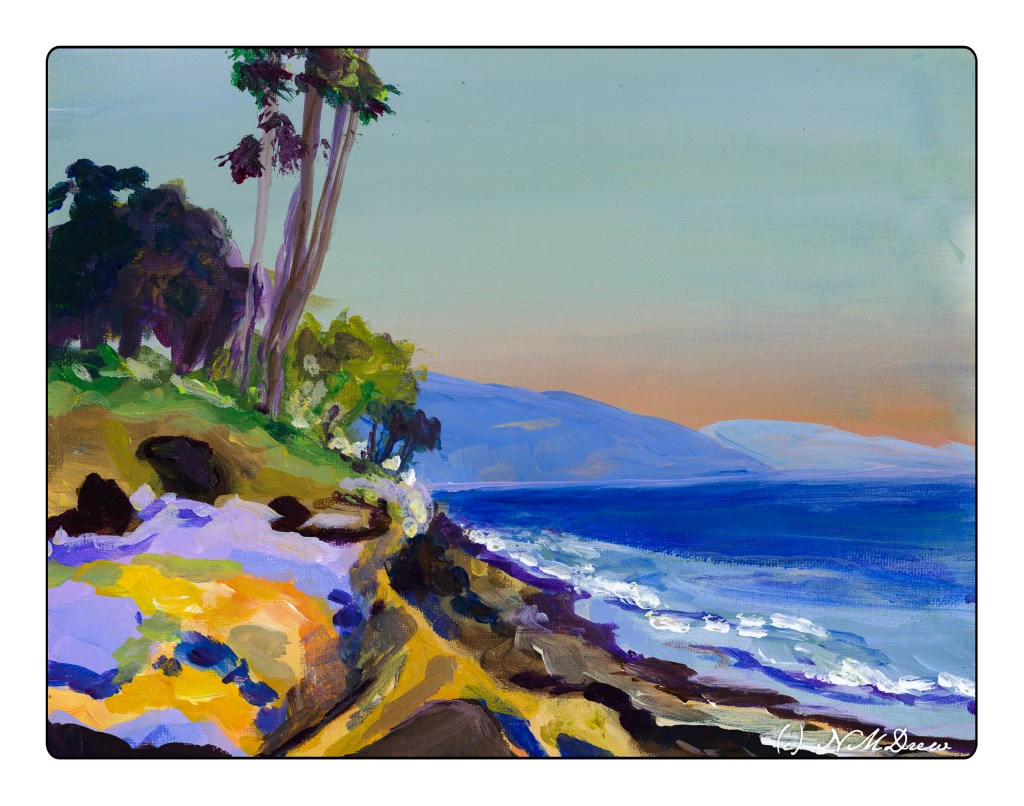
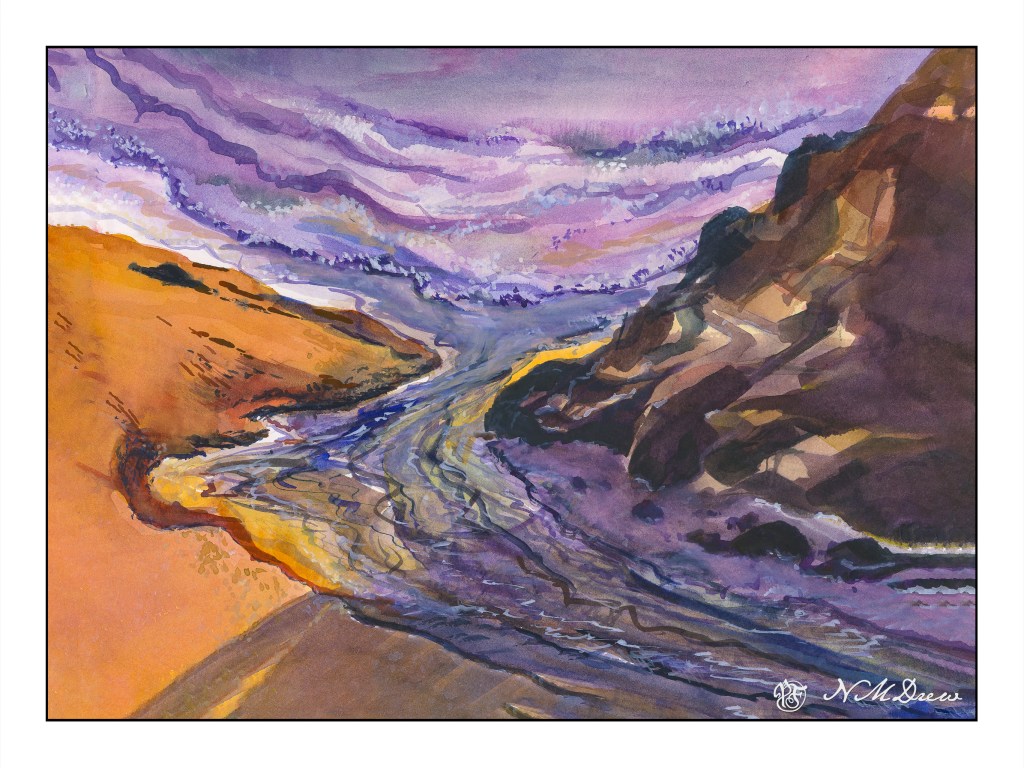
It is always worthwhile looking at the works of various painters, regardless as the medium in which they are creating. The works of Edward Seago have a charm to them which is old world, peaceful, and hearkens to a quieter and simpler time. This painting is based loosely off one of his oil painting of the eastern English coastline. What attracted me was – and is – his vast skies. The low lying shoreline beneath such a magnificent sky is worth trying out. The same may be said of the watercolors of Edo Hannema – he, too, finds the work of Seago, and Edward Wesson, as sources for inspiration.

In Southern California, the sky, where I live, is almost always blue. No clouds, little haze. Humidity sits at zero. (I won’t discuss the vast amount of lotion I use!) However, the big skies of the midwest with towering clouds, or the piles of clouds over New Mexico, are in my memory, and so the clouds and moist skies of a wetter clime draw me.

Here, I used the 1.5 inch flat brush for 90% of the painting, resorting to a small flat brush – 1/4 inch – for some detail. Large washes, wet into wet, some glazing. Paper is Arches 140# CP, 16×20. The large brush is becoming a favorite for sure!

The large brush helps me keep my colors clean and think about masses rather than details. Big to small. I am also refreshing my water as I move along – this took about 2 or 3 refreshes – and cleaning off my palette, too. With a large brush, large washes, a lot of color is used. Clean palette, clean water, and, of course, a clean brush. The results are beginning to be seen.
Across the Dunes

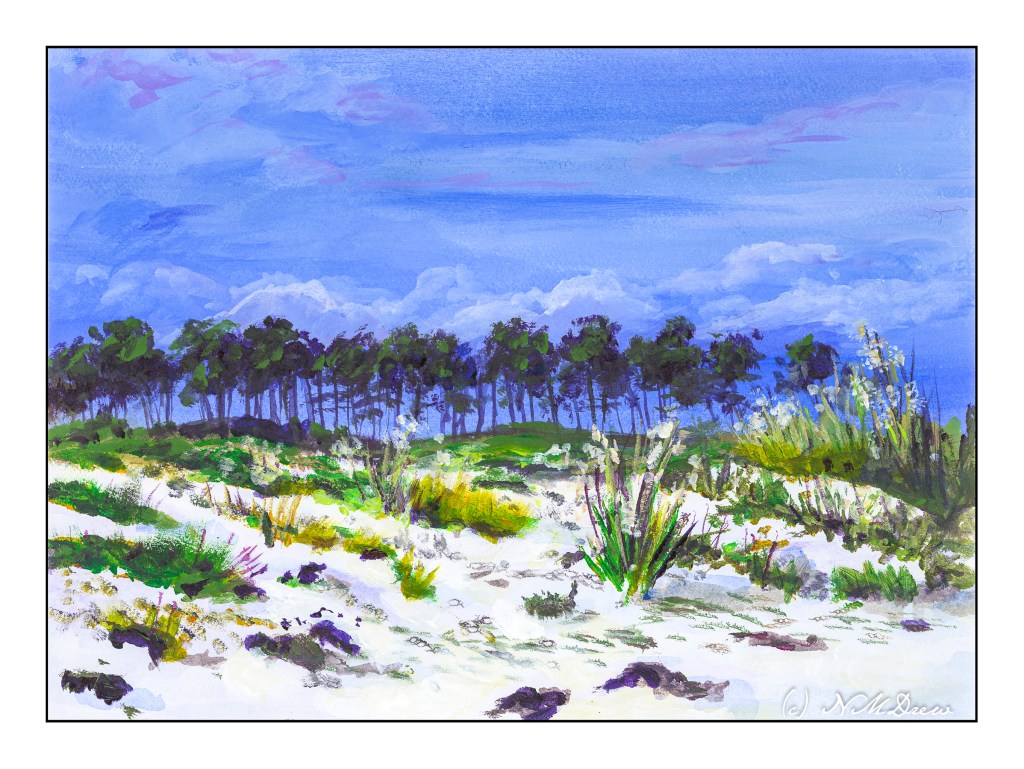
I enjoy gouache a lot because you can rework places and easily blur edges to soften them. That is a lot harder in acrylics. I decided to give it a shot. It worked rather well for the sky, but like gouache, the whites in the clouds darkened more than I thought they would. On the other hand, I did work on the sand a bit, using very thin water glazes for the shadows. That worked out pretty well.

I realize the key to “getting” acrylic painting is to just keep doing it, experimenting, trying. Each painting, successful or not, is a lesson.

Acrylic paint on unprimed Arches 140# CP. 9×12.

A Slice of Paradise

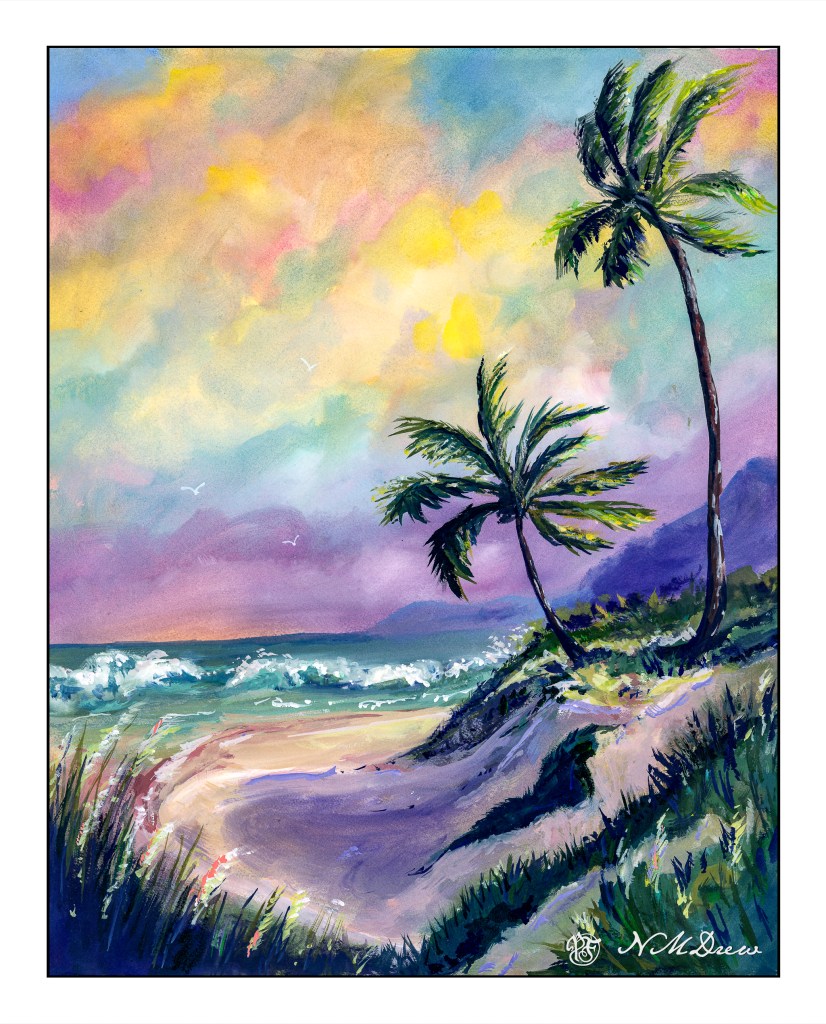
This is a tribute to the African-American painters of Florida known as The Highwaymen. Some of their numbers include Sam Newton, Alfred Hair, and so many others that I cannot name them all. In a time of racial unrest in the U.S., these painters somehow managed to thrive despite the Jim Crow laws of the South, and unfortunately, their work was not appreciated as it should be. However, today we know more about them, and can enjoy their work – the internet is so helpful in that regard.

I love bright colors and cheerful landscapes, and the tropics beckon. Palm trees are alluring and the brilliant light of these areas make colors more alive and intense. The Caribbean is filled with islands and azure seas, trade winds, towering clouds. States such as Florida, on both the Atlantic and Gulf sides, throughout the Gulf of Mexico and down along the coasts of Central and South America have such beauty in common.

The Highwaymen were not untalented amateurs. Some were self-taught, others learned from A.E. Backus. Each painter in this group sought an income otherwise denied them, as well as perhaps a way in which to express the beauty around them. Read up on them – they are a fascinating slice of art history.

As with the painting I last did, “Swamp,” this one is done with watercolors mixed with gouache on 16×20 inch 140# CP Arches paper. I used more gouache this time than I did with the last painting, and it was quite a challenge. I started out with bright colors and a totally different idea of a painting, but as I started blending the gouache with the watercolor, the gouache became a driving force. However, all color represented is simply toned with white or black gouache.

These artists worked in oil on masonite. Oils lend to blending colors more so than does acrylic paint, and I found that the gouache and watercolor worked similarly. I may try to do something similar in acrylic, and expect it will be a serious challenge as acrylics dry so quickly. Often The Highwaymen sold paintings still wet!

This is perhaps the most fun I ever had with a painting. I referred to paintings by some of the artists to see how they used color, photos from the internet of palm trees and Floridian sunsets. The composition is similar to a number of seaside ones, and I attempted to emulate the colors used by the painters for sand, sea, sky, and palms. I hope I caught some of the liveliness and spirit of The Highwaymen. I know I will be back to visit them, and Florida, again soon.