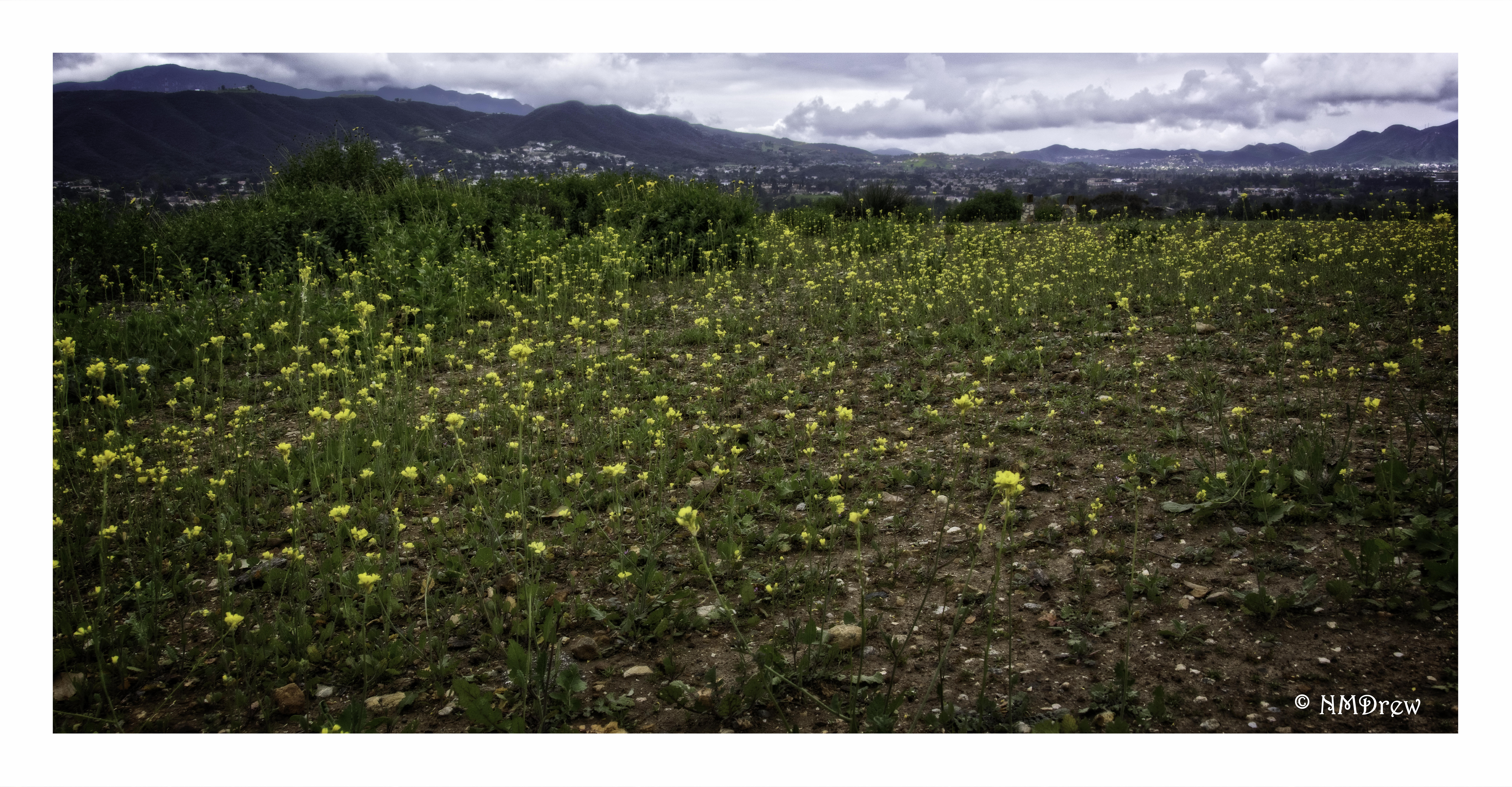
Another storm is on the way.

Another storm is on the way.
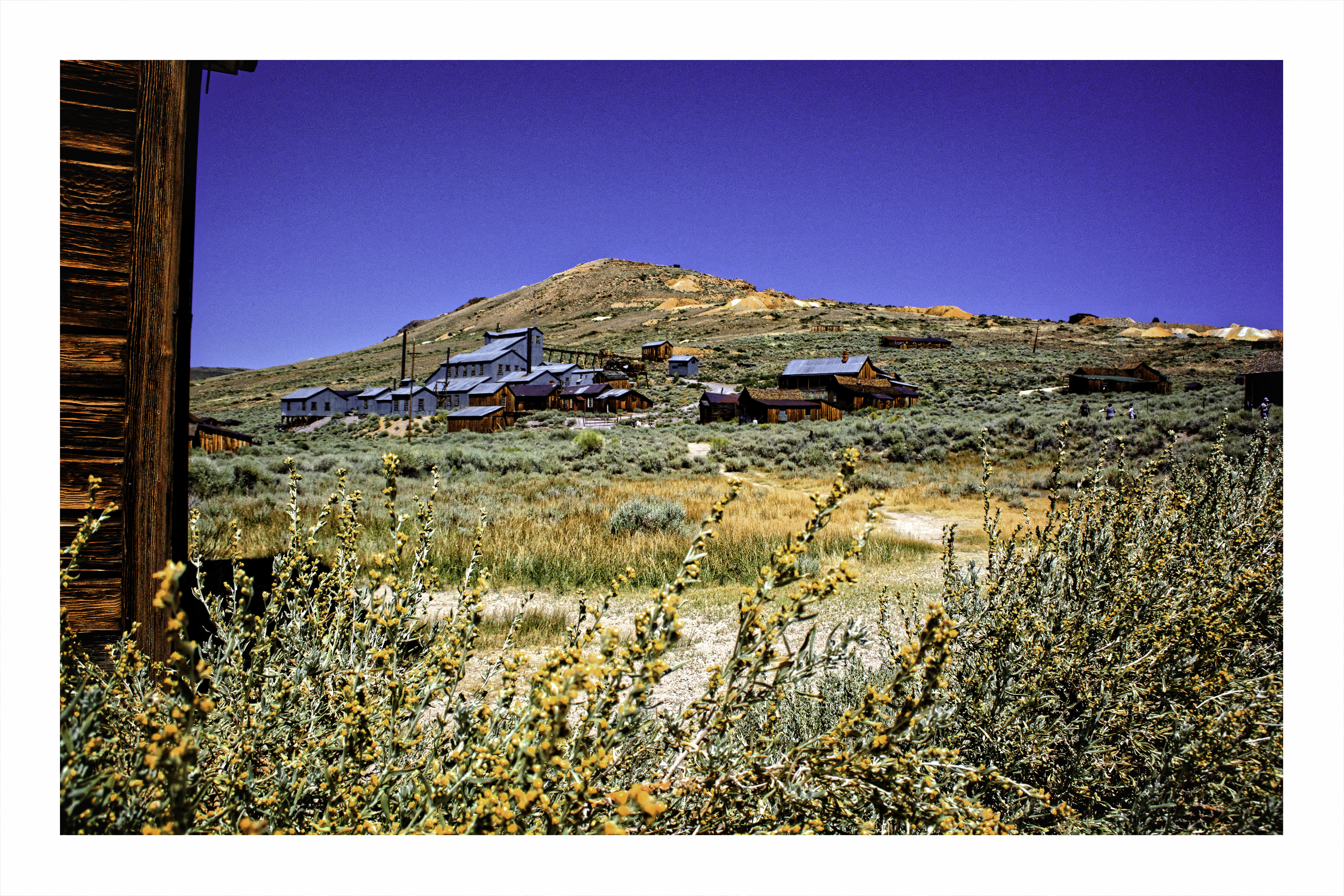
When we visited Bodie, it was in the middle of the day; it was hot; there was no shade; we were thirsty. The high desert is a dry, and to many, a barren place. I wouldn’t say that – instead, I would say it is a spare land with a spare beauty. It isn’t lush and verdant, but it is aromatic and clean – the light is clean, the air is clean, and it shimmers and dances with subtleties. You just have to look.
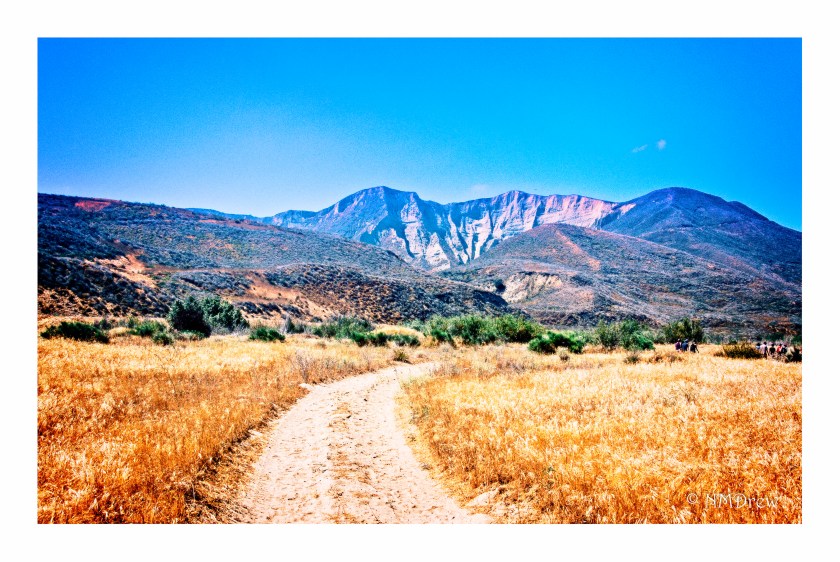
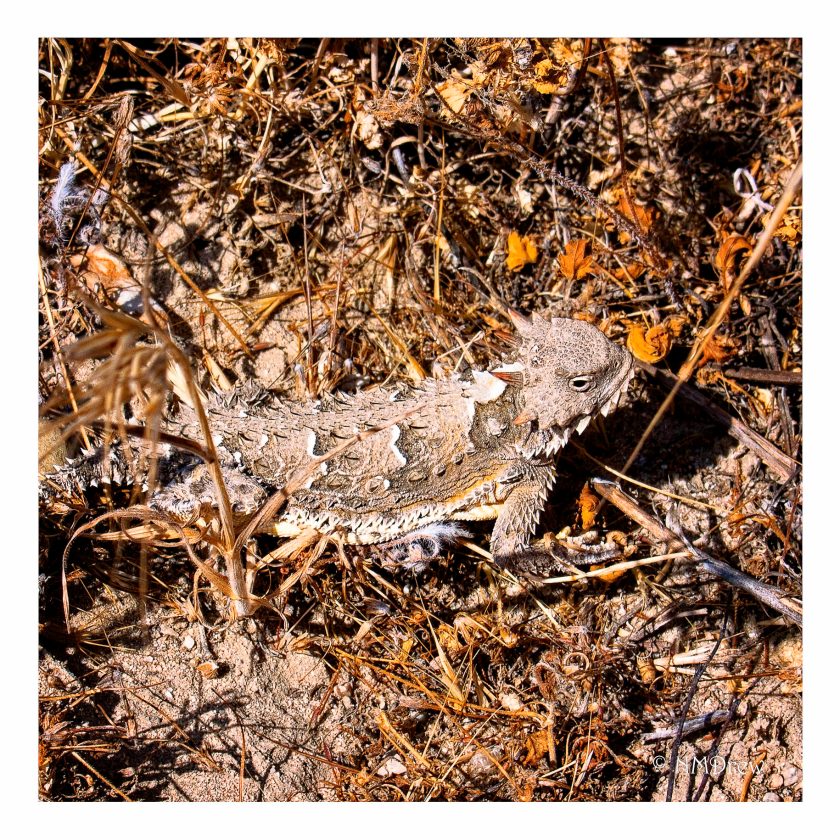
Meetup groups can be a great way to make connections, to do and learn about new things. Lately, I have been going on walks with the local Nature Conservancy group, and enjoying it immensely. I am amazed at what I see and what I learn. There are a lot of sharp eyes – the leaders spot things I wouldn’t notice, like horned lizards, and mountain lion tracks. Yesterday, we wandered over to Santa Paula, California, to explore the property the Nature Conservancy has there. It is up against the mountains and along the Santa Clara river, which is one of the last open rivers in Southern California – “unmolested” as Amy (the leader) says.
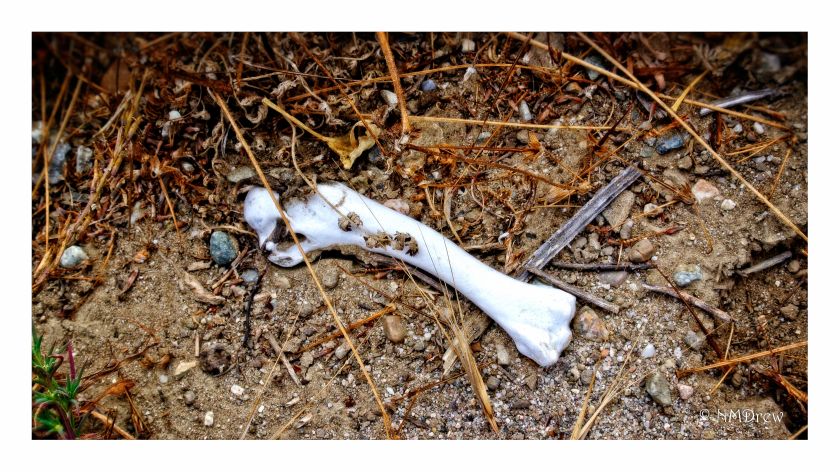
This hike consisted of a group of young men from a church in San Bernardino to a couple of young kids who found a horseshoe with the nails still in it and a feather from a red tail hawk. All told, there were about 15 of us. There were people I had met earlier – I expect they are regulars, as I am becoming – and newbies, too, who weren’t “new” to the world of nature, but just to me. Some had amazing knowledge of plants and animals and the ecosystems involved.
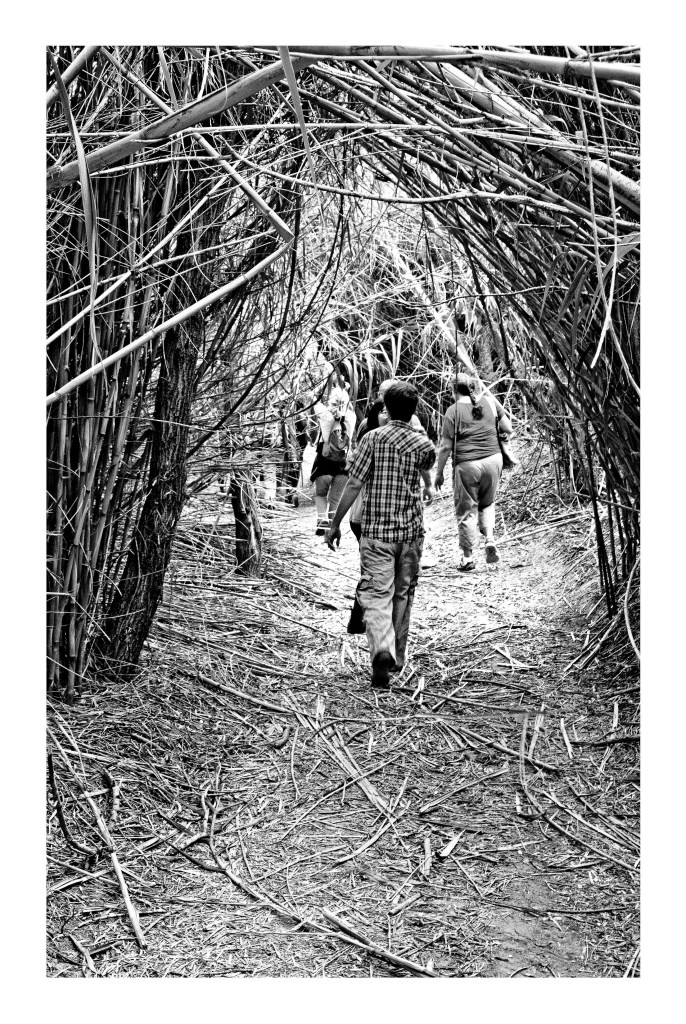
Probably the most interesting part of this hike, for me, was to learn about the invasive species here in California, and their negative impacts. These plants include arundo donax, black mustard, and fennel. They are everywhere. The arundo donax is an import from India and was used to control flooding along rivers. The problem is that it is very invasive and dense, crowding out native species. Black mustard was spread (supposedly) by the Spanish missionaries as the wended their way up from Mexico into California, using it as way to mark the trail from Mission to Mission. Finally, fennel (which has a taste similar to anise or licorice) is an import from the Mediterranean. Each of these plants are very familiar to the California landscape, but extremely, extremely difficult to eradicate. Each has changed the native landscape in its own way, not for the better.
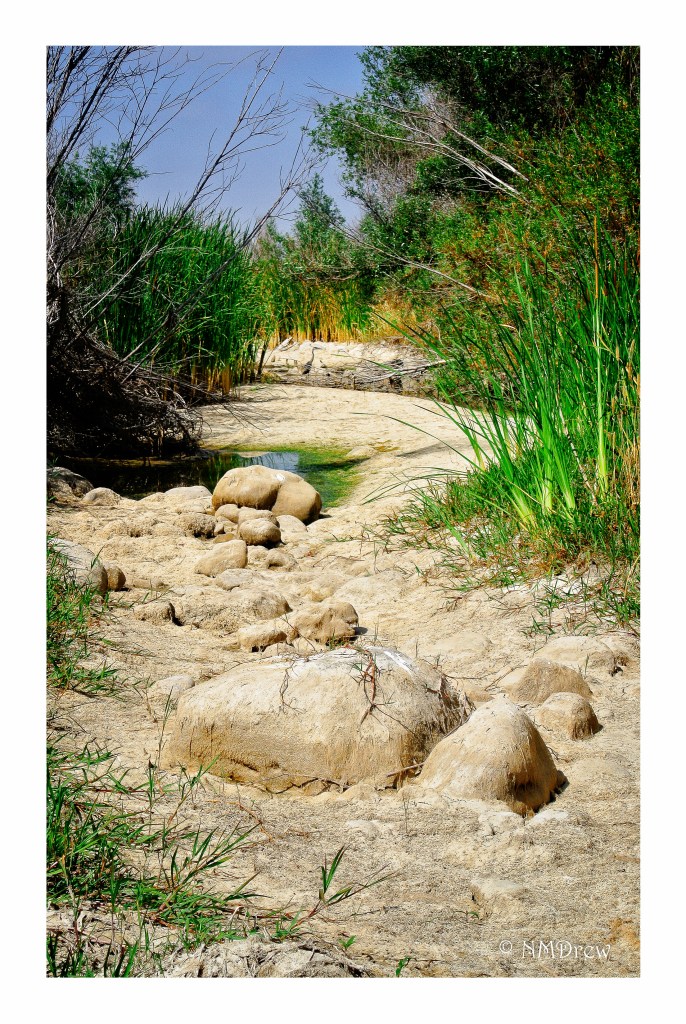
Native species along the Santa Clara river include mountain lions, badgers, egrets, herons, coyotes, pond turtles, yucca, buckwheat, cat tails, bull rushes, black walnut, red tail hawks, and a lot of other plants and animals adapted to the dry climate. The Santa Clara river itself is not a river as one might think – not like the Mississippi – but a seasonal one which varies depending on the rainy season. Some years we might see it wide and filled, other years a bit more than a trickle. Where we trekked there were scattered ponds, low areas surrounded by cat tails and clogged by the arundo.
Many people think that everything in So Cal is just a freeway . . . it’s not. There are a lot of open areas filled with life. You just have to get out to look for it! Below is a gallery of images.


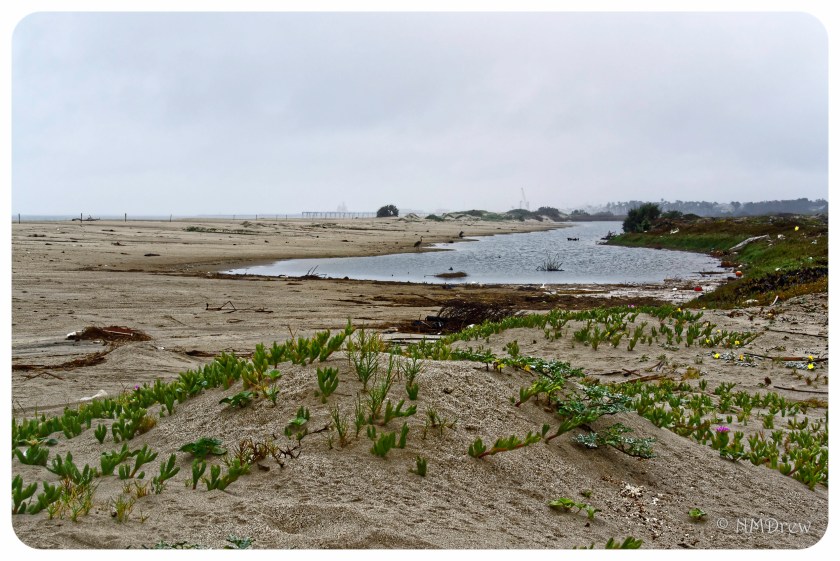
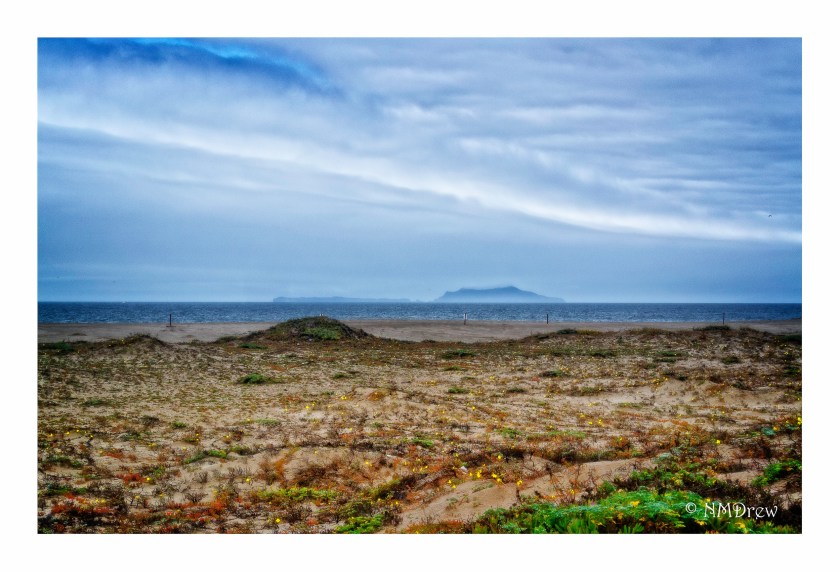
California is a land of contradiction. Los Angeles sprawls 50 miles south of where I live, and yet there are wetlands nearby that serve as rest stops for migratory birds. Locally, Ormond Beach, which is between the Seabee base in Port Hueneme, and the Navy base at Point Mugu. Currently, areas of the beach are closed off for nesting birds whose only nest is a shallow indentation in the sand, with eggs speckled to match.
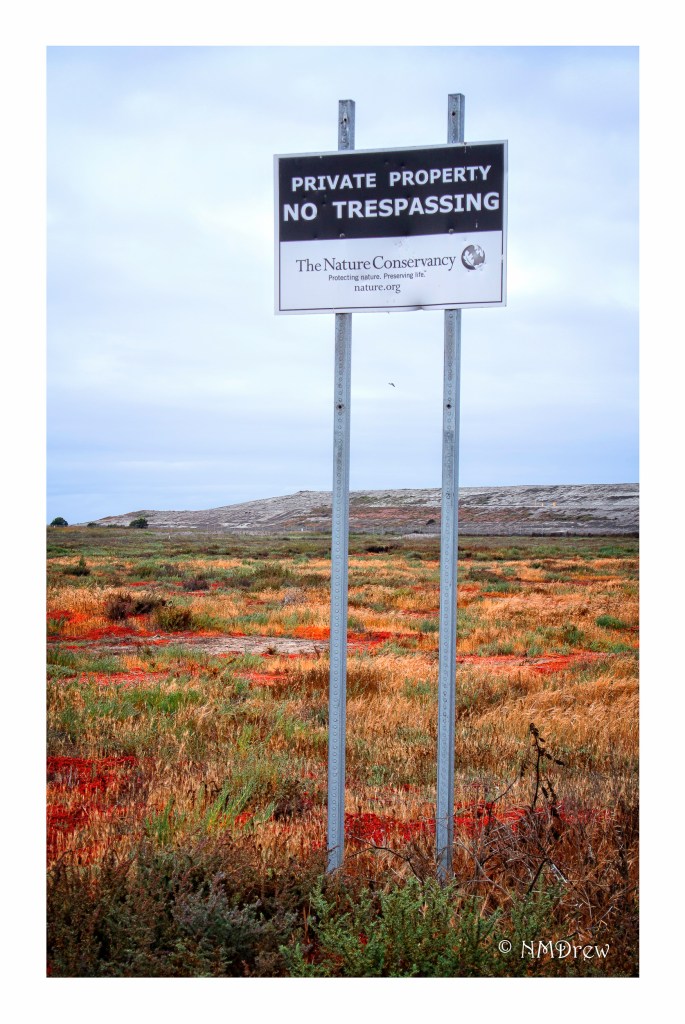
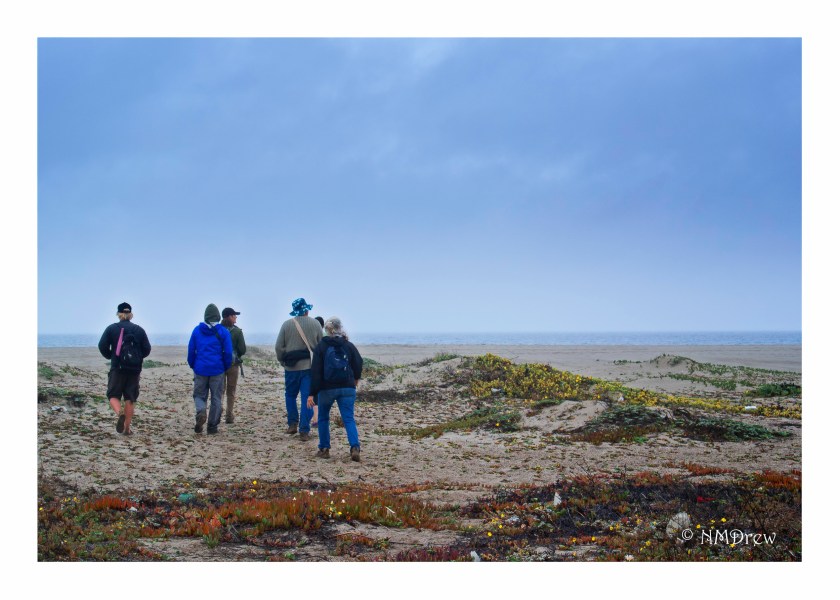
Today, I met up with a number of people for a hike sponsored by the local Nature Conservancy, whose essential philosophy is to preserve wild places by buying land, and keeping people out. They have bought up and have had land donated for the Ormond Beach Wetlands Restoration Project. They also have other sites here in Ventura County, such as in the Santa Clara River, which is one of the last – if not the last – river in Southern California that has not been modified between its source and release into the Pacific Ocean.
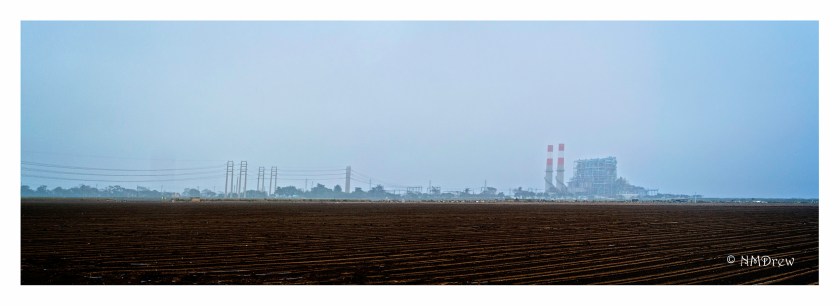
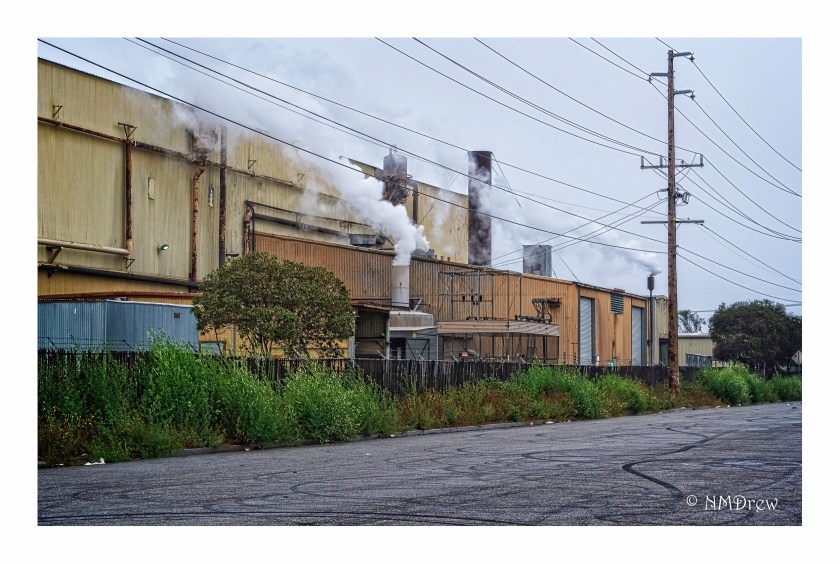
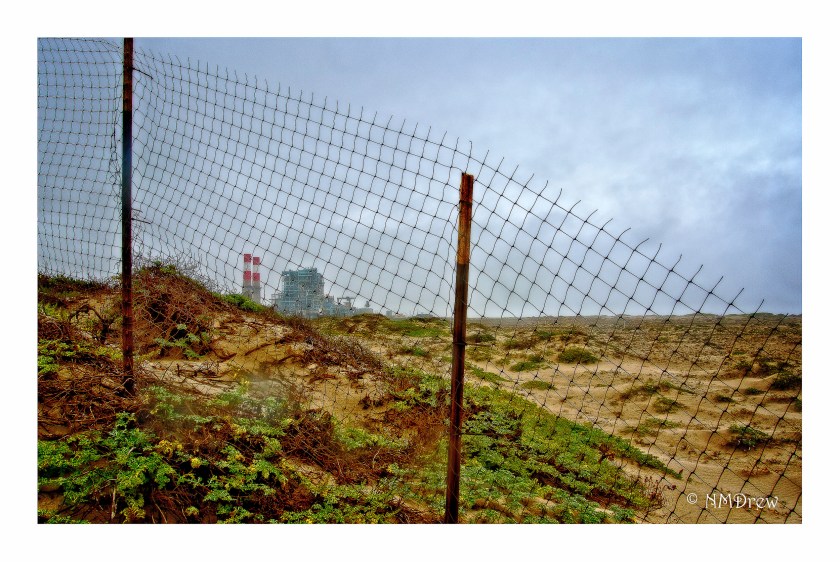
Coastal fog and overcast are normal for the California coast in May and June. It can be wet and drizzly and grey, while a few miles inland sunshine reigns. This fog is essential to many California environments, and while not fun to be in at times, it is really stunning in its own right. We live inland, so the sun is usually visible, but today, it has spread to our own valley. I left a slightly sunny inland valley to arrive to a drizzly, drippy beach. My glasses and camera lens had rain drops on them (I hope the camera will be okay – seems to be), and soon my clothes and hair were wet. Our starting point was a local recycling plant, at the end of a road, and we had views of the Halaco property, which is part of Superfund clean-up efforts . . . there are power plants here, visible across fields ready to plant. It’s a rather dreary place in the gloom.
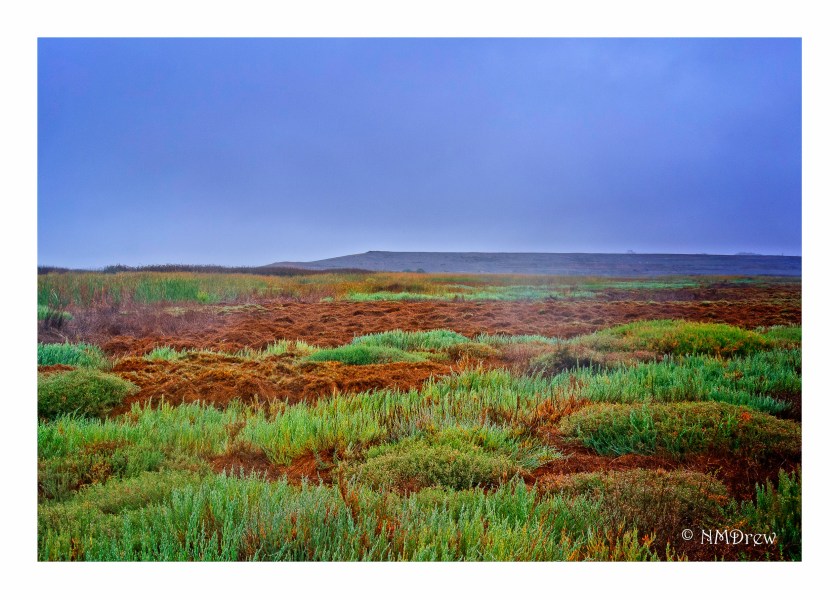
Our guides were knowledgeable about the area. While very flat, the plants and such could be a bit of a challenge to trudge through. We saw various birds, such as great blue herons, great white egrets, horned larks, terns, and snowy plovers, Flowers such as coastal lupine, beach morning-glory, dune primrose, and non-native species were also in bloom. We found animal toilets, where this animal and that pooped, leaving behind interesting scat filled with remains of pelagic crabs, feathers, and bones. Animal trails showed paw prints of coyotes, raccoons, herons, and other small birds.
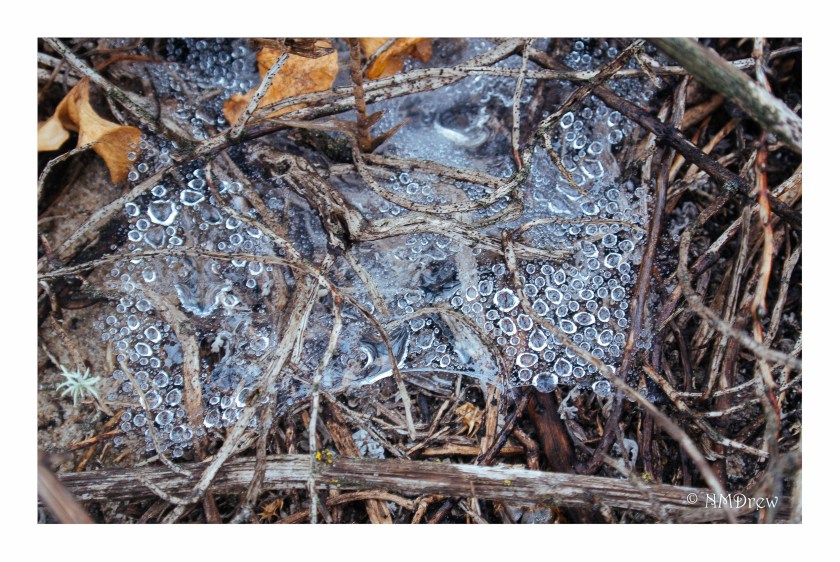
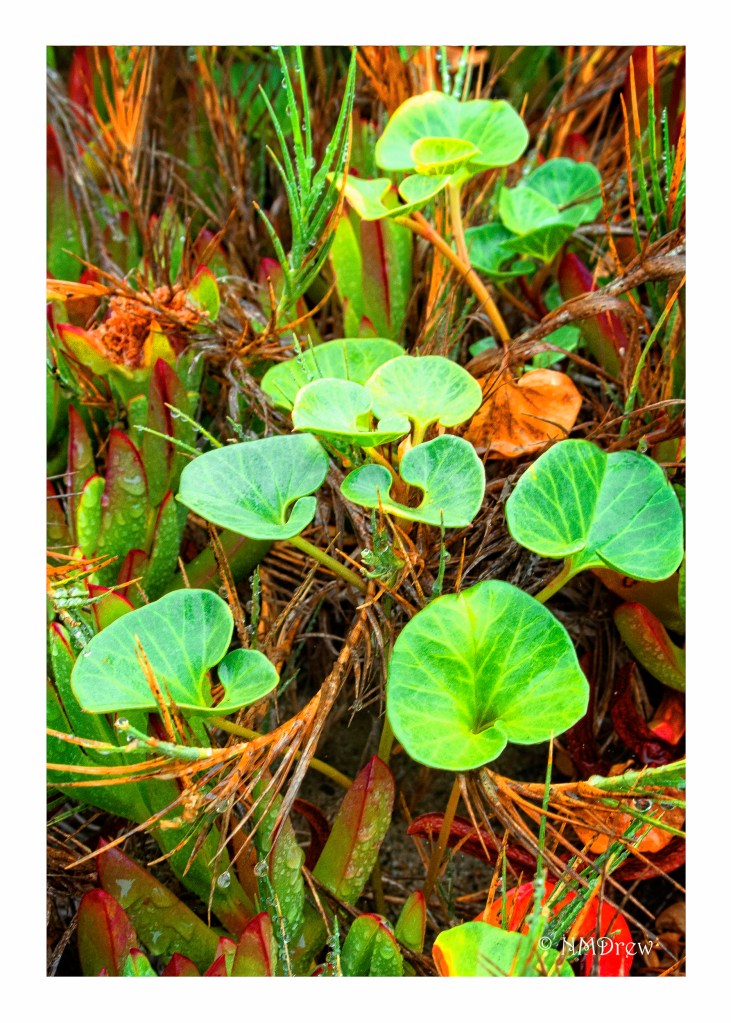
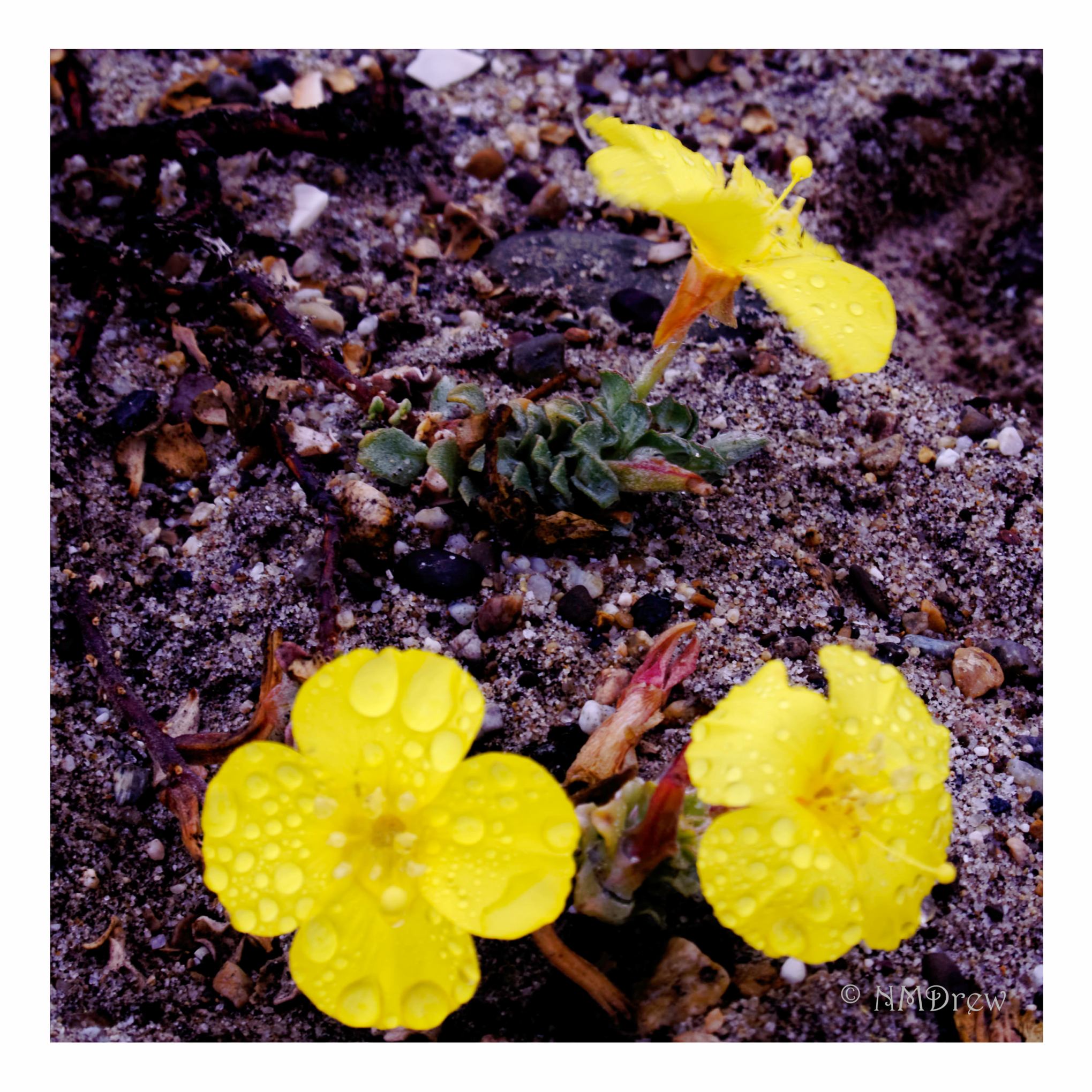
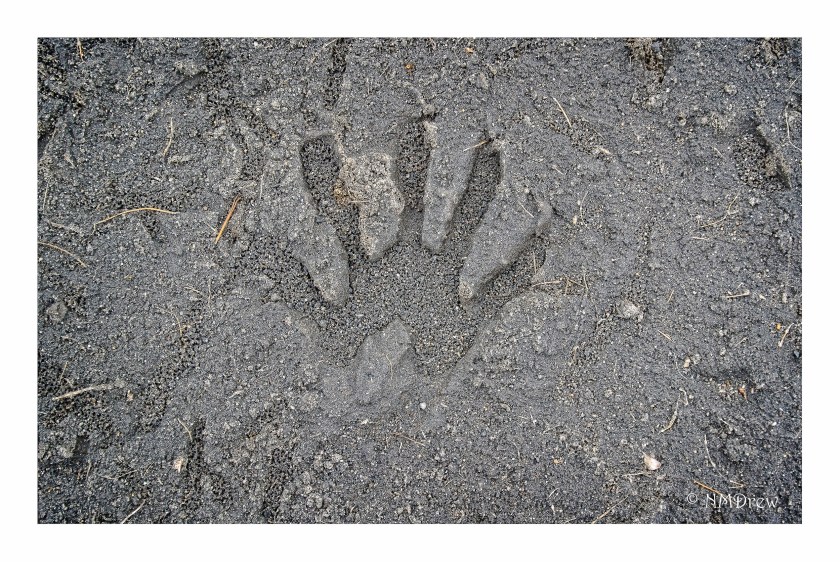
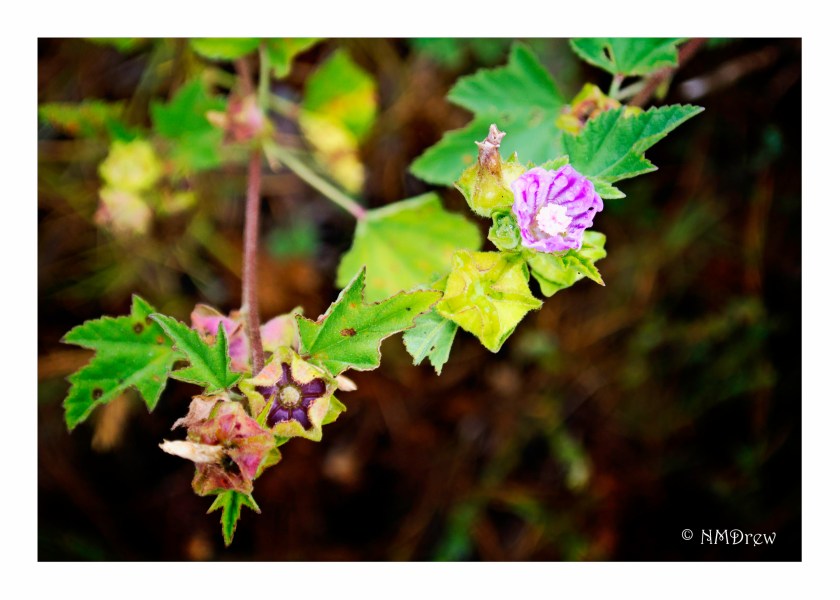
In a world increasingly damaged, the beauty and delicacy of the natural environment is accordingly threatened. Places such as Ormond Beach are a refuge for not only birds and animals, but for humans as well. I enjoyed this hike, and came home like a little kid, covered in mud and muck, soaking wet, and completely refreshed by a beautiful world and fun companions.
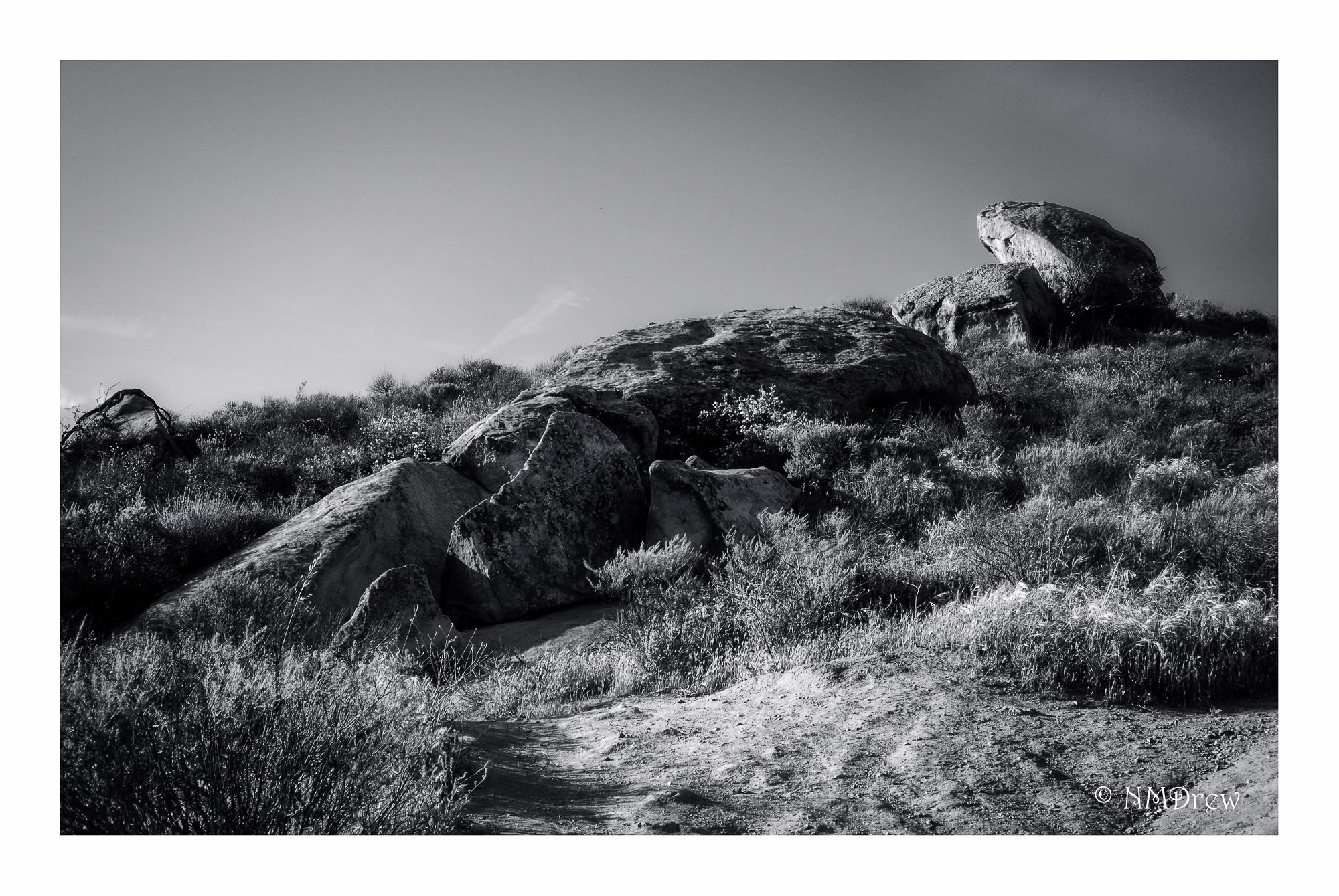
I always enjoy seeing the sandstone boulders and rocks in the Santa Monica mountains. How do they get the way they are? Who or what positioned them? These look as if they were cast down the hillside by some giant hand . . . These are yellow and red and make a wonderful background for the foliage and weeds of the chaparral.
 Ink, Yarn & Beer