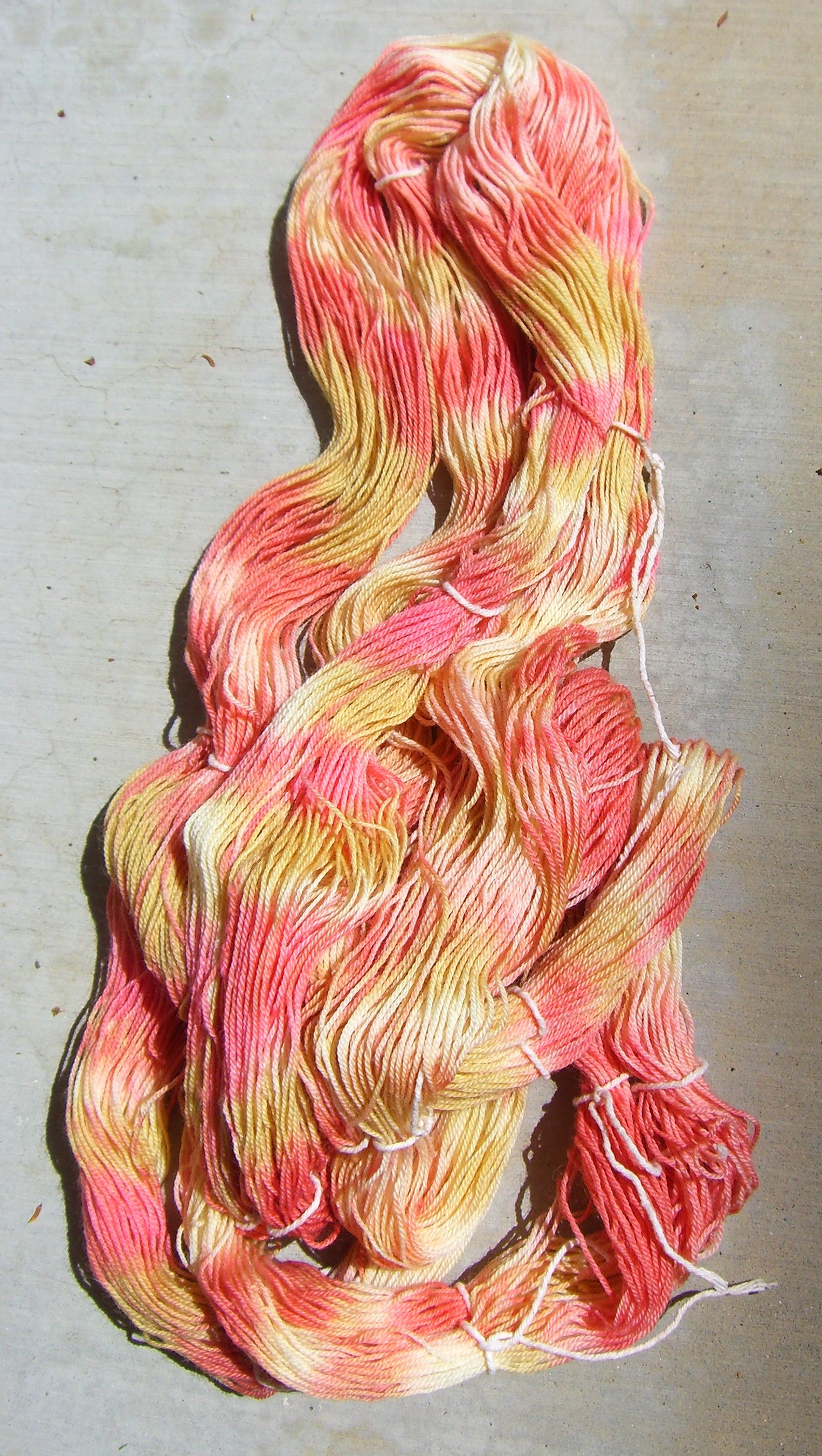
As we get older, time becomes less. We have less of it.
Having a conversation about the sense of time, and the differences in the perception of time we had as children – summer lasted forever – and now as adults – the children are grown! – whoever I was talking with said that our perspectives shift with age because of the contexts we have in our brain. Children are more immediate, and adults have touching points. These touching points are referential – we use them to frame our reality. Children are developing memory, while we are full of them. Older people can remember their childhood often more vividly than they can recall the day before.
I know for me this is certainly true. And the result is that I forget about the immediacy of living – the moment of now. Instead, my head is filled with plans and structures because of all the things I need to do now. If I don’t get certain things done now, I will miss out on windows, whether for opportunity or survival.
“Being here now” has so many different meanings – the nowness of chores and things that have to be done (which is where I am at today with bills and job applications) – and, of course, living and doing in the moment. I forget this so often that my sense of spontaneity is vanishing, and the horizon of my life is hurtling toward me at an increasingly rapid pace. I schedule the “thou shalts” and forget the “let’s”. How sad to think that I may lose what time I have left because I forget the joy of the moment and structure my life with tasks and chores and must-do-its.
This is the Year of the Tiger. Tigers are representative of generosity, power, energy, royalty, illumination, unpredictability, and protection. There are, apparently, five types of tigers, all with different meanings and powers to keep the cosmic forces balanced.
White Tiger: ruler of the Fall season and governor of the Metal elementals
Black Tiger: ruler of the Winter season and governor of the Water elementals
Blue Tiger: ruler of the Spring season and governor of the Earth elementals
Red Tiger: ruler of the Summer season and governor of the Fire elementals
Yellow Tiger: the supreme ruler of all these tigers and symbolic of the Sun
People born in these years are Tigers: 1902, 1914, 1926, 1938, 1950, 1962, 1974, 1986, 1998, 2010, 2022.
A Bit About Tigers
In and of themselves, tigers are beautiful animals whose very existence is threatened worldwide. Here is a brief bit of information from the Wikipedia article about tigers:
The tiger (Panthera tigris) is a member of the Felidae family; the largest of the four “big cats” in the genus Panthera. Native to much of eastern and southern Asia, the tiger is an apex predator and an obligate carnivore. Reaching up to 3.3 metres (11 ft) in total length and weighing up to 300 kilograms (660 pounds), the larger tiger subspecies are comparable in size to the biggest extinct felids. Aside from their great bulk and power, their most recognisable feature is a pattern of dark vertical stripes that overlays near-white to reddish-orange fur, with lighter underparts. The most numerous tiger subspecies is the Bengal tiger while the largest subspecies is the Siberian tiger.
Highly adaptable, tigers range from the Siberian taiga, to open grasslands, to tropicalmangrove swamps. They are territorial and generally solitary animals, often requiring large contiguous areas of habitat that support their prey demands. This, coupled with the fact that they are endemic to some of the more densely populated places on earth, has caused significant conflicts with humans. Of the nine subspecies of modern tiger, three are extinct and the remaining six are classified as endangered, some critically so. The primary direct causes are habitat destruction and fragmentation, and hunting. Their historical range once stretched from Mesopotamia and the Caucasus through most of South and East Asia. Today it has been radically reduced. While all surviving species are under formal protection, poaching, habitat destruction and inbreeding depression continue to threaten the species.
Tigers are among the most recognisable and popular of the world’s charismatic megafauna. They have featured prominently in ancient mythology and folklore, and continue to be depicted in modern films and literature. Tigers appear on many flags and coats of arms, as mascots for sporting teams, and as the national animal of several Asian nations, including India.
Painting Class – Back At Last!
It was so nice to get back to class after so many months away! Most of the core class was there – Connie, Fong, Paulina, Ann Marie, Jan, Paula, Philip, Cathy – and Teacher himself, Harris. The fact that is was pouring rain shows the dedication of all these painters. Teacher drives up from south of Los Angeles, and Paula comes in about 30 miles. The rest of us sort of radiate out 10-15 miles. Driving in, though, was far easier than driving out – buckets of rain to the point the roads were flooded and it was nearly impossible to see at times.
Teacher with Painting and Sketch in Charcoal and Ink
Foundations of the Painting
Dry Brush Fur on Tail
Teacher does a general outline of the subject with charcoal. He lays in the shapes and sets up the overall composition of the painting. Then he begins to use ink to outline the subject – in this case, of course, the tiger. In the picture you will see the picture which we are copying, and Teacher’s work.
Before any color is added to the painting, liquid ink is used to define outlines and fur. Teacher told us to use a large brush for the lines, and a finer one as well. The brushes were very dry, which gives the effect of the fur, as well as keeps the ink from bleeding into the paper, which is an unsized Chinese paper. It may look easy, but for those of us used to watercolor or acrylics, the entire process of dry brush is difficult because the dry brush in Chinese painting is really, really dry! It seems to be far dryer than what I would use in watercolor, but the absorbancy of the paper makes my “dry” brush seem sopping wet!.
Dry Brush Ink - Brush is Flattened to Create Furn
To indicate fur, Teacher flattens the brush between his finger tips, at the same time removing any extra water from the brush. He holds the brush perpendicular to the paper, or at an angle, depending on what he wants to do. This detail of the tiger’s tail shows you the effect this produces for fur. You will also see that different shades of ink have been used to create dimension. Finally, after about an hour, the foundational inking of the painting is completed.
Tiger - Inking Completed
Coloring the Tiger
In our Chinese painting class, we use Marie’s Chinese Colors. These are inexpensive paints, and often we can buy them as we need them in class because our group keeps them in supply. These paints are opaque, and when dry, do not bleed when wet. The colors we usually get are in boxes of 12, with names like burnt sienna, indigo, carmine, and so on. They are rather thick, but work very well in creating thin, transparent washes as well as opaque spots for details, such as leaves.
From what I have seen in many of my classes with Teacher, color is an addition to a painting, not the main focus. Ink provides the “bones” of the painting; color is like a condiment – something added for piquancy. This proves to be true for this tiger. The colors used were burnt sienna, carmine, and indigo. Straight ink was used for the tiger’s black and the bamboo leaves, and pure white was done at the very end to enhance the whiteness of the whiskers and fur.
Another element of painting on the unsized paper is that the colors become lighter as they dry. In the very beginning, Teacher painted the nose of the tiger with burnt sienna. This picture shows the paint very wet, and certainly the first thought you might have is that the picture is ruined, the paint is waaaaay too dark! But, as it dries, it lightens up, and is very balanced in the final painting.
Tiger - Drier Paint on Nose, and Carmine for Pink of NoseWet Nose!
You can also see that the burnt sienna is a good contrast for the carmine used for the tiger’s nose, as well as the fact that as the sienna dries, it becomes lighter, and quite nice. I think that teacher may have mixed a small amount of carmine with the sienna, but I did not make note of that.
The final painting was completed with ink bamboo leaves. Pure ink was used for the very dark leaves, and diluted ink for the greyer ones. A thin wash of indigo was used to outline the tiger, to make him “pop” out of the paper. Whiskers were added after everything else was done, using a very fine brush and pure white paint. These had to be done when the paper was dry, otherwise the whiskers would bleed into the background, or onto the tiger himself. White was also used to create the effect of fur on the tiger’s body, and, again, to help create a stronger image.
Teacher Adding White to the Tiger
Finally, the tiger is finished, and set aside to dry. At this point, we students have the opportunity for critique of the previous month’s work. Teacher does calligraphy if we want – after all, what is is a Chinese painting without a poem? He also shows us how to correct our paintings, by demonstrating where they might be weak. He will paint over our pictures (with out permission), and sometimes just a subtle wash will show us how to improve. He also will show us how to do something we might be struggling with, such as flower petals and how to load a brush with colors.
Completed Tiger - Click to Enlarge
Altogether, it is a great experience to watch a gifted painter in the process of creating a painting. Taking notes and photos certainly helps to recall what was done in class. I plan to do this tiger, partly because I think he is a very handsome tiger and I like the composition, but also to practice different elements in painting. I will post pictures of my progress, as well as evidence of my practice strokes and work on paper before I even begin this painting!
And now, here is the final painting of the tiger. Click on the photo and you will be able to see it in greater detail. Depending on your browser, you will see the picture enlarged, and then if you hover over it, a magnifying glass should appear to bring it to its original size. If this works for you, you will be able to look at the different areas of the tiger in fine detail.
It’s been a bit of time since my last post. I’ve been caught up in launching my students into the clinical world – like kids off to college or moving out – there is a bit of the empty nest. Simultaneously, there is room now to organize things and do things which have been put off. And to apply for jobs as who knows what will happen on the 15th. I’ve also passed the CBEST, with 204 out of 240 total points possible – about an 85% average, I guess. So, things can be added to the old credential. Back up plan taking shape.
Meanwhile, I have been looking at all my projects, and the fact is, I’m in a very scattered mood. Inventory of WIPs and UFOs shows the following:
Gloves, unfinished
Top-down beret, in revision and slow progress
Simple Cardigan, 1/2 sleeve remaining
Socks – too many to mention
A few other hats
Gansey – just started for the Esposo
And this Saturday, I finally get to go to the first Chinese painting class in probably five months. As this is the Year of the Tiger, Teacher will demonstrate this painting.
The weather turned this weekend from cold and windy to warm and sunny, with all the elements of spring making themselves known: the mockingbirds in the trees, the frisky squirrels, daffodils and freesias blooming. Thus, for a few days, the cabled beret was tossed out the window (figuratively, not literally), while the dye pots and colors and yarn came out to play.
A couple of weeks ago I sent away to Wool2Dye4, and ordered two skeins of their 100% washable merino sock yarn, their 80/20 merino bamboo combo sock yarn, and a one-pound cone of their Blue-Faced Leicester. I also had some sock blanks from KnitPicks that have been waiting many months to turn into butterflies. My MIL’s birthday is on the Ides of March, so this yarn and dyeing is something we do occasionally as a birthdye present for her (and for me, though I’m 7 months from now . . .).
Anyway, it was a blast! First thing we did was to paint up our sock blanks. We used powdered dye mixed with water – I’ll detail that in another post – and plastic syringes to place the colors. Judy’s sock blank is below.
Judy's Sock Blank - Before Steaming
This is my sock blank.
My Sock Blank - Before Steaming
We did this out on the picnic table, on top of a plastic tarp. Before dyeing the blanks, two long sheets of plastic wrap were stretched out beneath where each blank would go, and pressed down to make a seal. The blanks were soaked in warm water with a tablespoon of dish soap (Dawn) for about 30 minutes. We set up the dyeing table and colors while the blanks soaked.
Once we had our blanks painted, into the kettle they went! We rolled the blanks up in the plastic wrap, folding over the edges and such to seal in the colors, with a final sheet of plastic wrap, like a burrito. The kettle was set up with a vegetable steamer and plastic tray, and the blanks steamed for about an hour. Once they were done, we pulled them out and, as quickly as possible, freed them from their coverings and set them in a basin of warm water mixed with about 4 oz. of white vinegar. There they cooled, and while they were cooling, we got on to more dyeing!
Our “cooked” sock blanks now looked like this:
Judy's Sock Blank - After SteamingMy Sock Blank - After Steaming
One would hope that the abstract patterns would come out like the blank, but already I know they won’t. I’ve started knitting up my socks, or gloves, or whatever they are going to be. The colors are intensely rich, and the photos really do not show what they look like. Judy’s will more likely show its pattern – the blanks are always described as “make your own striped socks” – so it makes sense. Still, it is fun to knit them up to see!
The next dyeing adventure was to spread out a skein of yarn each, already soaked, and pour colors onto the skein. We’ve done this before, and often the patterns of the colors are really enjoyable. Judy made used multiple colors in hers, and I decided to go for a more monochrome pattern. You can see the results to the side – the turquoise skein is mine, and the multicolored one is hers.
The results of this are really satisfying as you can create strips or areas of color and work the color into the yarn. Judy’s painted skein is very obvious in its sections of color, but where the colors overlap can become very exciting. Mine is more subtle, which is odd for me, and for once the magpie did not overtake the entire project. I really like the turquoises and blues which were the result of mushing together a few shades of blue and turquoise. Wrapping the skeins in plastic wrap and steaming them allows for the different projects to go into the same pot without polluting each other.
The final project was to create flammegarn. This is a resist method used in Scandinavia to create randomly bicolored yarn. White or colored wool is tied off with yarn, in sections, and the yarn is immersed into color. The result is randomly colored and white yarn, much like our multi-colored yarns of today, but with fewer colors and shorter areas of color. The results are always fascinating.
Judy Holding the Tied Flammegarn Skeins
We decided to use the same colors, and to utilize our knowledge of color mixing to get some results. We dyed our entire skeins a rather lime yellow greenish color. Once we could handle the yarn out of the dye pot, we tied ours off. Judy is holding up the dyed, still tied, skeins.
And then you can see her holding up the now untied skeins. Hers is on the left, and mine is on the right.
She liked her colors, but for me, the colors did absolutely nothing. Yucko! Just not for me. So, I decided to overdye my flammegarn skein, and I am so glad I did.
Judy with Untied Flammegarn Skeins
I decided to continue to apply color theory to the flammegarn. The yarn was a rather yellow-green and blue-green. I could overdye the yarn with a turquoise, but then I would have two similarly colored skeins. I decided to use violet. The yellow would turn to a grey color (yellow and violet being complementary colors), and the blue would turn to a blue violet. Into an intensely purple dye pot it went!
You can see from the results, the overdye was perfect. No more putrid yellow and blue green. The overall effect of the skein is a rather purplish blueberry color – more violet than blue – and really nicely mottled. Up close, with some photoshop lightening of the picture, you can see the colors a bit more distinctly.
The long, thin picture of the skein is close to the real color, and in daylight it has that deep purply blue color. The larger picture on the left shows you the detail of the color, which, when knitted up, should add a bit of interest to the yarn itself.
Altogether, this was an incredibly satisfying day! The random effects of dyeing are half the fun – just experimenting and playing. You can see that Judy has an eye for detail and construction. Her colors are more orderly than mine, and I tell you, I really admire that in people. She is, for example, and incredibly talented beader and needlepointer, with the patience of a saint. Her work is impeccable. Me, I am far more crazy and like the process of making a mess. Too often, a mess is just the result. However, I was really pleased with the way everything turned out, for both of us, and I know we had a lot of fun together. With spring approaching (here in California), the plants are beginning to grow, and we plan on a natural dyeing adventure pretty soon, with native plants, as well as materials from other parts of the world. Stay tuned!