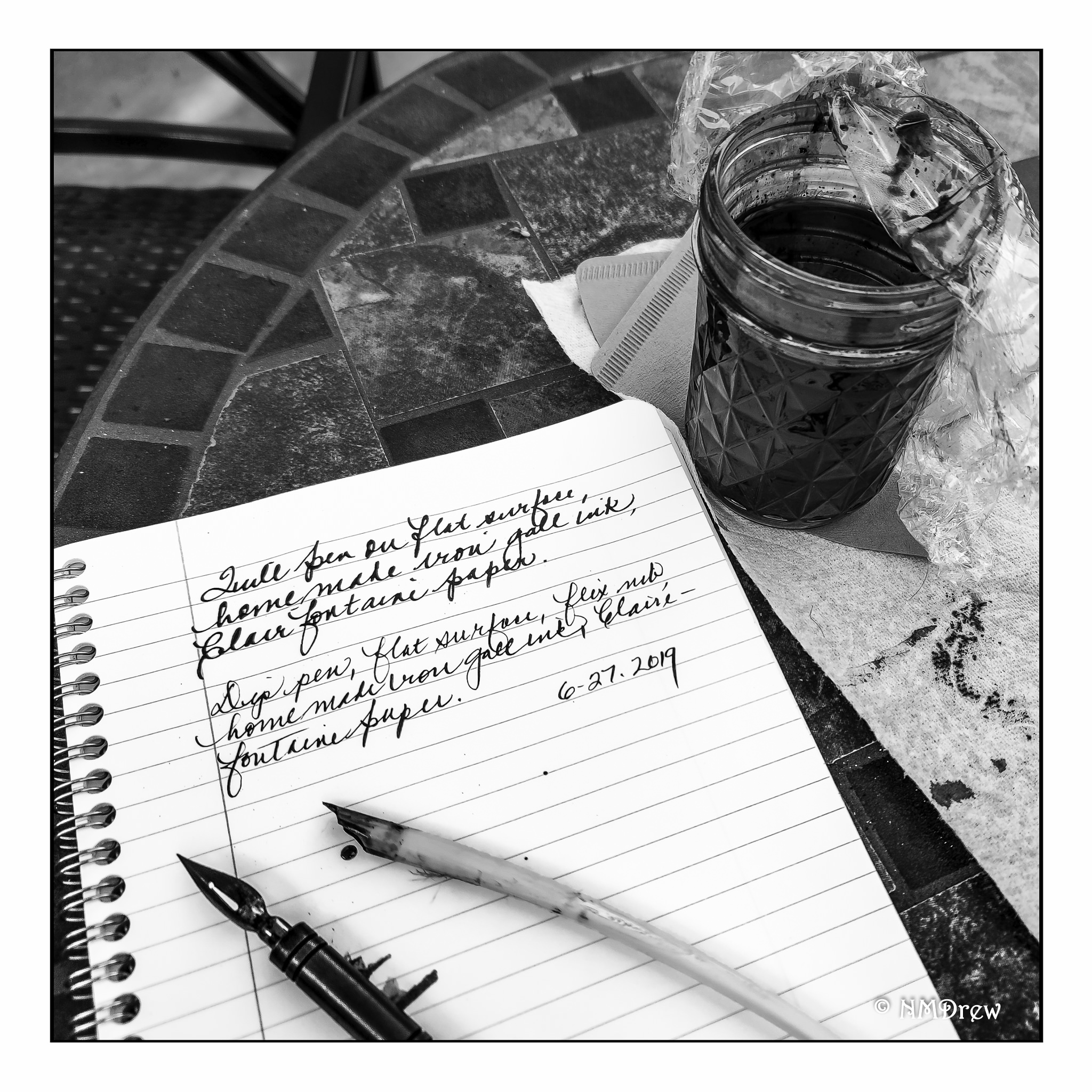
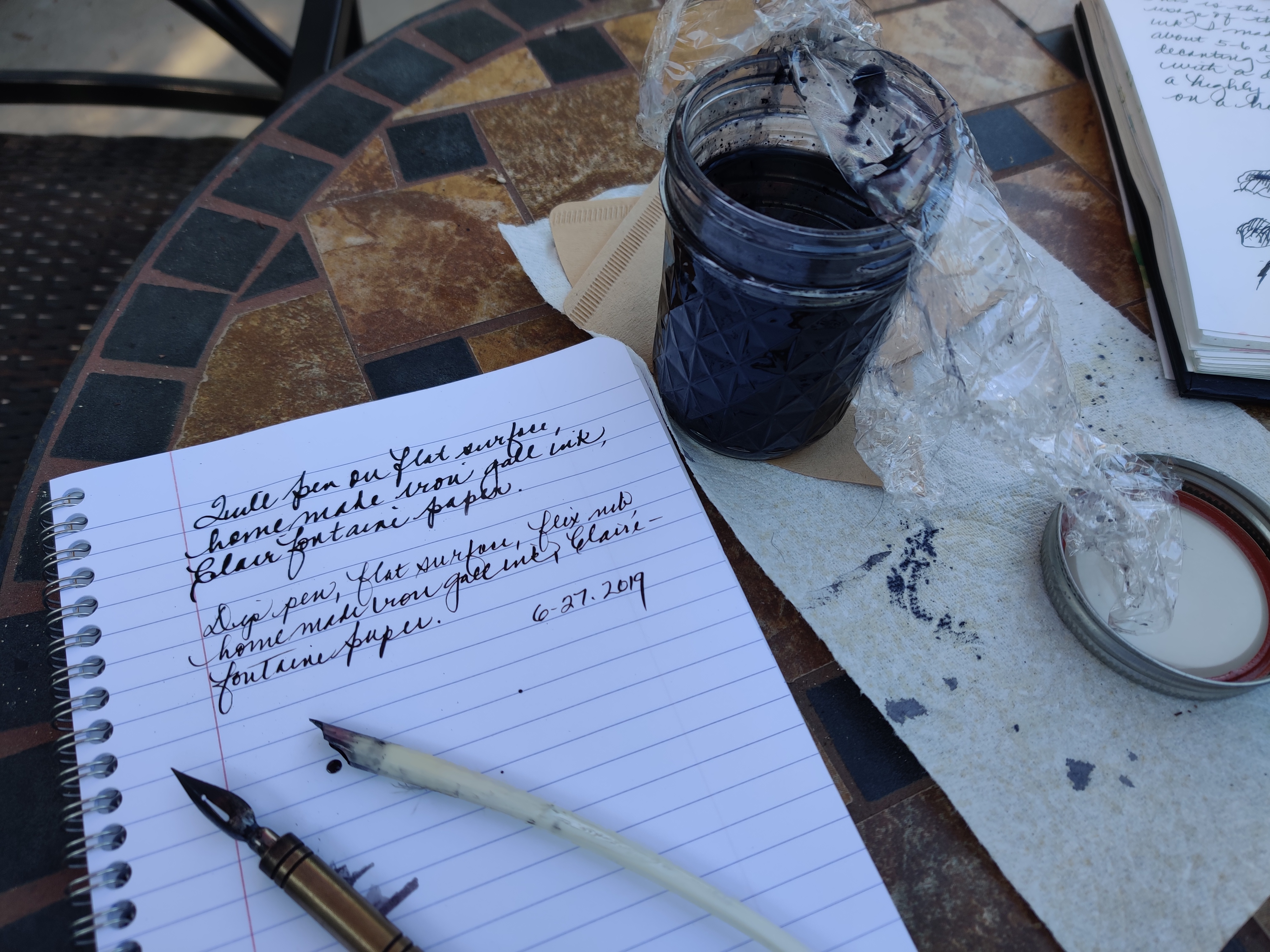
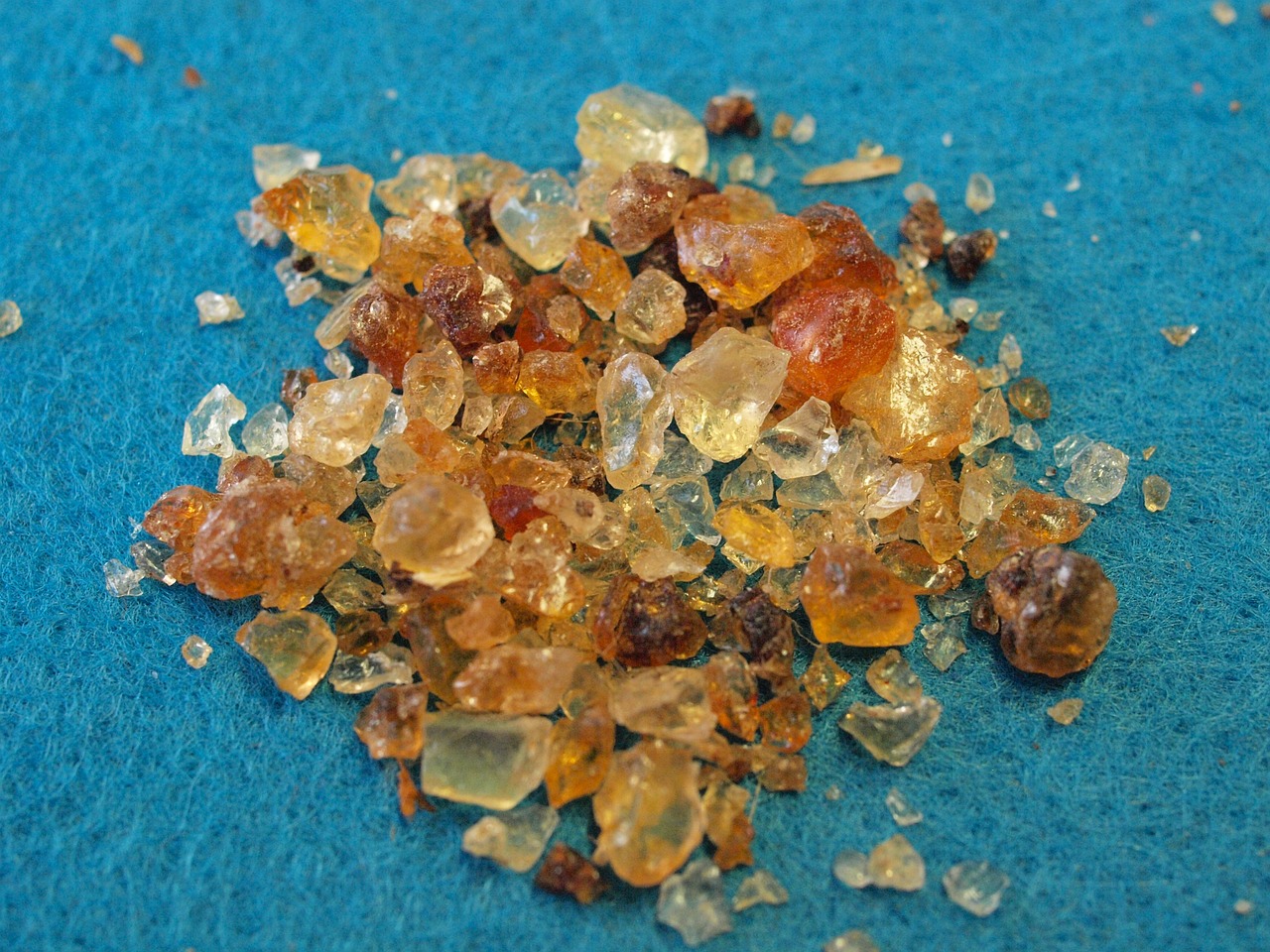
Today is the final day for adding ingredients to the iron gall ink. I added 25g. of gum arabic to the ferrous gallate (new name for the oak gall / ferrous sulfate heptahydrate solution) to create the final product of ink. Until the gum arabic is added, the solution is really just a solution or a liquid. My gum arabic was in a powdered form, so I simply placed it on top of the liquid in the jar, and shook it a lot. Since adding it, I am continuing to shake it. The gum arabic to the left is in its most common form – hardened sap. It has a jewel-like quality, I think – a lot like amber – and besides using it in ink, it is edible and has many uses in the food industry.
Gum arabic, the hardened sap of the acacia tree, is used a binder in ink, controlling the ink’s viscosity – how the ink flows. It adds more control into the ink’s behavior, such as eliminating or lessening feathering, bleeding or cracking when use on paper or parchment. An element of luminosity or shine is another characteristic it imparts to ink.
In addition to controlling viscosity, gum arabic helps the ink to adhere to the paper. The water in the ink evaporates, and left behind is the colored portion of the ink; it is the gum arabic which acts as a glue to stick the ink’s pigment to the paper.
An ink – or watercolor paint or gouache – needs the gum arabic to give it the right consistency or body to flow easily, but not messily, from the pen or brush. Other pigmented inks may also crack, and the addition of the gum arabic helps prevent this; I don’t believe that iron gall inks suffer from cracking.
Soon enough, the ink and quill will be put to the test of actually using it! Stay tuned . . .