Somewhere in Monterey

Today is a watercolor day!

I am surprised by how much less I am worrying about how my painting is going to look and how much I am becoming more involved with its process.

Working with gouache has certainly helped me with my usage of light and dark.  For awhile I wondered if working with gouache, from dark to light, would mess with my mind with watercolor, which is light to dark.  Actually, it helped a lot as I am more aware of light and dark than before, and thus it is easier to think about how to make it happen.

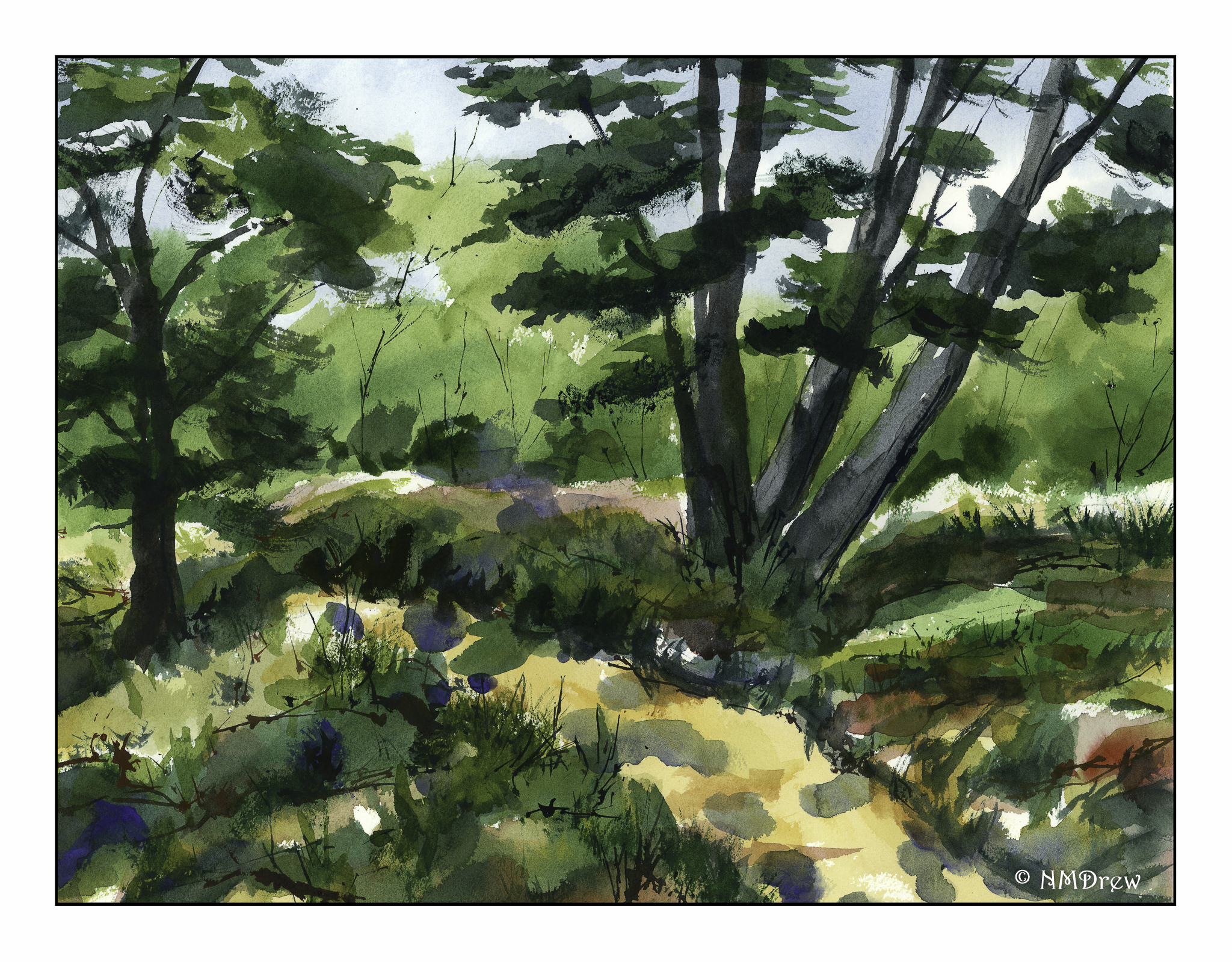
This is from a photo I took in Pt. Lobos Nature Reserve, along a path.  The light was dappled and flickering as the tree branches and leaves moved with the shifting wind.  It was a warm day, pleasant, and very, very much a prize of a day altogether.  I think this painting does a fair job catching it, though, as always, there are areas for improvement.
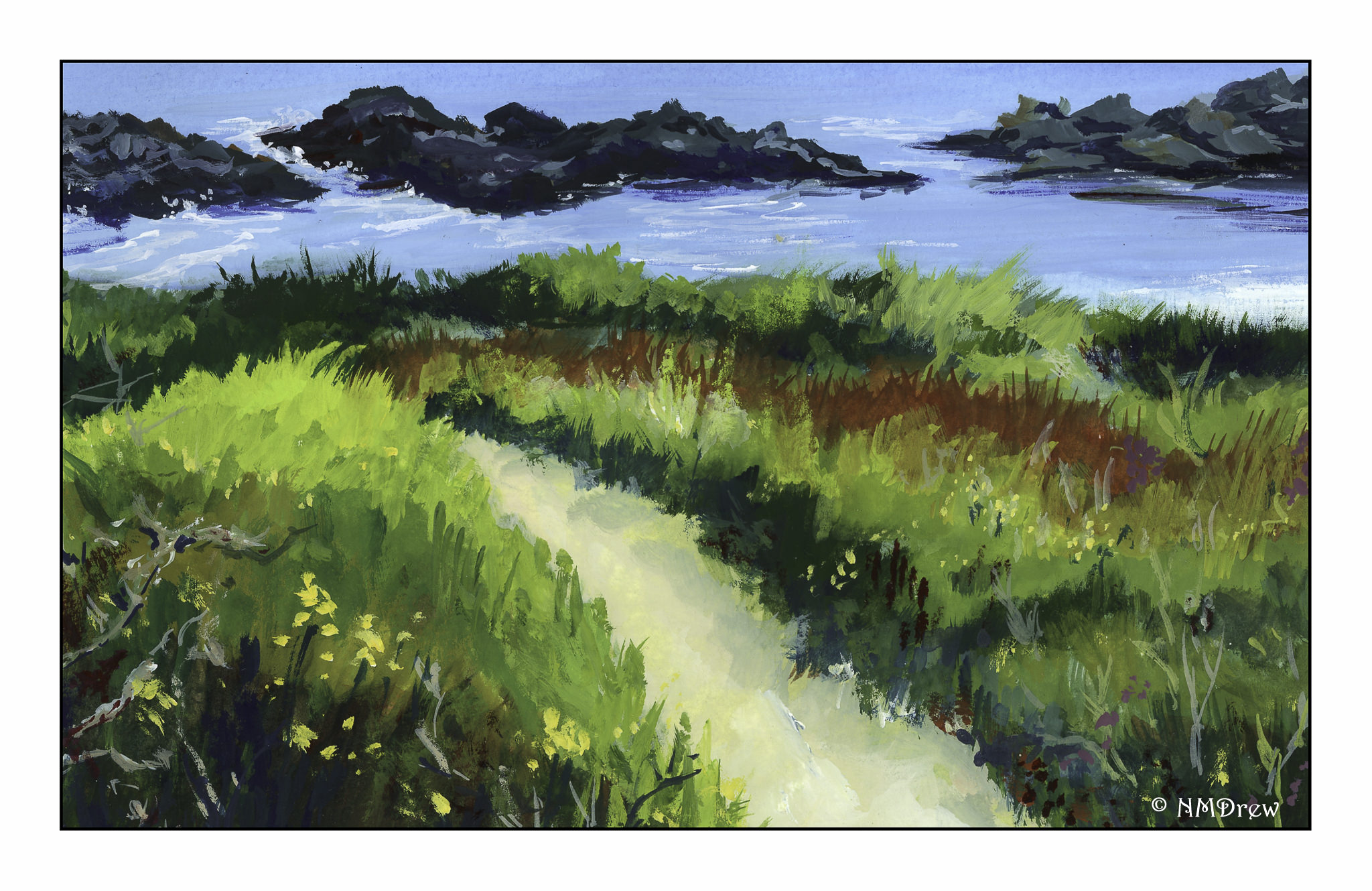
Shore Path

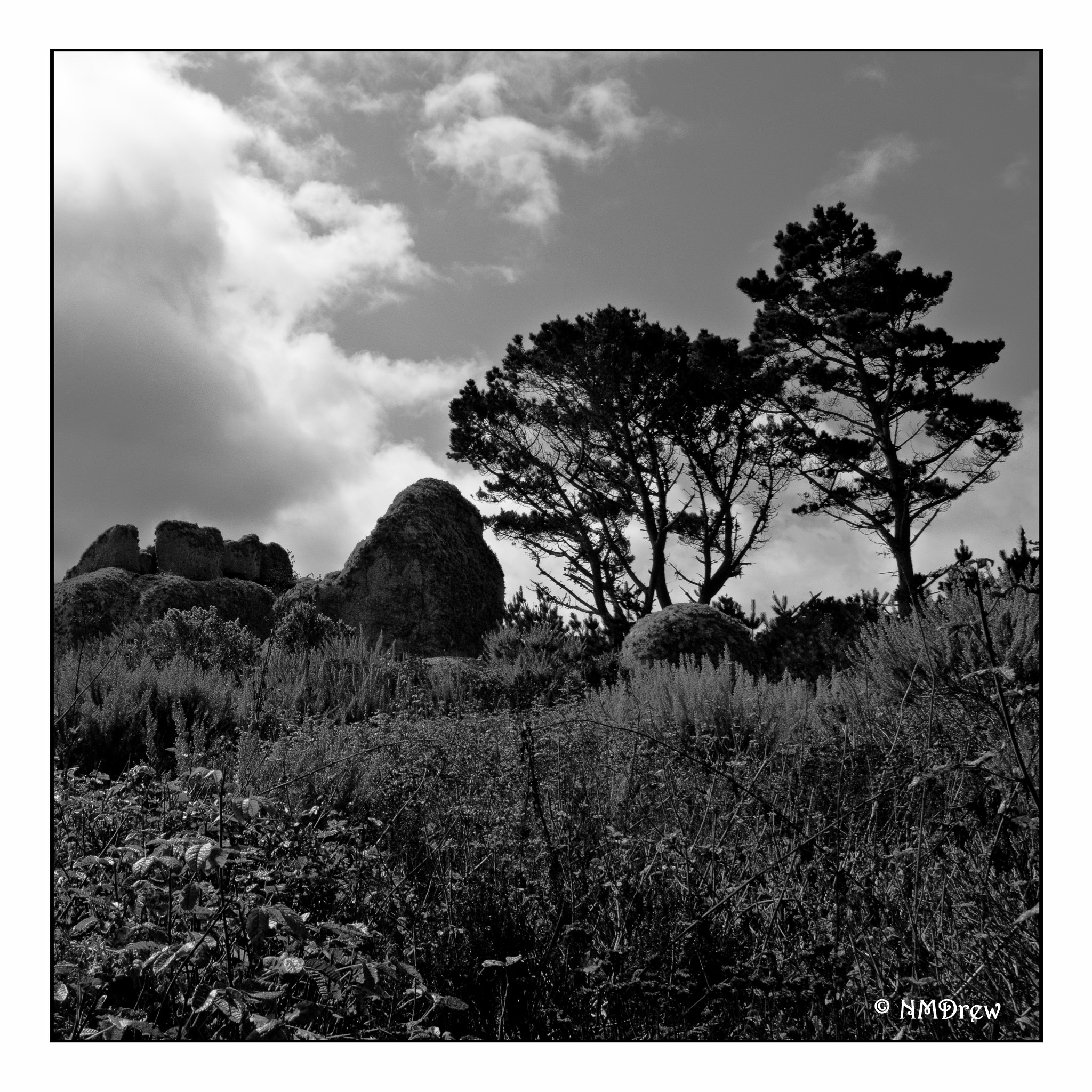
We spent a few days up on the Monterey Peninsula last week.  I took lots of pictures, some with the camera, some with the phone.  Digital is wonderful for catching so much – but it also keeps you from seeing things at times if you use the scatter gun approach that digital photography allows.  I tried to frame my photos more thoughtfully than I sometimes do, taking time to consider composition and so on.  All of this was with reference to the idea I would like to use material from my trip as potential painting subjects.

Above is one such example.  Once more, my sense of depth is not the best.  I tried to employ some of the techniques I know – atmospheric depth, less detail in the distance – but I really didn’t do a great job.  In some ways, the painting sort of created itself.  The path in the photo was curvier – way curvier – but it decided to become straighter as I painted.  I just noticed that!

Anyway, I am planning to continue to paint every day.  I do have some great subject matter.  I plan to alternate watercolor and gouache, and become a bit more academic – find things I want to work on, and then study it, whether from a book or an online video.

I can say I have improved over time, but I am not where I would like to be.  The question always at the back of my mind is, what do I do when I get where I want to be?

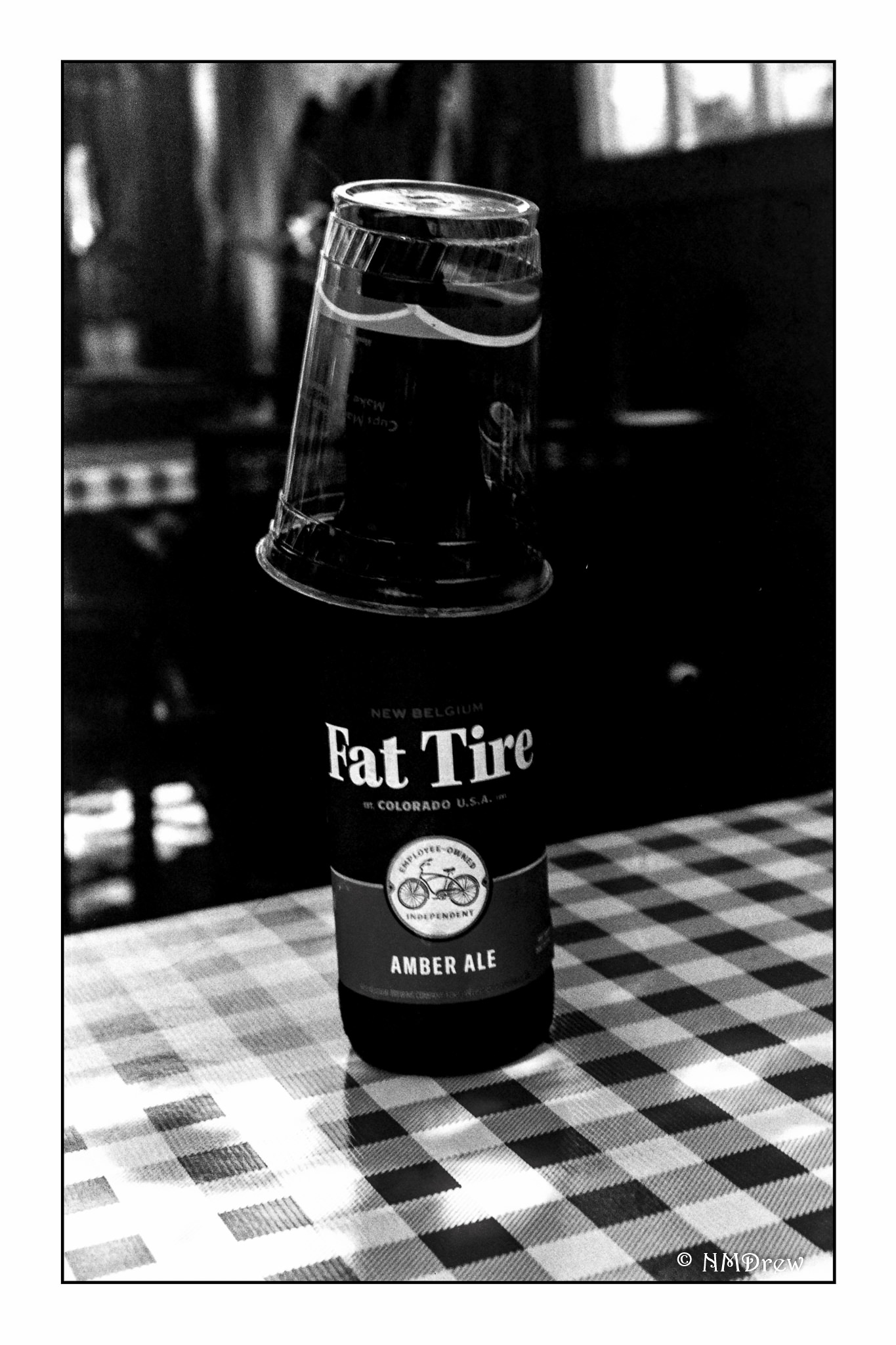
Fat Tire

Over a year ago I won a couple of rolls of Dubble film, and it was shipped all the way from Spain.  I finally got around to using it.  This is a desaturated image – since this is a black and white year – but the color one is pretty cool, too.  A lot of oddly colored films don’t appeal to me, but I really liked the results I got from it.  When I post a desaturated image from that lot, I’ll include the original, too.  I clean things up in LR and such, getting rid of the specks and threads of processing, but for the color ones, that is all I will do.


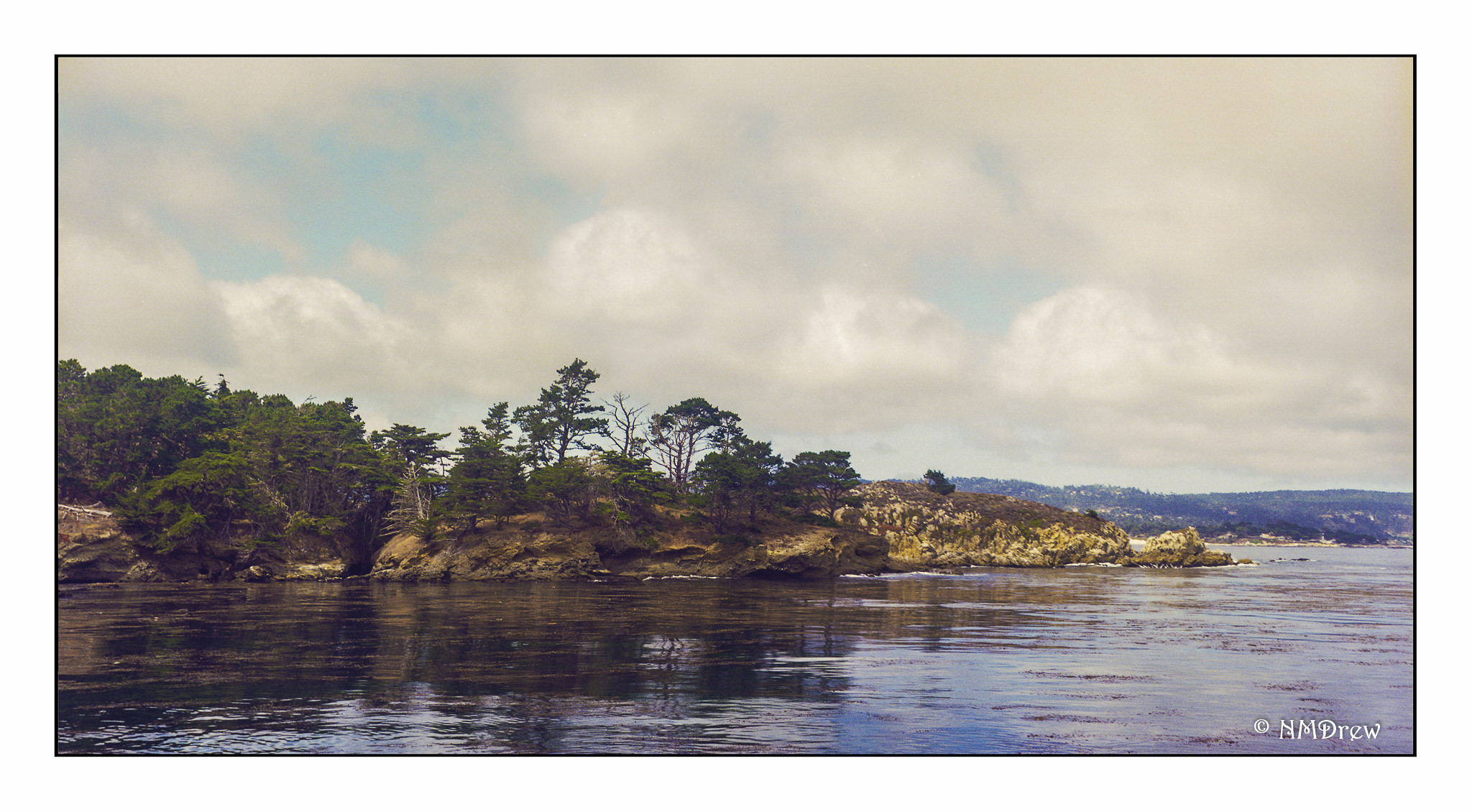
Whaler’s Cove with a 1937 Welta Weltur

There is something so different in the quality of a photo taken with a film camera, rather than a digital camera.  It is apparent even more so when it is done with an uncoated lens from 1937.  The lens in question is a lovely Schneider Kreuznach Xenar 2.8, 75mm, taken using 1937 Welta Weltur camera.  It is a folding camera that takes the still-available 120mm film.  I used Ektar 100 by Kodak, and applied the Sunny 16 rule for manual exposures.

I have a 6×6 version with a 6×4.5 reduction mask.  I thought I had removed the mask – but hadn’t.  All my supposedly square images came out rectangular!  I stitched two images together in PS6 and then tediously removed threads and dots of dust that were apparent even after scanning with Digital Ice on the Epson V600.

This photo makes me think of landscape paintings of the 1700s and 1800s – especially that turquoise sky.  Mayhap a painting will follow.