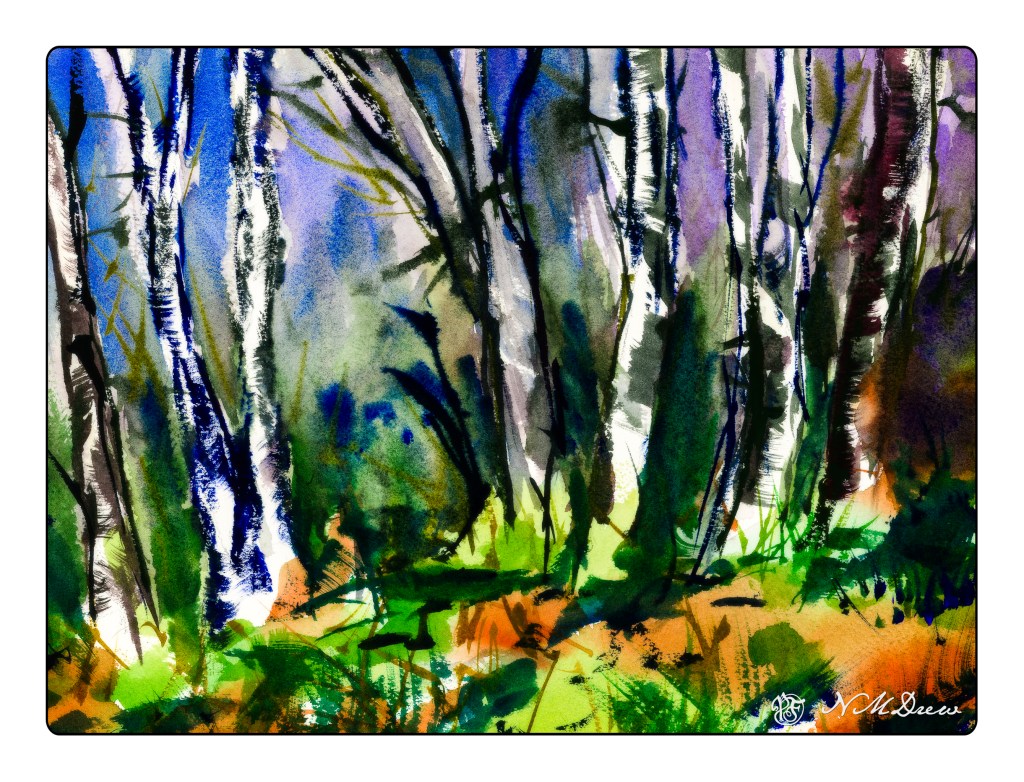
I have been trying to work with thin washes to lay in color, moving into negative painting – such as around the birch trees – and building the painting from there. I used different color mixtures to suggest the birch’s black areas on the trunk, and then used the darkest color I could mix to create some outlines for the trunks.
Watercolor is such an unpredictable, but somewhat predictable, medium that it can drive you crazy and fill you with delight.
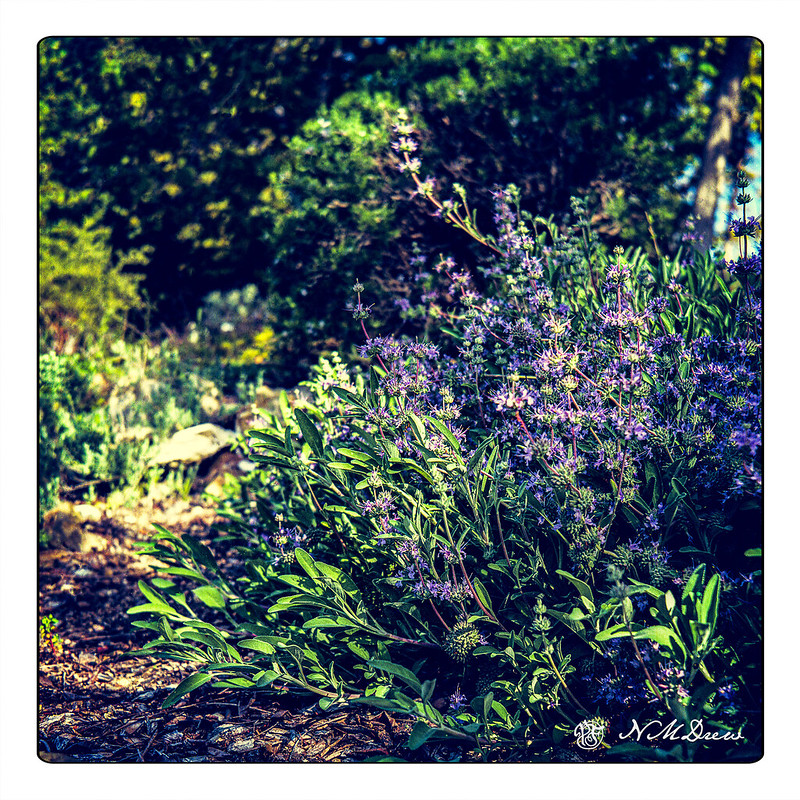
I took this photo a few years ago with my pre-WW2 Voigtlander Brillant. It is a simple camera that gives lovely results, as only a vinage camera can. I wonder if it is from their uncoated lenses.
I haven’t been to the local botanical gardens since last year, where this picture wast taken, when I fell down a hill and came home looking like something out of a horror film. A bit trepidatious to return, I admit. However, after the rains of last months, I know I have to go. The hills are greening, and the air of spring is in the air.
Definitely time to get out. I think more Ektar is definitely indicated, too.
After the rain comes weeds. This is a particularly prickly one, but not so bad as thistles! New growth comes in many forms, and this one, I think, will eventually produce some rather pretty, sticky, and prickly flowers.
Most of December 2021 saw rain and cold weather – at last! It doesn’t change the drought situation here in California, but it does help. I hope the bits of green here will soon spread over the hills, which have been dead and brown for far too long. Rain in the single-digit percentage points shows up on the weather forecast, but with the climate situation it is impossible to predict anything.
This is from the Chumash Trial area near my house. It is the same area where I spotted the Acorn Woodpecker in yesterday’s photo. I love this area because of the wonderful oak trees down this trail. Sadly, many were lost in the Woolley Fire (I think that is the one) from a few years ago that swept through this area.
One of the fun things about digital images, or digitized film images, is the playing around in post and creating presets. This one I rather like – it gives a sense of the softness that new growth brings to the world. Spring is coming, early of course in my neck of the woods, and the rains are the reason for the rainy season.



 Ink, Yarn & Beer