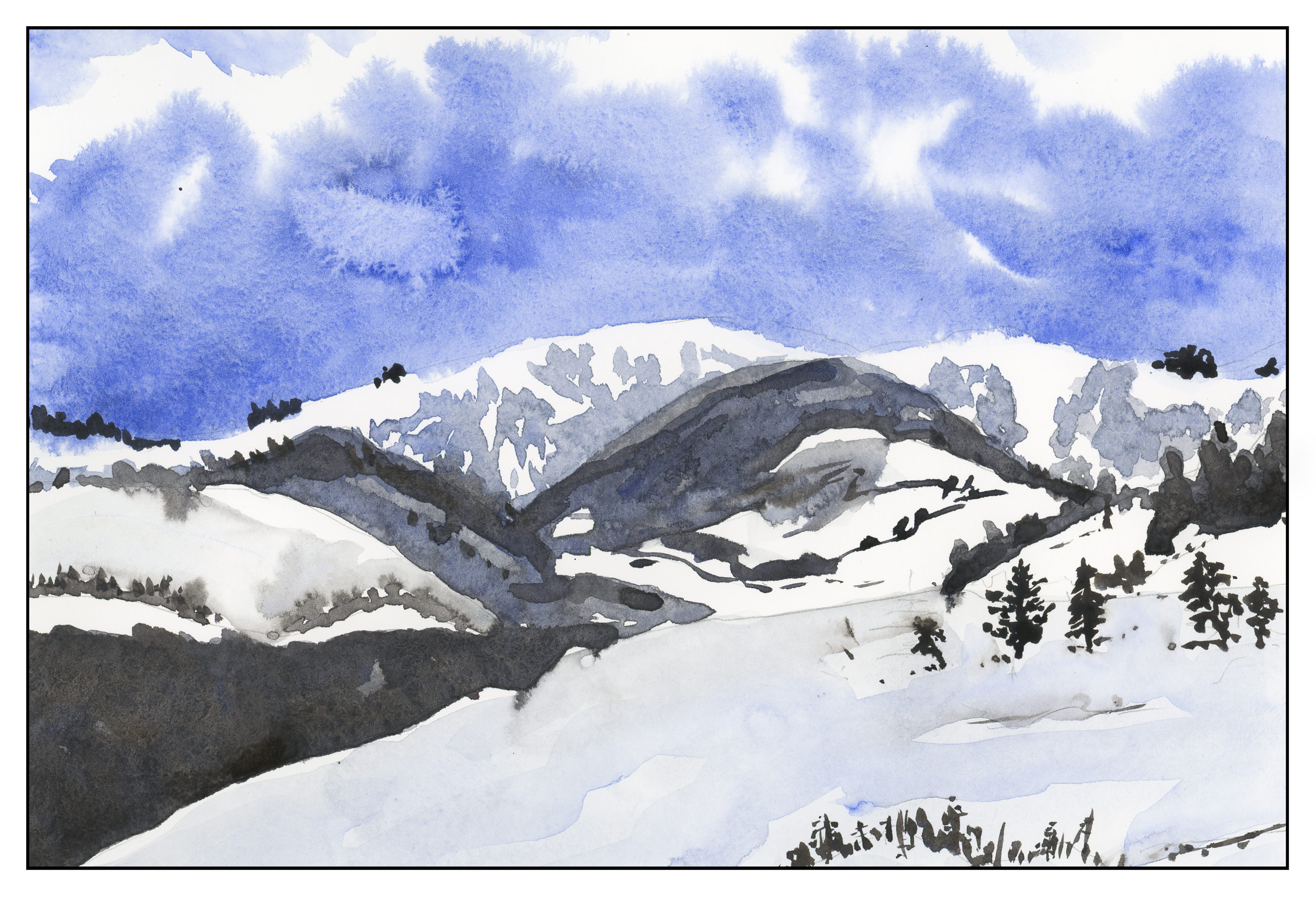
Another two-color study, this time using Burnt Sienna instead of Burnt Umber, along with the Ultramarine Blue. As an aside, looking up lists of “warm” and “cool” colors, the umber and ultramarine are considered “warm” by some. Beats me, as they sure look icy together. Here, the Burnt Sienna alone or diluted is warm in cast, but moves to dark and cold (in my eye) when combined with the Ultramarine Blue.
Category: Watercolor
Two Color Studies: Snowfall
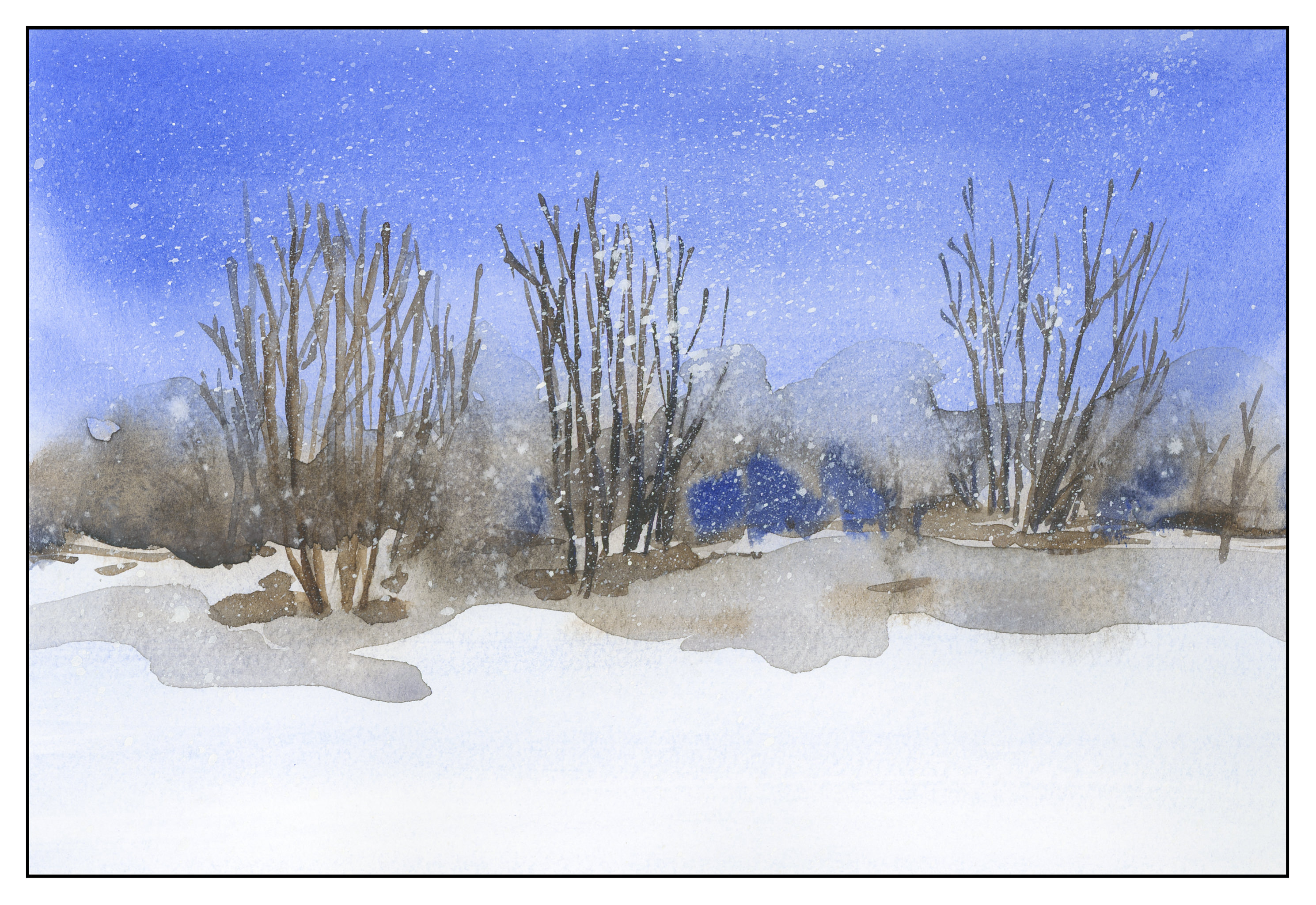
Another study in Burnt Umber and Ultramarine Blue. Cold, wintry colors. Here is a study done to practice laying down a gradated wash. Using a strong blue wash, I started at the top, then went all the way to the bottom, lighter by adding more water. Then, starting at the bottom, I used a dry brush to begin removing the wash, bottom up, until I reached the horizon. From there, a mixture of blue and brown to create the blurred trees in the distance. Then trees, shadows, and the shading under the trees. The paper is not the best for heavy washes – there is a bit of puddling – but the exercise of wash and 2 colors worked. Finally, I took some white gouache on a toothbrush and splattered it to create the effect of snow. Maybe this is really a 3-color study?
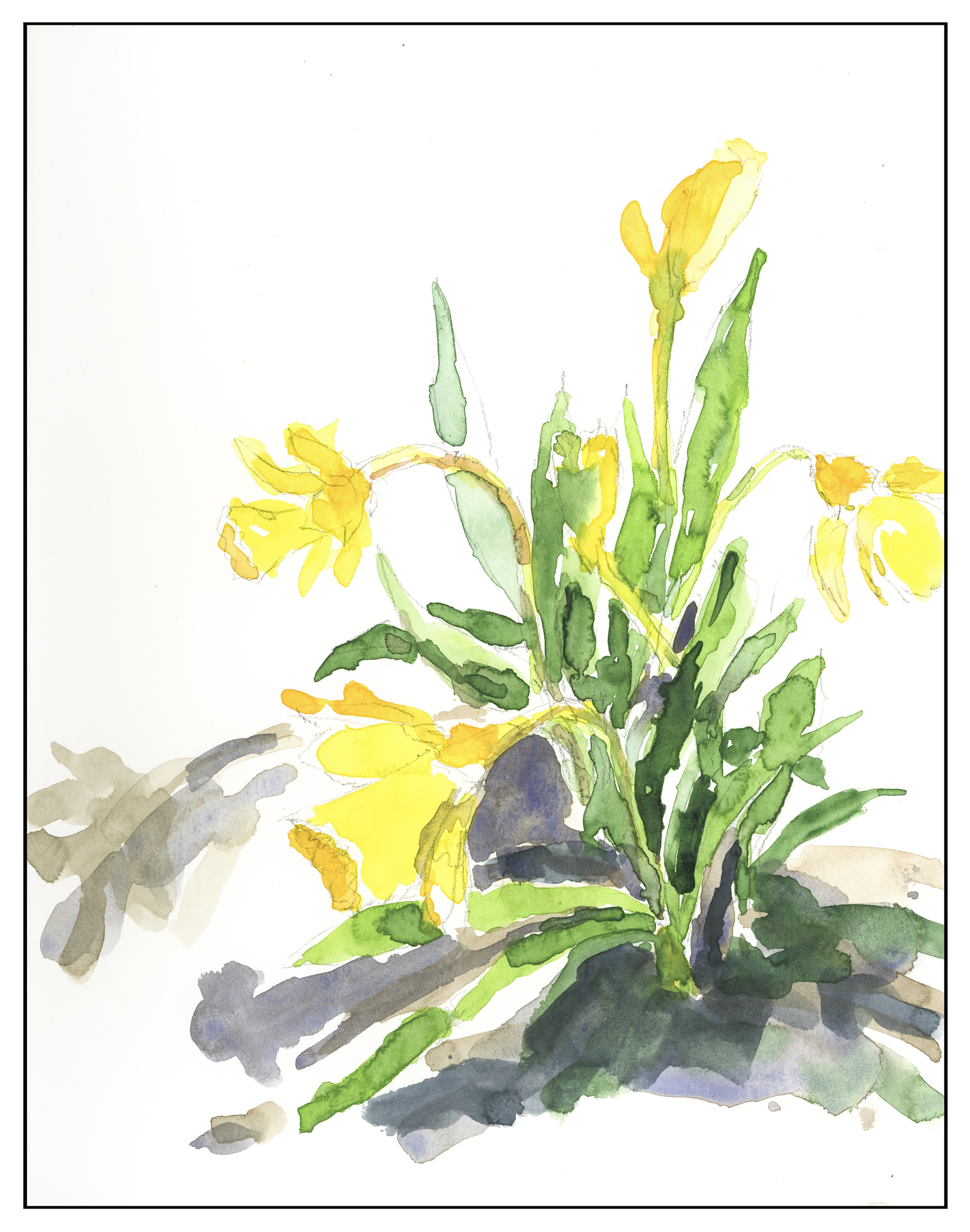
Daffodil Season, 1
Studies: Roadside
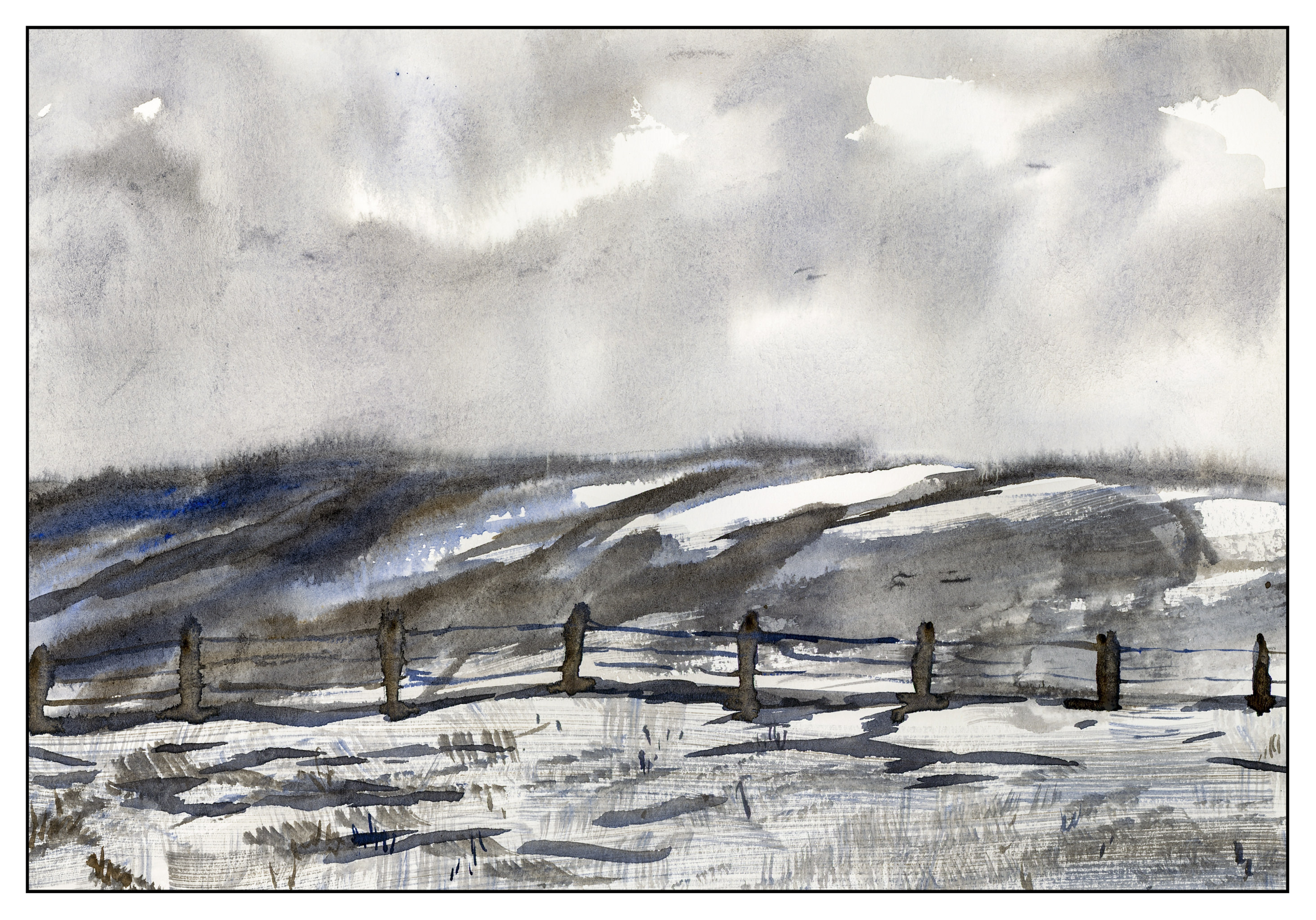
Last summer we drove through a lot of the wild west. The loneliness of Wyoming always gets me – vistas of open space, few cars, fewer people. Taking a picture during the summer is much different than what you see in winter, so I looked at some of the photos I took out of the window as we drove from Laramie to the Tetons. I tried to imagine how barren and cold it could be. Always the sky, always the distance, always the barbed wire fences. Again, in Ultramarine Blue and Burnt Sienna.
Besides trying to imagine a scene, I also tried out a new brush. It is a Cosmotop flat, by DaVinci brushes of Germany; it’s about 3/4″ wide. I wanted to see how it would do on the Canson XL paper I use for practice, in particular to see if I could get a “sparkly” effect with a dry brush. The paper is too smooth for that to work successfully, which is why there are fine lines in the foreground. (Sigh.) It did a pretty good job for wet-in-wet sky, and along the horizon line.