Flowers and Negative Painting

Negative painting is when you paint around an object. You can do this in any painting media, and it is really a good way to preserve the white paper for watercolors. As watercolor is transparent, painting over other colors influences the final result – for better or worse!

Today I decided to practice negative painting. Flowers are always a great subject (for anything!) – and a challenge, too.

I decided to start with an umbelliform flower – generic, no specific plant. If you know anything about flowers, think in terms of Queen Anne’s Lace or Cow Parsnip or Fennel. The flowers spread out over long stems branching off in a cone shape from a main stem. The shape is something like that of an umbrella, but the individual plant can be flat, convex, or concave. I chose a convex shape.

The first thing I did was pencil in the flower and stems. From there, a light wash of cobalt teal, diluted, to paint around the flower’s shapes. This took a bit of doing,and a bit of patience – to paint, and to let dry.

And, as you can see, the next step was to paint the flowers. The sun is above the shapes, so I tried to make the upper parts of the flower brighter than those bits directly beneath, and then with a spot of lighter ones further down the stem. By allowing the background to dry around the white areas my flowers were painted, in general, on a clean bit of paper. The colors are more clear. Yes, I did go in here and there later to paint onto the flowers again, and on the background, in an attempt to make sure I didn’t have any overwhelming pattern repeats and to help or improve areas I thought were not quite to my liking.

My next attempt is Spanish Broom. If you know what broom looks like, that is great – you know there are a lot of bright yellow flowers and buds which all clump beautifully together on a bush with dark green foliage. I did this background with the same goal as the umbelliform painting – keep white paper for more clear colors.

I took this painting a lot further than my umbelliform when it came to negative painting! I did 4 to 5 negative painting layers to get the sense of busy-ness of a Spanish Broom plant. I first added cadmium yellow, painting into the white paper and leaving some uncovered. From there, a bit of quinacridone gold or yellow ochre to add dimension to the flowers. Once these colors were dried, I went in with a slightly darker and more yellow green to depict leaves, and from there consecutive layers of darker and darker greens. In the end I diluted some white gouache into a greenish yellow mess on the palette to paint into the leafy areas.

As with the previous two flower paintings, I did a quick, simple outline in pencil. However, instead of painting the entire background and in between plants, I used the big green leaves of the Greater Celadine plant as a frame for its bright yellow flower, and greenish-yellow and dark green buds. Again, leaving white paper was important for the freshness of color.

The next step was to paint the yellow flower itself overall – no shadows or gradations until later. The yellowish-green buds were painted more wet-in-wet for blurring. I also painted some layers of darker greens and warmer greens on the leaves, and a mix of cadmium yellow and ochre for the shadows and stamens (pistils? – can never remember!) within the flower itself. The final touches were the fine hairs on leaves, stem, and buds. I used pure white for painting them on the colors, but added some lavendery green with the white gouache to paint onto the white paper in the background.

These exercises were time intensive, but in the end the focus and willingness to be patient paid off. I like each one for different reasons and I used each to try different ways of painting flowers. All of these are in my big sketchbook, and I am beginning to realize with each painting experience how much both a sketchbook and painting daily as much as possible are paying off. This along with losing a fear of failure a “formal” painting can bring are allowing me to explore and experiment in ways I never foresaw.
Water in Watercolor

Today I spent the morning running errands and doing chores, the afternoon playing with a friend and doing some photography. The day went by delightfully, but there is that need to pick up a brush and some paint. I wasn’t in the mood for trying to make a painting of anything, but the idea of waves and oceans has been going through my mind, and now it is time to get some ideas on paper. So, of course, YouTube comes to the rescue, and I found a nice, simple, easy video by Paul Clark.

Paul Clark’s videos are informative and easy to follow – as well, I like his presentation style and his paintings. In the above video, in 20 minutes, he shows how to paint water in increasingly more complex ways.

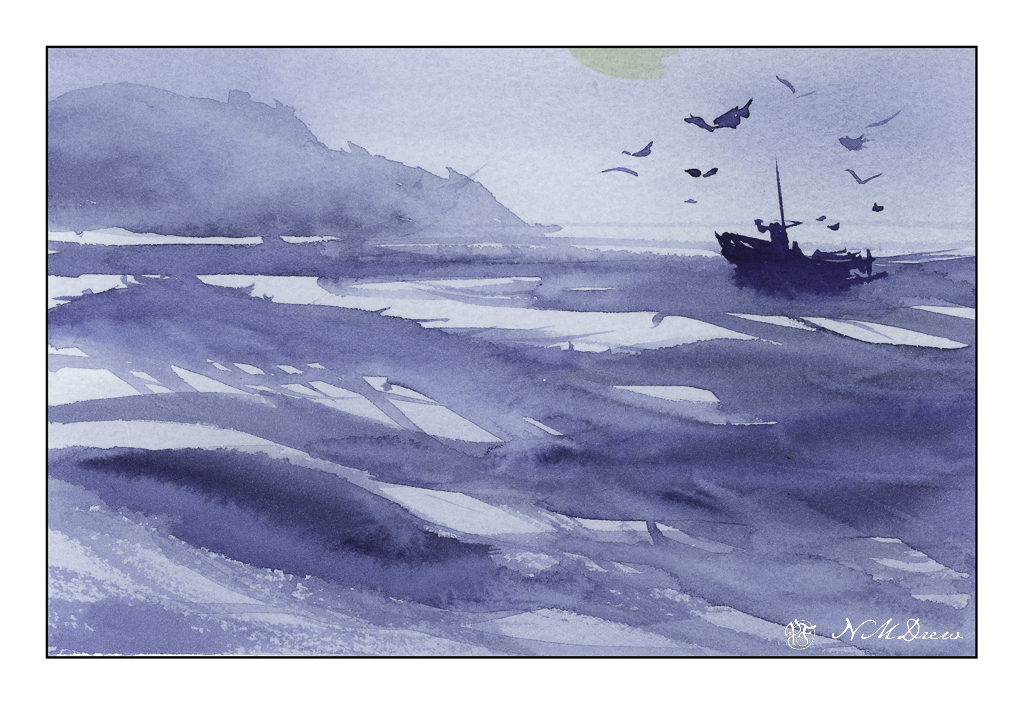
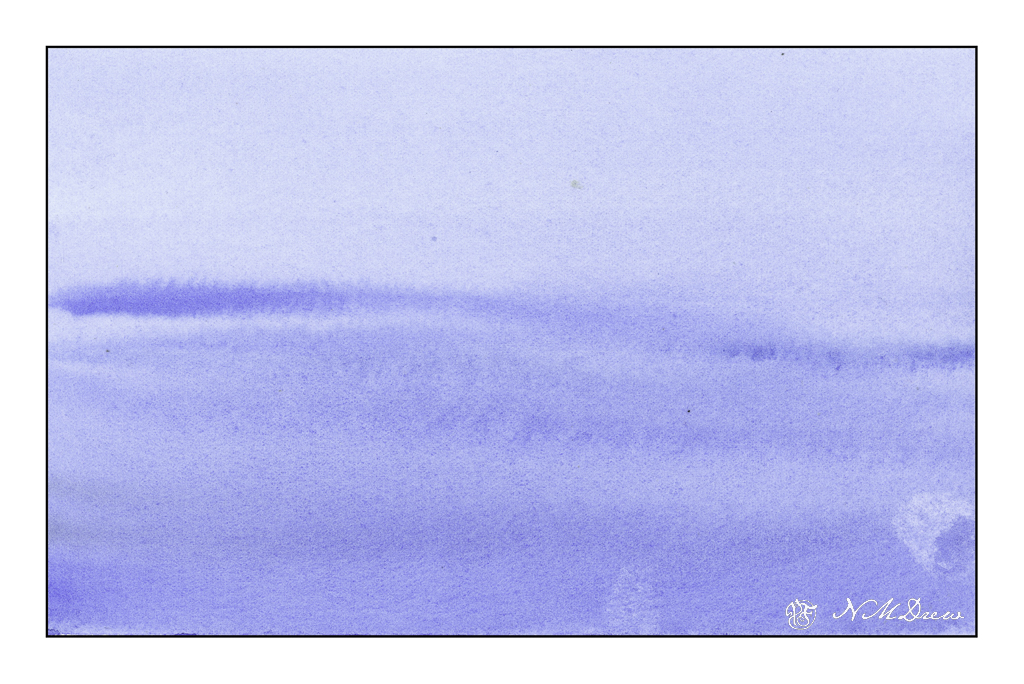
Above is just a simple, gradated wash, with the greatest density of value at the bottom of the page. From there, some paint is lifted, and while the paper is still a bit damp, more lines of color are painted into the blue, wider ones at bottom and more narrow at the top to suggest distance.

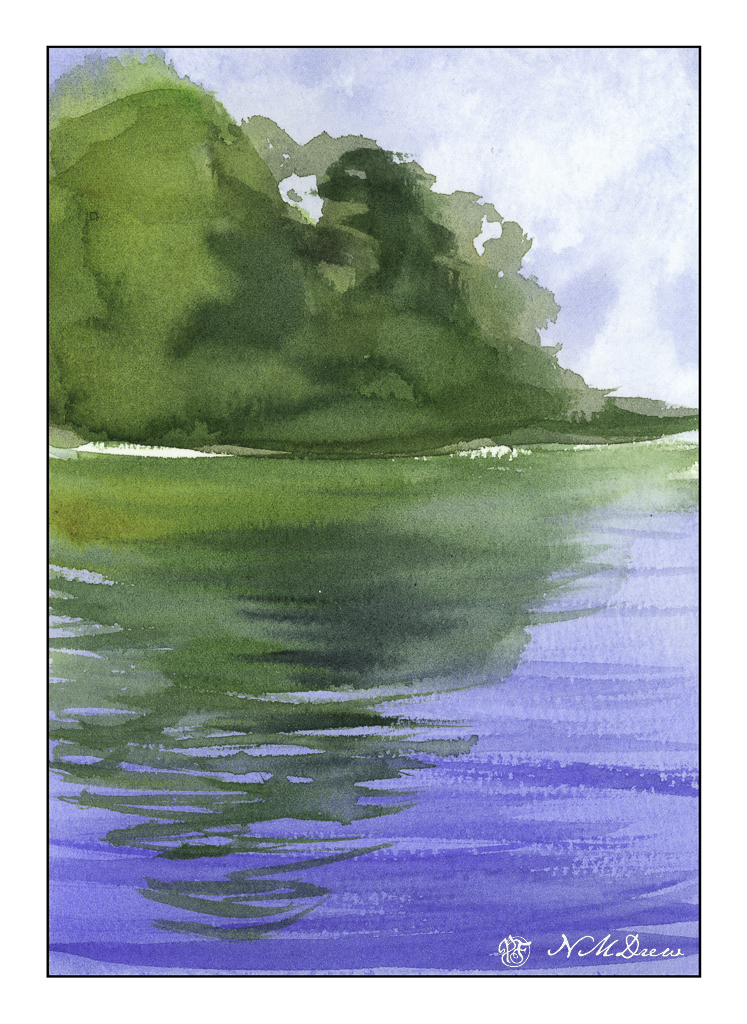
The next is reflections of trees on a lake. The trees and sky were painted first and allowed to dry. The water was then put in, using a gradated wash, darkest at the bottom. Time was given to put in suggestions of waves or reflections – this required waiting for the paint and paper to dry. The hair dryer is perfect for this. Watch how Clark does it in the video as it get a bit more complex than what I am describing.

The third one is done with one color of paint. I used a bit of what I had mixed on the palette – ultramarine and indanthrene blues. Clark’s painting is far better than mine, and we will leave it at that! I want to return to the video to watch it again as I know I worked really quickly – too quickly – to catch all the fine points.

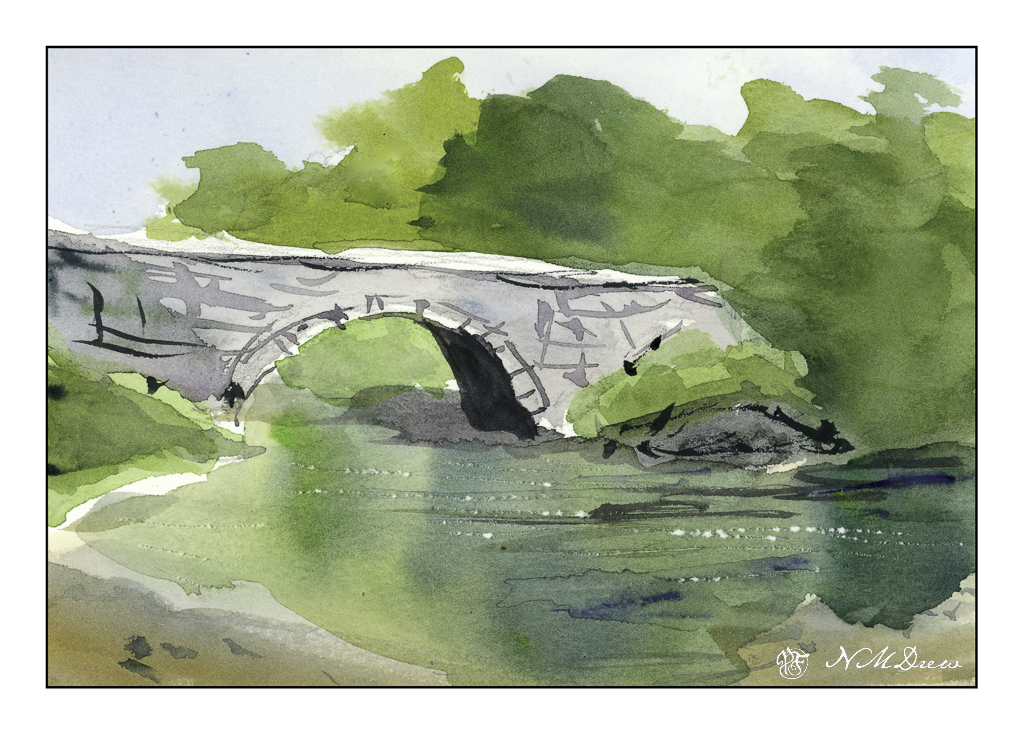
From the ocean we now move inland, to an old bridge spanning a river. I think was my favorite one, and I was quite happy with my results. The white sparkles of light on the water is done by using a knife point to dig a bit into the paper. Techniques varied here; again, refer to the video.

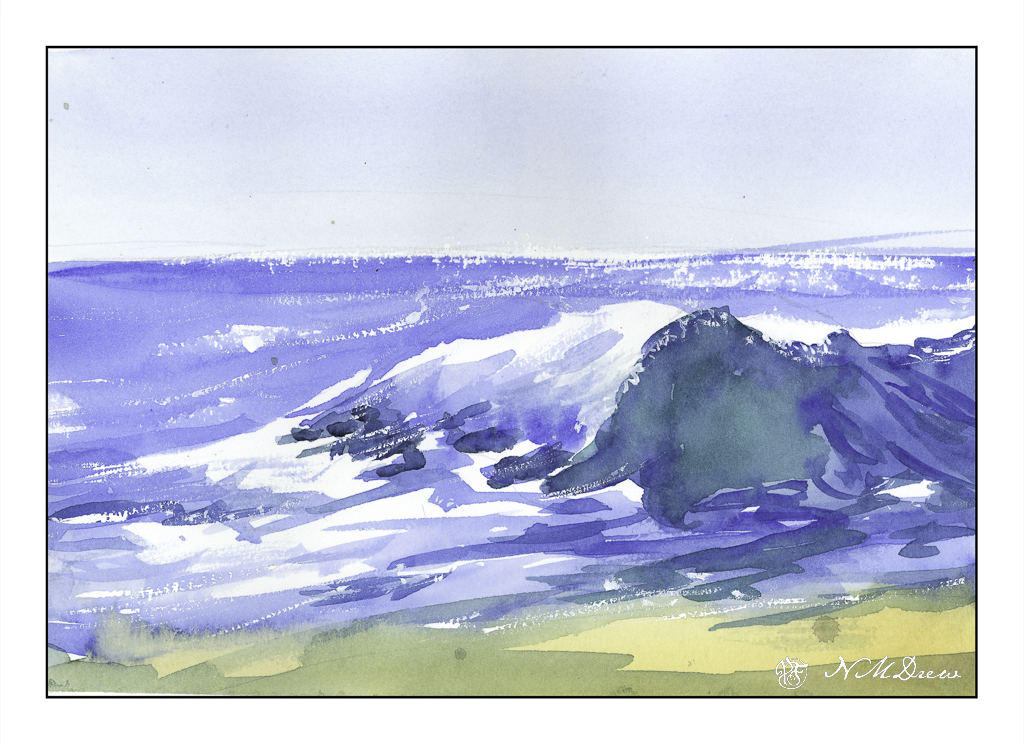
Now, back to the beach. My painting is quite clumsy in a lot of areas. I rather like the sparkly water on the horizon, and the way my white gouache dry brush adds to sparkles. While my painting is definitely that of an amateur, I have a better sense of what to look for, to see, in a wave. The idea I had initially was to learn a bit about crashing waves, and this one is a good introduction to them.

Altogether, I spent about 30-40 minutes doing these studies. I watched and paused the video for each painting exercise, and then went to work. The goal is to do and practice, not create a beautiful work of art. The act of painting is what teaches me initially, and then I can analyze a bit more to hopefully create more successful whatevers – here, waves and water and reflections.

Practice is something a sketchbook gives room for – a playground to explore. Paul Clark’s videos are really nice and I do suggest them. Meanwhile, it is time to go to bed!

Fishing Boats in a Misty Harbor

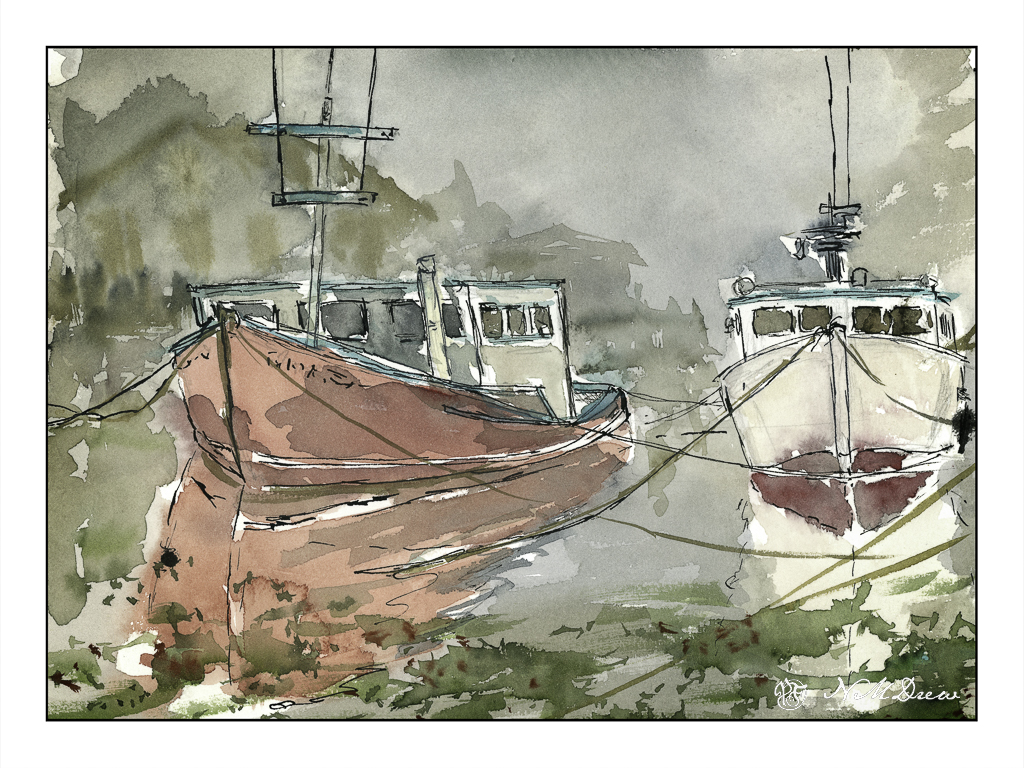
This ink and wash painting sort of drew itself. I wanted to paint some more boats, inspired by yesterday’s fortress / citadel / rock ship! I found some photos of fishing boats, drew them first with pencil and then inked them in. From there, lines and misty buildings, and seaweed in the foreground. Now, if you are fishing boat person, you will probably laugh at what I have done – and I don’t blame you – what are some of those things on the boats?!

That said, I think the boats turned out fairly good. The swoop and curve of a boat is always a challenge as most things look like rectangles and squares, with corners rather than a bulging curve out of the water. Reflections, too, are a challenge. I think the direction of the sun influences if reflections are shorter or longer in water – maybe I read it in Ted Kautzky’s classic Ways with Watercolor.

And so I leave you to ponder the boats, the fog, and what might lurk in the distance . . .

Somewhere A Citadel

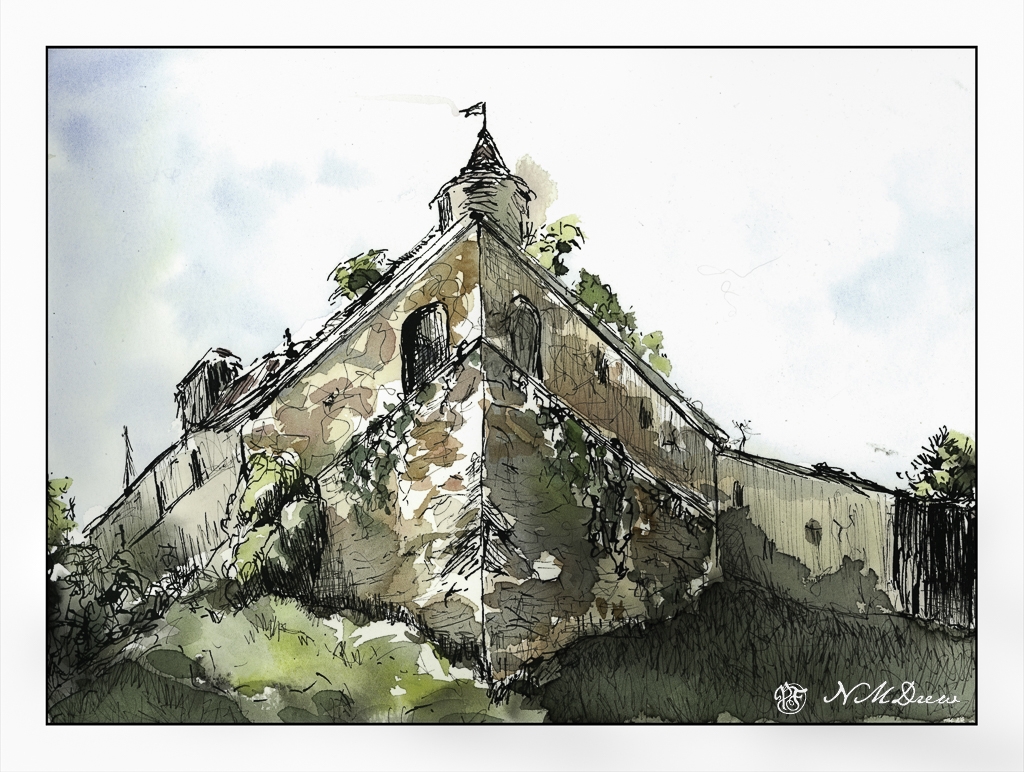
I travel the globe through watching videos, photo websites, and royalty-free images. This time I visited someplace in France, searching Pixabay for photos matching the term “citadel” and found some really interesting things. What I wanted in particular were photos with strong architectural details and perspective to use as practice for drawing / painting buildings. The one I used in the painting below was taken from a low vantage point and looking upward. The upper reaches of the tower were centered over the corner of the citadel, and the sides of the citadel sloped steeply downward.

Working from a photo is often difficult, especially if it is small on screen and cannot be enlarged. The left and right sides of the building were confusing, so I just sorta made up what they were, but the center of the building was pretty clear in the photo. I drew first with ink, then added color, and then returned to add more ink and more color a few times. The ink proved helpful in making the right side of the painting darker, as it was in the photo. I didn’t want to add a lot of paint as the purpose of ink and wash is just that – delicate touches of color to the ink drawing.

I really like working with ink for drawing buildings. It will get there some day! Right now I still struggle with both depth and perspective, but practice like this is always fun, and usually to almost always, rewarding.

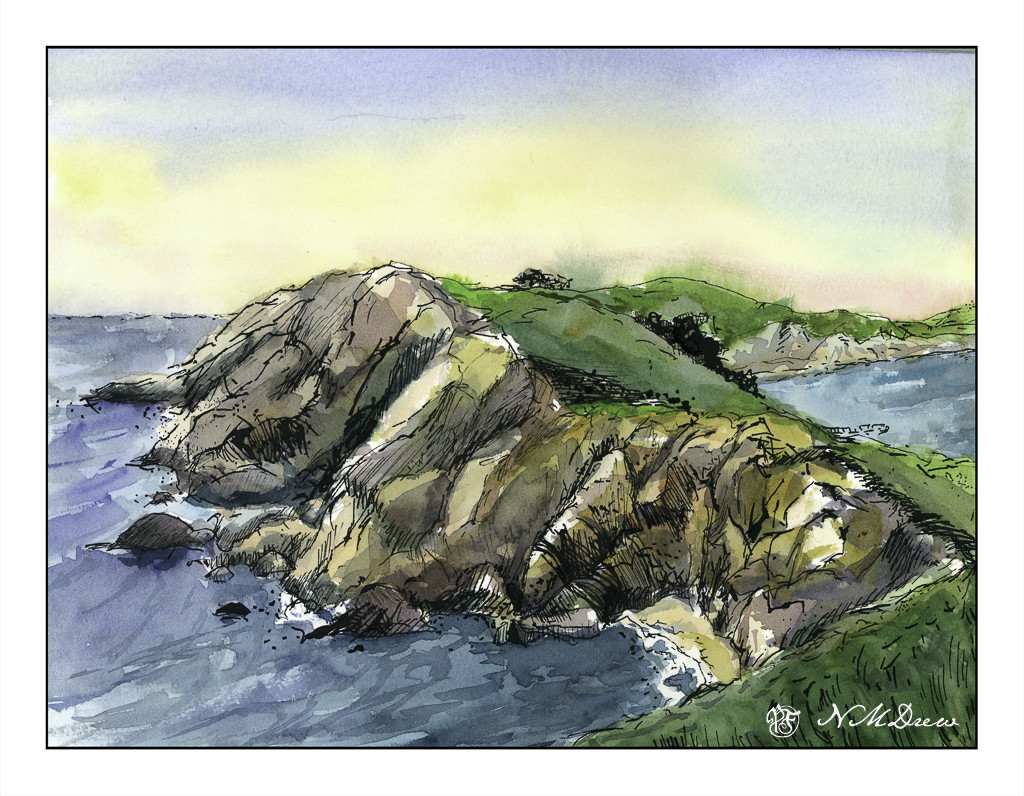
Impression of Wildcat Beach

India ink, watercolor, sketchbook. Wildcat Beach is one of the most beautiful beaches along the California coast, and what makes it interesting is not only do you see the ocean, you see the other side of peninsula, more water, and you want to wander along its top, and on the shore, or sail around. There is a lot of mystery here, beauty on a sunny day, strange and eerie in the fog and mist of the summer coast.