A Crostata of a Different Flavor

Sunset Magazine is filled with interesting things. Recipes of all sorts may be found, and the holiday issues are some of my favorites. The Thanksgiving edition had a particularly intriguing recipe, which I made for yesterday’s family get-together. You may find the original recipe here; what makes it particularly interesting is the fact it is made with an artisan flour derived from a different wheat than is in your average flour.  It is made with

Emmer farro flour, made from whole-grain emmer wheat, gives the crostata a rustic texture and great flavor. Because it’s low in gluten, it needs to be mixed with all-purpose flour to hold the crust together

The flour is from Bluebird Grain Farms whose specialty is heirloom organic grains.  While I did not use their flour, I think I am quite likely to try it in the near future.  I’ve added a link to their site under the Farmers to Admire category.

Below is how I made the crostata.  I think that you can use this recipe as a basis for any fresh, seasonal fruit – the frangipane is a wonderful flavor!

PASTRY

  • 1 1/2 c. whole wheat white flour
  • pinch salt
  • 1/2 cup plus 2 tbsp. cold unsalted butter, cut into cubes (1 stick of butter, and 2 T more)

Use a food processor, as in the original recipe:  pulse flours and salt to mix. Add butter and whirl 3 seconds. Drizzle in 1/3 cup ice water, pulsing until mixture comes together in a shaggy ball but still has bits of butter showing. Form into a disk, wrap airtight, and chill at least 2 hours or overnight.

FRANGIPANE

  • 1/4 cup unsalted butter, at room temperature
  • 6 t. white sugar
  • 1/3 cup blanched almonds, finely ground
  • 1 large egg
  • 1 T flour
  • 1/4 to 1/2 tsp. almond extract
  • 1/4 teaspoon vanilla extract

Beat together 6 T. of sugar with butter until light and fluffy.  Mix in almonds (I used ground almond meal from Trader Joe’s), egg, flour, extracts, until smoothly blended.  Set aside.

CRANBERRIES

  • 3 cups fresh or frozen cranberries (1 12-oz. package)
  • 1/4 c. white sugar
  • 1 T. water

Mix together cranberries, sugar and water.  Set aside.

ASSEMBLING CROSTATA

Roll out dough on floured surface into a 14-inch circle.  Rotate and flip pastry as you roll it out.  Trim edges, and transfer to a round pizza pan or rectangular cookie sheet.  Line either with a sheet of parchment paper.   (I used a cookie sheet, only to find it was to big for my refrigerator, so I tilted it to fit, and had no problems with any berries escaping!)
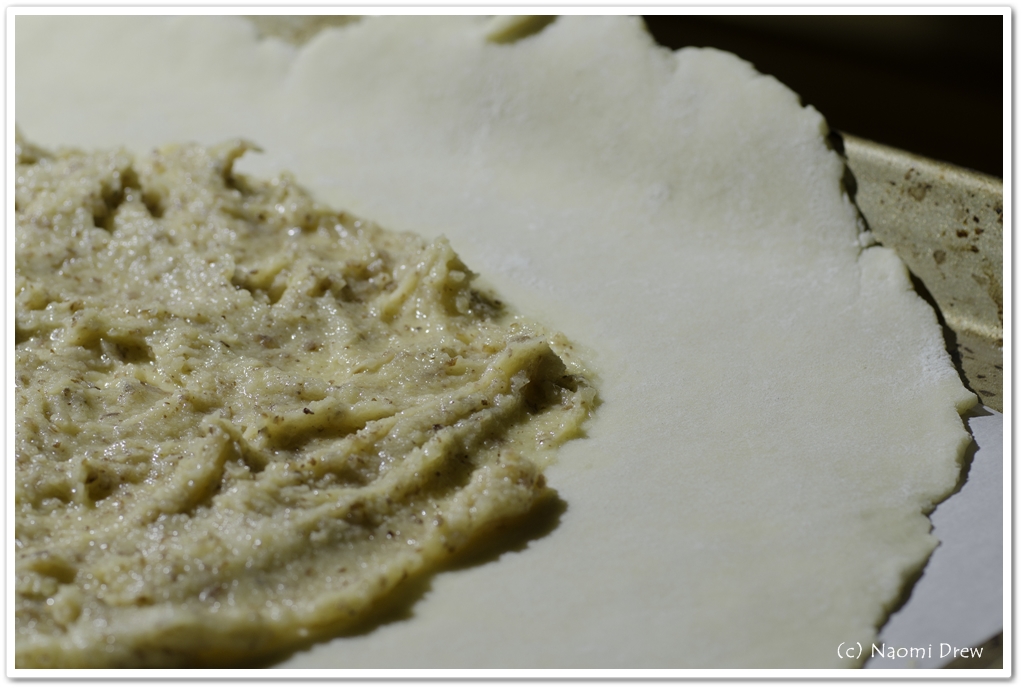
Spread frangipane over inside of dough, leaving about a 3-inch border outside your circle of frangipane.

Place sugared cranberries over the frangipane mixture, pressing them in a bit to help keep the cranberries in place.

Fold the edges of the dough up and over the cranberries – do this gently! – and create pleats or folds as you go.  Once you do this, pinch the pleats in place a bit to seal the dough.  This will prevent leakage during baking.
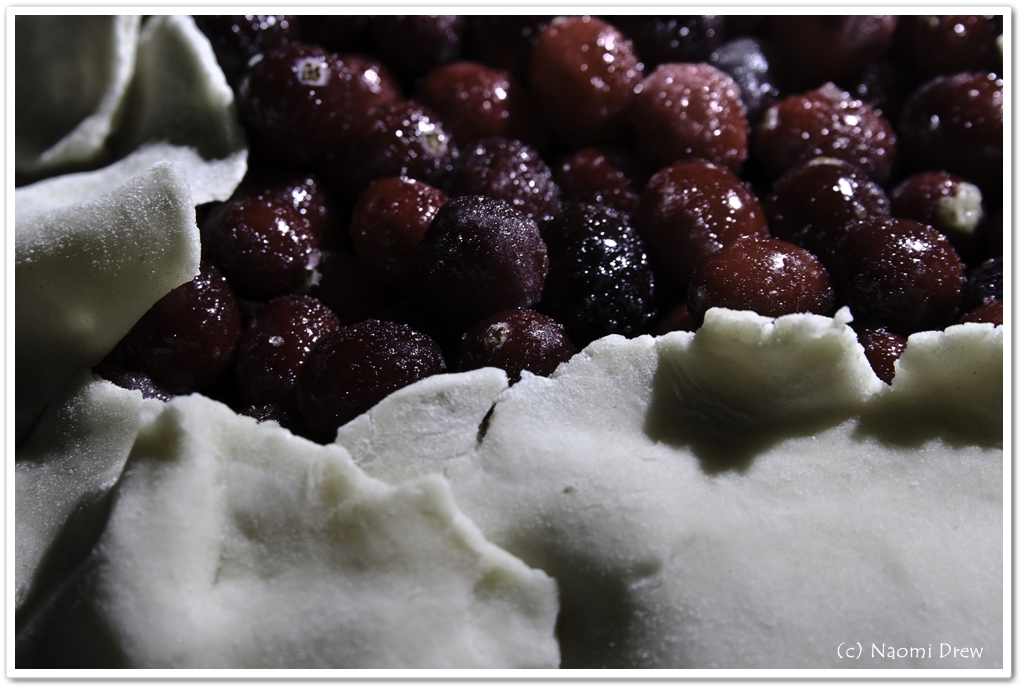
Place crostata in refrigerator for about 30 minutes before baking.  While you do this, preheat the oven to 375 F with the cooking rack in the middle.  I used my oven on convection, but changed nothing as far as temperature or time.

Bake crostata for 45 minutes.  I checked mine at 35 minutes, and then continued.

Cool on parchment paper and cookie sheet, then transfer crostata and parchment paper to cookie rack to finish cooling.

Serve at room temperature, or warmed in the oven.  Great with vanilla ice cream!

Soup of the Evening

I have had a squash or two lying around for a few days. I’ve roasted one, so tonight I decided to make soup out of the other. It is an acorn squash, which is not an easy one to peel and dice because of its ridges, but peel and dice it I did. I think next time, I will probably cook it before I turn it into soup!

Anyway, I took half a yellow onion, diced it fine, and sauteed it in olive oil and butter. Then, I took the diced, peeled acorn squash – seeds removed – and added it to the mix. I let it both onion and squash caramelize a bit. Then I added about 1 cup of sliced apple – I had one with a bruise, so I cut out the bruise – and added it to the onions and acorn squash, stirred it a bit, then added two cups of chicken broth (unsalted) and another two cups of water. Seasoning was a teaspoon of dried thyme. Then, left on its own to simmer about 30 minutes.

Meanwhile, I got the blender out, as the plan is puree it all, and return it to the pot. From there . . . it may be enough with a bit of salt and pepper for the final seasoning, or I may give it a bit of a bit by adding some ginger or aleppo pepper. In the end, though, I just pureed it in the blender, added a bit of salt and pepper, a bit of extra water to thin it out, and a dollop of sour cream. Suggestion:  do this in small batches – my kitchen had soup all over the place because I just put the whole mess in the blender, forgetting that blenders are enthusiastic!

The result is a soft, creamy soup, with a delicate sweetness from the apple, and more suited to an appetizer than a “hearty” meal. With a nice salad, and a tasty roll, the result is also perfect for a light meal.

Acorn Squash Veloute

  • 2 T. each live oil and sweet butter
  • 1/2 yellow onion
  • 1 acorn squash
  • 1 sweet apple
  • 2 c. chicken broth, unsalted
  • 2 c. water
  • Dried thyme, salt, pepper
  • Sour cream

In a 3 to 4 quart sauce pan, place diced onion and saute in heated olive oil and butter. Peel and seed squash; chop into chunks. Add to onion when onion is pale yellow, and continue to saute, allowing onion and squash to caramelize a bit. Dice apple, add to onions and squash. Add 2 c. unsalted chicken broth. Bring to simmer. Add 1-2 tsp. dried thyme. Simmer covered until all ingredients are tender. Puree in blender in small amounts, then return to sauce pan. Thin with water if necessary, and balance seasoning with salt and pepper to taste. Warm but do not boil.

Serve in bowls with a small dollop of sour cream on top, or a drizzle of thin cream.

Comment

Next time I make this, though, I will roast the squash in the oven and scoop out the seeds and flesh. Peeling it was not hard, just annoying!  The flavor may be more pronounced as a result.

Vultures & Brownies

It seems like there are machines out there, waiting for blogs to post new posts!  I received oodles of spam in the past 24 hours, as comments on my previous post.  Hmm.  The vultures are circling . . .

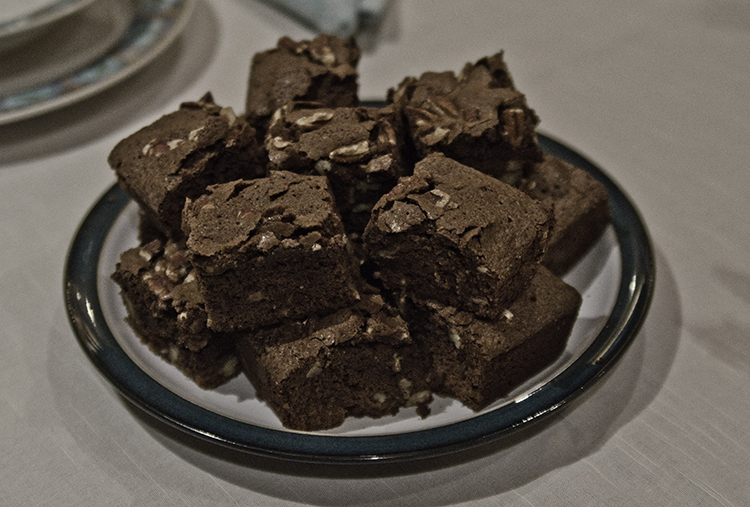
That aside, we had friends over for dinner – homemade pork chili verde and chocolate brownies for dessert.  The chili verde is a wonderful dish for cold nights as it is filled with pork, pasillas, jalapenos, tomatillos, cilantro, onions, garlic, cumin and crushed coriander. The brownies are plain old comfort food, easy to make, and very tasty, chocolatey, and filled with pecans.

– – – Brownies! – – –

Brownies

Preheat oven to 350 F.

  • 4 squares unsweetened Baker’s chocolate
  • 1 stick butter
  • 4 eggs
  • pinch of salt
  • 2 c. sugar
  • 1 c. flour
  • 1 c. pecans, with some set aside to sprinkle on top

Bring eggs out to warm to room temperature. Melt chocolate and butter together over low heat on stove. Cool to room temperature. Beat eggs, salt, and sugar together until thick and lemony. Beat the eggs very well, to incorporate a lot of air, as this is the only leavening used in this recipe.

After eggs are properly beaten, using a spoon (not an electric mixer), stir in melted chocolate and butter until not quite completely mixed in. Add flour, continue to mix until incorporated and mixture is evenly colored. Add pecans. Pour batter into 9×13 inch pan, bake at 350 F for 30-35 minutes. Bake less for gooey-er brownies.

My opinion is that a metal pan is best for this recipe. If you use a glass pan or convection oven, drop the temperature by 25 degrees.

Save some batter to lick – it’s awfully good!  But if you worry about salmonella, avoid this step in the clean-up.

Lemon Shortbread Cookies

Where I live, people give me lemons.  Lots of them.  I use them in cooking, in my drinking water, and wherever else they might be needed!  Right now I have about 40 sitting around, so yesterday I put them to work.  Here is the result . . .

Lemon Shortbread Cookies
2 1/4 c. white flour
1/4 c. cornstarch
pinch of salt
1/2 c. sugar
2 sticks unsalted butter, softened
1 T. finely grated lemon zest

Preheat oven to 300 F for a glass pan and / or a convection oven, or 325 F for a metal pan, not using convection. Place rack for cookies in lower third of oven.

Pan size: 8×12 pan, or use a 9×13 pan, and don’t spread the dough all the way to the edge of the 9×13 pan’s short side.

Whisk together cornstarch and flour in a bowl. Set aside. In another bowl, beat together the softened butter and sugar until light and creamy. Add the flour-cornstarch mixture and beat in until crumbly. Knead by hand to mix the dough until it is smooth and pliable in the bowl, about two minutes.

Using the butter wrappers, or other fat, lightly grease cookie pan. Pat (I mash!) the cookie dough into the pan. Prick the cookie dough with a fork. If you are feeling creative, you can also use a cookie sheet and parchment paper, and shape the dough into circles. You can also use pie pans for circular cookies. Just be sure, no matter what you use to bake your cookies in, to prick the dough with a fork in several places.

Bake the cookies for 30 minutes, more or less, depending on the size of pan used, and thickness of cookies.

Note
In my opinion, this is the best shortbread cookie recipe, and can be used as the basis for any shortbread you might desire. I’ve added chopped candied ginger, and espresso powder and chocolate chips, just to give you a few ideas. The cookies are light and tender, but very rich. Perfect with ice cream or coffee. We like them for breakfast, too, but shhhh! Don’t tell!

Rye Bread


This is a delicious rye bread, made in the French tradition from a recipe found in The Breads of France by Bernard Clayton. It takes time to make this bread, but is time well spent. It begins with a sponge, which ferments and imparts a wonderful flavor to the final loaf. If you want to make this a lighter loaf, use more white flour, and if you like the taste of dill seed or caraway, do not hesitate to add them to the final product.  I would do it after the sponge has risen, before the first rise.  This recipe is based on Mr. Clayton’s Pain Seigle recipe, with some modifications of my own.

Starter
1 c. dark rye flour (I used Arrowhead Mills Organic Rye Flour)
1 packet active dry yeast (Fleischman’s)
1 c. warm water

Mix all ingredients together in a bowl. Cover with plastic wrap. Let ferment at least 1 day before bread baking day at room temperature. I set mine outside one day in the sun, and it developed a lovely sour smell. I then let it ferment two more days, so on Day 3 I made my bread.

Sponge
1 1/2 c. warm water
1 c. rye flour
1 c. unbleached white flour (I used King Arthur’s Bread Flour)

Add all the above to the starter, stirring all into starter thoroughly. Add any seeds you might like – caraway, dill, or mustard. Let sit for at least 8 hours before making dough.

Dough
1/2 c. warm water
1 tsp. salt
2 c. rye flour (I used the rest of the small bag of rye flour I had boughten)
2 or more c. unbleached white flour, and more for the bread board when kneading

Pour sponge into large bowl. Add 1 c. of each flour, stir in. Add rest of rye flour. Dough is slimey and wet, but mix in the best you can. Dump out onto a floured bread board – be generous with your flour! Get out a spatula or dough scraper to help slap this wet mess into shape, incorporating more flour as needed. Begin to knead dough, adding more flour until dough is firm, no longer slimey, and does not break into wet spots. Do not over-add flour, as you want a firm but soft dough. Too little flour and your final bread will be rather flat.

First Rising
Shape into ball, then place into greased bowl, coating dough with oil in bowl. Cover with plastic or damp towel and let rise 40-60 minutes.

Shaping and Second Rising
Plop dough out of bowl and back onto a lightly floured bread board. Flatten a bit to remove air bubbles, then shape into another ball. Divide ball into 2 or 3 sections (see picture – I cut mine into thirds for small loaves). Shape into balls, pulling dough into smooth surface on top. Place onto baking sheets sprinkled with corn meal or lined with parchment paper. Cover loaves with waxed paper and let rise another 30 minutes.

Getting Ready to Bake
About ten minutes before the end of the second rise, preheat your oven to 400 F, making sure that the rack is in the middle of the oven.

Mix together a glaze of 1 egg yolk and 1 T. or more of milk.

Take a very sharp knife and slash the tops of the loaves, or make slashes on the outside of the bread. This will create nice visual texture and allow the bread to rise during baking without cracking too much.

Make a mop out of a paper towel, or use a pastry brush, and use the egg-milk glaze to cover the tops of the loaves.

Baking
Set timer for 22 minutes. Place bread in oven. When timer goes off, turn the baking sheet around 180 degrees, and reset timer for another 22 minutes. When timer goes off a second time, pull out bread. With a hot pad, pick up loaf and tap the bottom of the bread. If it sounds hollow, it is done; if not, put in for a few more minutes, and then tap again.

When bread is done, place on wire racks to cool, uncovered.

Notes
This bread freezes well. I made 3 small loaves just in case we got tired of the bread. So far, only one is left! This is great for small sandwiches, with sweet butter, or cheese.

For a first loaf, this is a bit of a challenge as rye bread dough is slimey and wet, and really does not develop gluten like whole wheat flour does. The addition of the bread flour increases the overall gluten content of the loaf, letting it rise a bit higher, but if you were to make a loaf of bread with 100% rye flour, it would be heavy and dense, but incredibly delicious!