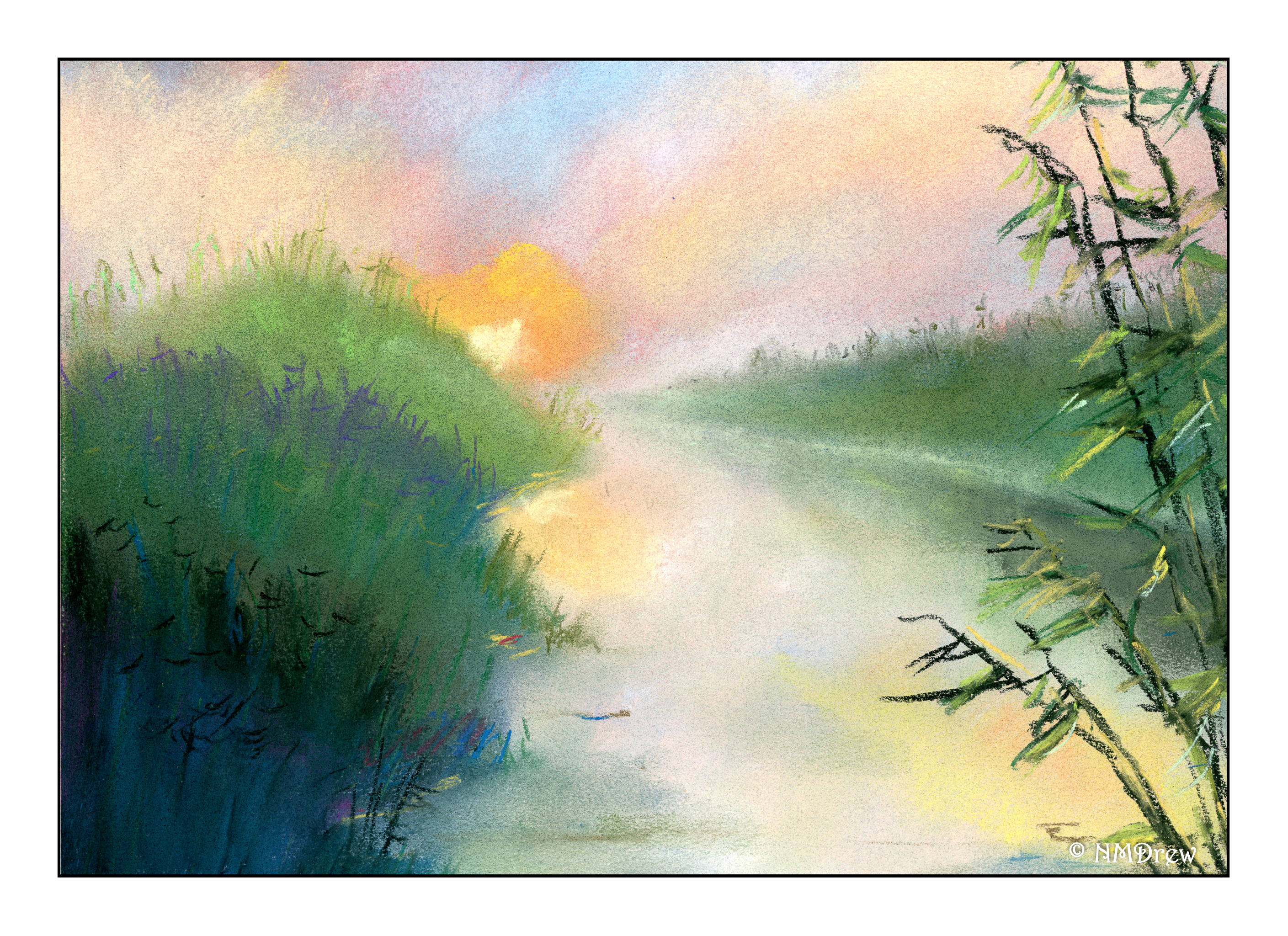
Pastels just feel so natural. Get your fingers into the colors, dust, papers, blending. So tactile. I can’t tell you how many times I washed my hands here, but more than I would even with Covid-19 lurking around . . . . !

Pastels just feel so natural. Get your fingers into the colors, dust, papers, blending. So tactile. I can’t tell you how many times I washed my hands here, but more than I would even with Covid-19 lurking around . . . . !
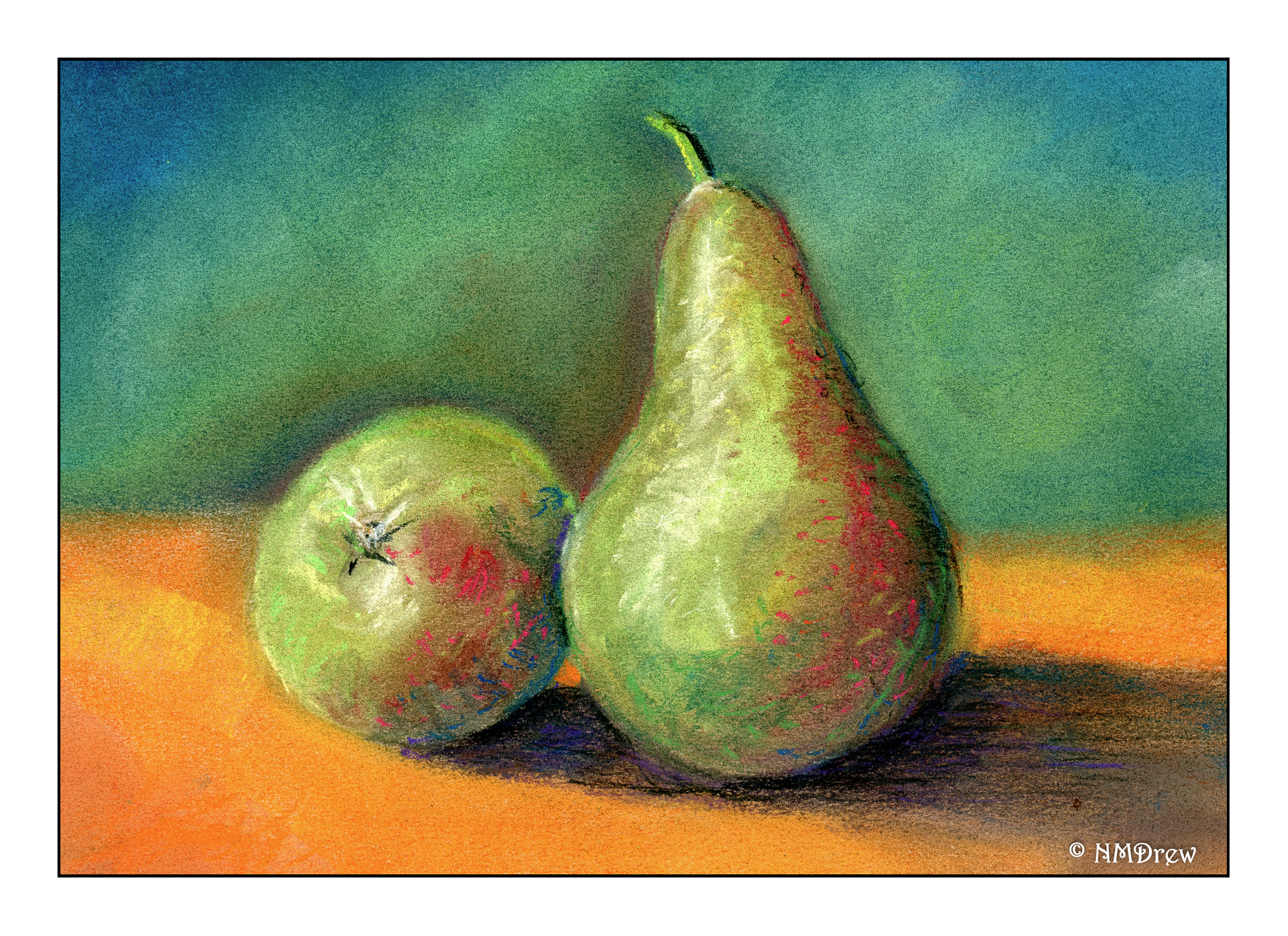
By far, this is the best of the 4 pastels I have done thus far. It sort of came together. Watching a YouTube video helped, too, to get an idea about how to proceed.
I used my fingers for most of the blending, and used a baby wipe in between to clean up dirty finger tips. I also worked the primary background and foreground first, working around the pears before doing the pears themselves. For the Saguaro painting, I had done the cactus first and then the sky – not really successful as the sky became a bit smudged with the greens. Live and learn! I used a torchon / stump for the areas closest to the pears and in the shadows to help isolate things. I cleaned them off with rough sandpaper – 100 grit.
Another thing I did was consider color and complementary colors in the painting. I simplified and did big areas before moving into smaller and more defined regions.
Of course, not all paintings will be this successful! It’s fun to compile knowledge and start using it when creating a picture or painting. The simplicity of this painting pleases me, but it was a more complex process than may appear because of the multiple layers of color put down.
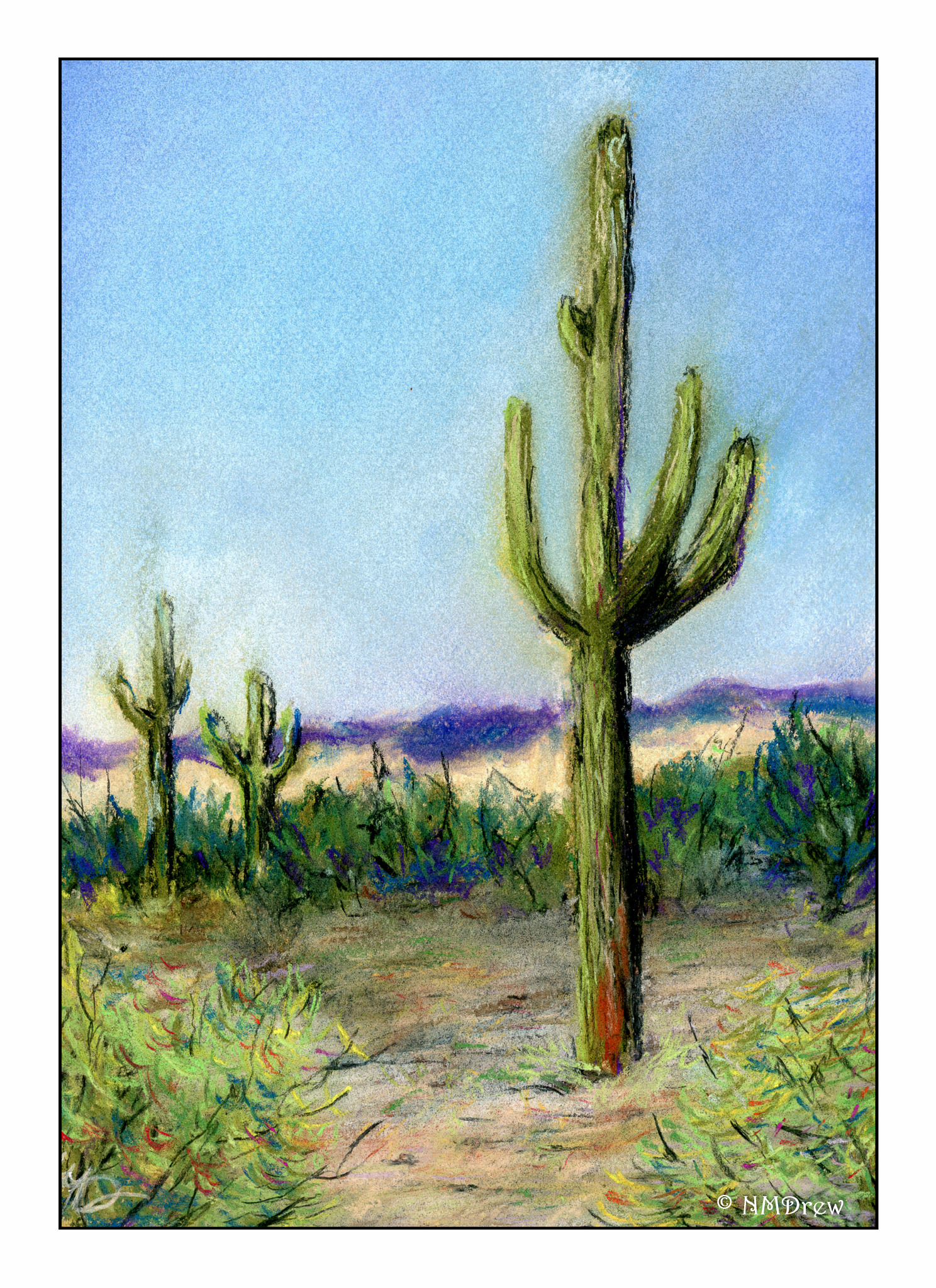
This is my third pastel, and second subject from the class on Monday.
There are some things I learned in doing this pastel. First, the large cactus has to be put in after the sky because it is just too big – the sky and the cactus – to work around. The mountains and smaller cacti are fine. I had to redo the sky a bit, and if you look, you can see halos of the cacti in the sky. Live and learn!
I also had to totally redo the foreground – it was all the same tonality! Midtoned. So, I went in and worked in a lot, a lot, a lot of lighter colors. It worked. Before there was nothing leading the eye to the big cactus- now there is to some degree.
The foreground plants in the corner are also at issue here. While they are lighter than the middle ground’s plants, they are not quite right. I need to increase the contrast within them, I think, to help them become individualized from the sandy dirt around them.
Finally, it is interesting to realize the importance of fixatives in the process of doing a pastel painting. Harder pastels don’t create as much dust (Nupastel) as do softer ones (Rembrandt). A “workable fixative” is necessary as the layers go down. A “final fixative” is applied when the painting is done. I have both, but the final fixative still allows the pastel to be rubbed off to some degree.
So, third painting, and I am getting the hang of it. Still very amateurish – my lack of depth perception always seems to get me. “Look at the light!” is my constant reminder, as well as the tricks of creating distance in a 2-dimensional painting. Gouache painting has proven to be very helpful here.
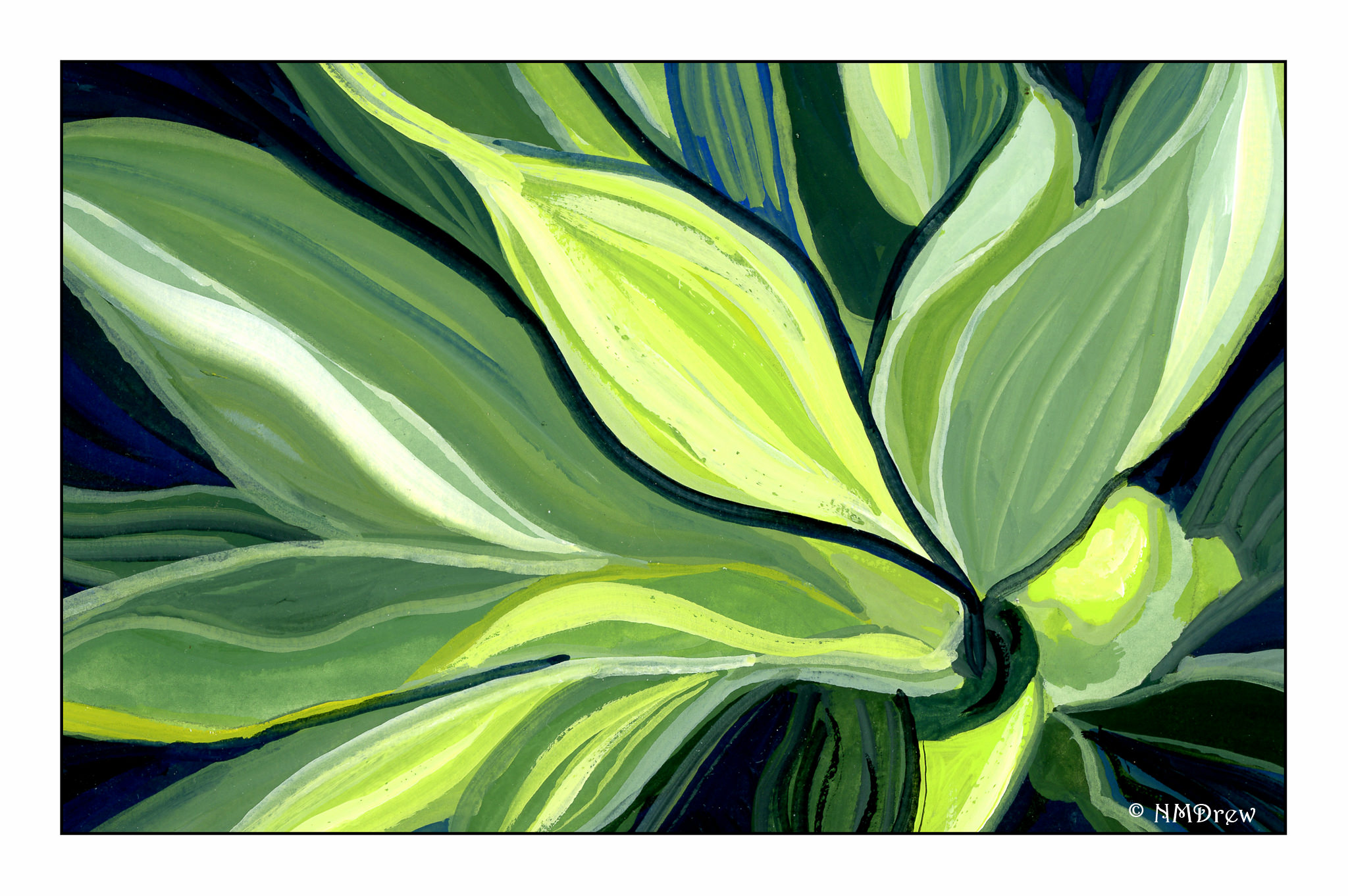
I started out with an attempt at doing a realistic succulent in gouache. It just wasn’t there. Then my pastels class came between it and me. And this ode to Audrey (from “Little Shop of Horrors” fame) moved into a sort of abstraction of its own. Normally my gouache tends to be done with thick paint and a stiff brush; here, softer paint and a softer brush. Quite a different experience and one I will need to revisit.
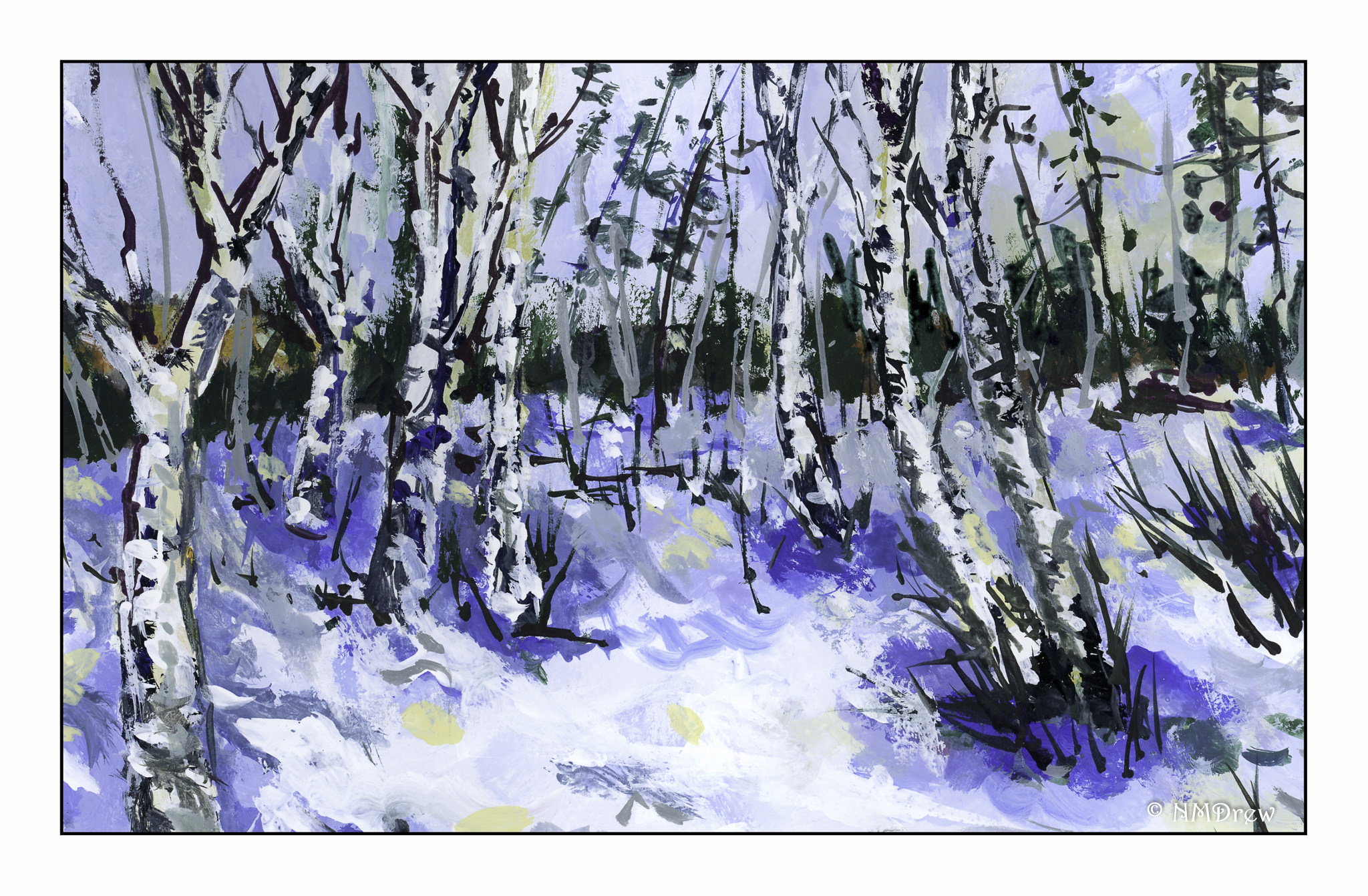
I am really rather pleased with this gouache – haven’t done any since last year! When I am painting in gouache, each one begins okay, with clear ideas in my head. And then it gets really and truly hideous. And then, it changes, almost by itself, and comes together in a way that watercolor doesn’t. I don’t know how to describe it, but the process is quite magical – just like snowy woods in the late afternoon.

