Watercolor Workshop, Day 2

Another day just painting!  What a pleasure to be able to do it!

Today we did two different things.  Actually, three.  For warm-up, we returned to the quick three minute sketches, which eventually morphed into a still life with three objects.  Mine were a piece of dried corn, a plastic mushroom, and a plastic artichoke.  I was not particularly nimble this morning, but here is one I produced.

From there, we moved on to landscapes, but I will hold off for a moment on those.  We did an exercise which I found fascinating:  take one object and paint it 6 different ways.  I chose a really lovely fake pear – golden and red, reminiscent of autumn.  Take a look  . . . they are in a gallery format, so click on one image to be able to scroll through them larger than they are here.

This was a lot of fun to do – nothing I ever have considered as an exercise.  And then . . . we moved on to landscapes from photographs Brenda took, laminated, and brought to class.
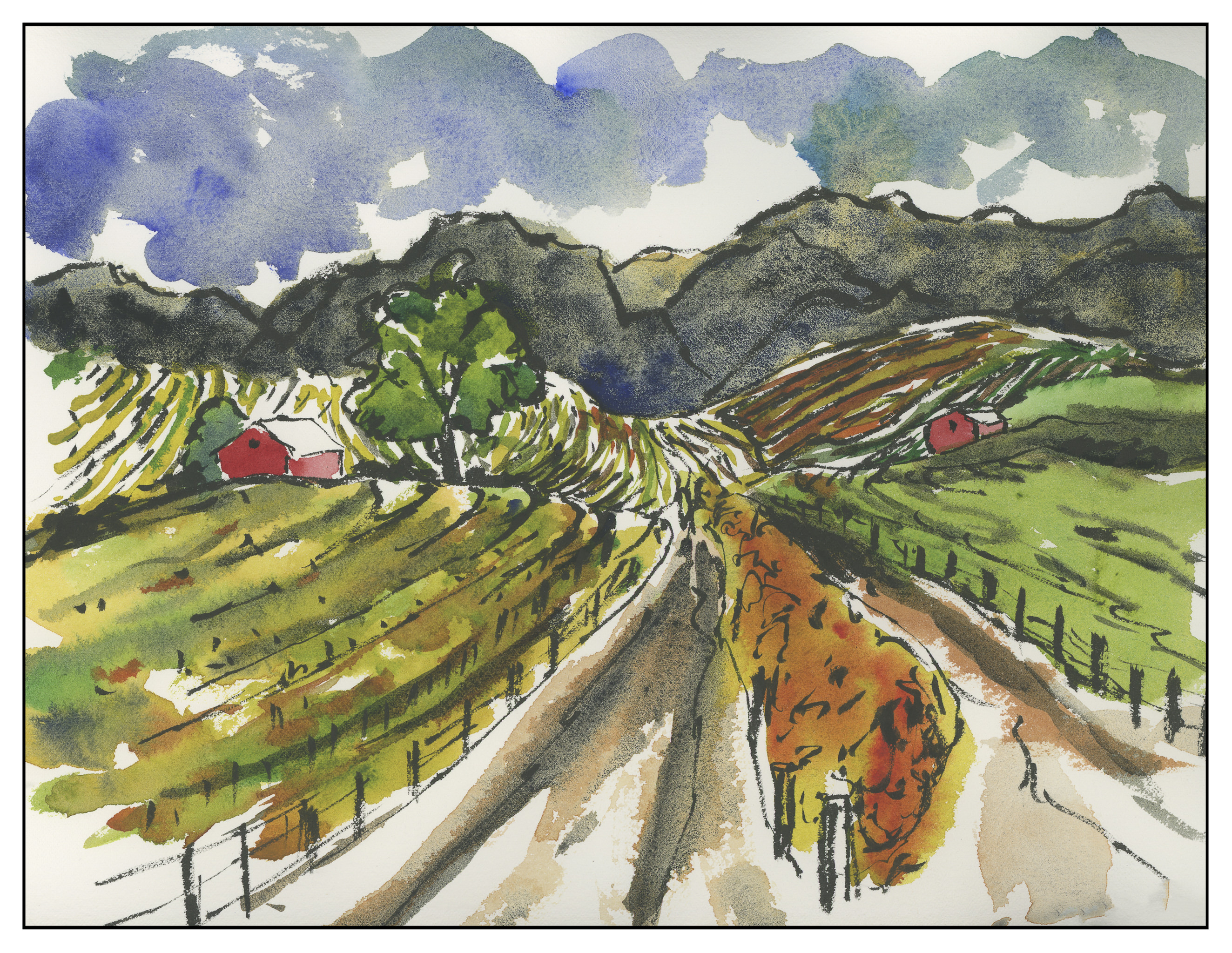
The idea was to take a photo and modify it.  This one is in the wine country of Northern California.
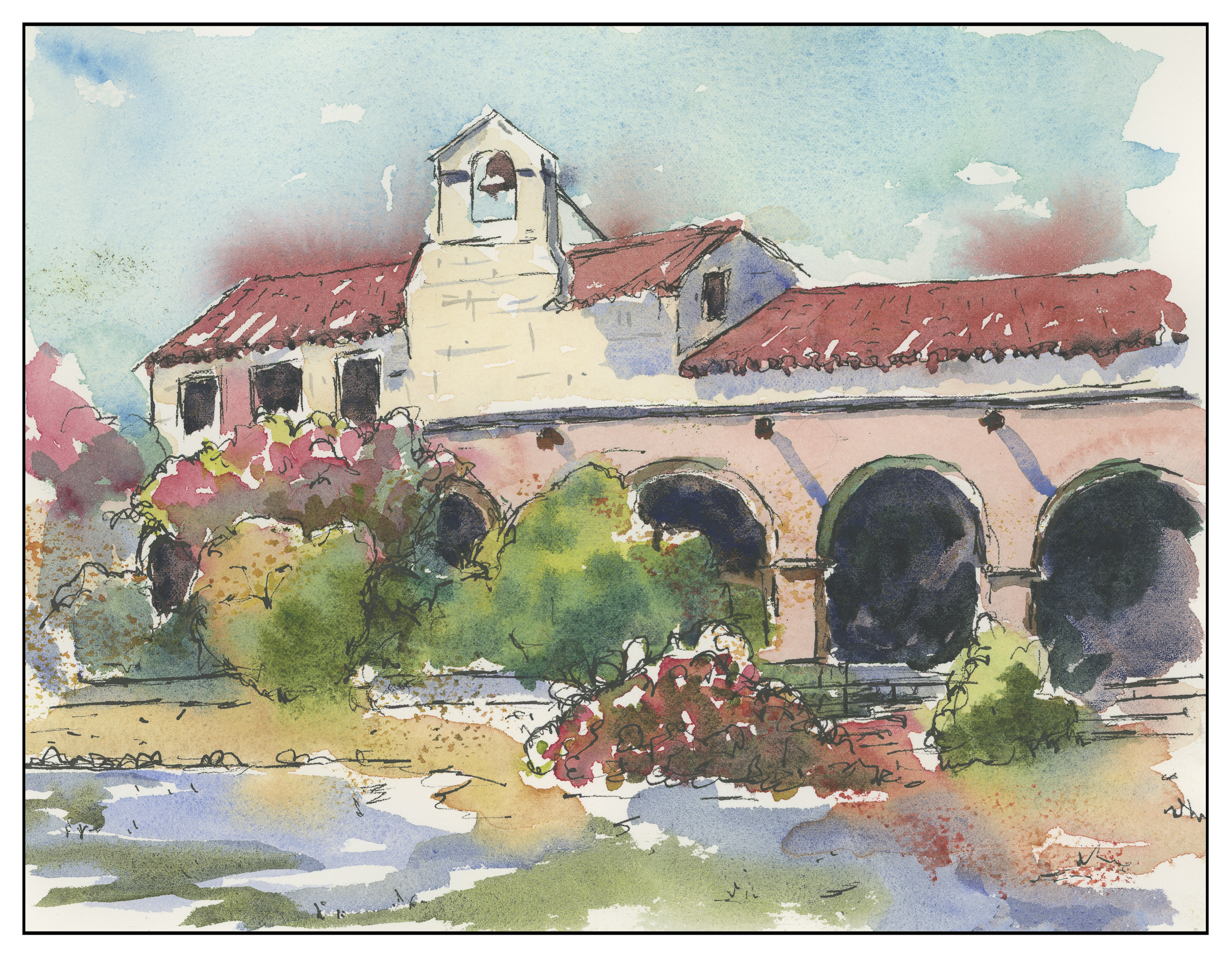
This one is, I think, in Carmel, but I don’t recall.  All the speckles are from the fact that it is a ghost image from a wet painting.  Truthfully, I was surprised it was a success at all.  All day I felt restless and unfocused.

Finally, this one.  I think it is the best of everything I did today.  The mantra for the day was draw, frame, paint.

Watercolor Workshop, Day 1

I was lucky enough to get a spot in Brenda Swenson‘s watercolor workshops in the Los Angeles area.  I was waitlisted and got unwaitlisted.  Now I am thoroughly enjoying myself!

Today was the first day.  We started out with loose, continuous line drawings.  Start and stop, but never lift up the pen.  The point of the exercise is to create “lost edges” – leave out a line and let the mind fill in the rest.  While not the first exercise, we did this one to compare and contrast the interest that comes with lost edges.

The study on the left is an upside-down plastic frog.  Drawing all the outlines and then some – not too exciting.  The second one, while not especially great, gets the point across:  lost edges give you something to participate with in the drawing.

More studies followed.  I did a clove of garlic, a packet of string, and a David Austin-esque rose.

I like all of these, but the rose is my favorite.  We could only spend three minutes for each picture.  Something to think about:  how much time do you have to do a drawing or a painting?  I must say I never considered that.

From drawing with lost edges, we moved on to painting with lost edges.  We did ink sketches and then used watercolor.  In watercolor, the lost edges work their magic while the paint is wet, and the artist judiciously touches one wet color to another, allowing the colors to bleed into one another.  In particular, Brenda pointed out how this works for shadows, especially for reflected light, form shadow, and even (but lesser) for cast shadows.

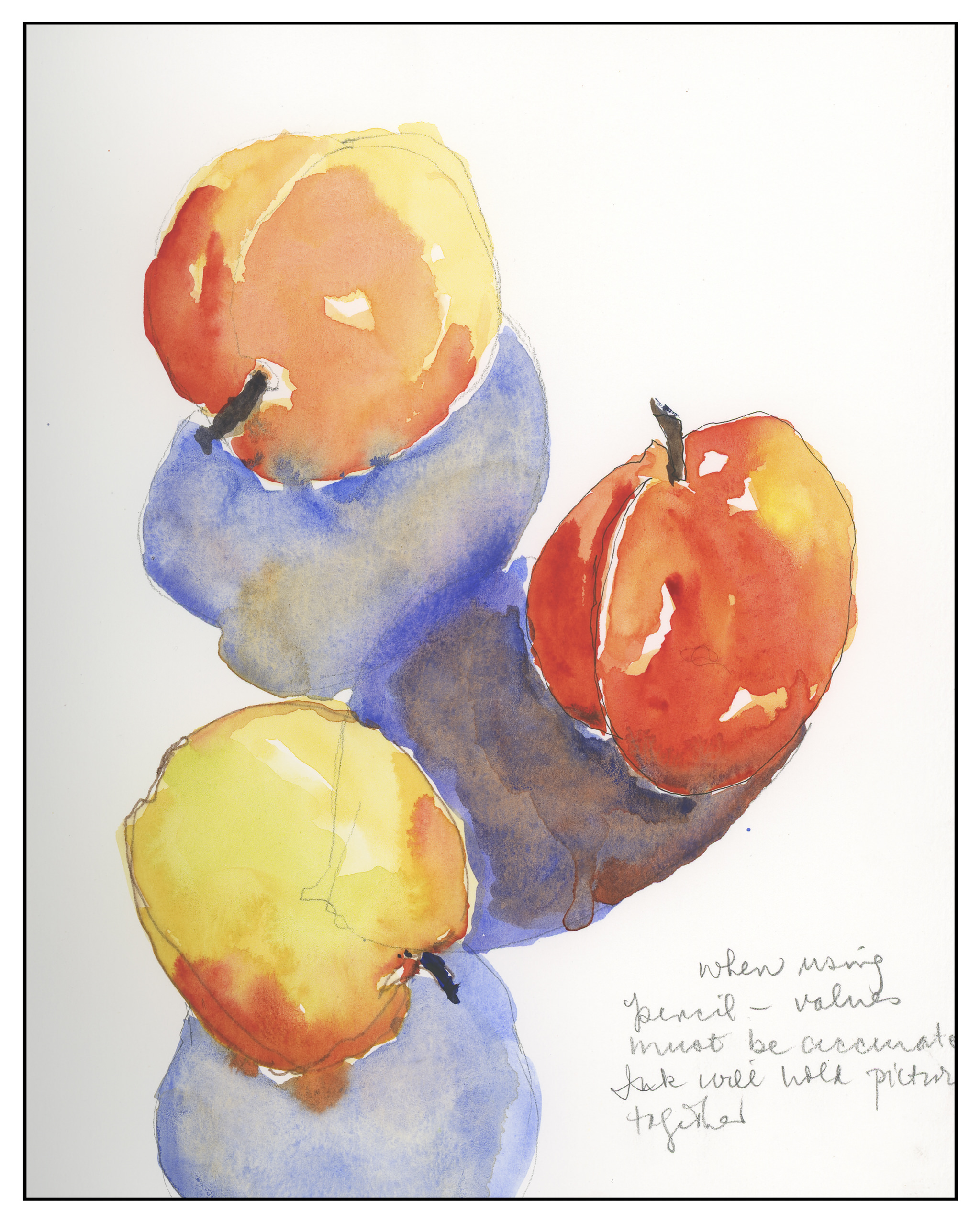
She said she pays a great deal of attention to shadows . . . I never really thought about shadows quite so much!  Below are two I did.  The one with the apricots worked out well, I think; we did three 3-minute sketches of the same object in ink or whatever, and then penciled in the shadows prior to painting.

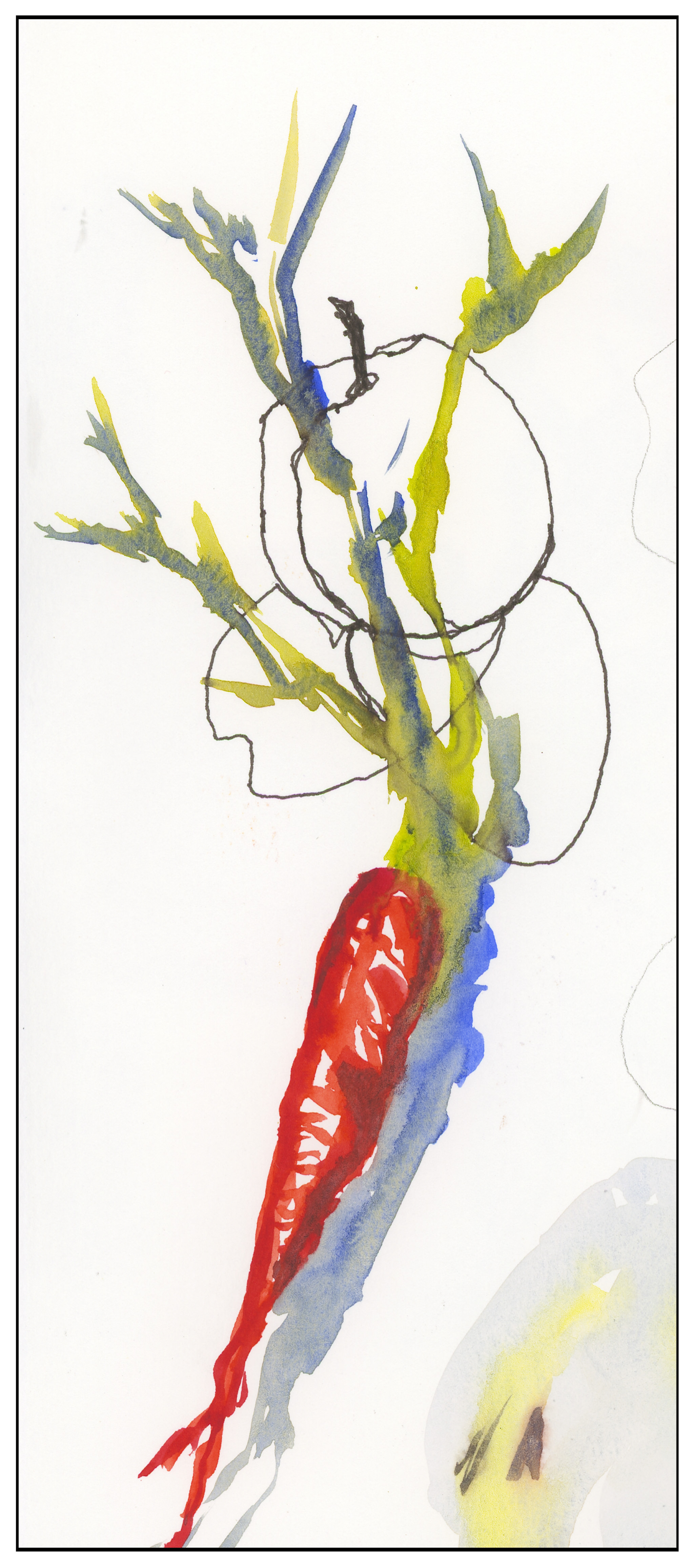
Finally, while I was rather impatiently waiting for areas of this image to dry, I did a casual sketch of a carrot, working to create lost lines and bleeds.  I just did it freehand with a brush over a line drawing I had done earlier in the session.  Serendipity sometimes works in your favor!

Tomorrow, painting from photographs . . . and a critique.  Eek!

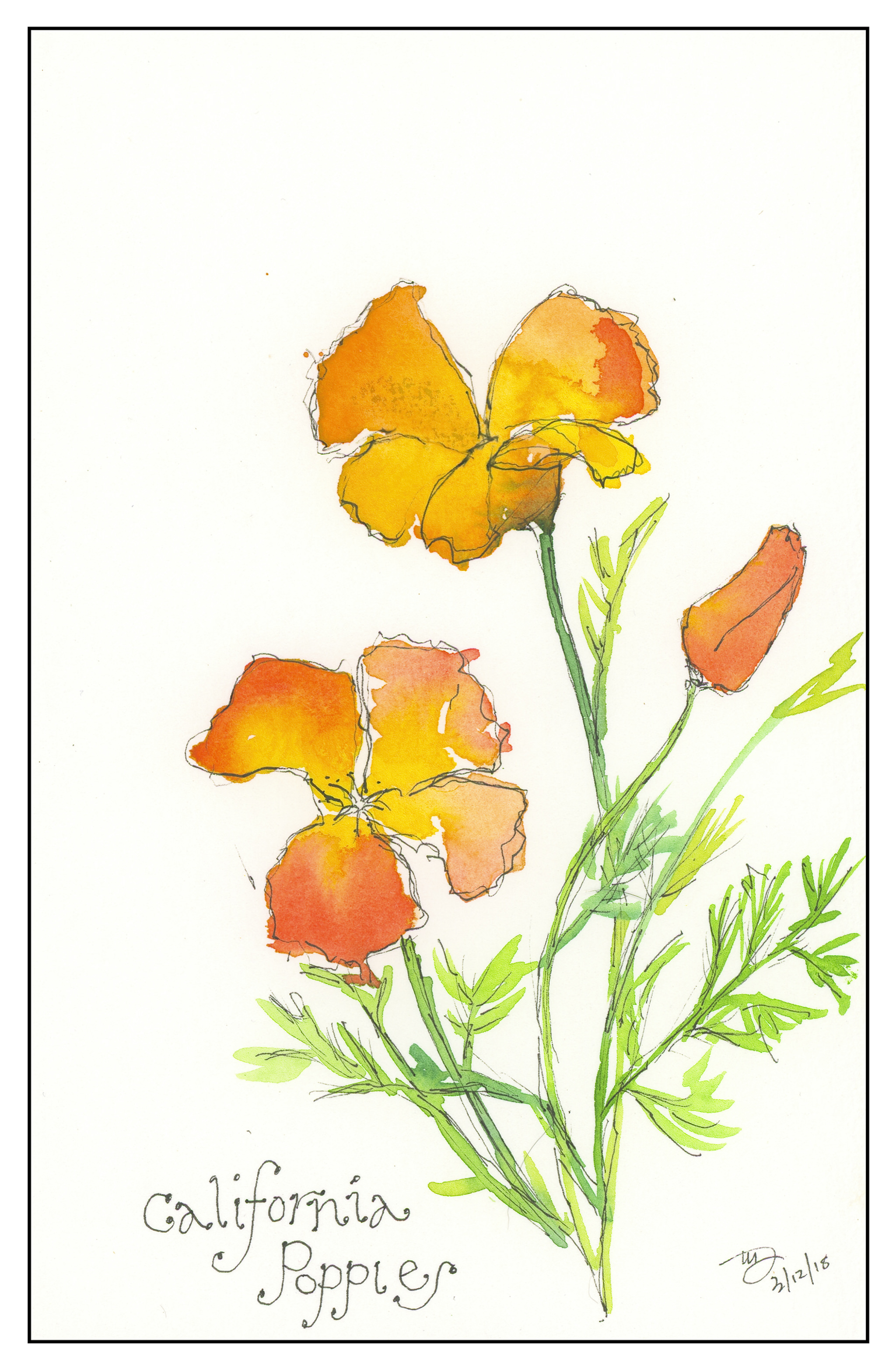
California Poppies

There is a poppy coming up in the front garden!  With rain, even more will begin to show up in the hills and fields, along with lupines and other wildflowers.  The quintessential California wildflower – delicate, lovely, bright.

I did this as a quick sketch this morning to test out a package of 5o pre-cut 6×9 cotton papers from Bee.  So far, the paper is pretty nice.

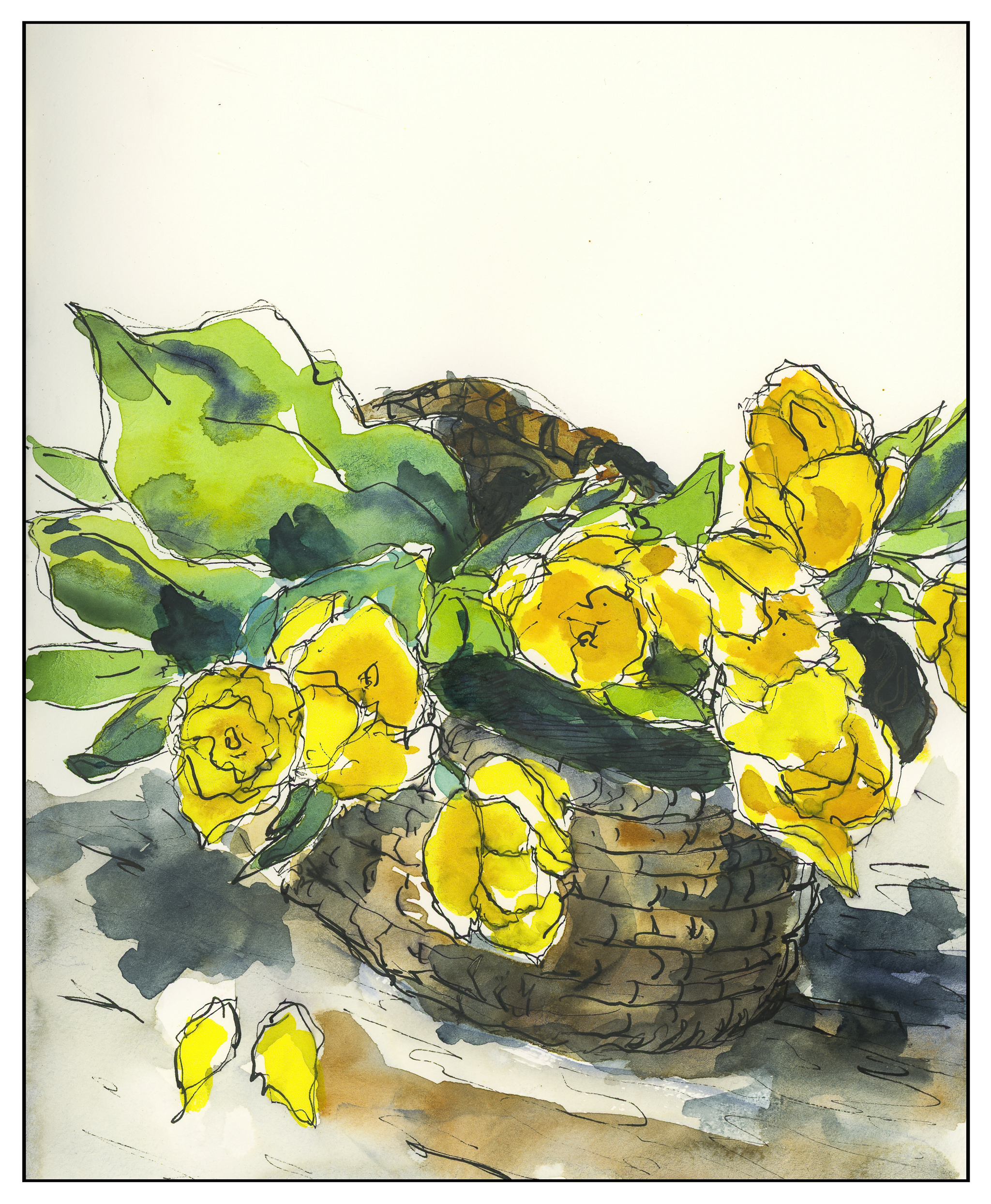
45.3 Tulips (Iron Gall Ink) – Painted

I should have done a value study here, but not in the mood, and not having a lot of time, I just decided to paint, hoping I “saw” the shadows enough.  Pretty tulips turned into a rather ugly mess!  Still, it is a learning experience, and the doing is often more important than the final results.  I am quite sure my paintings will be gone and not found in a museum.