
Getting older, one can become more cynical, more realistic, more idealistic, more involved, more aloof. Time is ticking away. At the same time, one gets a better sense of perspective and history because there is a definite pattern of repetition in life. Personal history is one long narrative. Family history blends in with local and national history, which in turn leads to world history. Someday we may have a sense of a history across the cosmos, as in, hey, my parents colonized Mars in 2892!
 I am not too happy with the increasing political polarization in today’s politics, nor the corruption, nor the increasing gap between the haves and have-nots. I dislike the wars we are fighting. I dislike the search for a scapegoat, namely the illegal immigrant, and laws being drafted making it okay to target certain populations. On the other hand, I can say what I think, live in a country which is peaceable in many ways and is politically stable, and am not forced to conform to a state idea of what is acceptable religion and what is not.
Days which celebrate a country’s history need to be days of reflection of its people – for the country’s ideals and visions, as well as a concern for what is best for all in the country, not just a few. Internationally, we try to make things work, just as we do on a local level, or within our families.
Is the U.S.A. perfect? Hardly. Neither is the rest of the world. Countries around the world are filled with humans who have history, loyalty, aesthetics, political ideas, conflict, needs, morals, religion. National holidays, such as July 4th, celebrate our own uniqueness, but need to also be filled with an appreciation for the rest of the world, and our part and place in it. We are not the only ones on the planet. We need to share, and do it responsibly.
Yes, this is rather giddy-eyed idealism, but I prefer to look at life this way. Granted, I am not starving, I am not unemployed, nor am I living in a country which is in the throes of revolution or isolated and surrounded by enemies. I have the luxury of such thoughts and such hopes because I am not concerned about my next meal or if I will be attacked on the way to the well. I am fortunate, more so than many in my own country or elsewhere in the world.
What, then, is my responsibility as a citizen, as a human, as a member of the planet?
 The visual is a primary part of our lives. Eyesight, unless you have a serious problem, is taken for granted. However, looking and seeing may be two very different things.
 To see is a subjective experience. Seeing is taking the act of looking to a deeper level. This is where we may interpret a facial expression. We may delve deeper into an object, moving in close to gaze on minute detail, or move back to take in a wider vantage point. Whatever we do to see, we do to experience on a personal level, from whatever motivates us to go beyond the cursory glance.
 I find that my photography is influenced by my study of sumi-e where the essential of something is far more important than the actual object. I also enjoy strong, graphical compositions, which can be seen in my favorite photos, and in some of my paintings. Dynamic lines and shapes are visually exciting and interesting as they lead your eye. Lines and shapes can also draw the viewer inward, into the heart of the artist.
 In a gallery, whether physical or virtual, the first thing we do is look. Something suddenly attracts us, we hone in, and then begin to see. All this is subjective. A critic, though, will step back and look more objectively, and contemplate skill, rendering, compositional elements, contrast, detail, color, and so on. An artist must also do the same of his or her own work. The purpose of this is to learn from what we have done, and this becomes an impetus to continue, to learn more, to move in this or that direction. Critiquing one’s own work, and that of others, is an intellectual enterprise, while also being a subjective experience which leads to a complex of new emotions, thoughts, perspectives, and whatever else lies within. It is also another level of the artistic experience which works in strange and wonderful ways on creativity, vision, and expression.
 Artists work to create expressions of an event, an experience, an emotion. Art can be visual, auditory, or experienced by other senses, such as touch or smell. Art can be kinetic – something we do physically. Art must be experienced – watching a play, seeing a painting, listening to a song, The artist experiences his own art by doing it, and then it is shared, and in the sharing, the artist moves beyond the moment and continues to grow. The same must be said for the viewer who participates by listening or seeing or doing. All together, art creates a mesh we all experience in our own unique ways, and binds us together in our humanity, creating a community whether or not we realize it, or choose to recognize or acknowledge it.
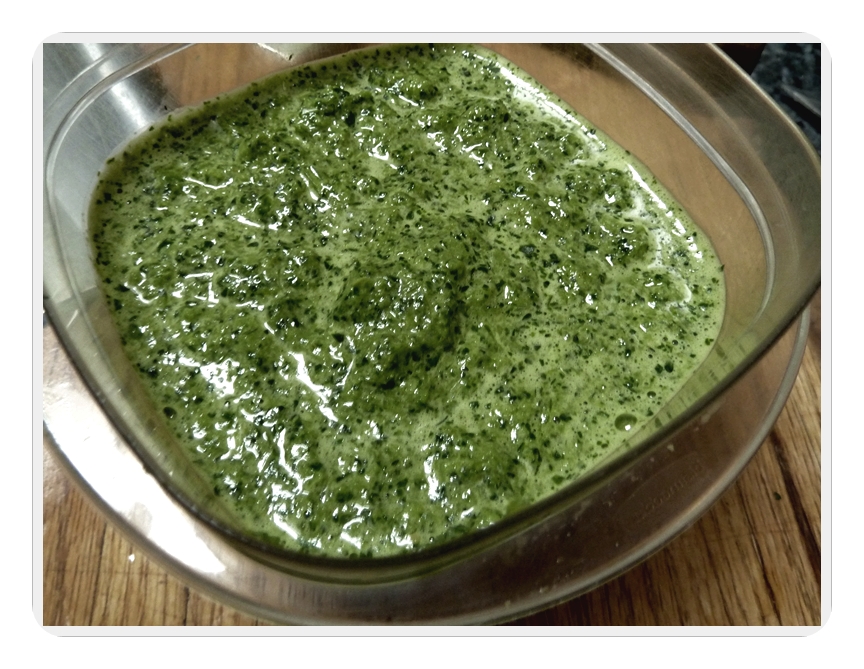
 Summer is here, and with it comes an abundance of fresh fruit and vegetables. Temperatures rise during the day, and the desire for food with heat goes along with it. Easy to make, fresh, and with pleasant amount of heat, homemade


 Ink, Yarn & Beer