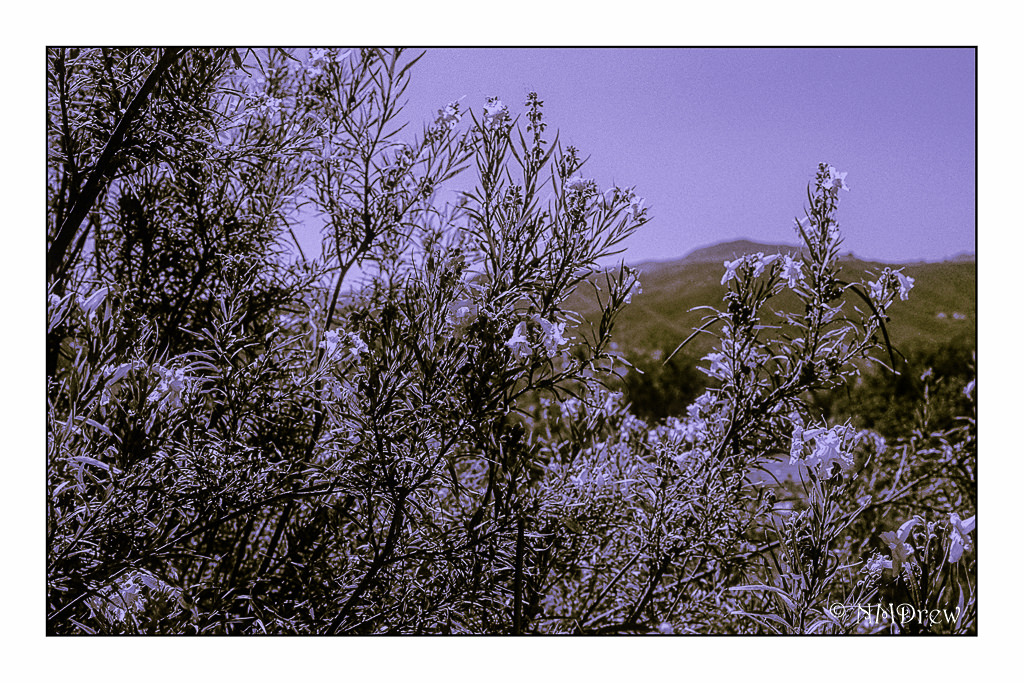
Somewhere in Monterey

Today is a watercolor day!

I am surprised by how much less I am worrying about how my painting is going to look and how much I am becoming more involved with its process.

Working with gouache has certainly helped me with my usage of light and dark.  For awhile I wondered if working with gouache, from dark to light, would mess with my mind with watercolor, which is light to dark.  Actually, it helped a lot as I am more aware of light and dark than before, and thus it is easier to think about how to make it happen.

This is from a photo I took in Pt. Lobos Nature Reserve, along a path.  The light was dappled and flickering as the tree branches and leaves moved with the shifting wind.  It was a warm day, pleasant, and very, very much a prize of a day altogether.  I think this painting does a fair job catching it, though, as always, there are areas for improvement.

Whaler’s Cove with a 1937 Welta Weltur

There is something so different in the quality of a photo taken with a film camera, rather than a digital camera.  It is apparent even more so when it is done with an uncoated lens from 1937.  The lens in question is a lovely Schneider Kreuznach Xenar 2.8, 75mm, taken using 1937 Welta Weltur camera.  It is a folding camera that takes the still-available 120mm film.  I used Ektar 100 by Kodak, and applied the Sunny 16 rule for manual exposures.

I have a 6×6 version with a 6×4.5 reduction mask.  I thought I had removed the mask – but hadn’t.  All my supposedly square images came out rectangular!  I stitched two images together in PS6 and then tediously removed threads and dots of dust that were apparent even after scanning with Digital Ice on the Epson V600.

This photo makes me think of landscape paintings of the 1700s and 1800s – especially that turquoise sky.  Mayhap a painting will follow.

Vacation Videos from the Monterey Bay Aquarium

Some thoughts on videos and blogging . . . 

Technology has caught up with me!  I decided to try some videos at the Monterey Bay Aquarium, just because I could.  I used my phone and digital camera.  In some ways I really appreciate the video as a format, but it also takes up a lot of space.  Videos are like the home movies of old – rather tedious if seen too often.  Still, it is the ability to really show people what something looks like is the beauty of a video – but it is really never the same as being there.  The sounds and smells and other environmental elements are missing (even though there are sounds, they aren’t the ones you might like to hear!).  I am not so sure I like the usage of videos, but what the hey – give it a try!

A short trip . . . 

Last Sunday we headed up the coast to Monterey, California.  Because of a slab leak, our funds for travel were rather depleted by that adventure.  Nonetheless, it is so important to get away from everything familiar, to see new worlds or revisit old ones.  We chose Monterey – it’s close, we like it, and there are many things to see and do.  We stayed at a B&B in an area that allowed us to walk nearly everywhere.  One is the Monterey Bay Aquarium,  It sits right out on the Monterey Bay, with a wonderful viewing deck.  Sunday night we walked down to Cannery Row, to look around, to shake out our legs, and get a lay of the land after being in a car for several hours.

Error
This video doesn’t exist

The Aquarium houses fish, birds, and otters!  Many of the birds and animals have been rescued after being injured.  These otters are just too cute for words – and you could easily watch their antics for hours.

The Aquarium is not only a living museum, but a resource for biologists and other professionals in the area of science.  Animals and birds are rescued and rehabilitated.  Research is conducted in many areas.  Fish are not just in big tanks, but also experienced first hand.  Here is a “petting tank” where you can touch the silky skin of a manta ray.  (Sorry if this video makes you motion sick!)

There are similar displays throughout the Aquarium.  Tanks contain sea urchins, anemones, kelp, fish and other things.  Docents know their subject and can answer a number of questions.  To me, this is one of the best ways to experience the Aquarium – contact, doing, playing.

There are individual displays of different sea life.  One room is dedicated to jelly fish.  I am sure that what they have on display is a tiny bit of all the jellies that live throughout the world, but being able to see them, large and small, swimming and moving, is entirely different in experience than seeing a still photo.

Smaller jellyfish, too.

Besides jellyfish, the kelp beds are well-represented.  There is an enormous aquarium in the center of the building, about 3 stories high.  Kelp is rooted at the bottom, and within the kelp forest swim fish, from bottom feeders to those who use the kelp as a means of hiding from predators.  Here, some rock fish (I think) are hanging out.

So many things to see and do at the Monterey Bay Aquarium!  More to come!


Heat & Sloth


Today both Josh and I were exhausted.  This hot weather is so draining, and instead of the nights cooling off as they usually do in California, it pervades into sleeping hours as well.  Open windows and fans work most of the time, but today the air conditioning is running full time to keep the house at 75, not 81 or so.  The result is fatigue in a very odd way.  The mind is numb.  The body is numb.  It’s like being a reptile in cold weather – moving requires too much effort.  In a bit, around 7:30 p.m., we will be out for a walk – how hot will it be?  Certainly cooler than earlier, but probably in the mid-80s.  How far we go depends on how hot it is.  Both the dogs and we need some exercise.

Such an uneventful day.  So little accomplished or aimed for other than survival.  No dinner cooked, just scrounging around for whatever can be found.  Passive activities such as watching TV and movies in the middle of the day.  The mind is only now becoming a bit more alert.  No sewing, painting, or anything that required too much, although I did pick up a 6th grade math book for the fun of it . . . that took a bit of effort, let me tell you.

And more heat tomorrow . . . it does beat a hurricane, though.  I am grateful for that.  I still have a home.  And, I know enough about heat exhaustion, having had it many times over the past several summers, that I stay hydrated and cool.  Only the other day a hiker died in the nearby mountains while his or her companions called 911 for help with their own heat exhaustion.  But being passive is so tiring in its own way.

Hotter Than Hell, So I’m Gonna Sew!

I think it must be about 100F (38C) where I live, so the air conditioning is on and not going out until it is dark.  My dogs aren’t mad, nor am I a Brit, so I am staying indoors, drinking water, and prepping the Maggie Shirt . . . and I am sewing it on my vintage Singer 403a,

I think these machines (the Singer 400 series) date from the mid to late 1950s and into the early 60s.  Mine is like it was never used.  When I bought her, she needed some TLC, heat and oiling, as well as a bit of gear grease, before she was off and sewing.  Unused machines freeze up, but once they have been given the right attention, I think they are the best!  I’ve had my 403a for awhile, and as I cycle through my machines, she hasn’t been out for a spin in quite some time.  Time to put her to work!

There is something to be said for the old Singer sewing machines.  They are well made and pretty straightforward.  The ingenious attachments are fun to play with and many collectors are nutso for them.  I have some, but usually rely on my more modern machines for things like fancy stitches and buttonholes.  Nonetheless, this machine is a blast.  It has cams for stitch patterns – the #0 cam is required to do a zig zag stitch – as well as straight stitch.

The 403a is a member of the “slant-o-matic” series of machines Singer made.  I like the slanted needle – it pushes the needle more into your line of sight.  Many newer computerized machines have the needle tucked back under rather fat upper portions, so they are harder to see.  Still, that doesn’t act as a deterrent.  For the 403a, as it is a slant needle machine, it is important to have the slant-o-matic attachments.  The one I have is the professional buttonholer, but I also have numerous feet that came when I got the machine.

Click on one of the images to open up the slide show . . .

The first two images are of the buttonholer – just a quick picture, really. The first shows you the box with directions, the second is the feed dog cover plate. The 403a has a rather interesting system to remove the throat plate – it is lifted up by a lever and slid out. The buttonholer cover slides in to its place – kind of complicated until you get the feel for it. The last picture shows you the box of feet and cams that came with the machine. The manual shows you just how unused the whole machine was when I got it.

When I buy an old machine, I want one that I know will work.  I like them to look good and to run well.  Some people get off on restoring machines, and while I can work on most of my machines for general maintenance, I really don’t find it a lot of fun to try to fix an ugly, rusted, beat up machine that is covered with rust and has electricals of suspect quality.  Prima donna, yes!

Finally, here is how I spent a few hours this afternoon.  The gauze for the Maggie Shirt is soft and stretchy, as is the characteristic of the critter.  It is also very ravelly.  Perhaps it is a bit of overkill, but I decided to stay stitch (the straight stitch) all around each piece, and zigzag to finish the edges.  I may need to cut out another collar stand as it seems to have gotten a bit warped by all this attention, but I have an extra yard.  Never having sewn with gauze, I bought a bit more to play with and to be sure that I didn’t lose so much to shrinkage that I would not be happy.

To be continued!