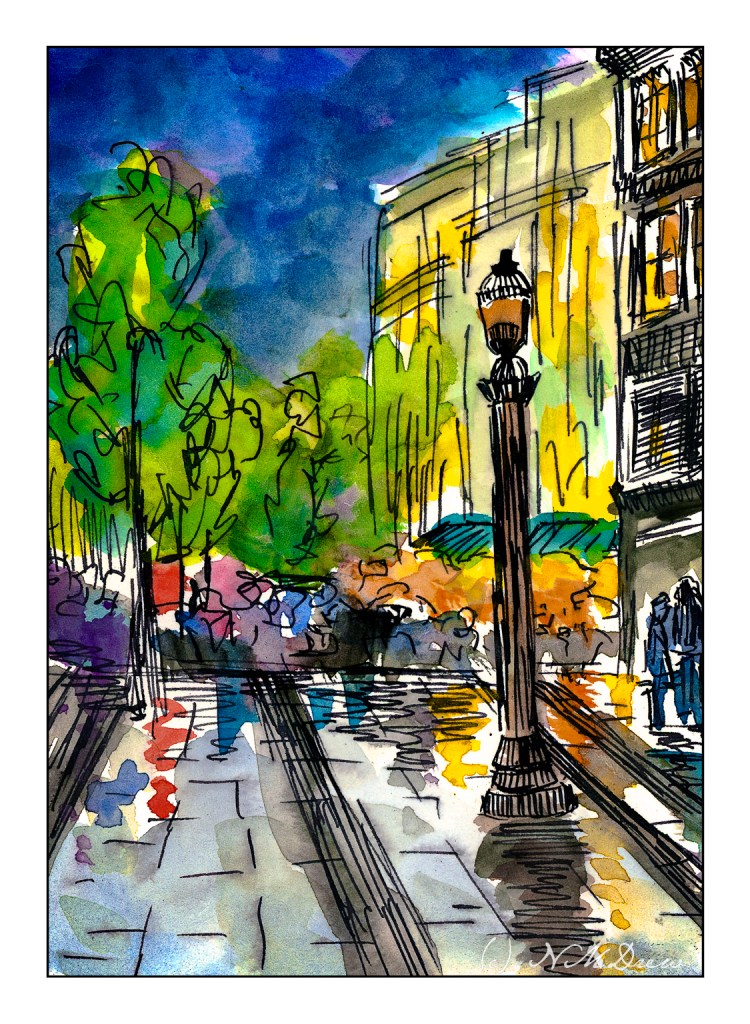
Rainy Night

I’ve always loved pen and watercolor drawings, long before urban sketching became connected with it. The ink here is some of my homemade iron gall ink, waterproof and dark once dried. On top of that, opaque pan watercolors I picked up at a little store in Decorah, Iowa, this summer. The paper is 100% cotton Bee paper – nothing great, not expensive, but fun to use and responsive to both ink and color. Illustrations like this are fun because they aren’t “serious” – I get to play, practice, explore. Not a bad way to spend some time before lunch.

The Truck at Manzanar

The Truck at Manzanar

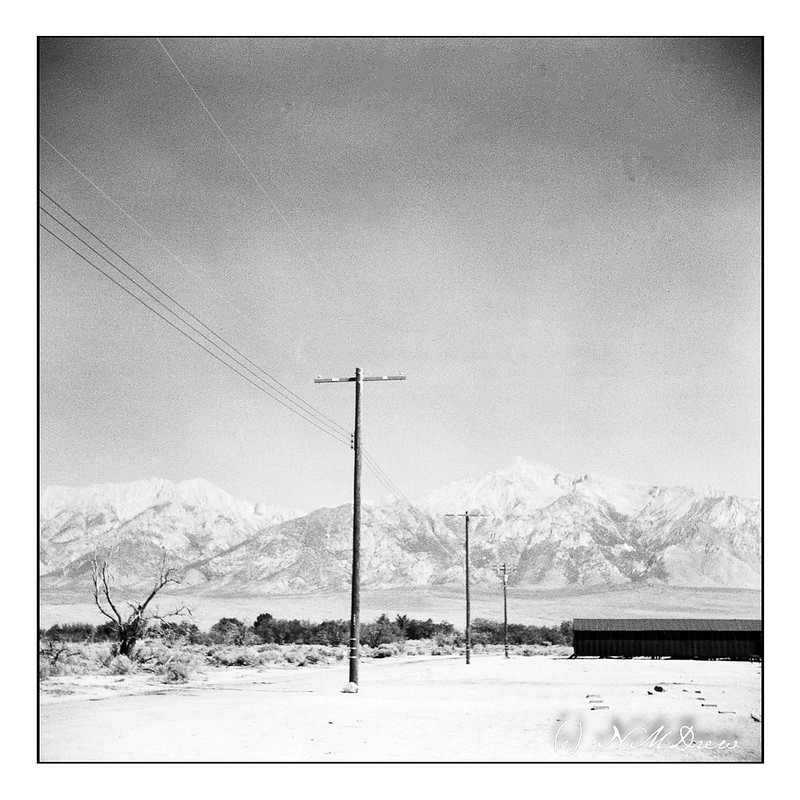
The day we came to Manzanar on our trip, we wandered throughout. Various places, such as the barracks, were open, but the visitor’s center was closed. Nonetheless, there was a lot to be seen.

Manzanar is a barren place, lonely and remote even today, even though it is readily accessible off Hwy 395 along the Eastern Sierra in California. Imagine being sent here, pulled from your home and put into buildings without insulation, subject to wind and dust, heat and snow, without appropriate clothing. Your entire family is stuffed into a room and there is no privacy. The internment of the Japanese did this.

This picture shows – and perhaps exaggerates – the isolation of Manzanar. Today it is still lonely, but 80 years ago probably even more so.

Zeiss Ikon Ikonta 521/16, Kodak TriX 400, Epson V600 and Negative Lab Pro.

Manzanar #1

Manzanar 1

In 2021 we headed out on what was to be a 3 week long road trip. The first part was up the Eastern Sierra along Hwy. 395, stopping and staying in Independence, CA. One of the most notable places to see along this route was Manzanar National Historic Site – a not very nice part of US history. It is a Japanese internment camp which was built for imprisoning Japanese Americans, natives of this country, and therefore citizens, as well as immigrants.

I took along a digital camera, and a folding camera, the Zeiss Ikon Ikonta 521/16. Only now am I scanning the film – it took quite some time to finishing up the roll! I used Kodak TriX 400 and got twelve 6×6 images out of the roll, which is 120 film. To process the film, I took it to a local lab and then scanned it myself using the Epson V600 and Negative Lab Pro in Lightroom.

However, the trip ended when we got breakthrough Covid. We headed back home, sadly, but better safe than sorry, eh?

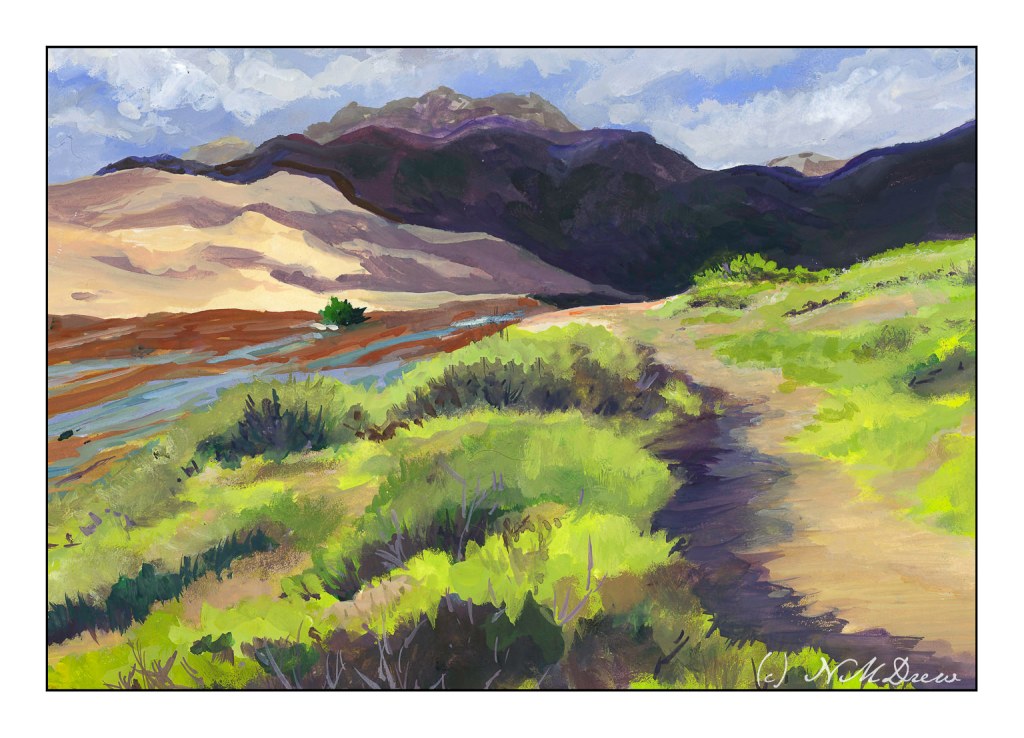
A Bit of Colorado

Great Sand Dunes National Park and Preserve is located in south central Colorado. It is, as the park site states:

The tallest dunes in North America are the centerpiece in a diverse landscape of grasslands, wetlands, forests, alpine lakes, and tundra. Stay on a moonless night to experience this International Dark Sky Park’s starry skies.

I never ceased to be amazed by the beauty of the natural world.

9×12 hot press Arches, 140#, gouache.

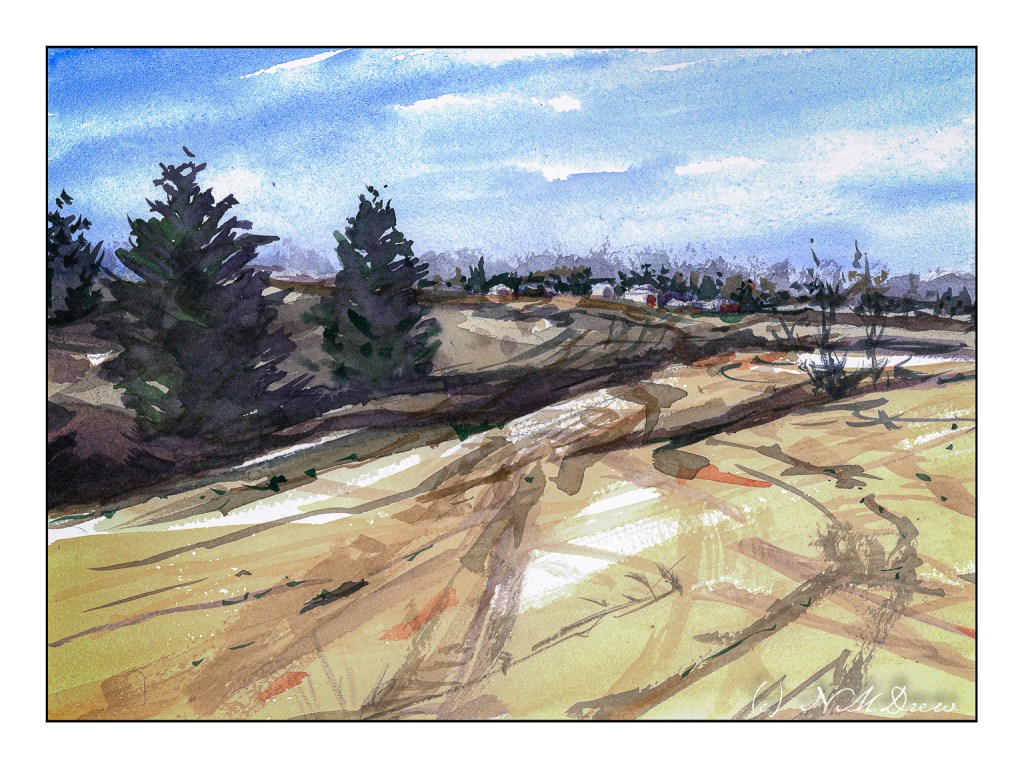
Tracks Across the Fields

I do love the bleak look of winter. With watercolor, a limited palette of 3 or 4 colors can express so much. Admittedly I used more, but I usually like alizarin, ultramarine, burnt sienna, and Hooker’s green for the colder time of the year.

Following through on points for some of the classes I have been taking, I am working to simplify subject matter, colors, and lead the eye. I think I managed to do this here, leading through the fields to the houses on the hilly horizon. I tried to contrast warm and cool colors, with a bit of warm on the buildings with the hope it will draw the viewer in. I also used wet in wet and dry brush, working from general shapes to more specifics; light to dark in general.

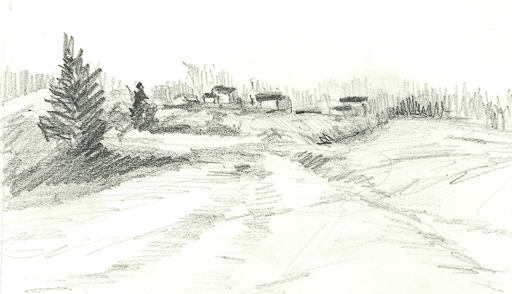
In addition to the painting, I am trying to make myself do a preliminary drawing before I touch brush to paint to paper. I did this one today. Lesson – it is actually worth the time, and I have been a silly bunt not to take on this fine habit sooner!

Watercolor, 9×12 CP Extra White Fabriano Artistico 100% cotton paper.