
From left to right, unknown (the one with the phone), FIL, DH. And I am behind the camera.

From left to right, unknown (the one with the phone), FIL, DH. And I am behind the camera.

I had a brainstorm the other day: Why not use vacation photos for drawing and watercolor subjects? I certainly do have a bucket load of photos. And, last summer we went to a lot of historical and beautiful places as we wandered through parts of the western U.S. Here, a view from a cliff in Mesa Verde National Park.
Colors include indanthrene blue, quinacridone yellow, organic vermilion, burnt sienna, cobalt blue, phthalo green and Carbon Ink in a Pentalic watercolor book.
Yesterday, here in the U.S., was Thanksgiving. We celebrated it with a few members of our family out of town. Tomorrow, members are coming here for the big family gathering, from east and south and west. So, Wednesday we made pies, and today we set up the tabbouleh, tzatziki, zhuk, and marinating chicken for tomorrow’s feast. Lots of chopping and such, along with a fun grocery trip to a market that sells all sorts of foods not seen in the ordinary middle class market . . . this one caters to Middle Eastern, Indian, Asian, and Mexican tastes, so there is a lot of fun and strange food to be had. On top of it all, it’s so reasonably priced! If you enjoy cooking, nothing like an exciting market and a family which loves good food.
So, did I spend my entire day prepping? No, I didn’t. I did some napping, had some coffee, edited some photos, and then had an epiphany: I can use my photos for subject matter, whether sketching, ink-and-color, or pure watercolor. I went through a few photos from our summer on the road throughout the Southwest and Western U.S., to places like Mesa Verde, Ft. Laramie, Yellowstone, and Teton National Forest. Lots of wonderful things to see. Now, a lot of wonderful things to recall with a drawing . . .
Photo from Fort Laramie in Wyoming:

A quick ink-and-color sketch of the same:

They don’t really look like each other, but what the heck. I liked the roof and chimneys against the blue of the sky.

The lines of the buildings against a clear sky created an interesting texture of shapes.
Given my frustration with painting grapes the other day, I decided to look at some YouTube watercolor videos on painting the highlights and shadows of spherical objects. I found two which I really liked, and the result is I did a number of studies, as can be seen below. Techniques include both wet-in-wet, glazing, and a few others. 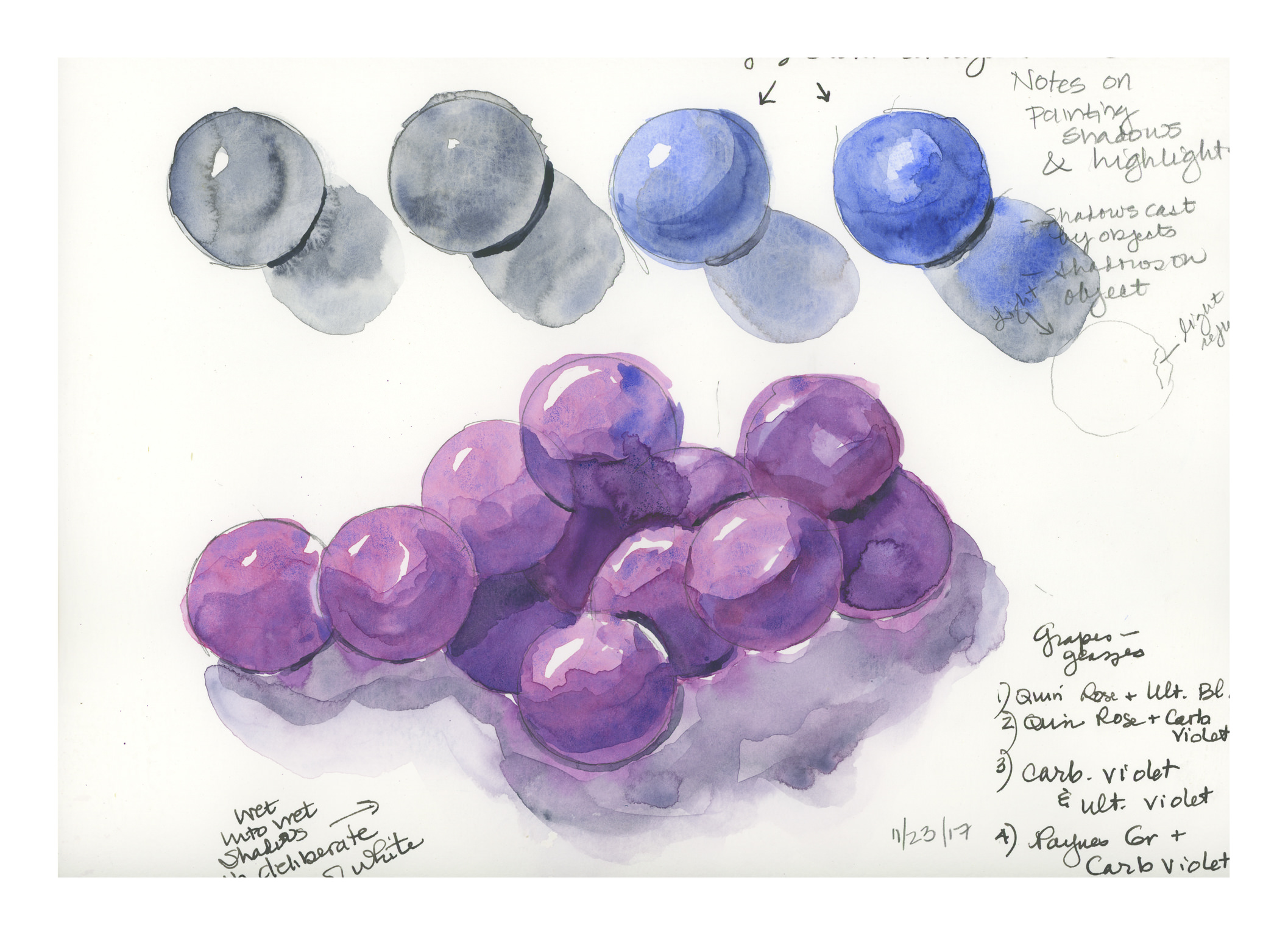
The purple balls were done with glazing; the shadows were wet-in-wet. Here and there I went in with a damp brush to soften the edges of the shadows in the grapes, or to blur paint over areas which seemed weird. Not too bad, but I do not find glazing appealing; it may be I need to improve my glazing technique.
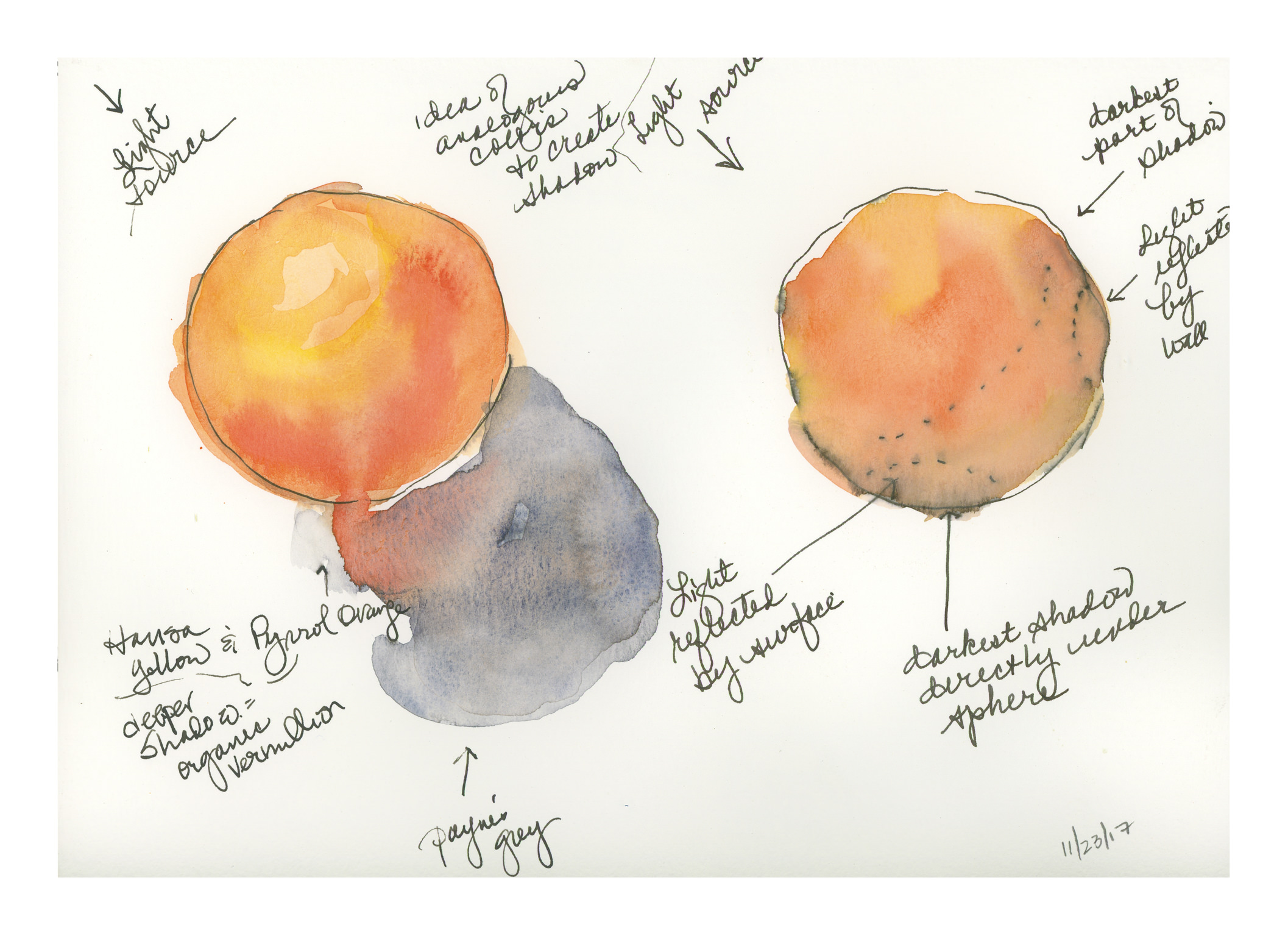
These orange goodies are preludes to a potential painting of oranges. The one on the right was done first, but as the ink was bleeding – it was ordinary fountain pen ink – I moved on to the one on the left, which is drawn with Sailor’s Carbon Ink. I like the on the left quite a bit – the bleed into the shadow, as well as the colors themselves, which are Hansa Yellow, Pyrrol Orange, and Organic Vermilion. The brush I used was a large one, a Cosmotop 14, and the paper was the Canson pad of watercolor paper (not the Montval).
Soooooo!! Things are beginning to improve!

