
Take some time, kick back, relax – a beautiful video with music to soothe in troubled times.
Author: -N-
Vinca Major

A close-up taken using the X100V. SOOC, too.
As a ground cover, Vinca Major is wonderful for shady areas. Soft, long vines with brilliant leaves and purple flowers make for a lovely display. It’s always been a favorite of mine.
Happy Easter!
Virgin River

Practicing watercolor, and here we are – once more addicted! My new routine is artwork in any form, and then some sewing or other fiber arts. Gardening soon now that it isn’t raining. Life in quarantine hasn’t changed our lives much here – no kids to home school – but it has helped to focus on what is important in our lives besides food!
9×12 Arches watercolor, done mostly with a angle brush and rigger. Some gouache used.
Too Ripe

Banana bread anyone?!
Being relatively housebound these days, you have to get creative. Some people create amazing scenes with toys, like Frego (hint!) and her adventures. We had some bananas given to us, but they were way too many to eat, but good for mushing up and freezing for future baking endeavors like bread, or even better, pancakes.
Abstraction
If you follow my all-purpose art blog, Journey By Paper, you know that I have been slithering around with pastels, gouache, and watercolors as a theme for a painting called “The Slough” – sort of an evolutionary adventure. In doing so, I began to move into a kind of abstraction, painting without lines.
Generally, I tend to paint watercolors without any lines on the paper. I don’t know why, but the lines too often act as a cage, and keep me from just exploring color. I really love the way colors and water react on good paper, and I think the lines make me think I need to produce a “perfect” painting, whatever that is. So, here are some abstractions I did, all in one afternoon, in the order I did them. Comments about each panting are below them. All were painted with a 1/2 inch or 1 inch flat brush.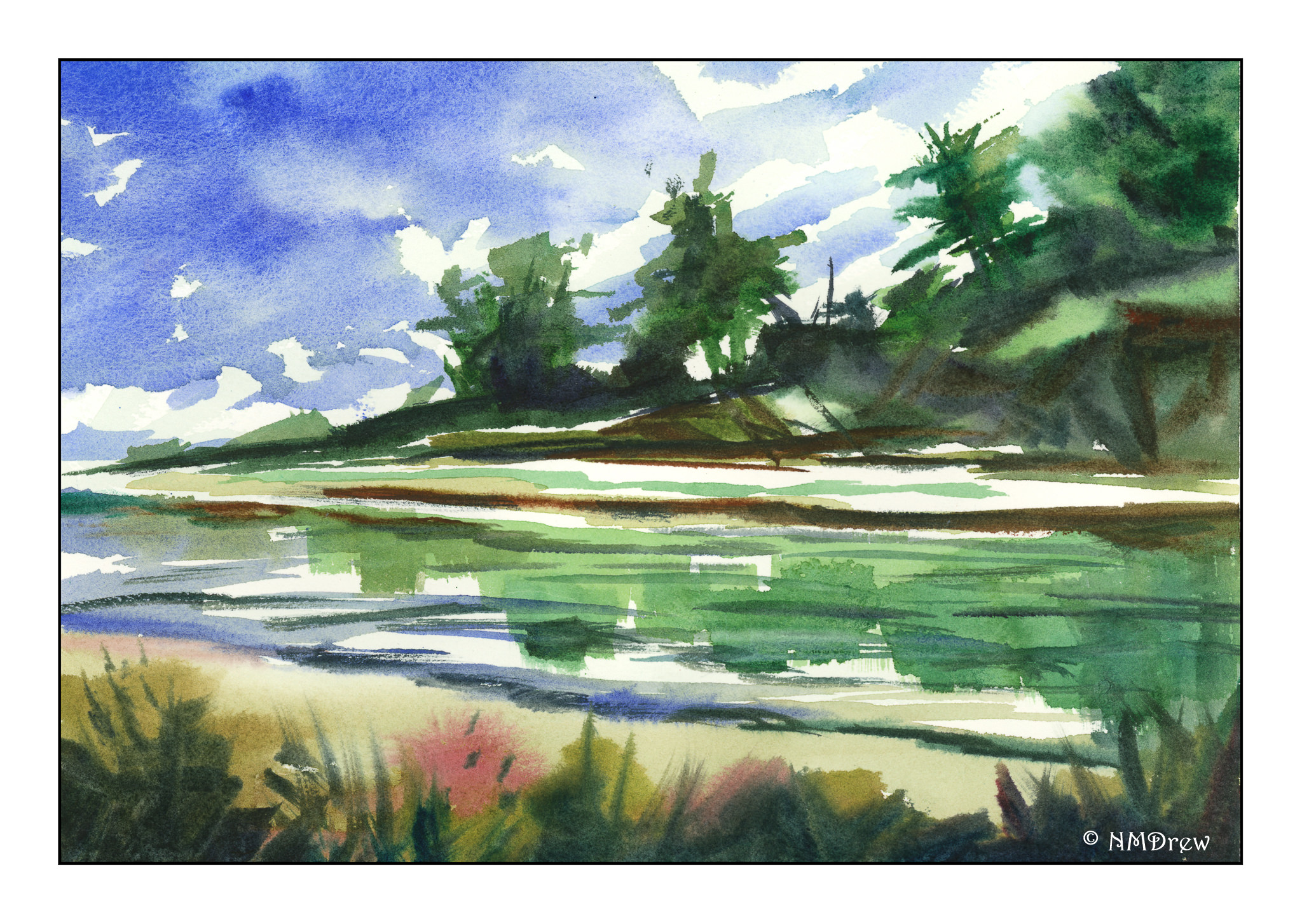 This one I wanted to work on contrast, saving white paper, and creating shapes with the 1/2 inch brush. I was pretty pleased with the results, but the foreground was a bit of a puzzle.
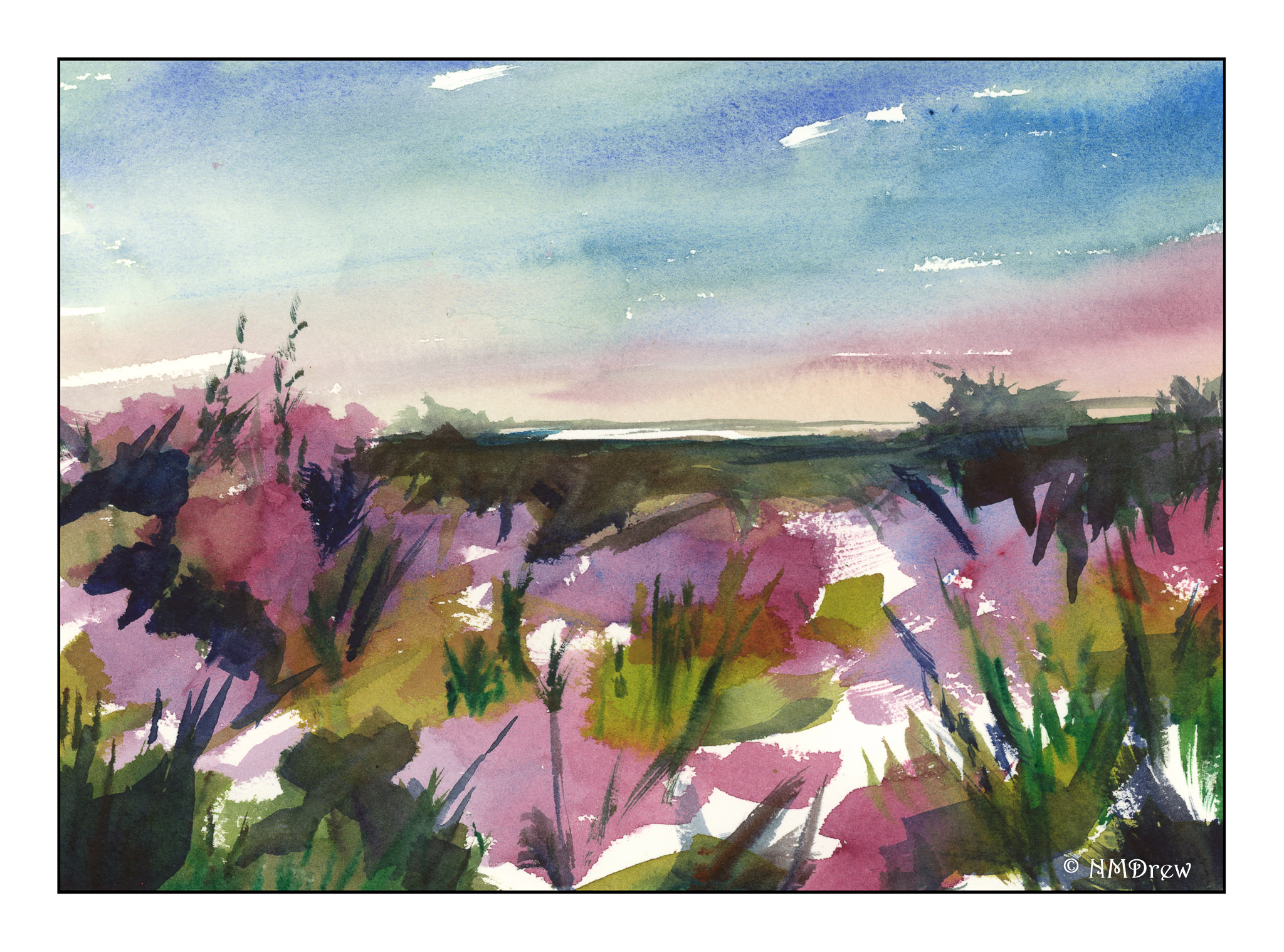 The above is an abstraction of heather. The sky doesn’t match the heather. This one I need to re-think.
 I really like this one – the colors just are so beautiful (to me). I think the abstraction worked to catch trees and snow in the spring, although perhaps I could redo it more simply.
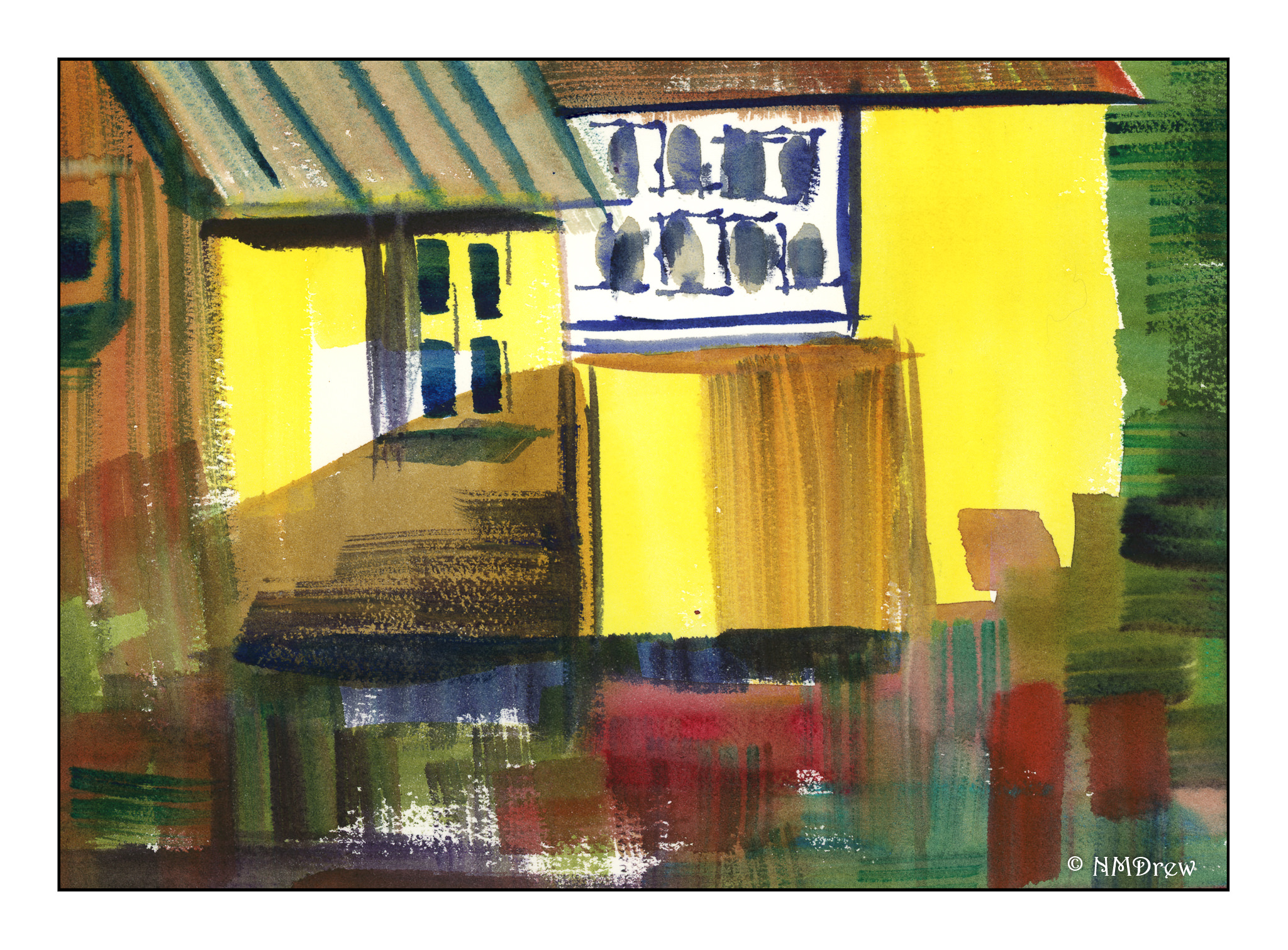 Finally, this yellow house has been calling out to me, but a yellow house is not that interesting in and of itself. But, a series of shapes to make a house became the idea after doing all those abstractions before it. Here, a 1 inch brush and a bit of thought. I like this one because it is cheery, has white paper showing through, and is showing me what I can do with pure colors.

