
Sometimes you see things in a photo that you didn’t see when you made it . . .

Sometimes you see things in a photo that you didn’t see when you made it . . .

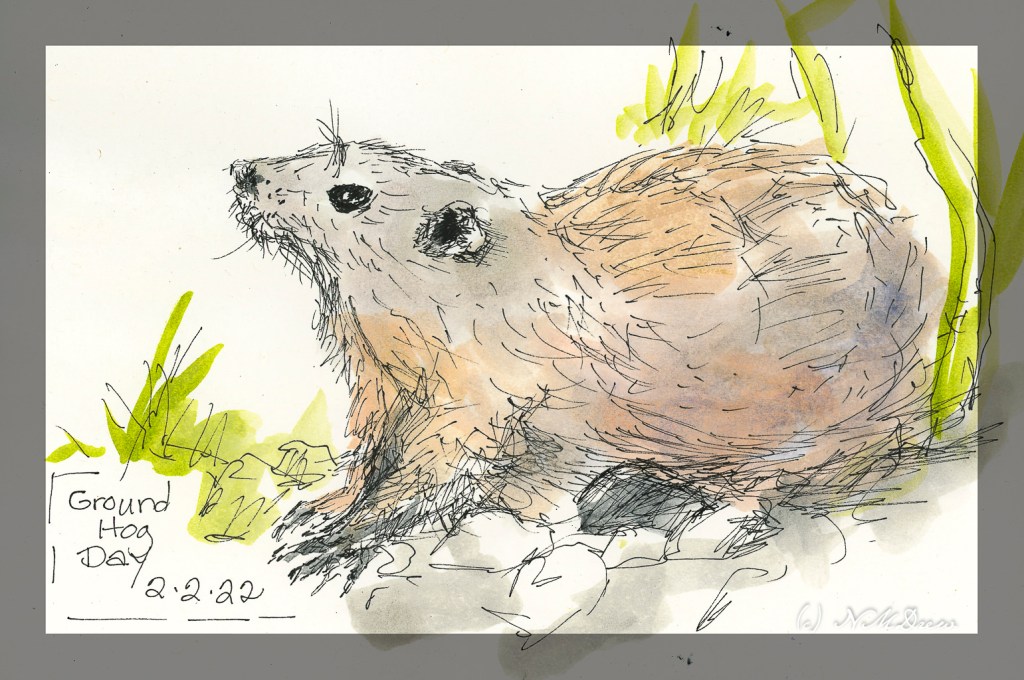
One of the beauties of drawing is you can create anything you want. This is a ground hog, but one I invented. I invented him when I realized his ear is all cockamamy. So, new subspecies: the Lopso-Eared Ground Hog.
Ground Hog Day has always been a favorite of mine. First, I like ground hogs. They are cute. Second, the entire idea of a day devoted to such a cute animal is rather delightful. According to the website history.com:
On February 2, 1887, Groundhog Day, featuring a rodent meteorologist, is celebrated for the first time at Gobbler’s Knob in Punxsutawney, Pennsylvania. According to tradition, if a groundhog comes out of its hole on this day and sees its shadow, it gets scared and runs back into its burrow, predicting six more weeks of winter weather; no shadow means an early spring.
Groundhog Day has its roots in the ancient Christian tradition of Candlemas, when clergy would bless and distribute candles needed for winter. The candles represented how long and cold the winter would be. Germans expanded on this concept by selecting an animal—the hedgehog—as a means of predicting weather. Once they came to America, German settlers in Pennsylvania continued the tradition, although they switched from hedgehogs to groundhogs, which were plentiful in the Keystone State.
Groundhogs, also called woodchucks and whose scientific name is Marmota monax, typically weigh 12 to 15 pounds and live six to eight years. They eat vegetables and fruits, whistle when they’re frightened or looking for a mate (they’re sometimes called whistle pigs) and can climb trees and swim.
They go into hibernation in the late fall; during this time, their body temperatures drop significantly, their heartbeats slow from 80 to five beats per minute and they can lose 30 percent of their body fat. In February, male groundhogs emerge from their burrows to look for a mate (not to predict the weather) before going underground again. They come out of hibernation for good in March.
In 1887, a newspaper editor belonging to a group of groundhog hunters from Punxsutawney called the Punxsutawney Groundhog Club declared that Phil, the Punxsutawney groundhog, was America’s only true weather-forecasting groundhog. The line of groundhogs that have since been known as Phil might be America’s most famous groundhogs, but other towns across North America now have their own weather-predicting rodents, from Birmingham Bill to Staten Island Chuck to Shubenacadie Sam in Canada.
In 1993, the movie Groundhog Day starring Bill Murray popularized the usage of “groundhog day” to mean something that is repeated over and over. Today, tens of thousands of people converge on Gobbler’s Knob in Punxsutawney each February 2 to witness Phil’s prediction. The Punxsutawney Groundhog Club hosts a three-day celebration featuring entertainment and activities.
Let’s hear it for monata monax!
The end! Or is it?
Anyway, as I mentioned yesterday, more blue in the lower front, some other touches, and then let it sit overnight.
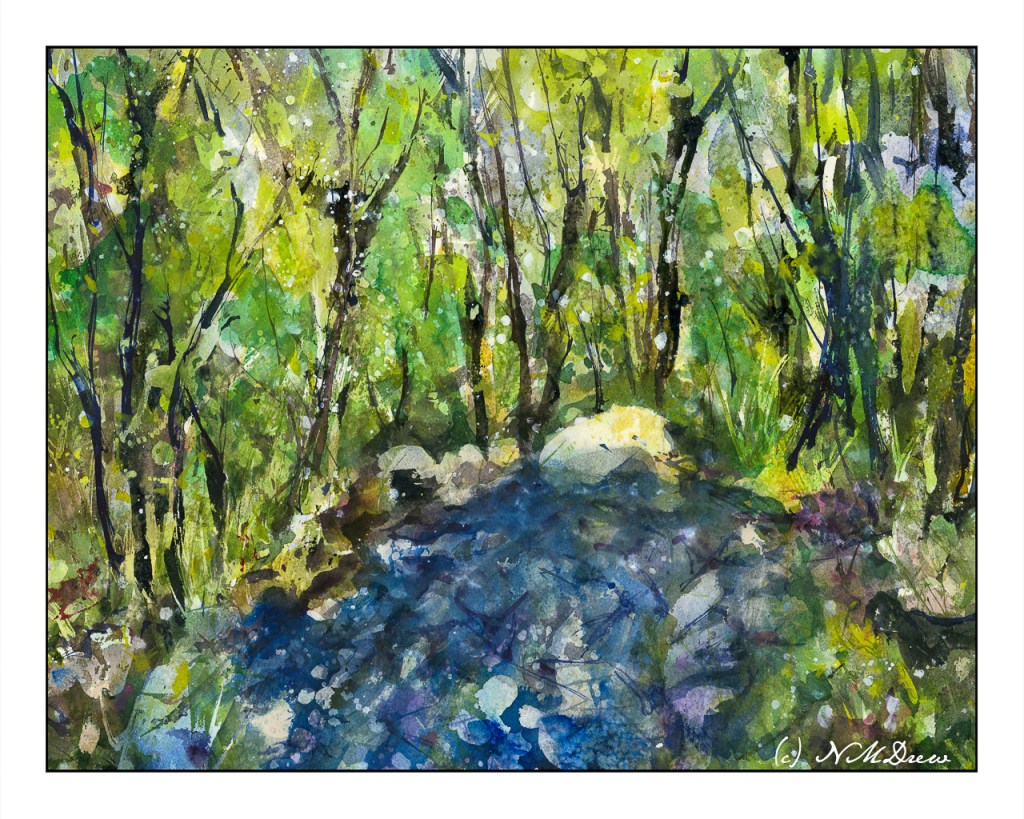
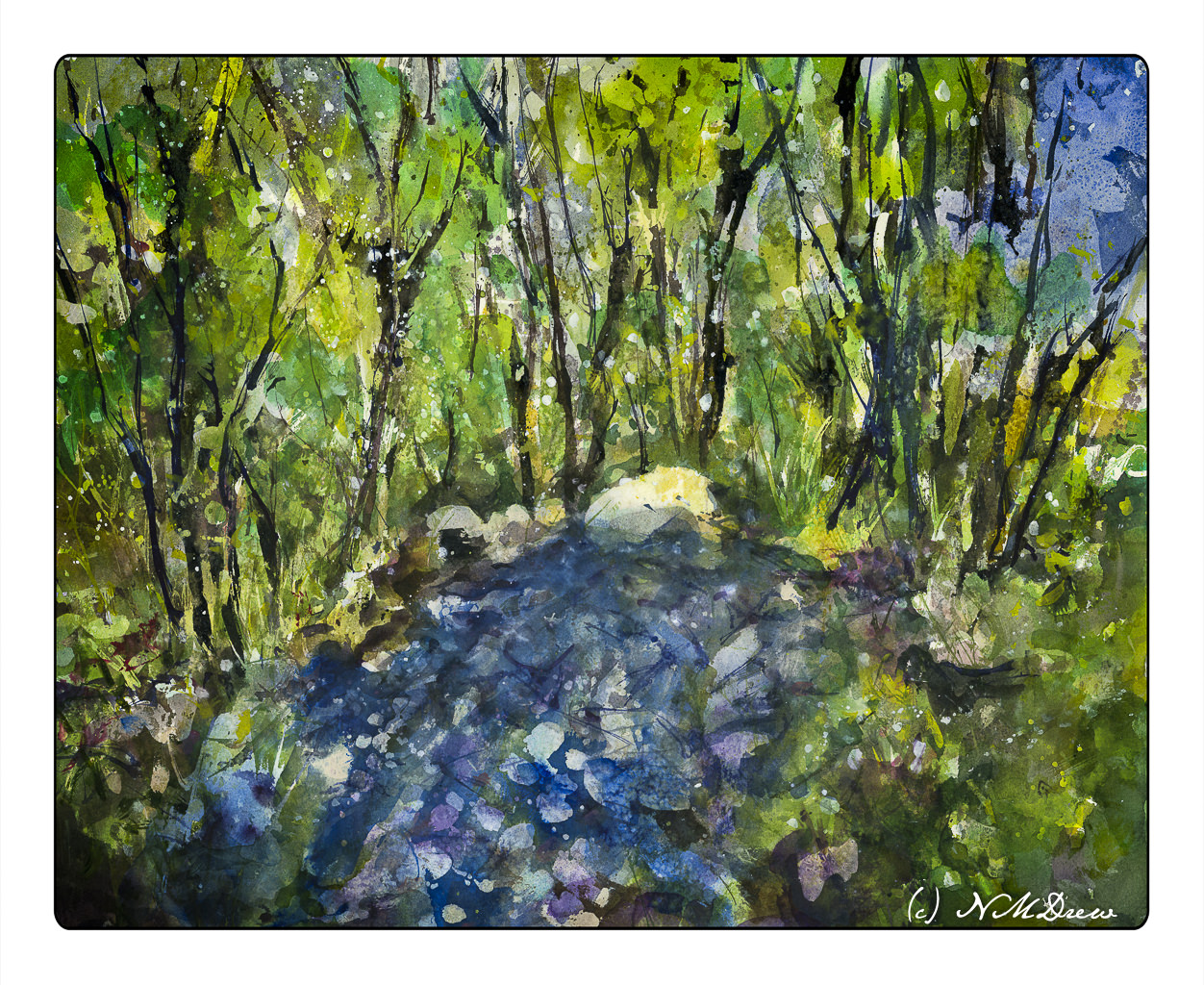
This morning I took another look at it, and the only way I can describe what I did was to refine it. I increased contrast in some areas to create harder edges. Other things were designed to lead the eye toward the center of the painting, toward the whitish rock at the top of the water. I also looked for areas that just didn’t look right, somehow too symmetrical or distracting. In the end, little bits here and there made it better to my eye. But – that was during morning coffee when I was trying to wake up!
I have never worked on a painting – a watercolor – for this long a time period. Total time is probably 8-10 hours. Time was spent laying down frisket, colors, letting things dry. Then frisket was rubbed off. Water was sprayed at different times and salt sprinkled. Rubbing alcohol was also sprayed on. I think the last round of frisket took about 30 minutes to rub off, along with salt. The result, though, are transparent layers of color which I could not have accomplished otherwise.
While the perspective seems a bit off – or maybe we are looking down into the water from above? – I like this painting. It’s a new adventure for me in watercolor, and while bright, I don’t think it is overly so. I deliberately did not use any orange!! New ideas are coming to mind for painting in a transparent medium. Mood and impression work here for me – not realism, but suggestion. So, spring thaw, melting ice, new leaves.
In this final version, I cropped it and changed the perspective a bit in Lightroom. Post-processing artwork is much like post-processing a photo, an din the printing industry it is done all the time. You can see the uncropped version in the gallery below.
Arches 16×20 140# CP, acrylic, gouache, watercolor.
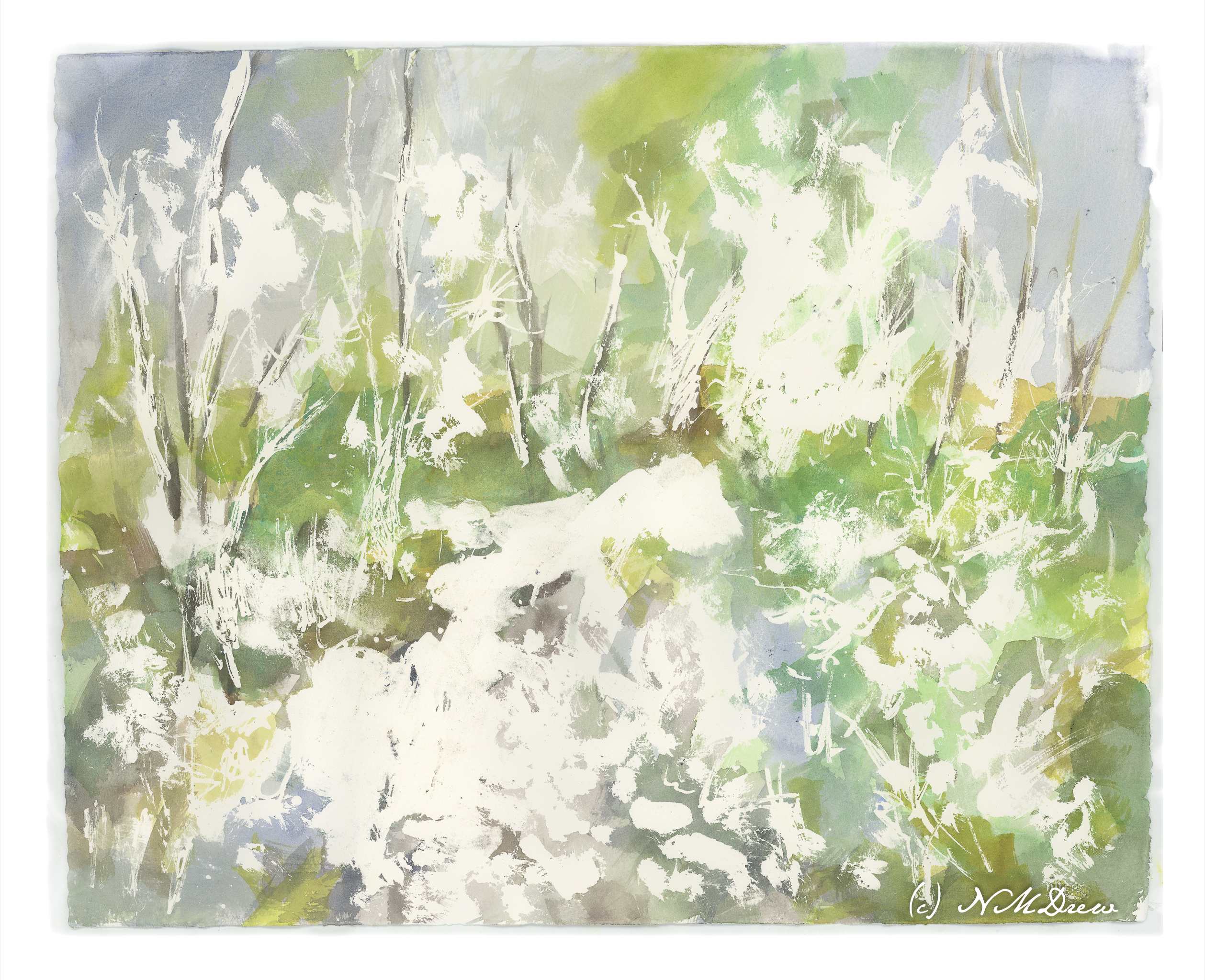
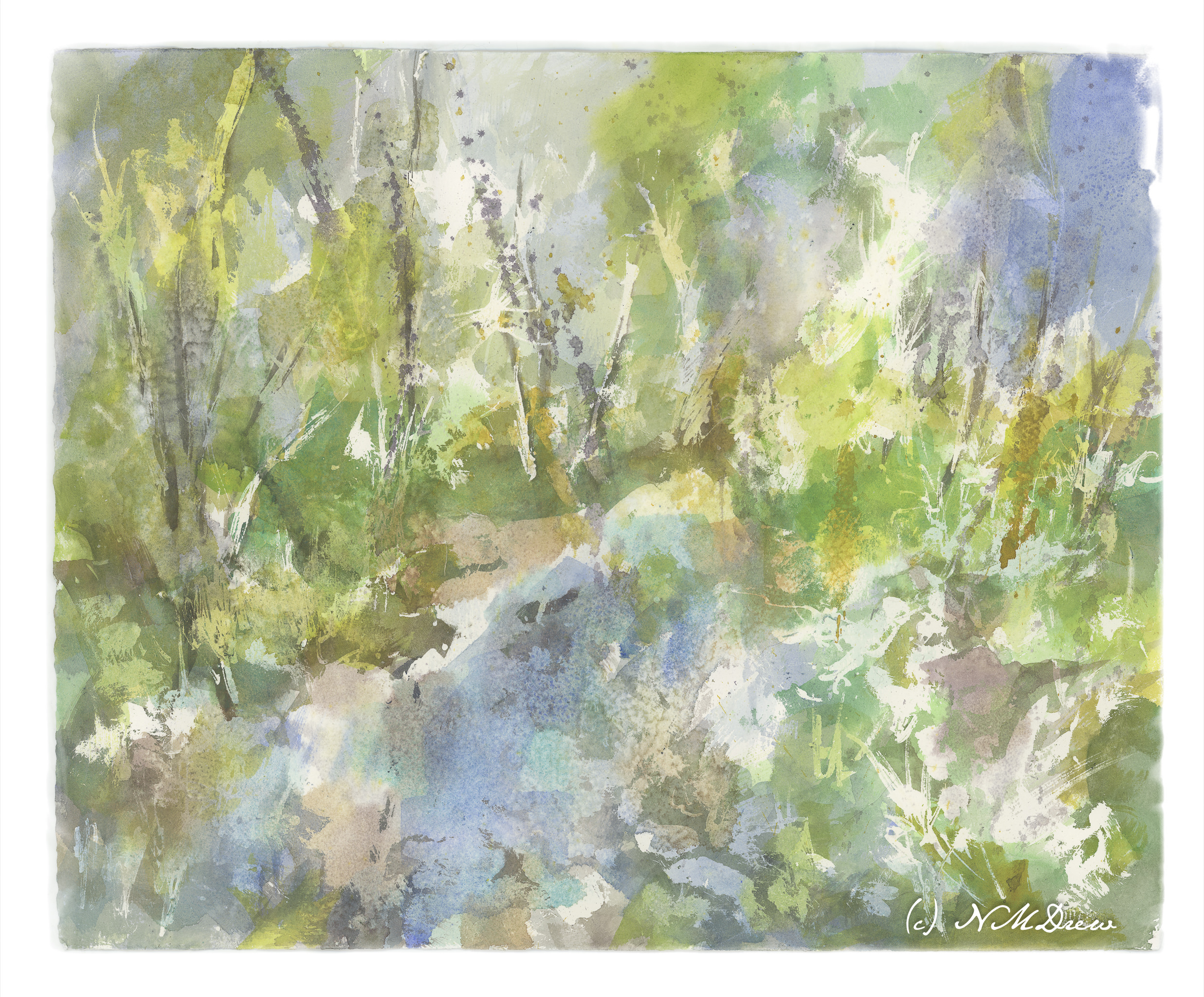
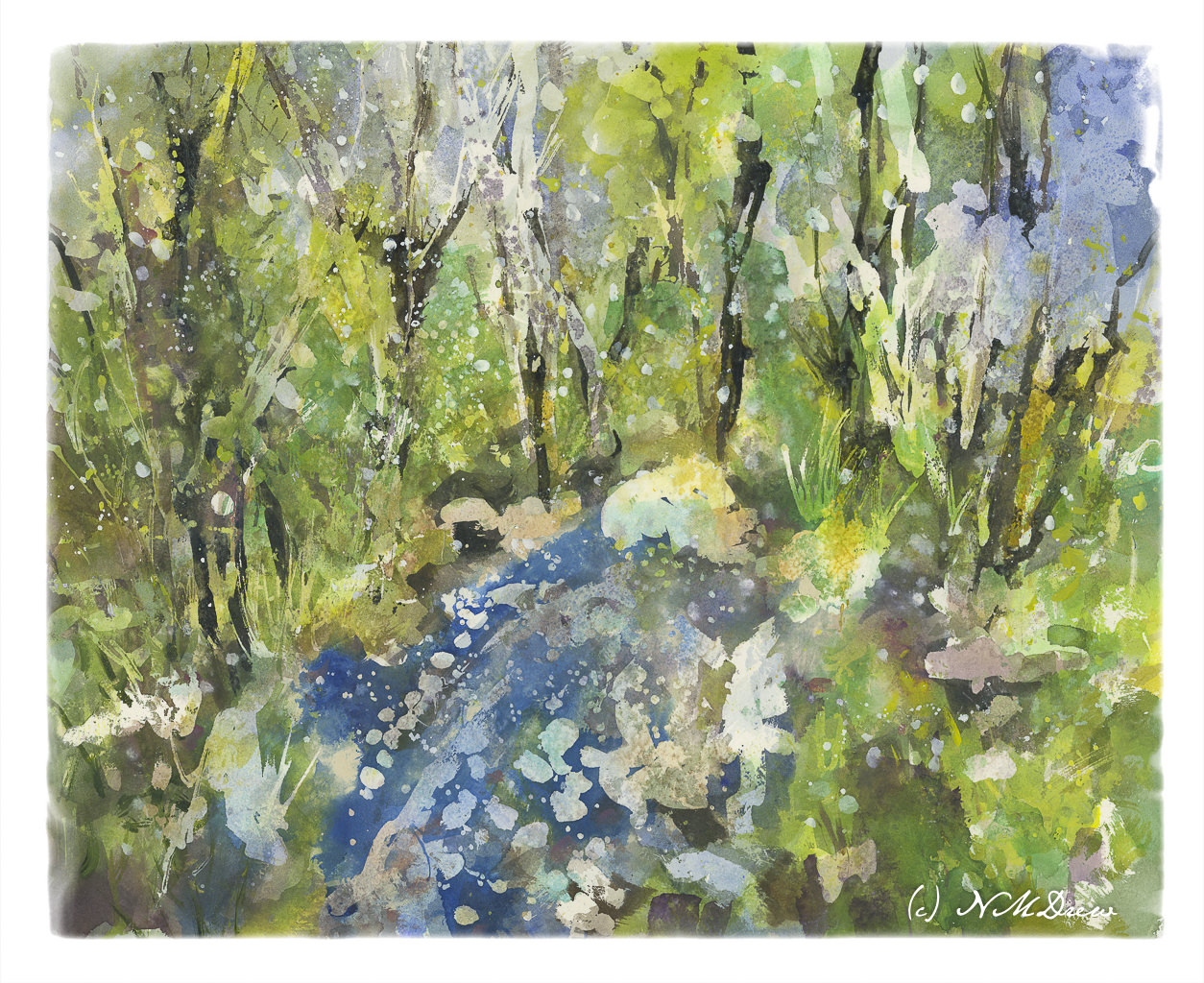
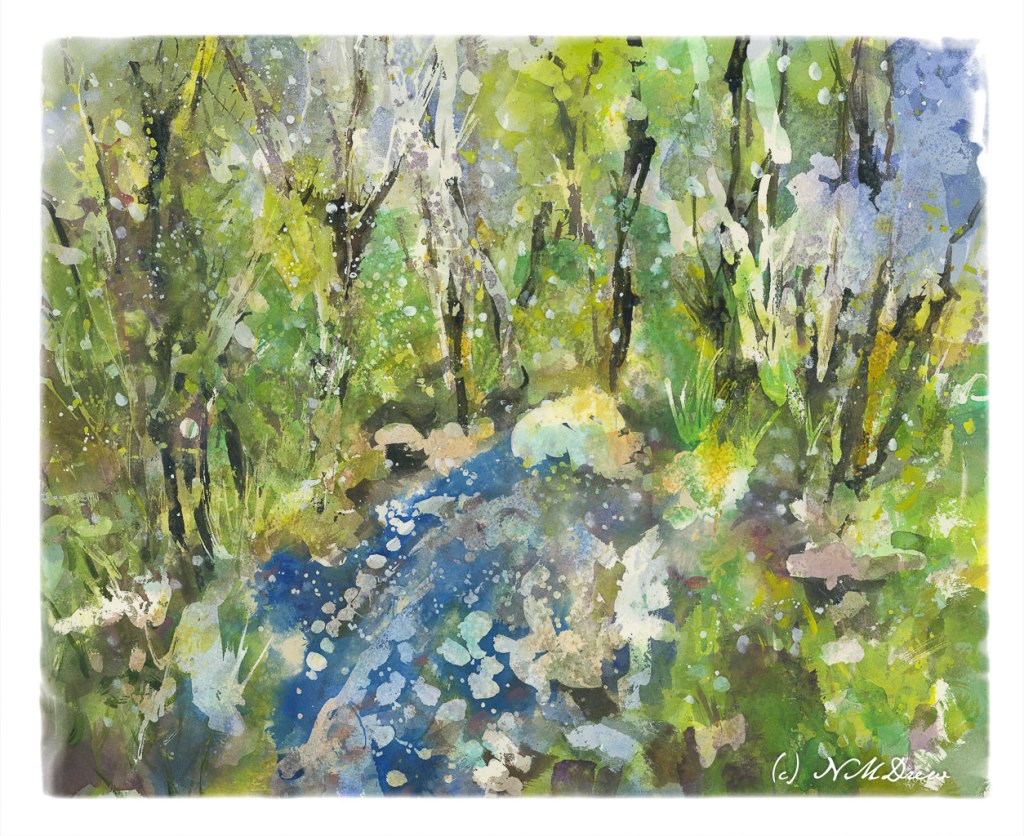
Getting there, but not quite.
I added more frisket, colors, salt. I also began adding acrylic paint thinned down quite a bit. Now, another night of letting it stew, but I already think I know what I want to do with it. For instance, I want to add more blue in the lower left foreground in that rather large white blob. Perhaps some sense of geometric texturing by adding tape and then painting over it. White streaks for snow on trees? It’s hard to tell.
Waiting is a good thing to do.
 Ink, Yarn & Beer