Sashiko #6 – Second Color

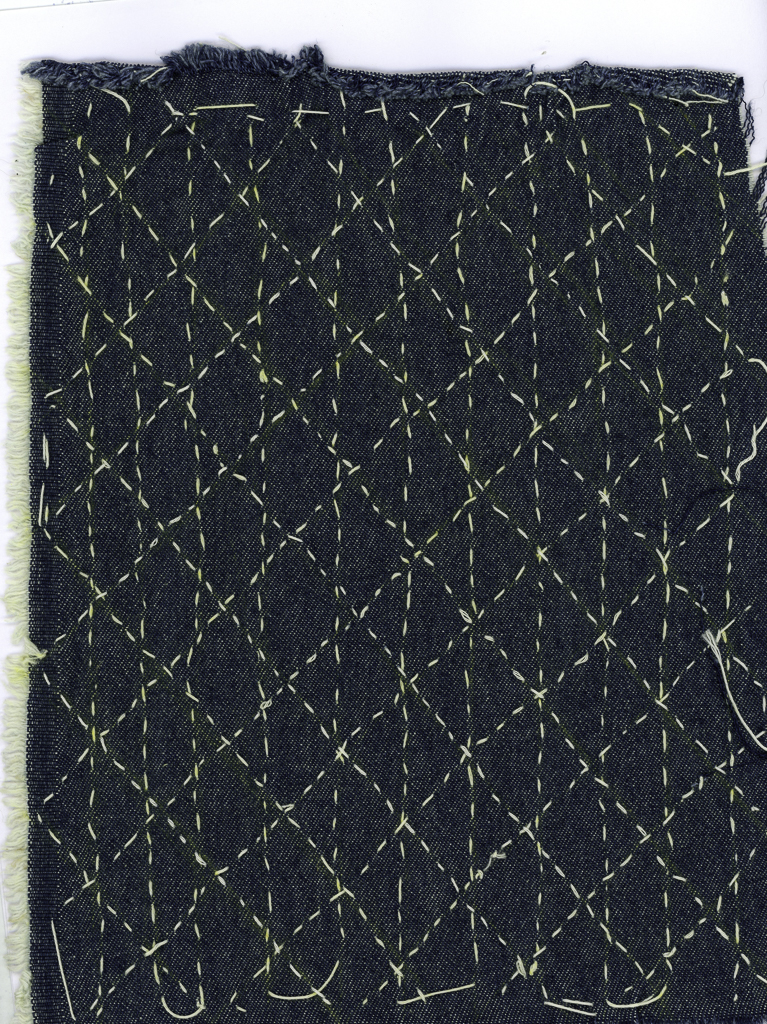
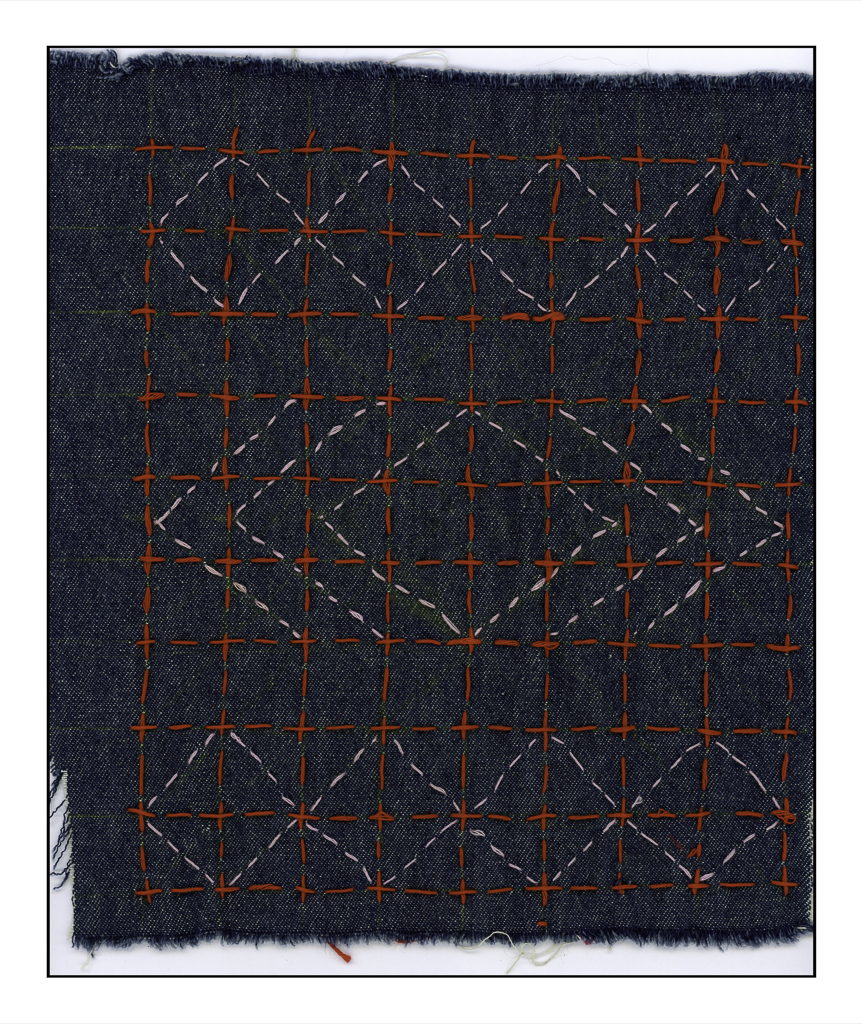
Although it doesn’t look especially bright or pink, the second thread I added was a carnation pink. However, I did not have any “real” sashiko thread in pink, so I decided to use a pink DMC embroidery floss.

Initially I sewed the floss as it was – 6 strands of thread – but found it to be really challenging and far more difficult than the sashiko thread in red with which I began. The sashiko thread I have is thinner than the 6-strand floss, so a fatter thread means more work! I picked out what had done. Then I separated a strand of the DMC into two 3-thread strands. These made for thinner thread, and I used it for the top and bottom designs of the swatch above.

However, I felt the 3-strands were just not quite right. So, for the middle design, I used a 4-thread bit of thread, pulling apart the floss into a 2 and 4 strand bit. The 4-strand is thicker and, I think, looks better. However, I never liked separating floss into thinner strands as it tangles up on itself as it is separated. Being lazy I have decided that traditional sashiko thread is more to my liking, and I will leave it at that!

A couple of thoughts . . . the denim is fairly loosely woven, but the floss is heavier than I would like to deal with – I really had to pull to get it through the fabric. For a more loosely woven fabric, I think the floss would be perfect. Sashiko thread seems to come in both thick and thin weights, and I have been using the thin on the denim. Would it be too thick on a more densely woven fabric? If I used thin sashiko thread, would it be too thick and need to be separated, much as the floss needed to be? I guess we shall see on future projects with different fabric.

Sashiko #6 – First Color

This heat is really getting to me – and it is not as hot as in Texas or Florida, and we certainly don’t get the humidity, either. But, I have been staying inside or going to places I know with air conditioning – heat has always not been my best of friends.

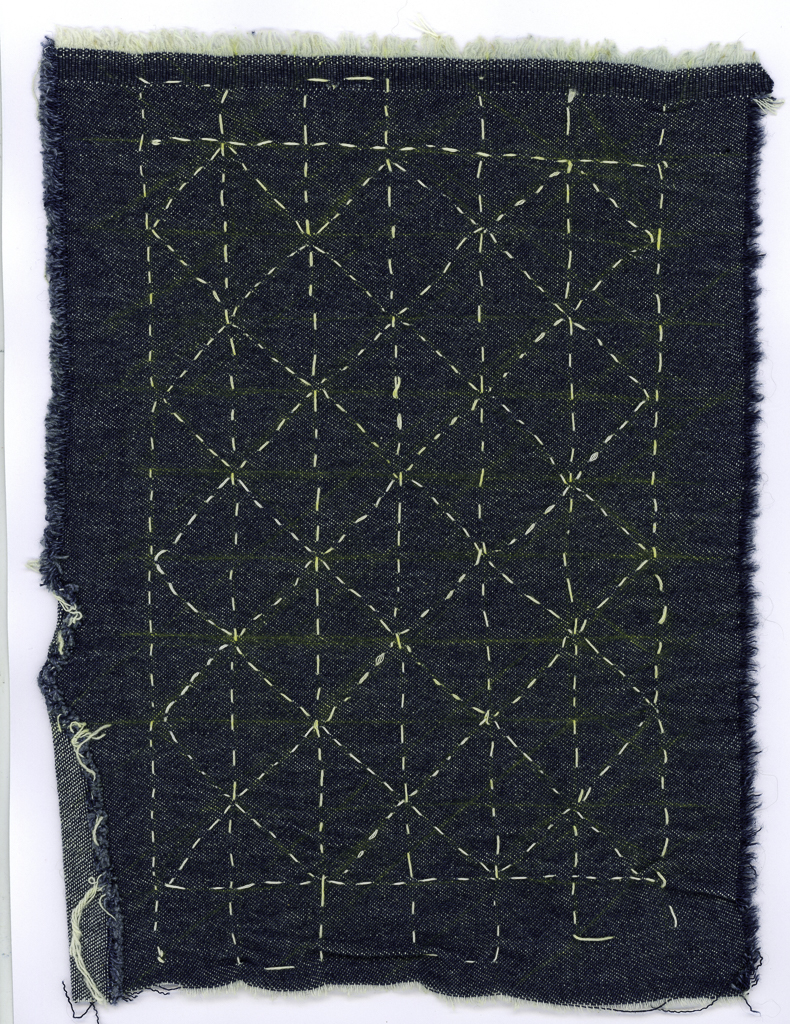
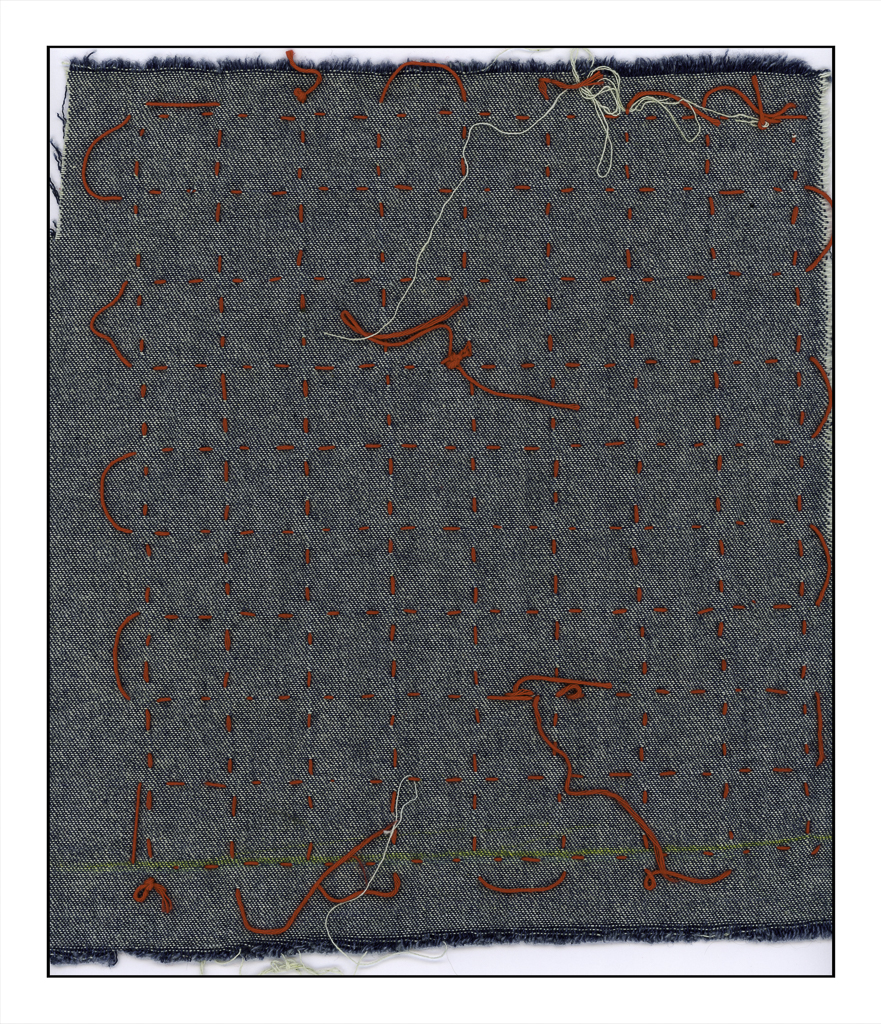
Given that there is only so much you can do lounging around a house, it can be good to just watch a movie or show and do something a bit creative. As the sashiko has been ignored, I figured today would be a good time to do some. The same denim as Sashiko #1-5 was ironed and starched, and a grid laid out.

If you look, you will see that the intersections are little + signs, and then there is one stitch in between each plus sign. I am not sure where I am going to go next, but I have a few ideas. The other question is what color thread or threads? I am not quite sure what I have – maybe a pink or bright green against the denim? Not sure.

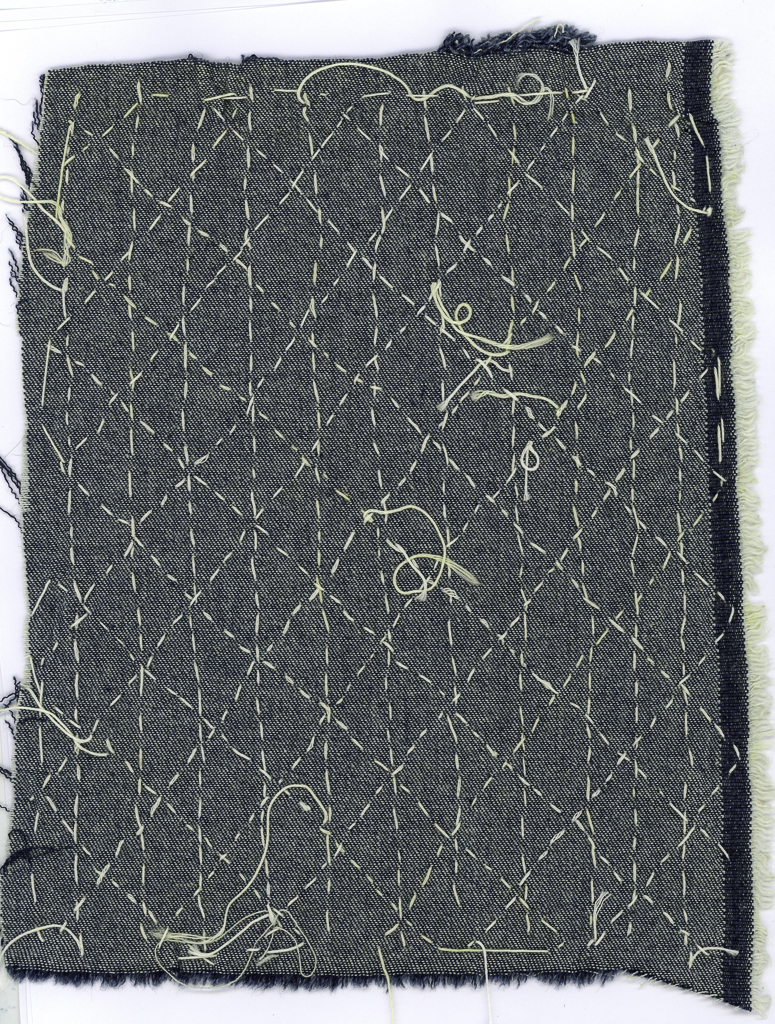
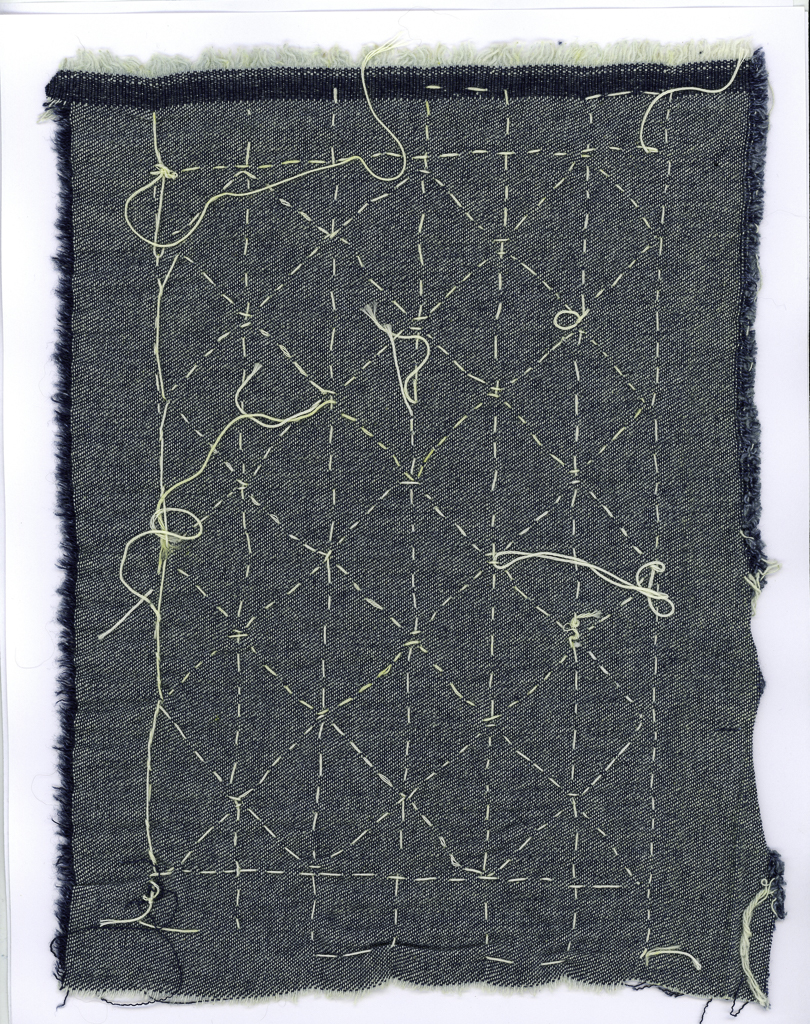
Anyway, below is the reverse side, just because it is so interesting. Oh, I was going to do the stitching on the reverse, but with the plus signs, my mind was not cooperating, so that will be for a simpler project.

Sashiko #5 – First Color

I starched and pressed a rectangle of denim from the same stuff I have been using and had washed. It made a major difference as far as an ability to be nicely stitched, I think. It could also be that I am being more conscientious about the rhythm of my running stitches. With this fifth sample, my hands are getting comfortable.

You can see that my stitches are more even and my lines are more straight. This is not counted cross stitch or Victorian handwork where threads are counted. Instead, it is a decorative art with a bit of the human thrown in! As you can see, some areas have more stitches in the same distance and others have less. Is that important?

My beginnings and endings are a bit neater, too. I’ve been using back stitches to begin and end my thread, but in some areas I carried the thread to a new area in need of stitching by running the threads together on the reverse. All the stitching on this sampler is being done on the right side of the fabric, but sashiko #6 will be on the reverse . . . but that is a few days away!

Sashiko #4

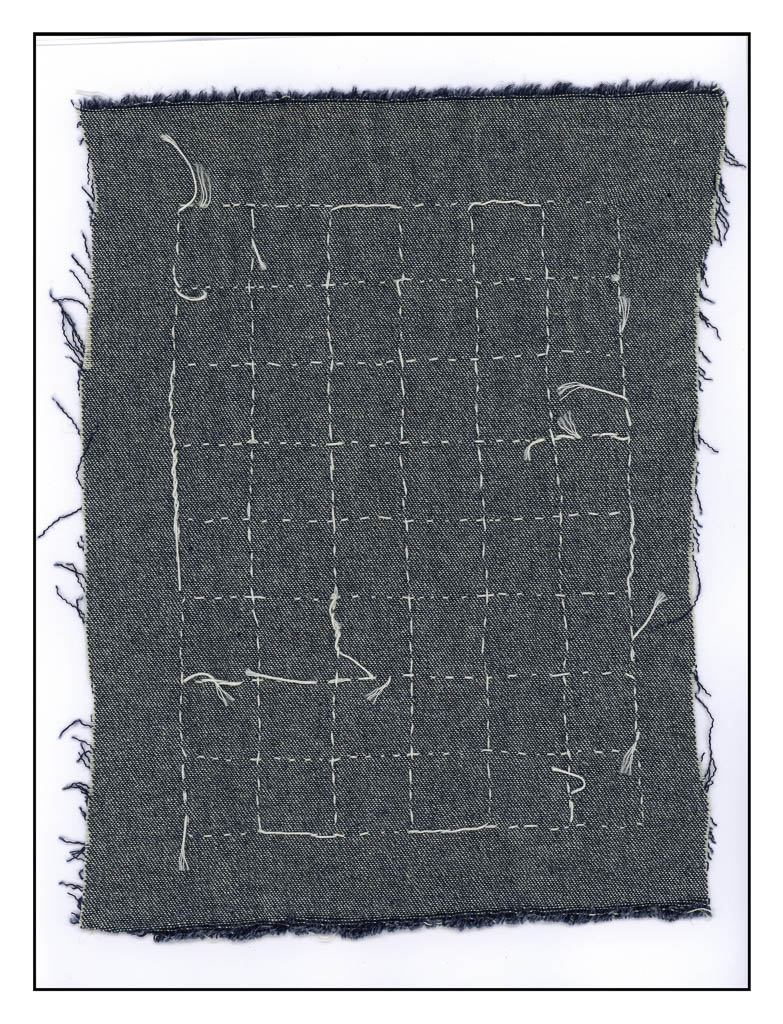
For this sashiko sampler I tried a couple of things. First of all I used two different thread colors, still sewing onto the soft, washed denim. I laid out a 7×7 grid and then just followed the grid lines using the white thread. Then I looked at the stitching and thought a second color would be fun to add, to see what it would like more than anything else, as well as to try to design a design of my own. I don’t really like the results of my own design and it makes me think about what kind of designs work well in sashiko.

When working threads, they need to be secured at beginning and end. I tried knots – meh. Loosely woven fabric lets the knots through a bit easily. Weaving threads in and out is messy but might work okay. I have even thought of using a bit of fray-check but have not tried it out yet. Back stitching over threads at the beginning and the end seems to produce the best results, but getting the needle into the right places to replicate the preceding stitches takes a bit of work – practice will most likely help. The softness of my denim is also a challenge in doing this.

So, a couple of thoughts. I read that many people do sashiko stitching on the reverse side of the fabric. This is something to try, to see how well it looks. As well, I want to starch my next bit of denim to see if that helps. For my next project, I will try both and report the results!

First Practice in Sashiko

Awhile ago I decided to try my hand at sashiko, a traditional Japanese embroidery used for both practical and artistic reasons. Originally it was used to quilt layers of cloth together, old clothes to make new ones. Patches were pieced onto already patched clothing. Today it is hard to imagine that clothing had to last generations, but this art form was for practical reasons. The artistry of it – the creation of patterns – shows the fact that, despite hardship and poverty, the need to express and create, to add beauty to the world, exists at many levels.

Today, we don’t patch clothes like that, to make them last for ages. We don’t need to for the most part. Instead, we call it “visible mending” and use it to enhance our clothes or show off our skills. It is a tradition that is now becoming a fabric art, much as quilting. However, these stitches are made by hand (although Babylock does have a machine which mimics hand sewn sashiko) and add character to jeans or old denim, or are used as a way to enhance something, such a purse or towel or whatever.

I bought sashiko thread, needles, a palm thimble specific for sashiko, and from there watched a few videos. I have some denim that I am cutting up to practice on. My stitches are uneven and I am trying to find a rhythm first in creating a running stitch. It is far harder than you think. So, first, the rhythm and comfort with the stitches.

Above is my first attempt. I just drew straight lines by hand, but later got out my pica stick and used it. Loops are left so that the fabric does not pucker as the rows are stitched, and as each row is done, I attempted to straighten and flatten out the fabric – a running stitch is great for gathering!

Above is my second attempt. More running stitches, but I tried different ways to begin and end rows. The loops prove to be important is not getting puckers – I got rid of a few with a hot iron, but you can see at the bottom a pucker across the left side.

Securing stitches is important. I tried different ways – many involve stitching over other stitches. I am still exploring that element – I want to figure things out on my own!

Above is the reverse of each of these samplers. The one on the left is the first; the one on the right is the second. The second one is neater as i carefully used a Chaco chalk pen to mark lines as I moved along.

Currently I intend to stick to straight lines and figure out how to connect them in different ways to make patterns. Tradition holds many patterns to be explored – many straight, geometric, circular, a combination of both, and many can become pictorial if you desire. Not all are done in a running stitch is my guess as I have seen some designs with completely solid lines of thread – backstitch or a running stitch then redone in between and in the reverse direction with another running stitch?

Mysteries to be explored!