
Josh writes . . .
My uncle has been getting into and enjoying high-power rocketry for a while now, and I guess I’ve been a little inspired by his enjoyment. In hanging out with him, I got interested in it, too, and raided his scrap bin for some parts and ideas. While most people interested in rocketry would probably begin with any of the high-quality kits that are available, things seemed to line up for a scratch build for me.
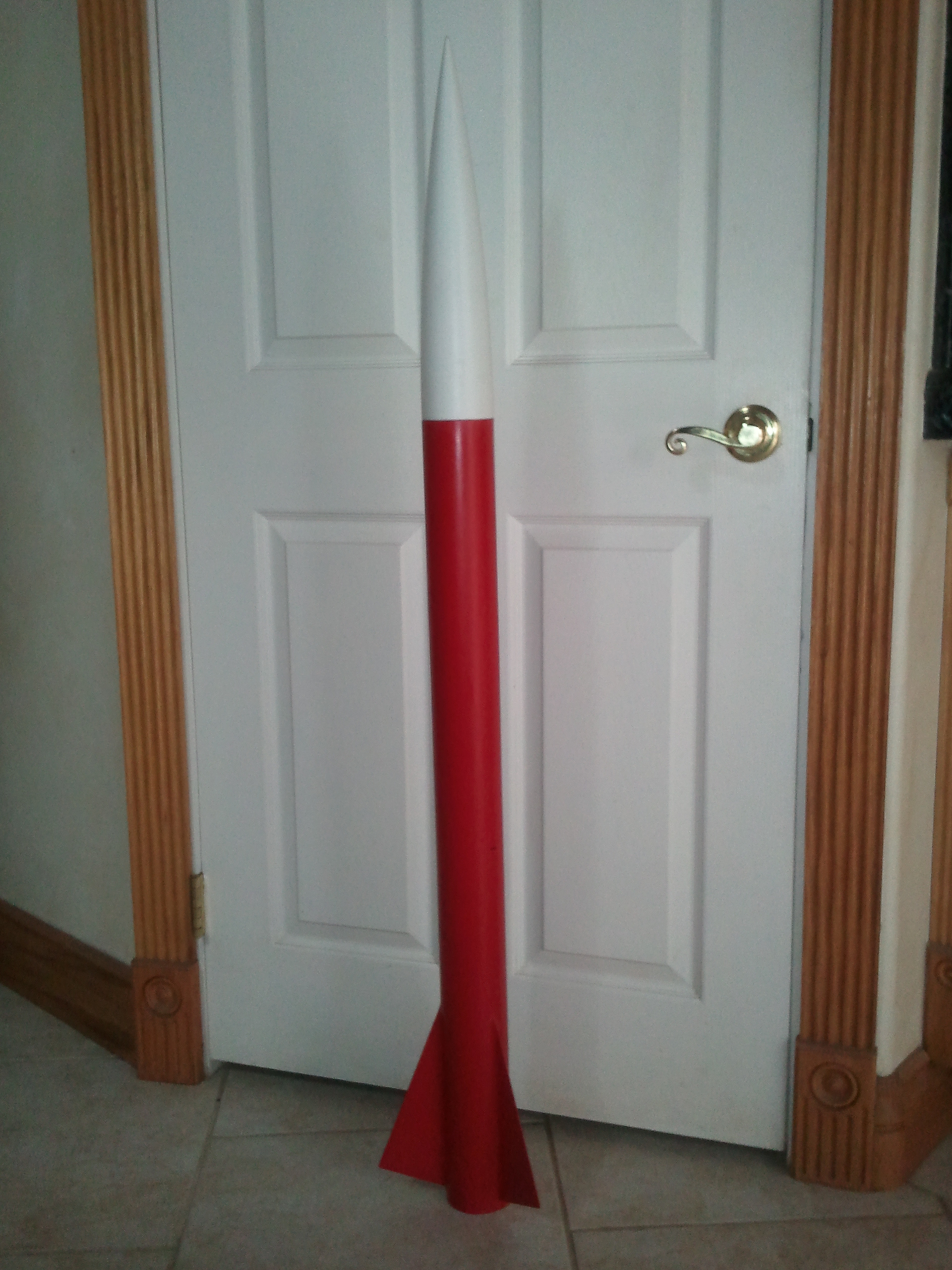
I started with a standard 3-inch mailing tube from Office Depot. We wrapped it with a layer of fiberglass for strength. I built a motor mount out of a piece of “blue tube,” which is high-strength paper composite tubing made specifically for rocketry, and some rings cut out of plywood. Fins I cut from a composite called G10 (aka Garolite). The recovery harness was made from Kevlar and nylon webbing. I found an inexpensive surplus parachute online, and added a plastic nose cone. The whole thing was assembled with epoxy, and a little spray paint I had around prettied it up some.

In between work and other obligations, it took several build sessions over the course of six months or so to get the whole thing ready to fly, but finally I was both ready and available on the club’s regularly scheduled launch day. My uncle and I went out to the club’s launch site in the desert, and we saw several flights despite the conditions, which were on the windy side. One rocket, launched to about 2000 feet, drifted more than a mile on its parachute before touching down again. I was a little nervous, but I knew that my comparatively large, heavy rocket would not be flying as high, especially given that I was planning to fly on a comparatively small motor, so I decided to go for it.
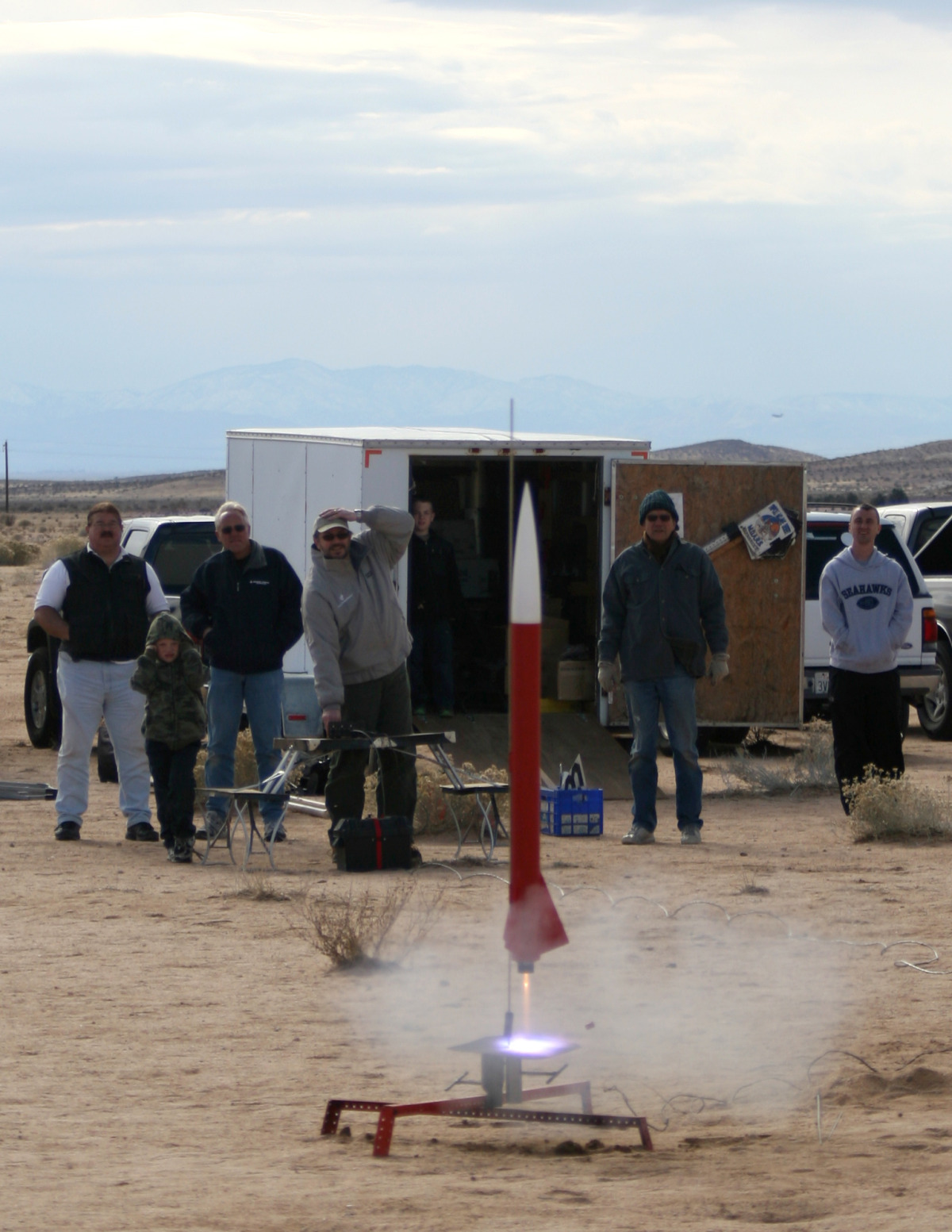
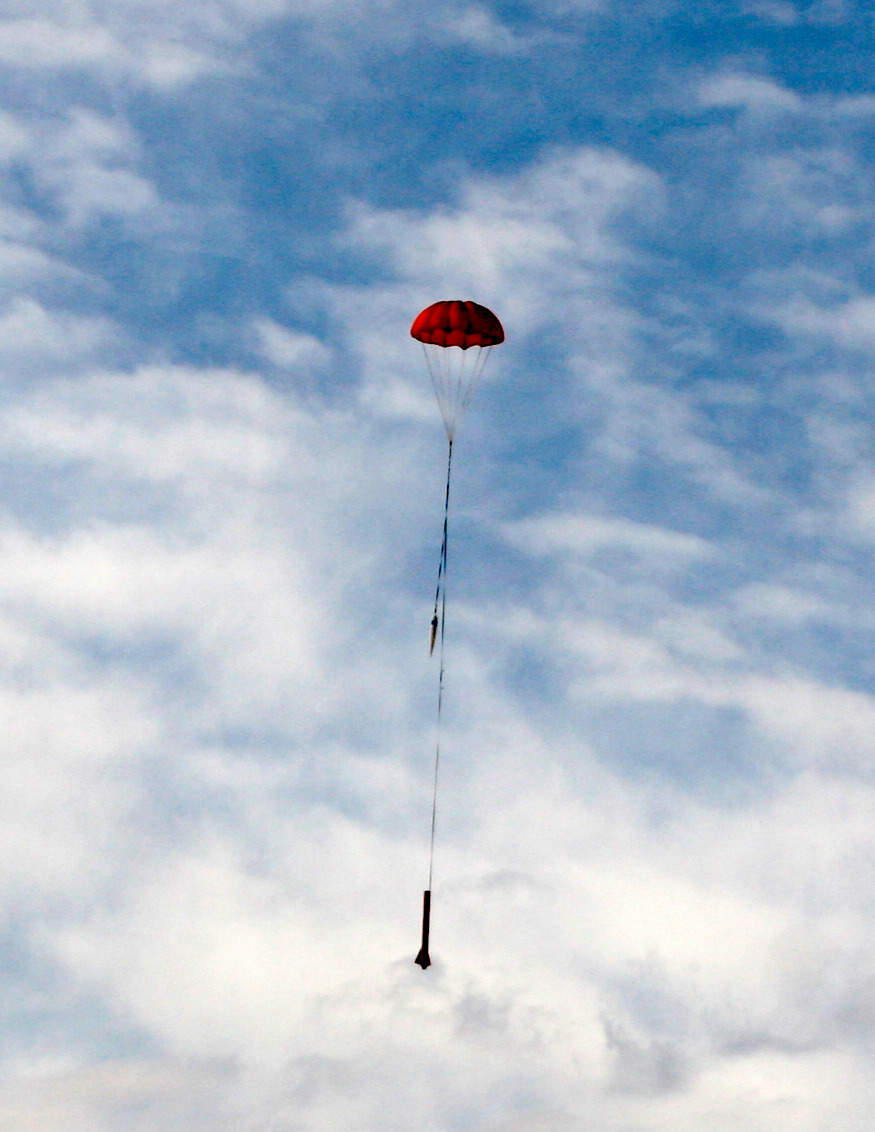
The motor I had chosen was an H-238, and the simulation software estimated it would boost my rocket to about 980 feet. The delay packaged with the engine was rated for ten seconds, so we cut a little hole in it with a drill bit to shorten that a bit. The launch looked good, although the rocket seemed to wiggle a bit just after it cleared the launch rod – perhaps because a crosswind caught it. While I have seen lots of rockets go completely out of sight, the comparatively high weight and low power kept mine in sight the whole time. It had a smooth climb to apogee, then turned and started down again. I had a terrible moment or two when the rocket was clearly pointing toward the ground and falling, but the ejection charge finally did go off. The chute deployed, and the rocket came down smoothly after that. It touched down only a few hundred yards from the pad, and when I caught up to it, I could see by grooves in the sand that it had been dragged about eight feet by the wind. There was no damage, though, and the rocket is ready to fly again.
Plans are already under way for future flights and projects. This rocket, although it flew well, does have some design flaws that aren’t fixable, so the next one will benefit from what I learned in building and flying this one. I also have plans to install an electronic altimeter in the next one to control the ejection charge (actually, charges, plural, for dual deployment) and avoid the possibility of a bad landing. I also want to install a GPS receiver and radio beacon so I can find it if I lose sight of it. An on-board camera looks interesting, too.


 Ink, Yarn & Beer