Honey-Sweetened Rice Pudding

For baking, I try to avoid refined sugar these days. I already have a tendency to bounce off the walls if my energy is not directed, irritating everyone around me and annoying myself as well. Honey does not have the same vibratory effect on me as white sugar, for whatever reason, no matter the arguments given that honey and sugar are the same thing. I don’t really care. The fact is, that honey and I are better behaved together than sugar and me. The biggest thing is that recipes called “honey this” and “honey that” often have a ton of sugar as well. I’ve even seen recipes labelled “honey blah” with a tablespoon of honey and a half cup of sugar. In this age of massive lies, what else is new? So, I created this recipe for those of you who like rice pudding and want real honey-sweetened somethings.
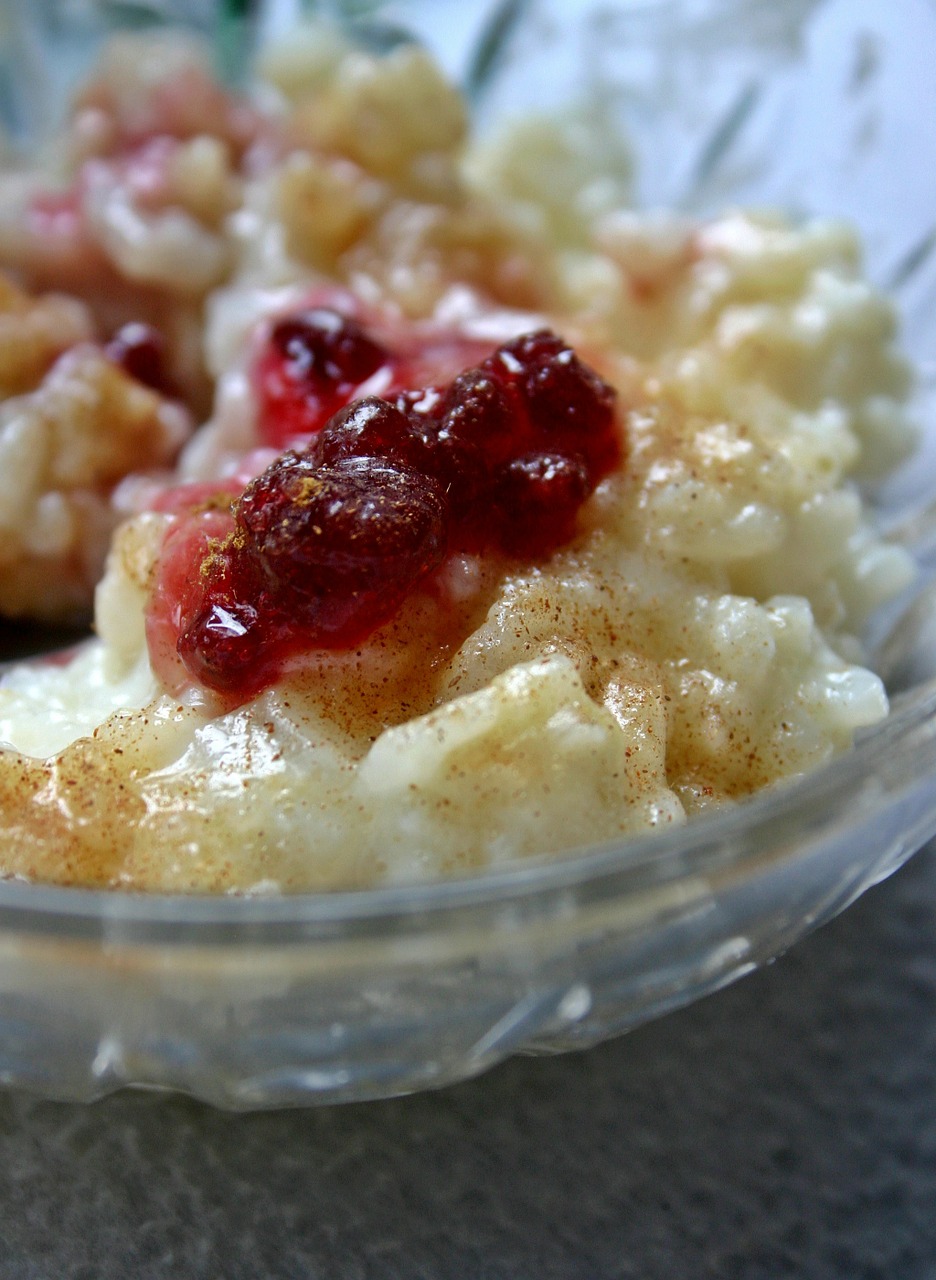
Honey-Sweetened Rice Pudding

2/3 c. honey
4 c. unsweetened almond milk, or milk of your choice
3/4 c. short grain rice
1/4 c. cream
2 tsp. vanilla
1/4 – 1/2 c. raisins or other dried fruit
1/2 c. toasted almonds

Method

Mix honey, milk, and rice together in 2 qt. sauce pan. Watching carefully and stirring as needed, over medium-high heat, bring mixture to boil. Once boiling, drop to a simmer, and stir periodically. Note: Almond milk does not tend to boil over but regular milk does. Simmer for 15-20 minutes, or longer. Rice will cook and pudding will begin to thicken. When pudding is thickened, stir in cream and raisins. Continue to cook a bit longer, maybe 5 minutes. Take off heat. Add vanilla and almonds. Good warm, and cold; will be thicker if refrigerated.
Soup Night

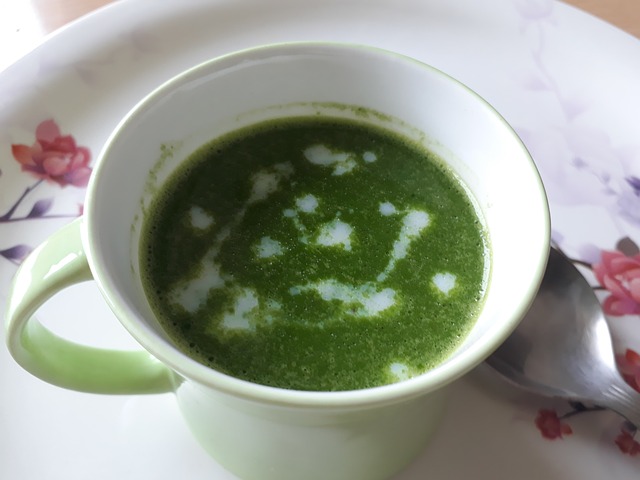
I like cream soups more than I like brothy ones.  I also like to use items that are kind of not at their peak – not spoiled – but not really the best they could be.  However, I don’t think true cream soups – made with half and half, full-fat cream, etc., are the best for overall health.  So, I use my own methods.  Follows is a spinach soup, but you can use any vegetable you want in its place.  I even use lettuce that is not really perky, and it all comes out fine.  So, here you go!

Cream of Spinach (or Whatever) Soup

  • olive oil – 2-3 T.
  • 1/4-1/2 chopped onion
  • 6 oz. spinach
  • 3 c. chicken stock
  • Pepper, salt, garlic powder, nutmeg – or other flavors for seasoning
  • 1 c. unsweetened, plain almond milk
  • 1 c. Greek yogurt
  • Parmesan cheese, sour cream, full cream, or whatever you want for garnish

Saute onion in heated oil.  Add spinach and saute some more.  Pour in chicken broth and cover.  Cook until spinach is soft and wilted.  If you use other vegetables, you may need to simmer longer.  If you do, watch your pot and add more liquid if necessary!  Season with your choice of seasoning.  Remove to blender – or use immersion blender – and puree until very smooth.  Return to pot and stir in almond milk and yogurt.  Blend well.  Heat through.  Strain if you have bits of stuff you want to get rid of or just to be fancy and serve in bowl.  Garnish with garnish of your choice.

Serves 2-3.

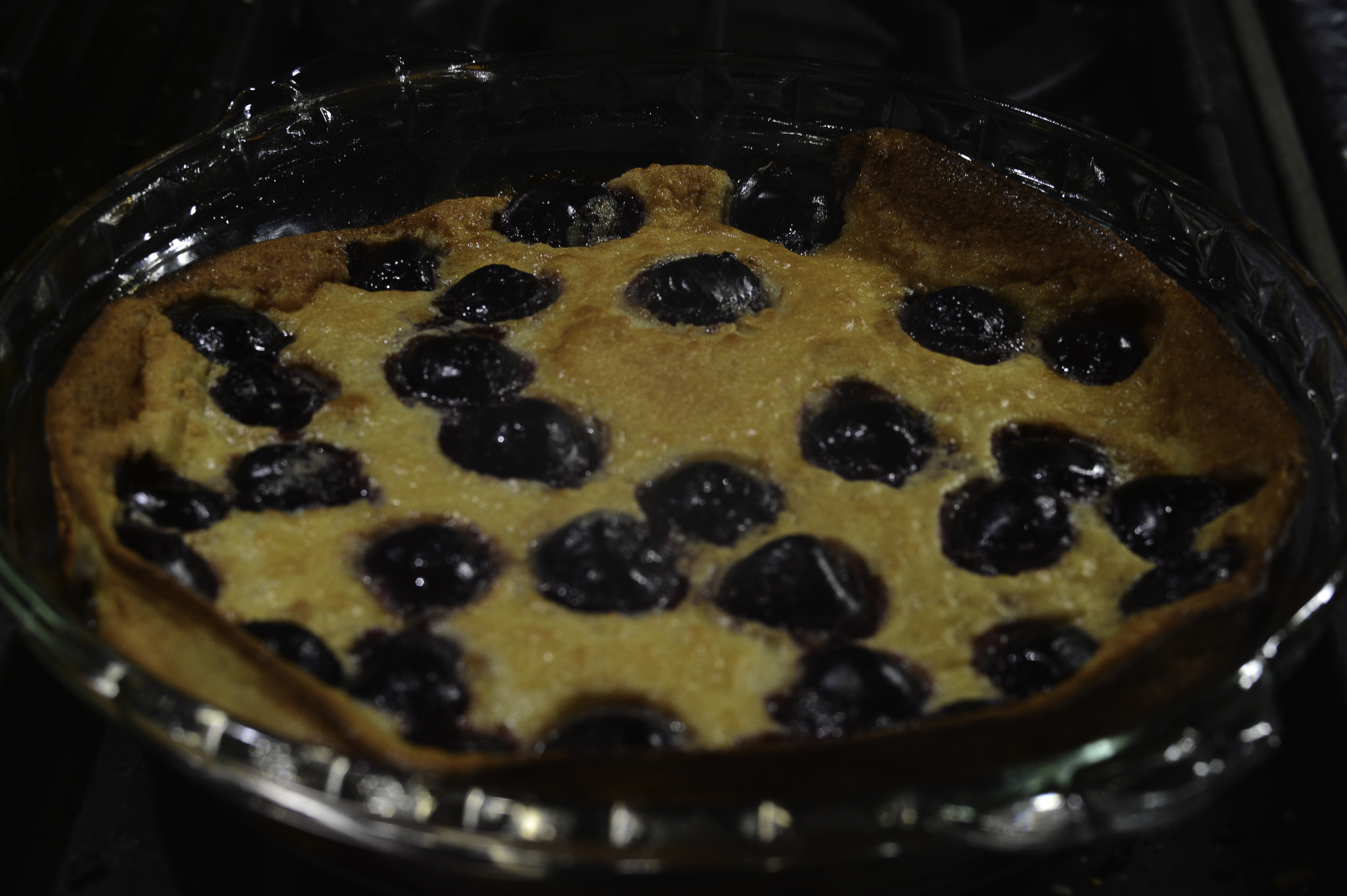
Delicious Dessert: Clafoutis!

I’m a sucker for summertime desserts, especially those involving fresh fruit.  Besides pies and crisps, clafoutis is a brilliant one – simple, not full of sugar, and very tasty.  Most ingredients are right on hand, too.  I made this one for people with gut problems (IBD), but put the non-gut-problem ingredients in ( ).

Clafoutis

  • 2 large eggs, beaten
  • 1/2 c. almond milk (or regular milk, half and half, or cream)
  • 1/4 c. honey (white sugar)
  • 2 T. melted butter
  • zest of 1 lemon, more or less depending on taste
  • 1 tsp. vanilla or almond extract
  • pinch salt
  • 1/2 c. oat flour (regular flour)
  • 2 c. fresh fruit – cherries are traditional – I used frozen (other fruits such as berries, stone fruits, etc.)
  • (1 – 2 T powdered sugar for garnish)

Preheat oven to 325 F.  Grease 9″ pan with butter or non-stick spray.

Beat together eggs, milk, honey, melted butter, lemon, salt, extract.  Mixture will be thick like cream, but not heavy batter.  Use a whisk – save some dish washing.  Whisk in flour gradually to keep a smooth batter.  Pour into pan.  Place fruit in pattern or randomly on top.

Bake on middle rack of oven 40-50 minutes, checking half way through to see if you need to rotate pan.

Remove from oven, cool.  If you want to add the powdered sugar for garnish, wait until clafoutis is cooled so it doesn’t melt.  Serve warm or cold.  Great for dessert or breakfast.

Devour!

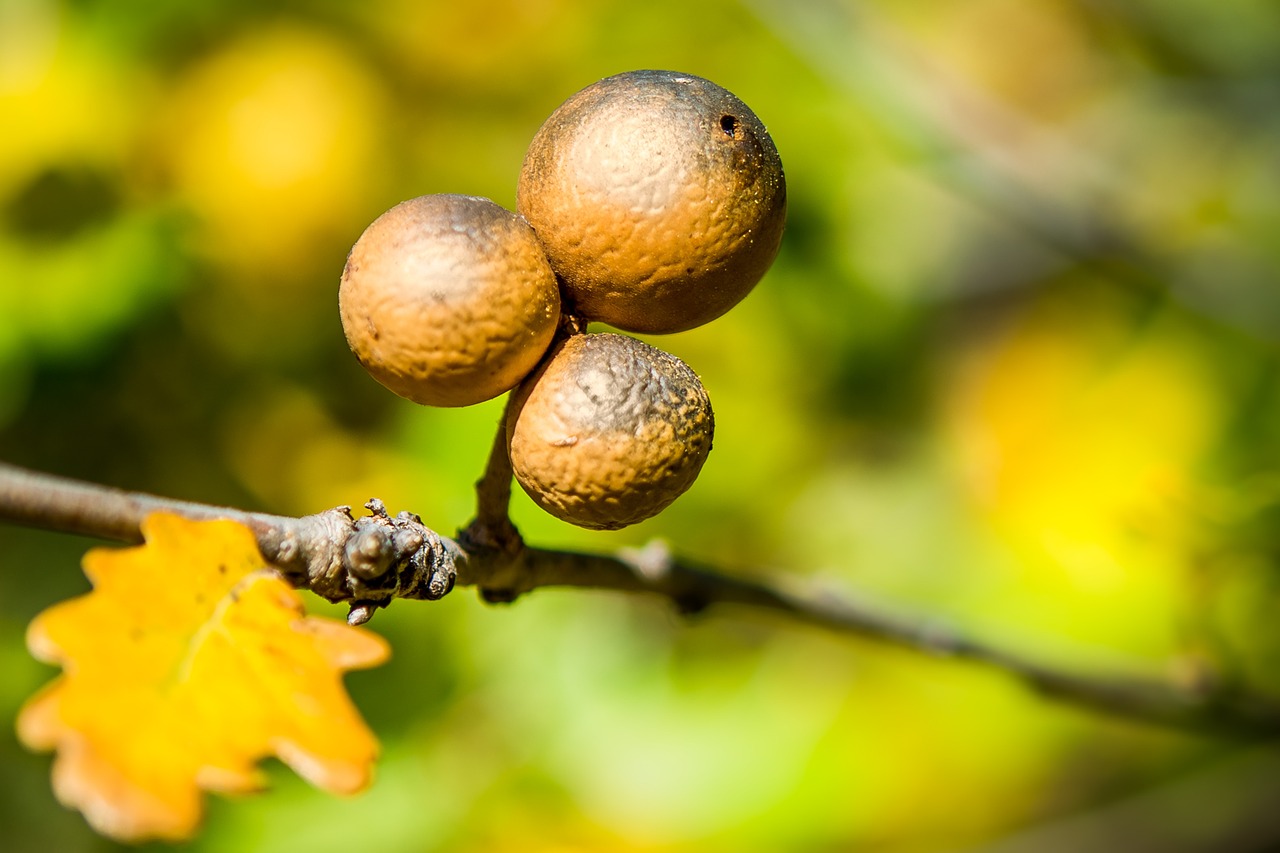
Oak Gall Ink: What To Do


If you were to google “oak gall ink” a bazillion links turn up.  Videos, message boards, recipes, historical documents are revealed to the unwary.  In particular, there are two ways in which oak gall ink – also known as “iron gall ink” – may be made.  One involves the simple crushing of oak galls and then steeping them in water (distilled is probably the best choice as  there are no chemicals to interact with the galls), and the other is a 2-month long ferment which gets (eww, gross) all moldy.  I’m not sure the latter is up to my tastes, but I will give it a shot nonetheless. Today, though, is the “short version” – perhaps a process lasting a week or less.

There are two sites which I think give a good indication as to the process I plan to use.  The first is this video from the British Library:

This next link is from the Schoenberg Institute for Manuscript Studies, out of the University of Pennsylvania Libraries.  I rather like the description, the detail, the grey kitty Chloe, and the historical evidence of a cat with inky paws on a manuscript.  Both are good reads, so take the time to travel a bit.

Receipt for Iron Gall / Oak Gall Ink

  • Oak galls:  80 g.
  • Distilled water:  300 g.
  • Ferrous Sulfate:  50 g.
  • Gum Arabic:  25 g.

Crush oak galls into small pieces or grind into powder using a spice or coffee mill.  Place into jar and cover with 300 ml. of distilled water.  Place in sunny window 3-7 days (depending on your life and schedule).  I plan to do 3 as per the recipe from the Schoenberg Institute.  After 3 days, there should be a dark murky liquid in the jar.

On Day 3, add 50 g. of Ferrous Sulfate to oak gall mixture; replace in sunny windows for another day.  On Day 4 add the Gum Arabic and leave for another day.  On Day 5, strain the liquid into a clean vessel and voila, ink!

Thoughts and Concerns

My first concern is I am using ferrous sulfate heptahydrate, which is apparently a hydrated form of ferrous sulfate that dissolves more readily in water than the normal.  My next concern is the ratio of oak galls to ferrous sulfate – it is 8:5, or much closer than the 5:1 and 3:1 ratios I have seen in other recipes.  The more acidic the ink, the more destructive to pen nibs, quills, and paper.  However, at this point, I’ll take it as the ferrous sulfate heptahydrate may not create such a strong acid.

Honey Vanilla Frozen Yogurt

Ice cream anyone? Really, frozen yogurt. I made some and it is really, really good and rich. I have a Krups freezer that goes around in circles to churn it. So, here is my recipe.

Honey Vanilla Frozen Yogurt

  • 4 egg yolks
  • 1/4 – 1/3 c. honey (vary with your desired sweetness)
  • 2.5 – 3.0 c. SCD yogurt – strained


Using a double boiler, heat water below level of upper pan. As water is heating, beat together egg yolks and honey in upper pan. (If you heat the honey to make it easier to pour, watch your temperature. You don’t want to get it hot enough to cook the yolks.) Beat vigorously with a whisk. Put egg-honey mixture pan on top of boiler, continue to beat vigorously. After mixture begins to thicken, beat in yogurt – don’t dump it at once into eggs, but perhaps a cup at a time. Using an instant-read thermometer, beat and heat to 165F. At this temperature, remove upper pan, pour mixture into container to cool. At this point I added

  • 1 T. vanilla extract

Cool mixture in refrigerator until chilled.

Before using the ice cream maker, you may wish to sieve the ice cream if it looks lumpy. Freeze according to your ice cream maker’s directions – mine took about 20 minutes.

This ice cream (yogurt) is very rich because of the egg custard. The yogurt adds a tang which is a nice contrast to the honey. I think this could be the basis for all flavors – like raspberry, etc.

Store in freezer-safe container, and then – DEVOUR!