
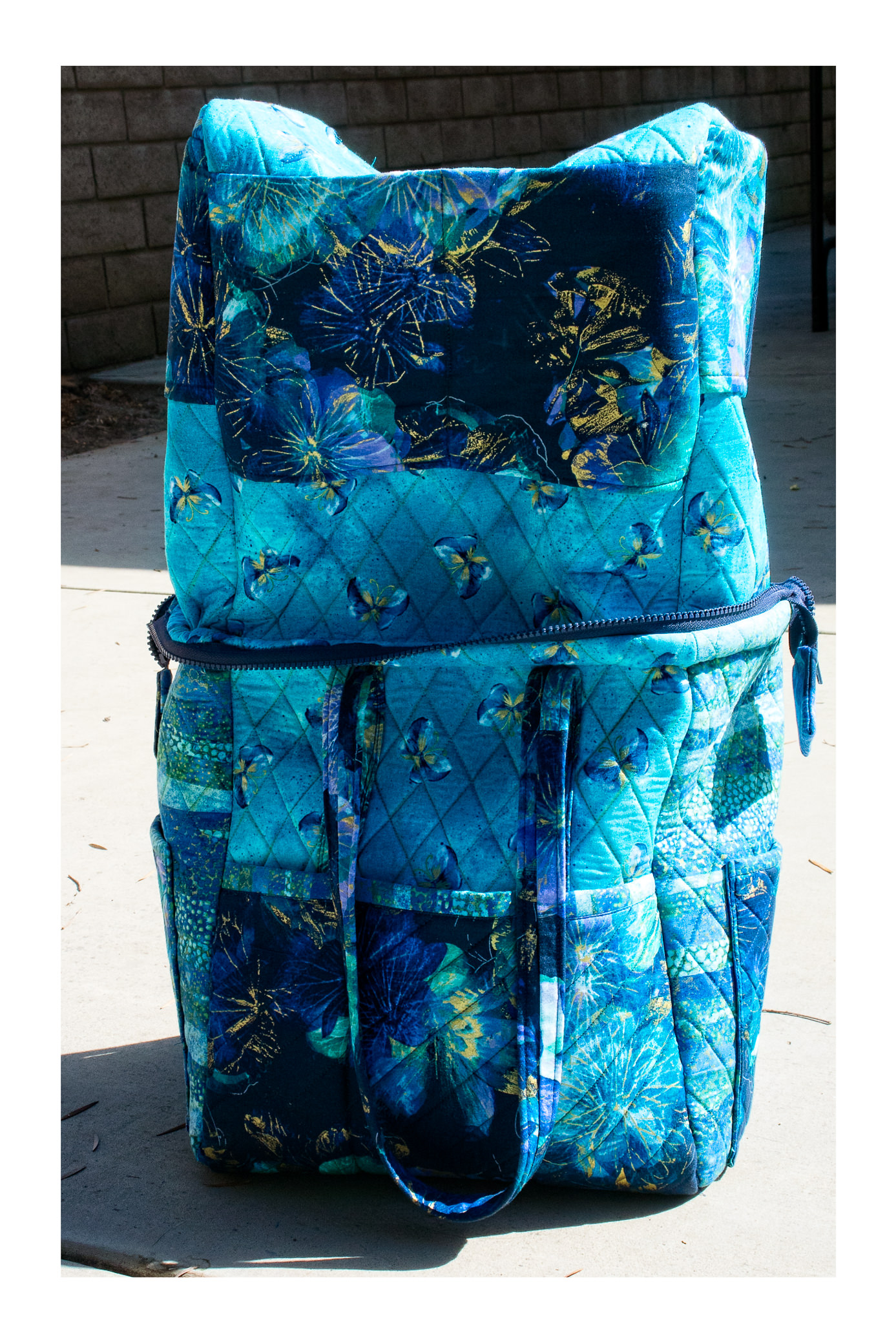
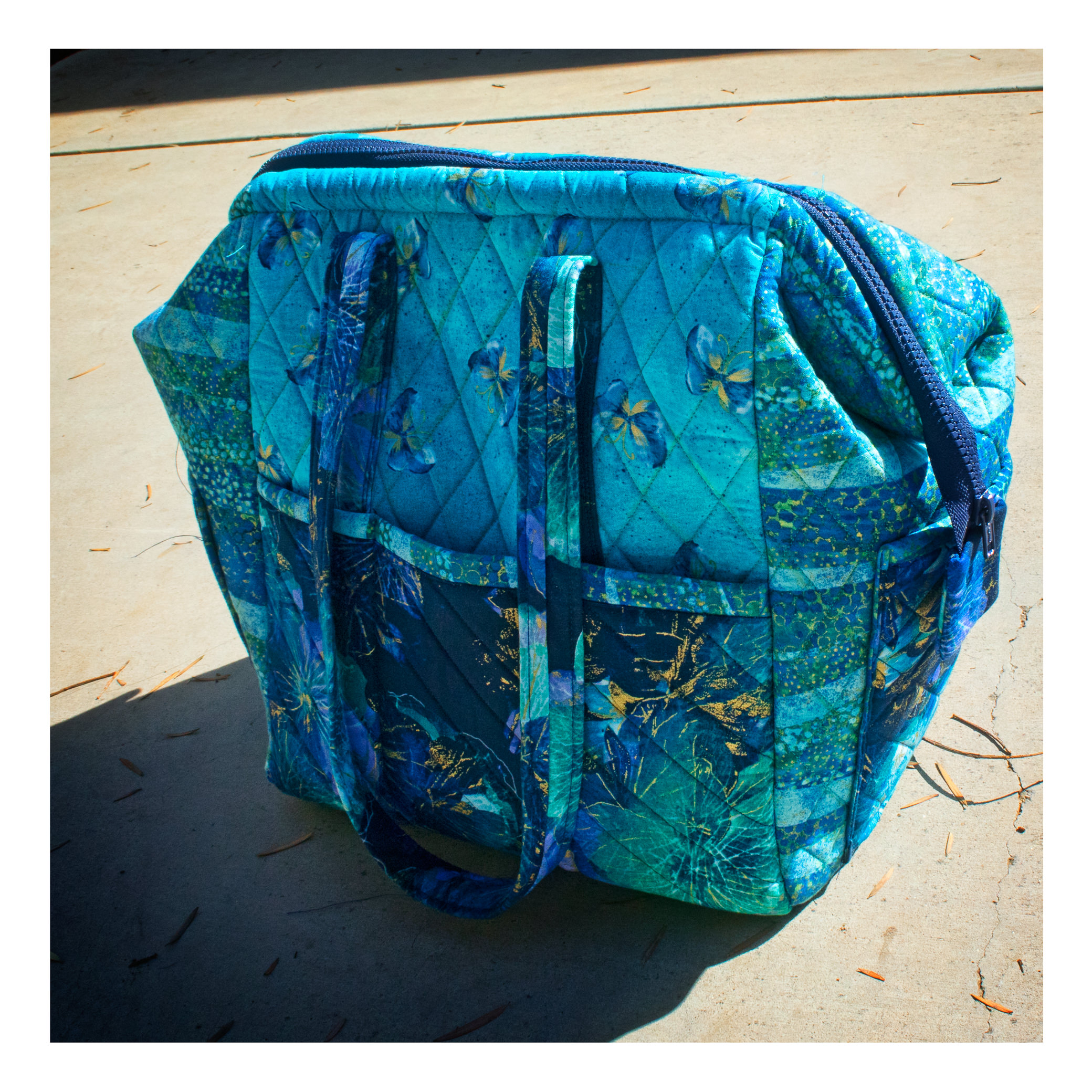
Between Inktober 2018, watercolors, tasks and errands, I have been working on another bag. This one is in need of massive trimming of threads – so is the Boxy Tote – before it is done. Then, it will be shipped off to a friend of 45 years “just because”! It’s not perfect, but then nothing I ever do is, so that’s life, eh?
This bag is done with one piece of material and quilted every half inch on the body. It’s called the “Rockport Tote” from Aunties Two. The pattern is clearly written, and even better, there are videos to accompany it. If you are interested, follow the preceding links and you will find them. This project took me awhile to do – it spanned about 3 weeks, and in between a lot of stuff, I was champing at the bit to finish it. I’m going to start another one next week – bags are in the works for Christmas presents.
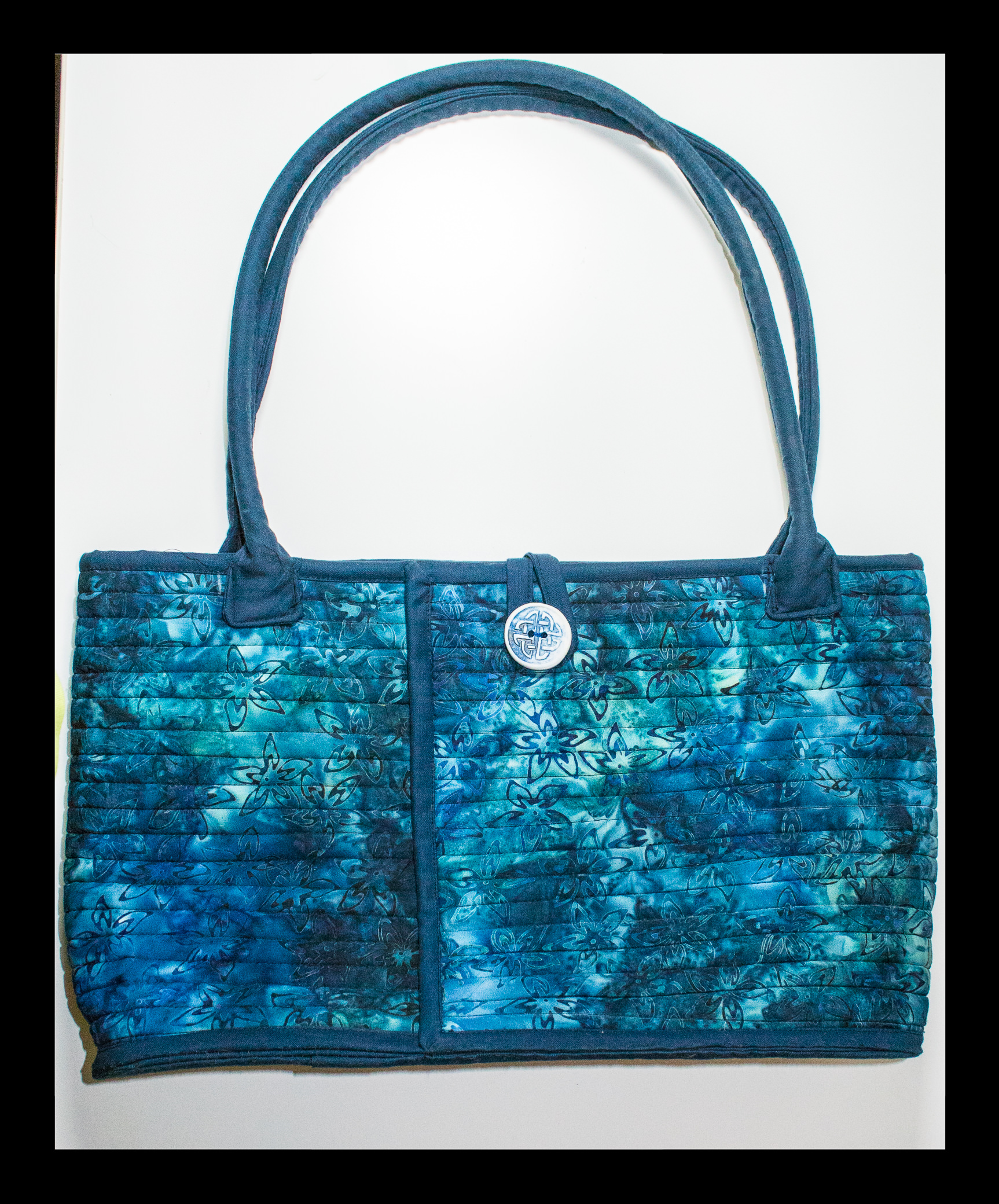
The bag comes in three sizes – small, medium, large. The small is tiny, perfect for little gifts and using up scraps of fabric. I made the medium size. The large is a bit bigger, but this one is a nice size to carry around. Also, I was really happy to find this ceramic Celtic knot work button in my button box – it seems perfect for the bag.

One thing I am enjoying with my time off is the actual ability to have time. If I was still working, I would be rushing and feeling pressed to finish this bag, and I think the whole project would have become a point of aggravation. Slowing down requires having time, and in the time I have, I am finding I am enjoying working on things that would otherwise become frustrations. My sewing skill is far from good, and my own rather casual approach to things doesn’t help. Still, I do have time to do handwork (hand sewing) and picking apart seams or other bits that might not please me. I have time to think about what I want to do, and time to set aside a project with the time to return to it. All of a sudden the rush-rush-rush of my former daily life is gone.

And thus, another project completed. I start a 5-week introduction to quilting class at Quilty Pleasures and another 2-day class to make another Rockport Tote. Yes, you read that last right – I figure I would make one Rockport, and then make another, learning from my own experience, as well as that from Betsy, who taught the Boxy Tote class I took last month. And, though I profess to dislike quilting, my thought is that learning how to cut and sew precisely, as needed for a good quilt, won’t hurt me or my sewing skills. I can only improve. And I know I will have a lot of fun in the process (and probably some frustrations, too.)




 This store is called
  Ink, Yarn & Beer