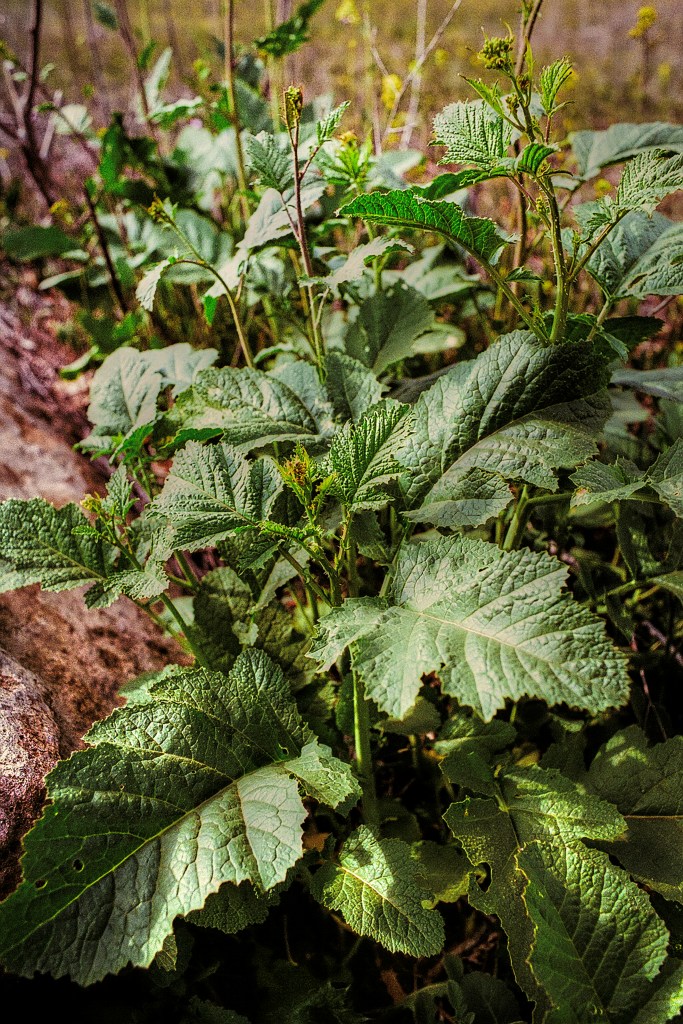
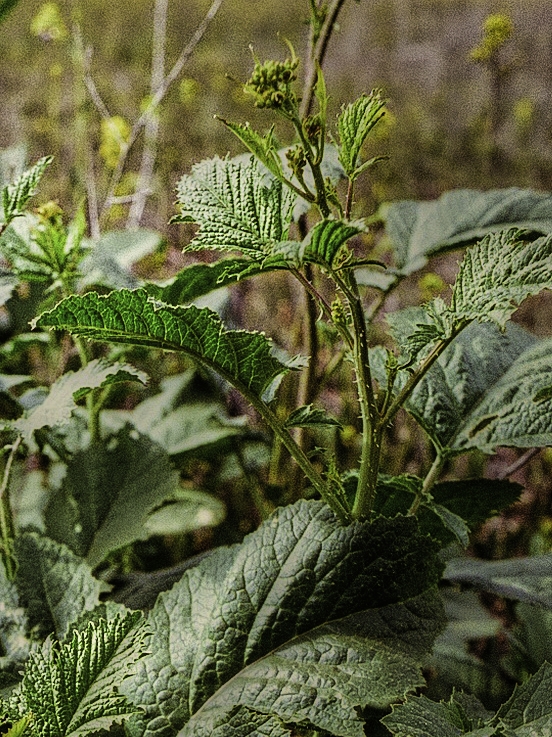
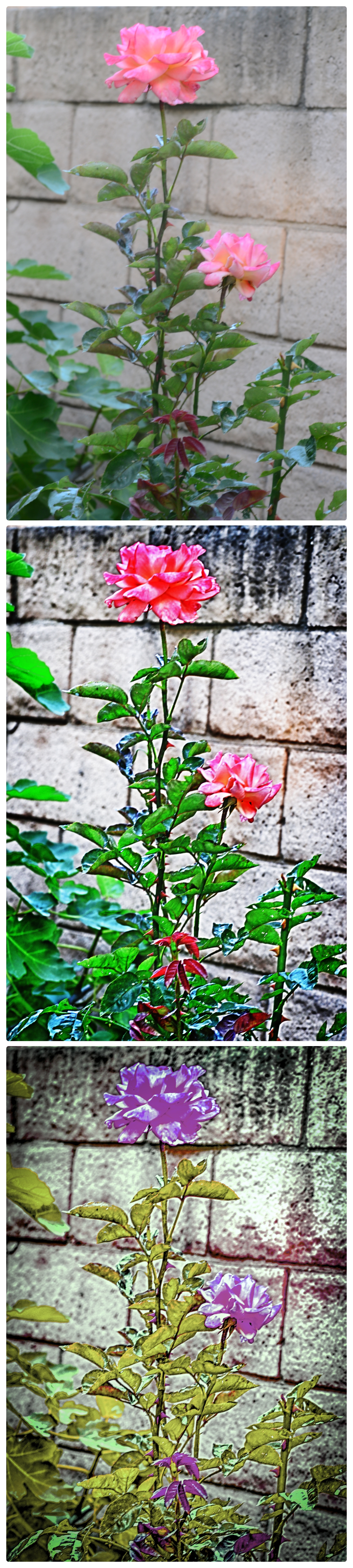
I did a little post-processing of one of the few images I liked from my “checking for a light leak” roll of film. I pushed the colors, and upped the detail a little, as well as the contrast. Below is a detail of the same image.
I am rather intrigued by film and how it processes from analog to digital. I now have a roll of Kodak TMax 400 in the Nikon FM2N (same camera that had this image in it), and took it out for a walk under the nearby oaks. Black and white in the woods. I will have the TMax processed and scanned at a professional lab.
There is the purist in me that says a photograph should never be changed from what the camera took. To change it means I cannot take a picture in the first place.
Another part of me that realizes there is such creative potential in photography – especially digital photography. And, in some situations, it is the only thing that makes a dismal photo worth looking at. For me, color and contrast are always attractive. Together, both change mood, season, emotion, focal points.
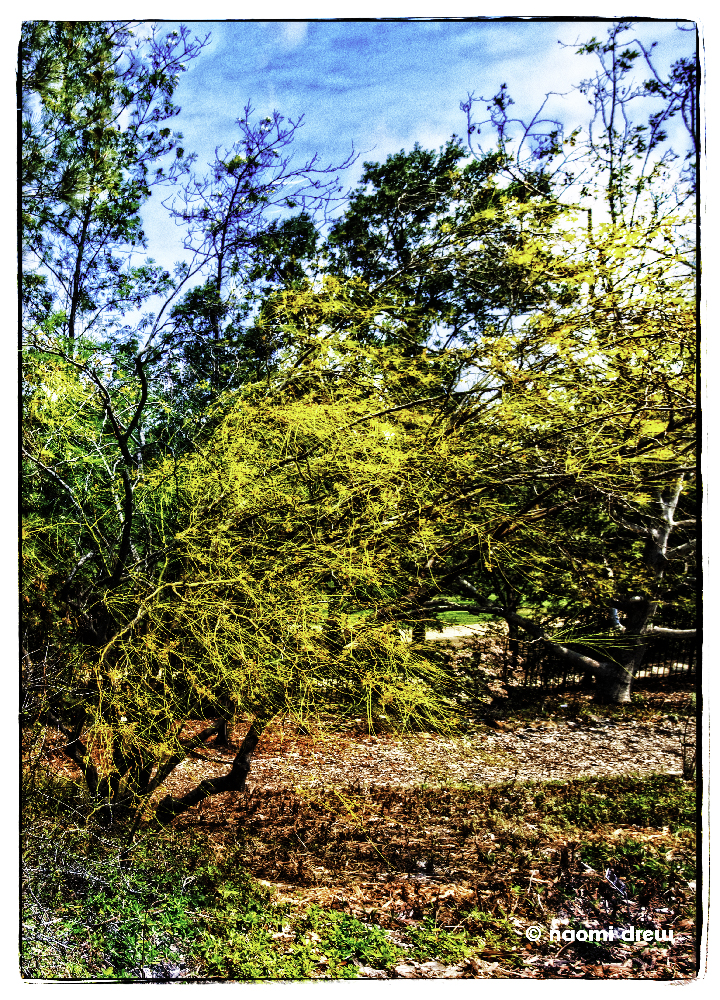
Today, I went out to the local botanical garden around noon. There was not the least bit of interesting light, only shadows. I wanted to see what a new lens could do, and was too lazy to get out when the light is particularly nice (meaning get dressed and out the door before 7 a.m.!). The intention was to see how well the V1 does creating panoramic pictures on manual focus – important to learn as the camera is highly automated. A couple came out okay, but they were truly boring to the eye. So, color manipulation and such – the art of post processing.
Post processing in LR 4.3. Original picture was awful, sorta liked the black and white, and final one, with some removal of distractions, was about the best I could get out of a poor, poor shot.
For the past three weeks I have had a cold, which continues with abandon. Sore throat, stuffy nose. Allergies, too. Add to this, the SD slot in my camera no longer holds the card, so it is in the shop awaiting parts and repair – probably won’t get it back till mid-July. Hopefully under warranty, and won’t cost me a couple of C notes.
As a result of this thrilling life, nothing much interests me other than just getting by and getting well. In my hours of tedium, I’ve been playing with some software, and really pushing pictures to the edge. Sometimes bad or dull pictures can be made more interesting, but I can tell you right now, some only become far worse. Here is my example, for your amusement.
Hardly attractive, perhaps interesting. It opens some creative thought processes as well as makes me wonder if people who are into photography and post-processing images are logical and sequential in knowing what they want for results, or just play around. I expect those who do specialize in post-processing are very well versed in problems and correcting them – me, I am not, and so just wander around. I need to sit and focus on such things. But, I would rather be outdoors . . .
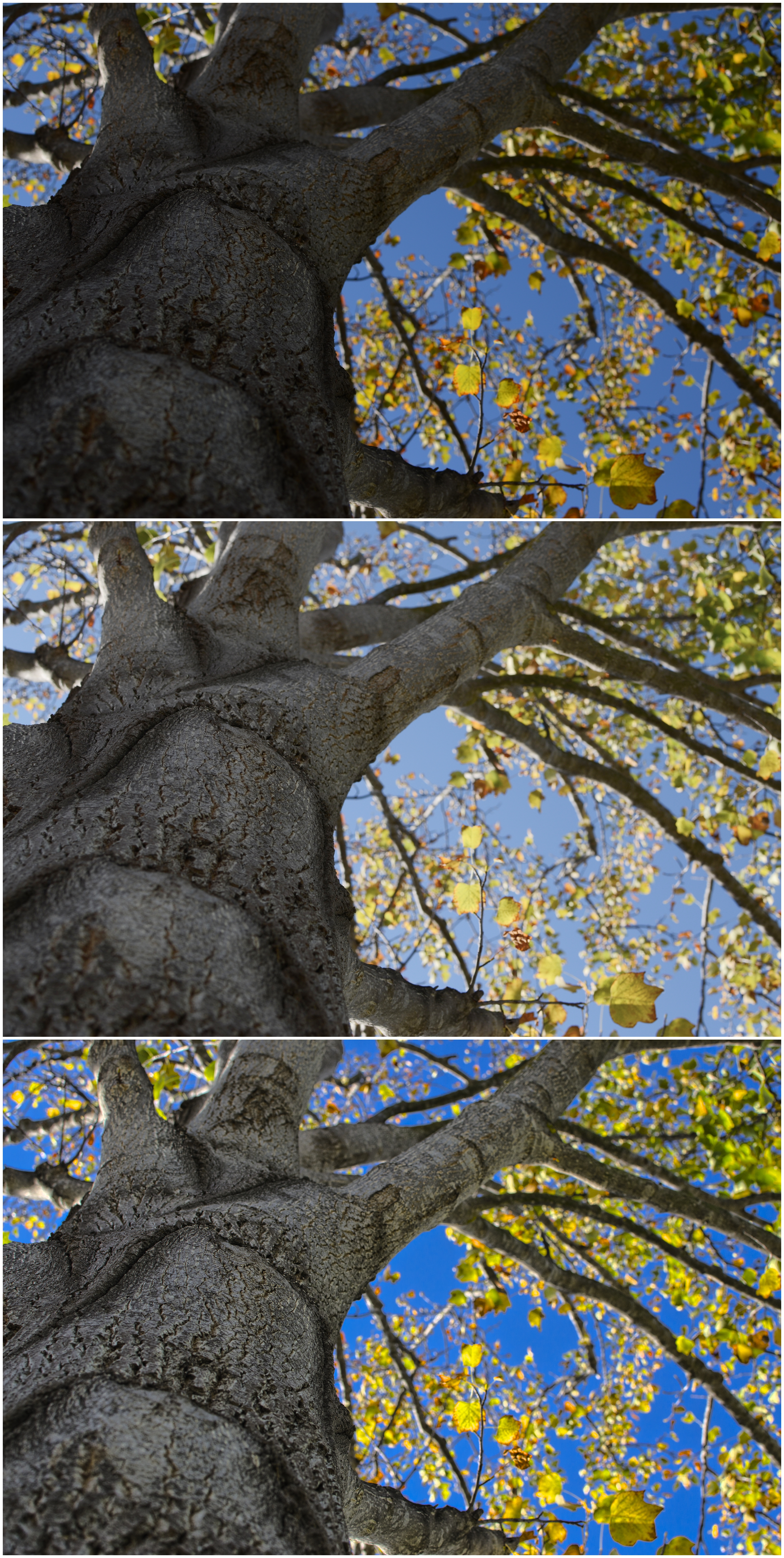
One thing I find I like about HDR, if not pushed too far, is that it can create a good sense of the original light without a loss of detail. I still have 8 days left on my trial version of HDR Express, so that is the toy I chose to play with this morning. Yesterday’s picture shooting up into the tulip tree was the subject.
Manipulating images in other software, such as Photoscape or FastStone, allows me to lighten and darken them. I did this with the idea of merging multiple images in HDR Express, but HDR Express likes being boss, and reads the metadata from the same 3 images, and shuts its processes down – it realizes that you’ve got the same picture. That is a frustrating limitation. Removing all the metadata doesn’t change the situation. However! There is a work-around that is rather nice.
In Lightroom, open up the image you want, adjust the image so it is dark, and then right click on the image and export to HDR Express. It then pops open HDR Express, and HDR Express takes a few minutes, and creates 5 images, ranging from dark to light for your viewing pleasure. The differences are not immense, but if you watch the histogram on the upper right of the screen, you can see what the program is doing to your picture.
Below is a composite picture of the tulip tree out front. The top one is the original one I shot, which was dark to begin with, so I didn’t change it when I sent it to HDR Express via Lightroom. The middle one is my adjustment in Photoscape, which did a good job, but the intensity of the blue sky was a bit lacking. Finally, the bottom image is the one I exported to HDR Express, and it produced a rather pleasant image, with all the detail of the trunk, while retaining the colors of the leaves against that intensely blue sky I saw in my lens.
Top to Bottom - Original Picture - Lightened in Photoscape - HDR Express Image from Original
The Nikon Hit Man doesn’t like the idea of having to use lighting or post-processing to get the perfect image. I disagree. Post-processing is often necessary, and has been done forever by artists in the darkroom – dodging and burning are forms of post-processing. The thing is, sitting at a computer putzing with software is pretty dull stuff, so for us restless souls, it’s something of a nuisance. In a darkroom, you are moving around, not sitting at a desk. Big difference. Modern technology has its points, but movement is not often one of them!
I am in agreement, though, with the Nikon Hit Man about the original image: it should be as perfect as possible. This means you think about it before hand (if you can) by choosing the right lens, exposure settings on your camera, and so on. Not always easy to do – or remember – because there are so many things you can forget as well! And that is why programs which allow image manipulation are assets to the photographer. Nonetheless, for people who like the physical realities of art, software is more challenging than trying out a new medium, and often far more frustrating.




 Ink, Yarn & Beer