Come into the light, Luke . . .

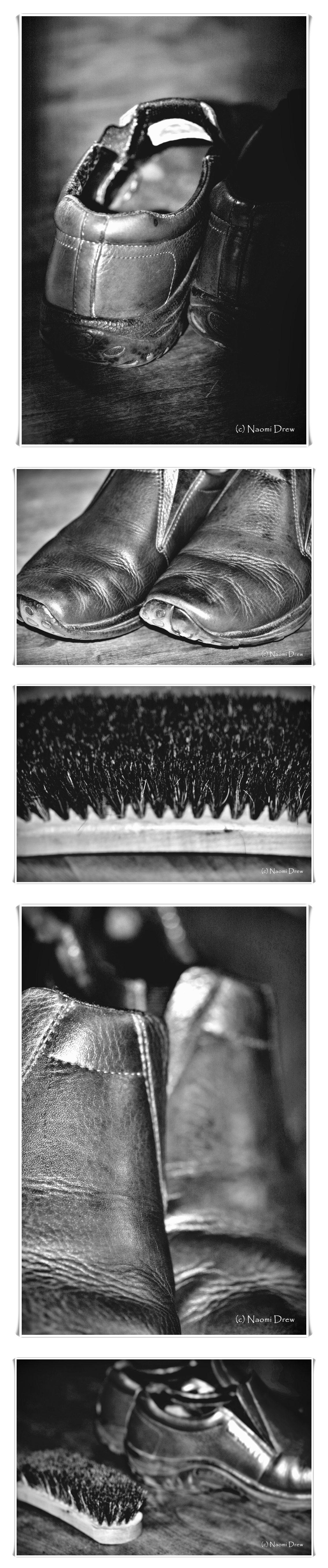
The other day I picked up a book on black and white photography, specifically John Batdorff’s Black and White:  From Snapshot to Great Shot.  He mentions using available light.  With this in mind, and rather restless as I wait for the afternoon to pass before heading out to a swank party, I wandered around and came across my husband’s shoes on the table.  He just polished them.

I used available light, and augmented a bit with some post-processing and on-camera pop-up flash for a few pictures.

As they say, work with what you got.

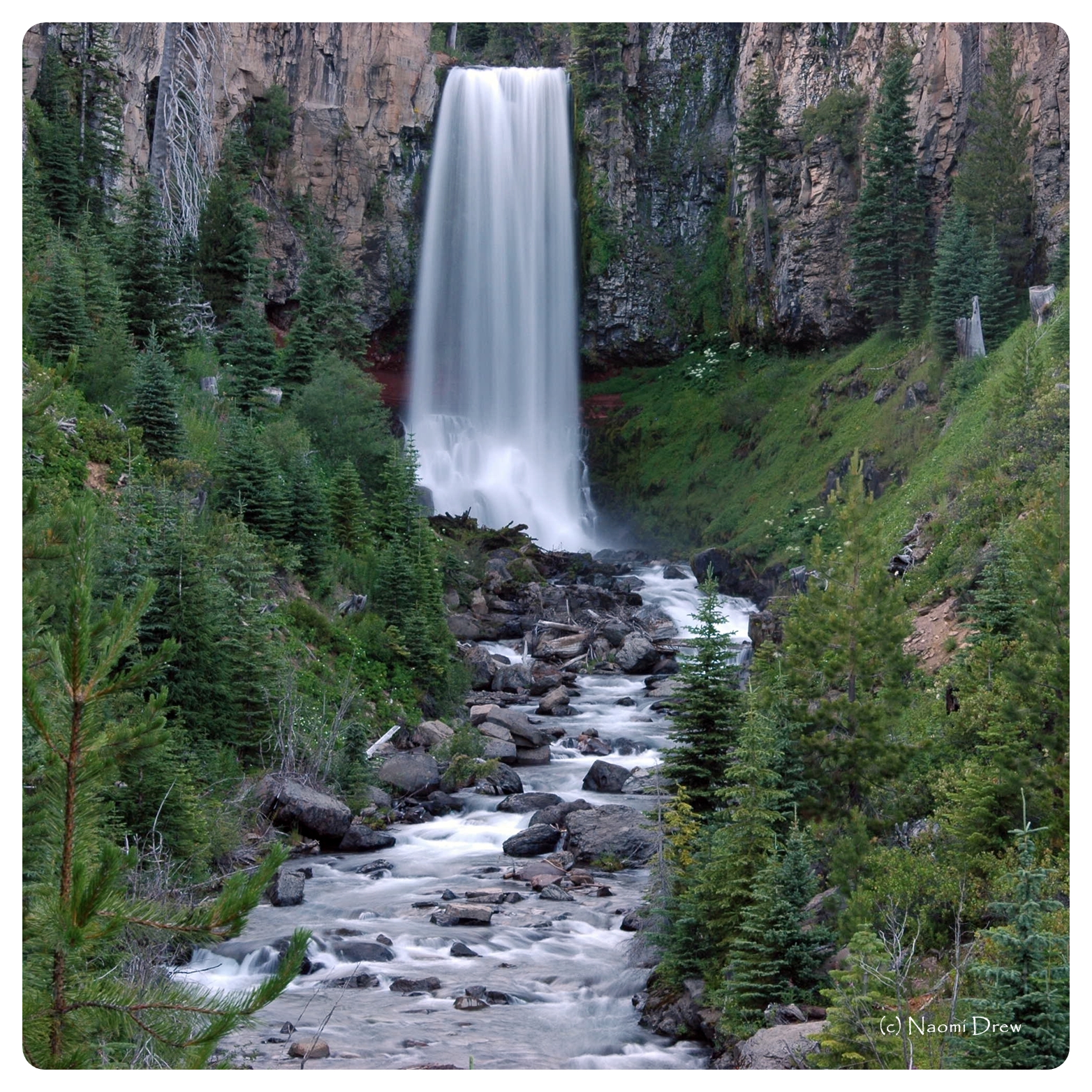
Tumalo Creek

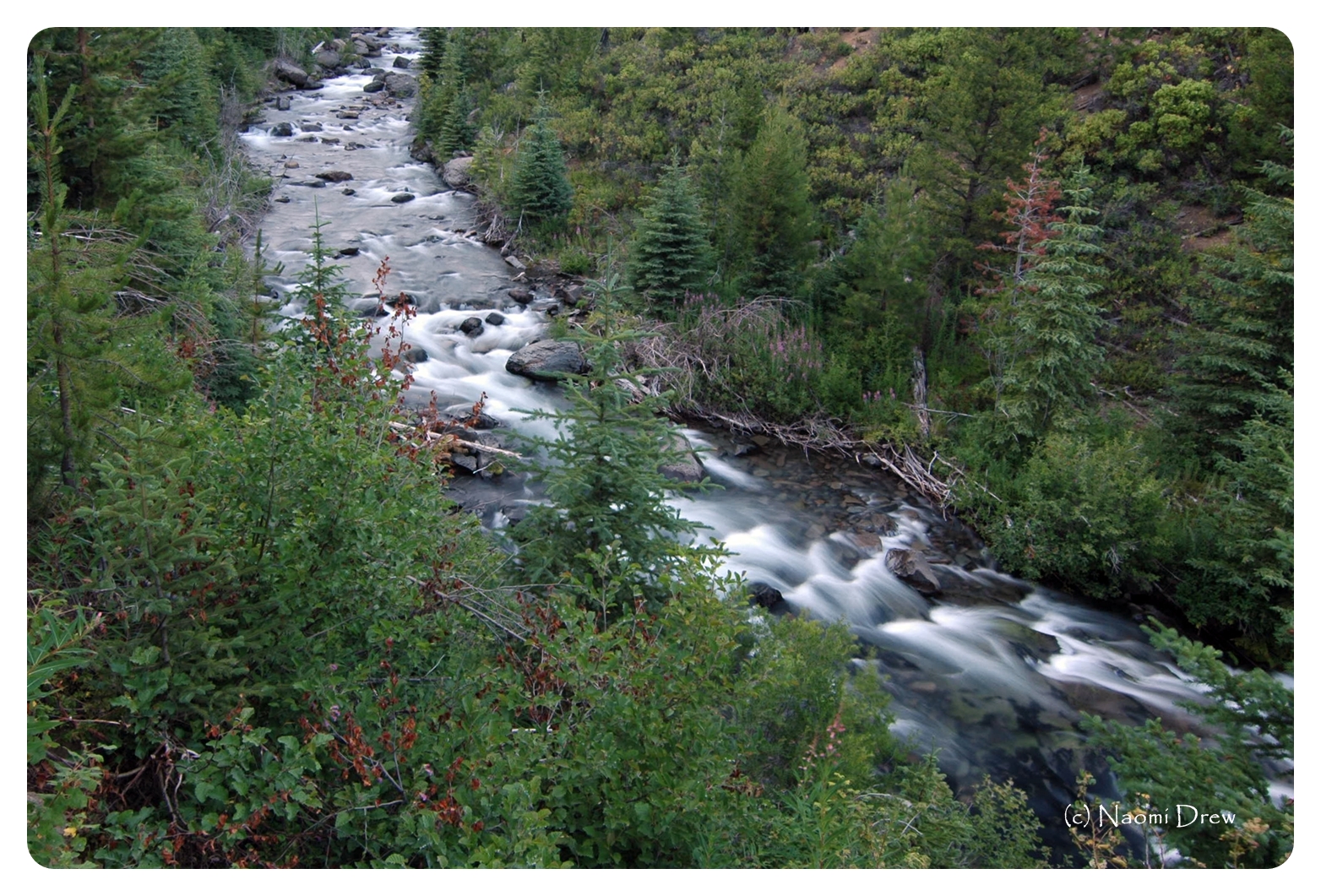
Outside of Bend, Oregon, is Tumalo Creek and Falls.  We went there on our last night in Oregon, before heading home.  It was a spontaneous trip, so I just threw the camera bag in the car, not taking a tripod.  I should have as the light was fading quite rapidly.  Everything I did was handheld, or precariously propped up on a railing.

There is always something about blurred water in photography that attracts me.  I can hear the water by looking at it.  This blur, in contrast to sharp silhouettes of trees or plants against the water, is always an eye-catcher.

None of these pictures particularly pleased me.  I was using the Tokina 11-16, which is a very wide-angled lens.  These are far harder to use well than what you might think.  Composition is really difficult.  At the falls, it was particularly difficult because of the perspective and falling light.  There were a couple of other photographers there – with tripods! – who probably did a much better job than I did.

Pulling these out, a couple of months after our trip, I did a bit of cropping and other post-processing, but mostly I was considering the composition, and how a poorly composed picture may be improved by judicious cropping.  Not so sure if it worked, but what I did learn was a little more about composition!  Cropping something into a square is far more challenging than a rectangle . . .

HDR, i

HDR – high dynamic range – is an area of photography that you can love or hate.  Some people push it and produce very dramatic images, which can be good or bad, depending on perspective.  Other people are more subtle about it, and the result is equally good or bad.  All this is, of course, a matter of opinion.  My opinion, here, is what counts!

At times, I rather like the gaudiness that HDR can produce.  Other times, I dislike it.  I think that the colors involved often influence my reactions, as there are some colors I prefer more than others.  Subject matter, as well, will influence my opinion.  You?

The point of HDR is to merge multiple image files so that the details in the shadows are visible – seen in overexposed images – and the highlights are also visible – seen in underexposed images.

I have been looking at different software for HDR.  The one I like the most so far, out of of three that I have looked at, is HDR Express, by Unified Color.

In my own portfolio, I don’t have a series of pictures with variations in f/stops or exposure, so what I did was take a NEF (raw Nikon image) file and, in Lightroom, adjust the color a bit, and then change it to -2.00 through +2.00 for exposure, and export each one to CS5.  From there I saved each as a .tif file.  Finally, I imported and merged them in HDR Express.

Below is the original image used for the HDR.

These are the images I used with the changes in exposure – all lined up so you can see the gradations.

I imported all five of these pictures into HDR Express, merged them, and then saved them in the different “styles”.  Below is a merged image of the different styles.  The first image, in the upper left hand corner, is the original image.

So far, I have only positive things to say about HDR Express.  It is very easy to use.  The website has good tutorial videos – check the sound volume on them as it varies – and the 30-day trial period is unrestricted, meaning no size limitations of the pictures, no watermarks, or other points of frustration.

This software is my first foray into HDR that has been enjoyable.  I will be trying other free versions over the next several weeks before deciding which, if any, I will purchase.  I will also confess that while I have Lightroom and CS5, I am only scratching the surface of what these programs can do.

If you want to see the images I used in larger format, check them out on my Flickr site.

What You See . . .

Nothing like exploration to come across new places – and new people!

In my family, there is a history of being in the television industry.  My mother was a camera man (really, woman) in the 1940s.  Both of my parents worked out of Chicago for CBS.  My husband and his brother have worked for local and national TV.  Me, I haven’t done anything in any type of commercial photography or television or movie business.  It’s all sort of magical, just because I don’t know anything about how what I see is made.

This morning, while I was putzing around, I came across these two videos on YouTube by Jay P. Morgan.    I certainly have a greater appreciation for that final commercial photo in my magazine!

This first video shows the lighting set up for the photograph – key, fill, reflection.  Before and after shots are demonstrated as each light is added.  This video deals with the subject alone, not addressing the background.

Now that we have learned about the soft boxes, rim lights, and reflectors, we learn about the special effects!

Needless to say, this was a great couple of videos and certainly a wonderful insight into the work behind what turned out to be quite a nice final image.

Hats off to you, Jay!  Totally fun, educational, and enjoyable!

Oh, yawn . . .

I have really not been interested in looking at computers, being indoors, thinking, or writing.  The end of summer and beginning of autumn always puts me in a restless, unfocused mood.  Not a bad thing, if I just let it happen.  It’s a hibernation of sorts.  Then, life gets interesting again.

School was closed today, so I decided that as I have a birthday coming up, it was time to take the drive to downtown L.A., into the heart of Hollywood and environs, to venture to Calumet Photography for some lighting equipment.  The Nikon Hit Man came along.  We spent some money – but not a lot because we bought the Calumet brand – and came away with some very solid stuff for very little.  I had wonderful help from a beautiful, friendly woman, and she really made a confusing experience (for someone who has never bought this stuff) a pleasant and educational experience.

Here are the pictures I took after setting it all up in the living room.  Take a look – me, I’m going outside to read, and maybe take a nap!