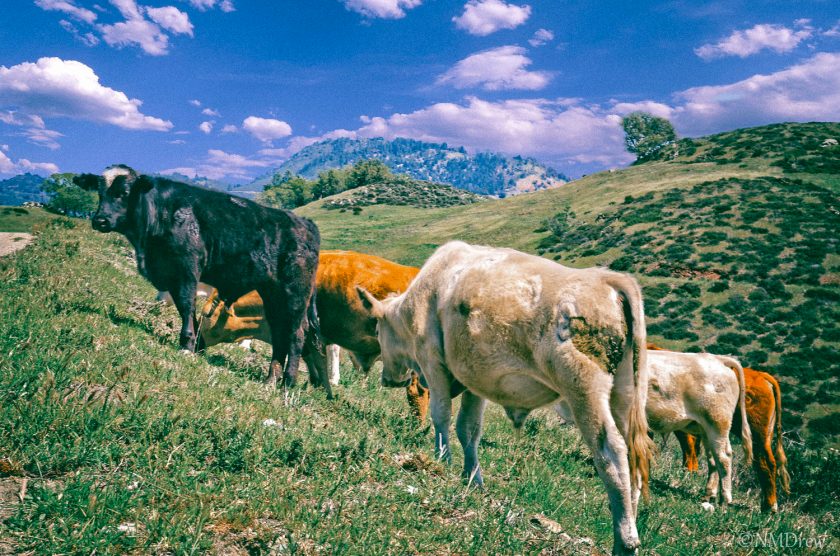
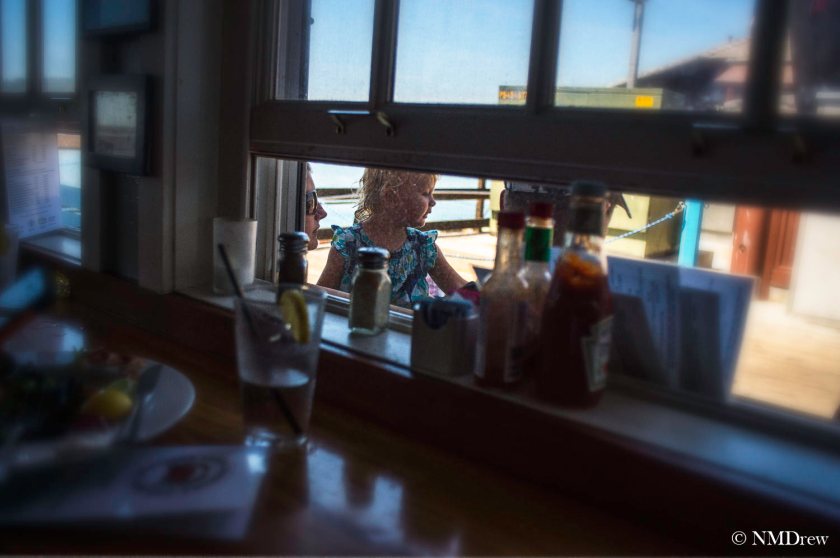
Style

Definition search result for STYLE (straight from Google search “definition style”):  1.  a manner of doing something.  2.  a distinctive appearance, typically determined by the principles according to which something is designed. 
I’ve been thinking a lot about style of late, as in style of music, clothing, politics, painting, drawing, writing.  Since we are all individuals, we all have ways of doing things that earmark them as our own.

I don’t particularly care for what I might consider my native way of drawing and painting.  I have a vision in my mind’s eye about how I want things to look as a finished product.  That doesn’t mean no happy accidents, but it does mean I have a certain vision of clarity with watercolor paints in particular.  I think a lot of what I paint seems labored – and maybe that is because I did the laboring?  My paints seem heavy and more opaque rather than utilizing the transparency of the medium.

Copying

Copying a master’s work is a time-honored tradition for art students, whether sitting in the Louvre and copying a Rembrandt (if they still let people do that, like they did in the 1800s), or a sumi-e student in training.

Today there seems to be a shunning of such, with more of an emphasis on “originality” coupled with a fear of lawsuits for copyright infringement.  If you think about it, nothing is really “original” but derivations of other’s works or our own creative minds, but someone before you or me probably had the same idea.  Forgers can make a bit of money by copying masters, and passing them off as the master’s, but with today’s technology, I expect that becomes a bit more difficult.  By the same token, can using a photograph as a springboard to a painting can be considered under some circumstances as copying – even if you have taken the same picture yourself?  It’s my understanding you cannot take pictures of the Eiffel Tower lit up at night because those photographs are copyrighted by the lighting of the tower!  That is how crazy this world can be.

Learning from Copying

What do you learn when you copy someone else’s work?  What do you have to do to “get” there?  You have to look, think, analyze, plan, and then look, think, analyze, and plan again.  After you do that, where do you go?  How can you apply what you have learned to make your newfound knowledge your own?  I struggle with this as there are artists I admire, whose work inspires me – how do I make what I have learned in the process of copying my own?  I am still trying to figure this out.

One thing I do not want to do is pass something off as original if I have copied it as a learning experience.  That is completely unethical.  I find it interesting that certain art instructors make it well known that, if you have taken a workshop with them, any work derived from learning in that workshop cannot be sold as “original.”  Does that mean their “style” is copyrighted?  Does this mean if you develop a style with your own subject matter which is similar to what you have learned that you can be sued for copyright infringement?  If such is the case, none of us can produce anything – this building is copyrighted, that tree is copyrighted, that person is subject to privacy laws, that color is copyrighted, that song sound is copyrighted, that rhythm is copyrighted.  If you do DNA testing, you may be signing away your rights to your own body’s chemical makeup.

So, What Happens Now?

Well, I know what I want to accomplish in my painting.  To list it:

  • clarity of color
  • economy of composition (meaning not overworking something) and simplicity
  • mastery

I prefer landscapes to portraits or animals.  I can do skies fairly well.  Trees, sometimes; mountains, sometimes.  Cityscapes?  Seascapes?  Challenges for sure.  What about painting cars – part of cityscapes!  Waves – part of seascapes.  Water?  Omigod!  It’s overwhelming.

Enough whining and pontificating – time to get out the brushes and color!


Making, Doing, Being

We take our everyday lives for granted, which is pretty much what we are used to on a daily basis.

Some people are always worried about where the next meal is going to come from – people who live in poverty or war-torn areas probably experience this far more than I can imagine.  If I skip a meal, no biggie – lots of stuff in the fridge or down at the market.  When a student tells you that in his former country, as a child, what he remembers most is always being hungry, it makes you think.  To live like this is beyond my imagination.

And what about people who go from being very active, to suddenly being limited on a physical level?  From walking to not walking?  To using both hands to using one?  The physicality of everyday life is not something most of us remark upon, unless it is suddenly gone!  A stroke?  A fall?  Some crazy American with a gun?  A nerve-wasting disease?  How do we handle this?

If you think about, everyday life is normal as long as it doesn’t change.  When it changes, how do we handle it?  What do we do?  Do we fall down and pity ourselves?  Do we get up and move forward with whatever is in front of us?  Certainly a level of self-pity and horror exist when something bad happens which changes our daily lives, but it also can lead to creativity and a philosophical or spiritual awakening.  How we choose to adapt – and the key word is adapt – often determines our outcome.  It may be minimal in the eyes of others, but it can be major within the person affected.

I really believe we need to look at our lives on a daily basis, to appreciate and be grateful for what we have, not focusing on what we don’t have.  If our lives can be better, how?  If we want to change things, what do we want to change?  This is not an ever-moving forward process.  Like the frog in the well, three feet forward, two feet back.  The road is bumpy and challenging.  At times the goal is obscured or lost, but movement continues.  We choose in many ways how to adapt to our lives, however horrific we may find them.

Those who adapt, survive, even if the survival is not to their liking.  Those who give up are also adapting, but probably not successfully.  What we want, too, changes.  We need to adapt to those changes.  We need to think about them, to consider them on multiple levels.

When we stop making, stop doing, we stop being.

The Peace of Flowers

The world is a busy place, sucking you dry.  Newspapers are filled with news, from bombing Syria and worries about being bombed in return, to disgust that Congress has allowed the killing of hibernating bears and wolf cubs in their dens.  It makes me wonder what the world is coming to . . . and what people think.  Yes, I live in an isolated part of the world, one which is relatively safe, but it doesn’t keep me isolated unless I turn off the news.  This is where the walk in the woods, in the fields, and exploring the natural world outside the artifice of man beckons.  As California is now in the midst of a bloom unseen in years, I am out there nearly every day, taking in the blooms, the colors of the hillsides, and listening to the birdsong and buzz of bees.  It brings a peace.

As someone who is getting older, I frequently think of death. People – friends, colleagues, family – have died in the recent years. All my earliest childhood friends are gone. Death is something to be considered in this day and age of every baby must be born, regardless, and everyone must be put on life support, regardless. There is something disrespectful about the quality of life all this means. Keeping people alive by artificial means reaches a point, an ethical point, where it is ridiculous. Killing wolf cubs and hibernating bears for sport is equally unethical. Our destruction of the natural world boggles the mind, and the immediacy of pleasure or self-righteousness fails to address a longer viewpoint: what are we leaving behind? Plundered resources, extinct animals, and warehouses of people on life support. Equally, we kill others with impunity. In 40 to 50 years, the earth’s population will double, and we will be in even more dire straits than we are in now. Even within our own lifetimes we see the destruction, but deny it.

And so, flowers. One part of the natural world, fragrant, beautiful, evanescent. If they disappear? What next?

Junking the Junk

corner-2-goodwill-drop-off-corner-bw

How many of us really do clean up and clean out after the holiday season?  I know I never have because I’m lazy and really do not have the time.  To declutter means I have to have the time to do it.  When I was a kid, my mother made us clean our rooms by throwing everything into the middle of the floor, dumping drawers out, and so on.  It was pretty traumatic and valuable (to me) things would get broken.  The sound of a vacuum cleaner forewarned that hell was ready to break loose.  So, for me, getting rid of things takes a long, long time because that is what cleaning up meant:  throw it all in the middle of the room and spend 20 hours doing the task.  I’ve done that for years.

2016 has been different.  For a variety of reasons, the DH and I have been cleaning up and cleaning out.  In the past two months we have rearranged the garage for better usage, and to consolidate stuff so it can be more easily accessed and sorted out by subject matter (yarn, books, toys, tools, etc.), so that future decluttering tasks are easier to do.  We also managed to install new mirrors in the bathroom, clean out the cookbook shelf, empty the bathroom vanity drawers, throw away all the stuff lurking under the kitchen and bathroom sinks.  DH has cleaned up his office and I have cleaned up the studio and bedroom closet.  The picture above is not what we took to the Goodwill drop-off corner, but yesterday, just from the closet, I brought over bags of purses, shoes, clothes, material, and other goodies.  The bags were the 15-gallon trash can variety.  Now the closet looks like a closet!  I can find my clothes, my shoes, my sewing machine(s).  Wow!

I get holding on to things.  Some things are too costly to replace, such as paints or spinning wheels or chain saws.  Hobby items are tools that can take up space and may not be used all the time, but are necessary when needed.  However – HOWEVER! –  too much is just too much.  Freeing up space means there is actual space – physical, mental, and emotional – for new things (hopefully not physical unless they are the product of one’s productivity).  Organizing makes life cleaner and easier.  We still have a long, long way to go, though.

So, with that thought in mind, I leave you with a link to a jolly good cartoon:  http://www.newyorker.com/cartoons/a20188

Learning to Like Photography

For me, photography has always been an interesting dichotomy or dilemma, a sort of love-hate relationship.  I enjoy looking at photographs, but as someone who has always drawn or painted, to me, photography often seemed rather pointless other than “creating memories.”  It’s the exactitude of a photo that gets me – little in the area of artistic endeavor.  However, as I have been doing it now for about five years, I am slowly changing my mind.

OLYMPUS DIGITAL CAMERA

Let’s travel back in time.  As a kid, I had a camera, and took snaps.  I also have a handful of photos from times past, images of my family and parents and of a generation past.  There is something to be said for these pictures – a name has a face – a flavor of a time is caught.  No, these are not “art” as I think of it, but bits and pieces of the quilt which is my life and the lives of others.

2003

In my twenties, I bought a Canon A-1, thinking I’d be a hotshot photographer because I finally got a “good” camera.  Hah!  I have a number of snaps of deer butts – yes, indeed!  a fine collection!  The reason is simply because I had no education in photography or concept of construction of a photo – of waiting, of thinking, of taking the time to wait for a picture.  The cost of film processing was dreadful, and so I put away the camera until the digital age.

Cimg1481

The beauty of digital, as we all know, is the fact that film and processing costs go out the door.  A few classes helped me learn more about the camera, and soon I had a few purchases and thousands of pictures under my belt.  Truth to tell, I was – and still am – somewhat caught in a love-hate relationship with photography.

P1020742

Now I am returning to film, and finding there is something about having to wait to see my photos.  Digital has given me the opportunity to learn more about the elements of composition and how different lenses work.  There are some lenses that are my favorites, many of which are manual focus or prime digitals.  Some of my cameras I prefer more than others.  There are also software programs and plug-ins which can trigger the creative process.  Finally, it is a real pleasure to be able to scan my own analog images and play with them.  Perhaps at one point I will develop and print, but for now, that cost factor and failure factor, and the where-the-hell-will-I-put-these factor all create a “no” for now.

Mooooo (1 of 1)

I am learning to like photography more, and appreciate it as an art form.  Some of it is an appreciation for the historical.  Some of it is going out with friends and looking at what others do.  Reading about different ways to “see” helps as well – working with the rule of thirds, layering of fore-middle-back, action, direction – all these are helping me see the world around me as it happens, which is very different than creating a picture on paper wherein I am the god(dess) directing motion, movement, or whatever.

Under the Greenwood Trees

Somewhere I read one must dedicate 10,000 hours to an art to gain a modicum of mastery.  Maybe I am on my way.

Lunch Window (1 of 1)