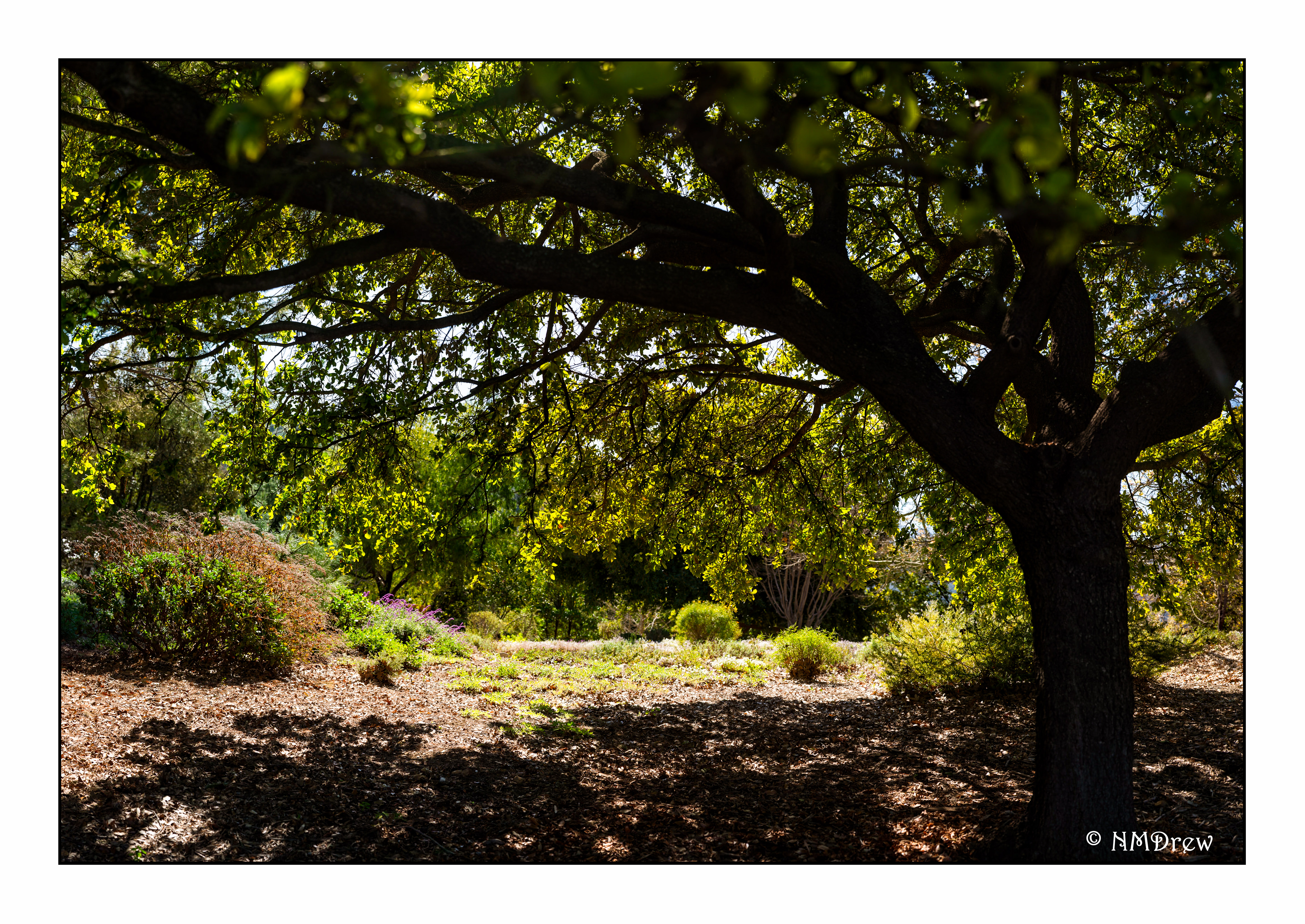
I did this one as a pano, focusing on the leaves in the center of the image. I wanted to make them the clearest part of the image, trying to catch their sparkle. I am always fascinated by the dappling of light through leaves.

I did this one as a pano, focusing on the leaves in the center of the image. I wanted to make them the clearest part of the image, trying to catch their sparkle. I am always fascinated by the dappling of light through leaves.
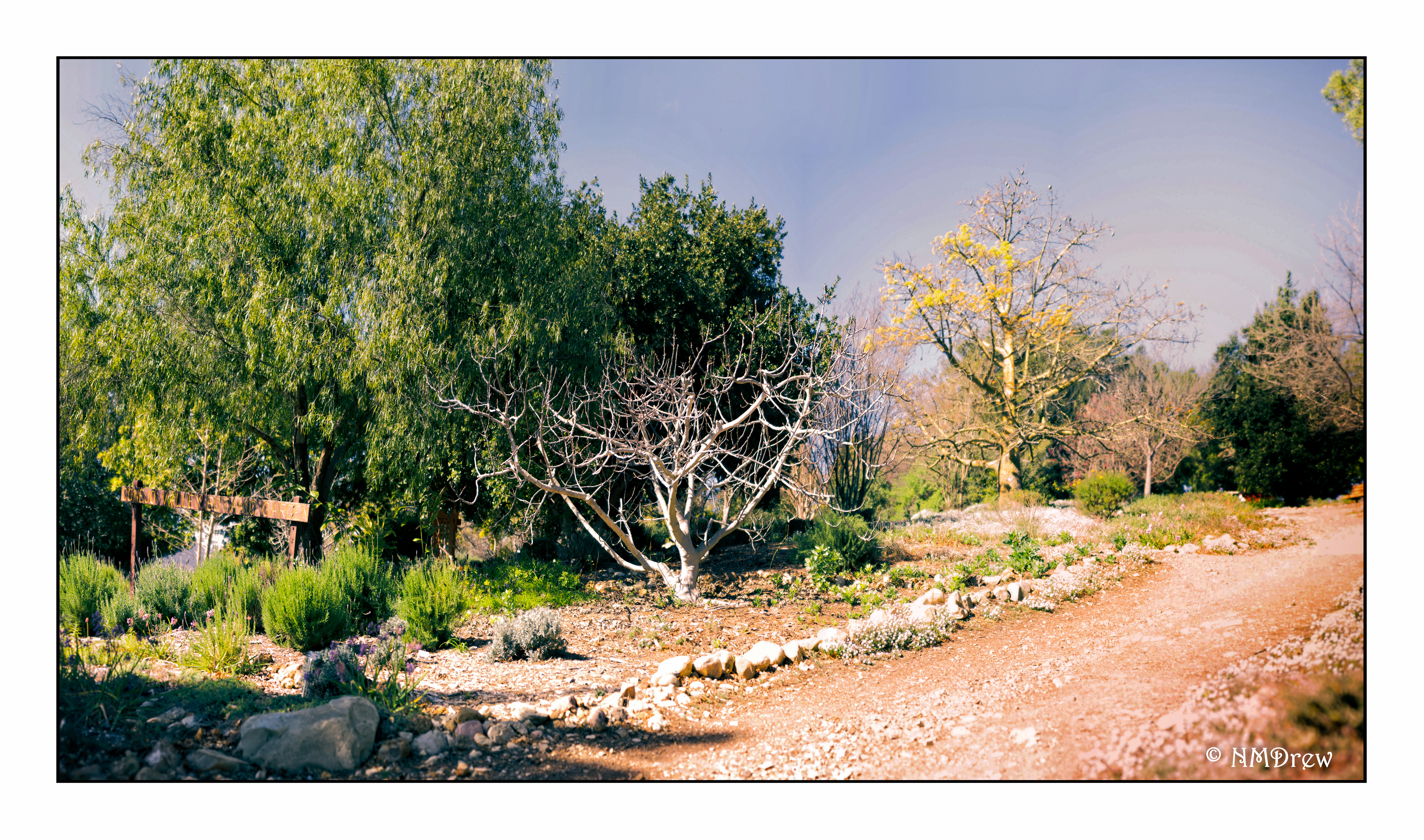
My interest in panoramas was sparked by the wedding photography of Ryan Brenizer and what has become called the Brenizer Method. Essentially, Ryan Brenizer became famous for creating a very narrow DOF in panorama portraits of couples. I think they’re great! I have used it in landscapes and still lifes with some success. It’s where digital cameras are so good to have in your camera collection.
Taking panoramas is fun with a DSLR or whatever D style camera you use. I think smaller numbers of pixels help if you tend to shoot a lot of images. I know I do. My Df is a 16 megapixel camera, and sometimes i just take a scattergun approach to shooting – lots of images covering more area than I think I want. I try to take a picture of my hand to show where my pano pictures begin and start.
To get consistent image exposure, it’s necessary to use manual exposure and turn off auto focus. Consequently, I like to take an image using my preferred f/stop and do everything else on auto. Test images are important and worth the few minutes required to do. This will give me my shutter speed and iso. If the image is too light, I might drop the EV and so on. Once I like what I see, I set up the manual techniques, take a picture of my hand – often out of focus – and begin to take pictures. On a conservative day, I take maybe 20 images; on others I have taken as many as 130 or so. Fewer images taken works out better – easier on you (that camera gets heavy) – and easier on your software and computer when stitching the images together.
I have also done panoramas using digitalized film images.
Once done, I import my images into LR. Looking for my hands, I export the images into subdirectories labeled, conveniently, Pano 1, Pano 2, etc. Use whatever you like. During the export, I change everything in size, using, for instance, 1024 as the length of the long side of the image. When you have a 100 images, reducing in size is important. You can also apply filters globally across these smaller images. These details I assume you know how to do, or learn.
After reducing all the images in size, I do a Cntl-A in the subdirectory to get all the images, and do, in LR, Edit, Merge to Pano in PS (down at the bottom of the pop-up menu). Off to PS and after clicking OK, the magic begins. It can take awhile. The nice thing about using PS as opposed to LR for a photomerge is that any ones which cannot be used in the pano are kicked to their own spots in the final image.
Here is an example of a panorama I took the other day. All told, 137 images. You can see that PS decided some did not belong in the final merge.
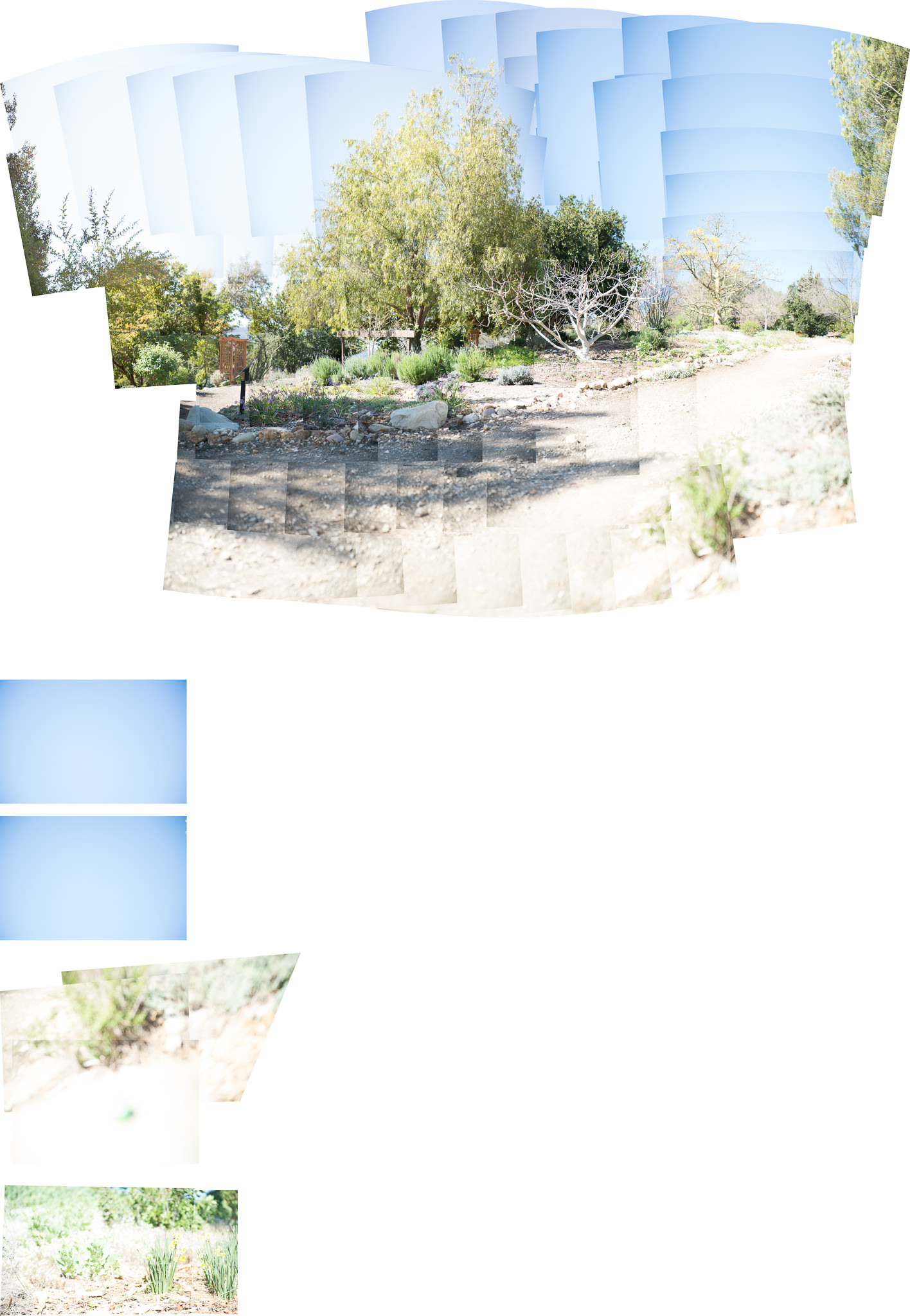
This pano was also just plain bad. I redid it and this was the result:
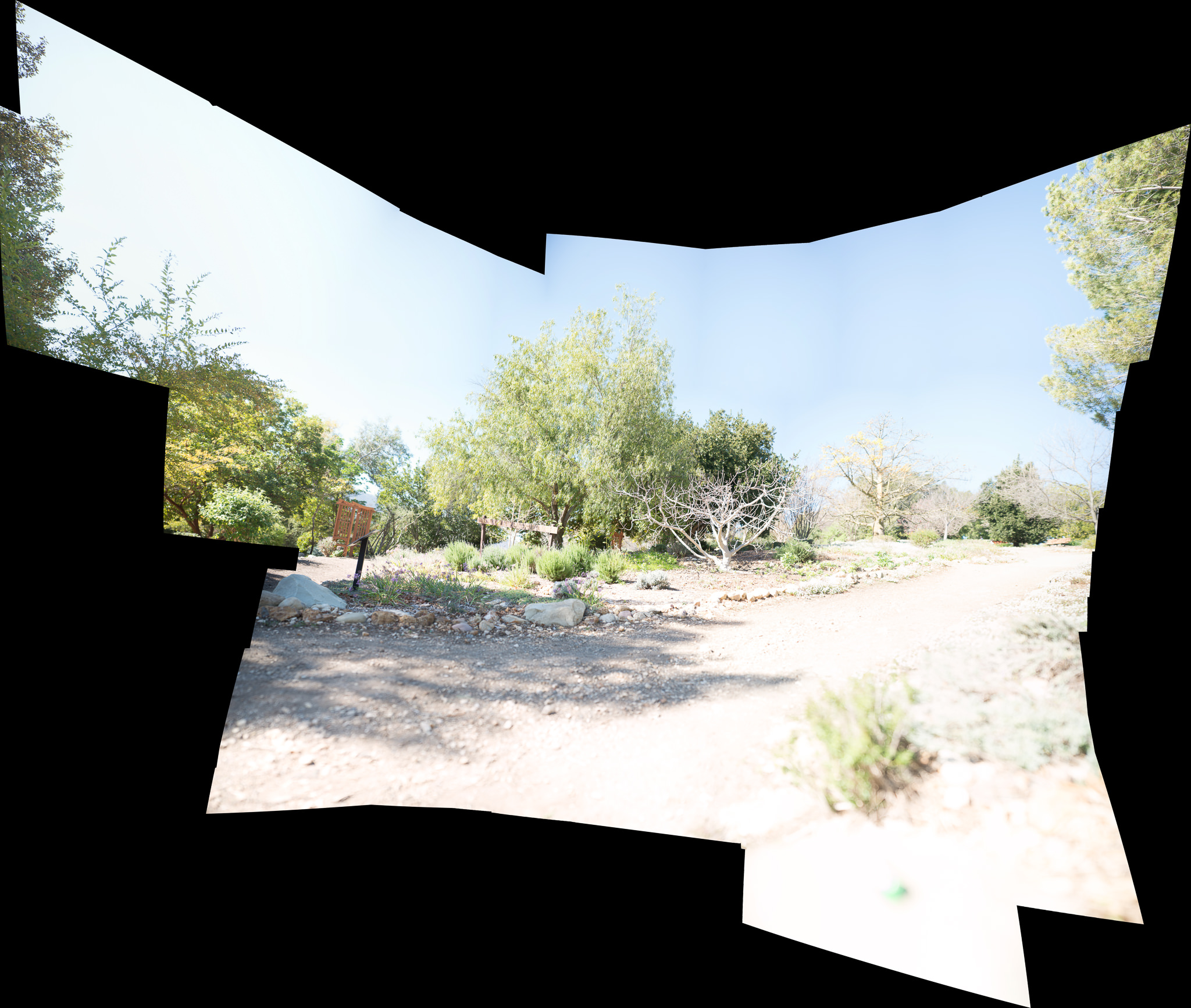
The panorama in PS can be more than huge! Make sure you go to Layers and choose Flatten Image. If you try to save it without doing this, PS will bug you to remind you. Do it. Then save it and it will go back to whatever directory you have the original images in LR.
After cropping and editing, the final result was this one you see at the top of this post.
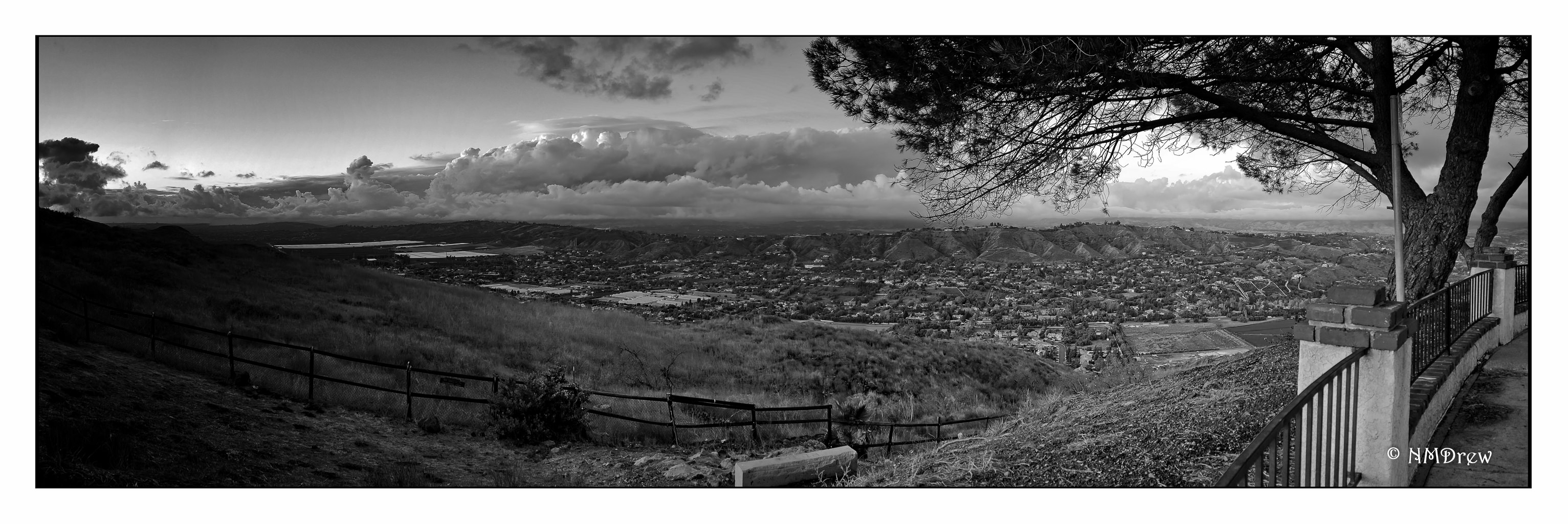
This is a pano of 4-5 images I took with my phone when I went out chasing the sunset the other day. I found most of our walking areas closed because of the rains – muddy trails, swollen creeks – and so followed roads into the surrounding mountains. When I came to this view, I had to really think – where is this? It took a minute, but then I realized I was overlooking the Santa Rosa Valley (I live in the Conejo Valley), from a vantage point I had never seen.
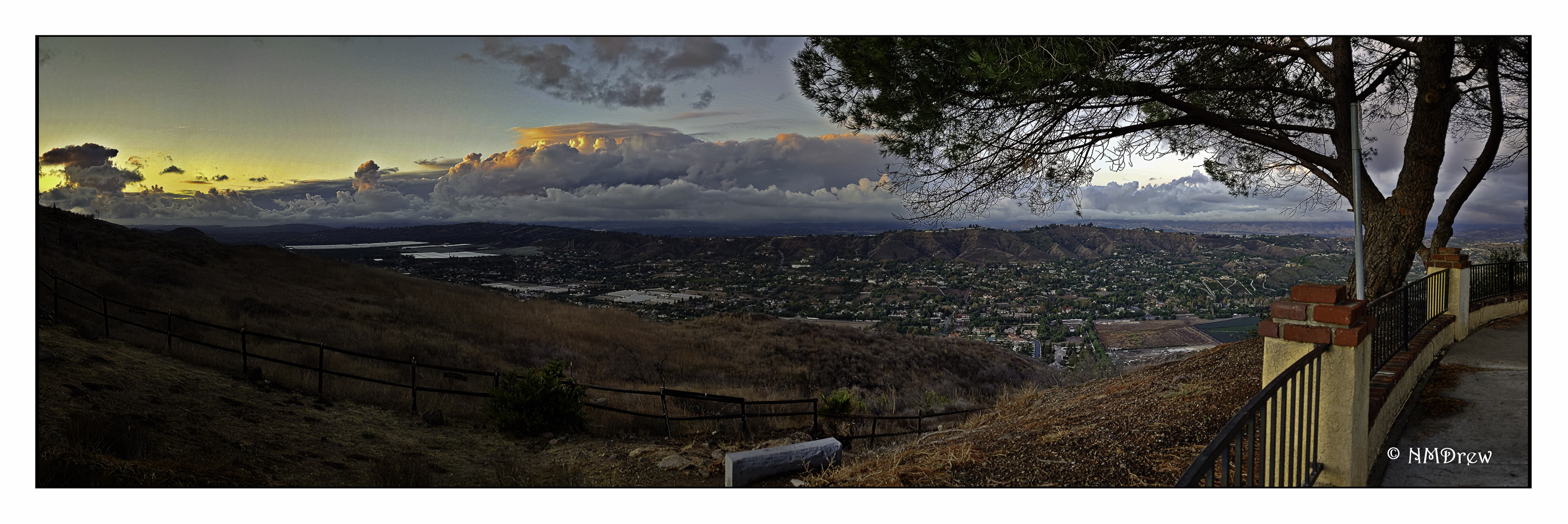
The rains cleared and the sky was filled with clouds! I went to my usual places but they were all closed – muddy trails, swollen creeks. So I headed for the hills, following roads I sort of knew might give me a clear view of the sky and city. This one was a total surprise. Suddenly I was wondering just what I was looking at, and then it hit me – I was looking into the valley beyond the mountains surrounding my own. The clouds were beautiful as the sun went down, so I took a series of pictures – 4 or 5 – and made a pano of them in PS. This made my day, let me tell you!
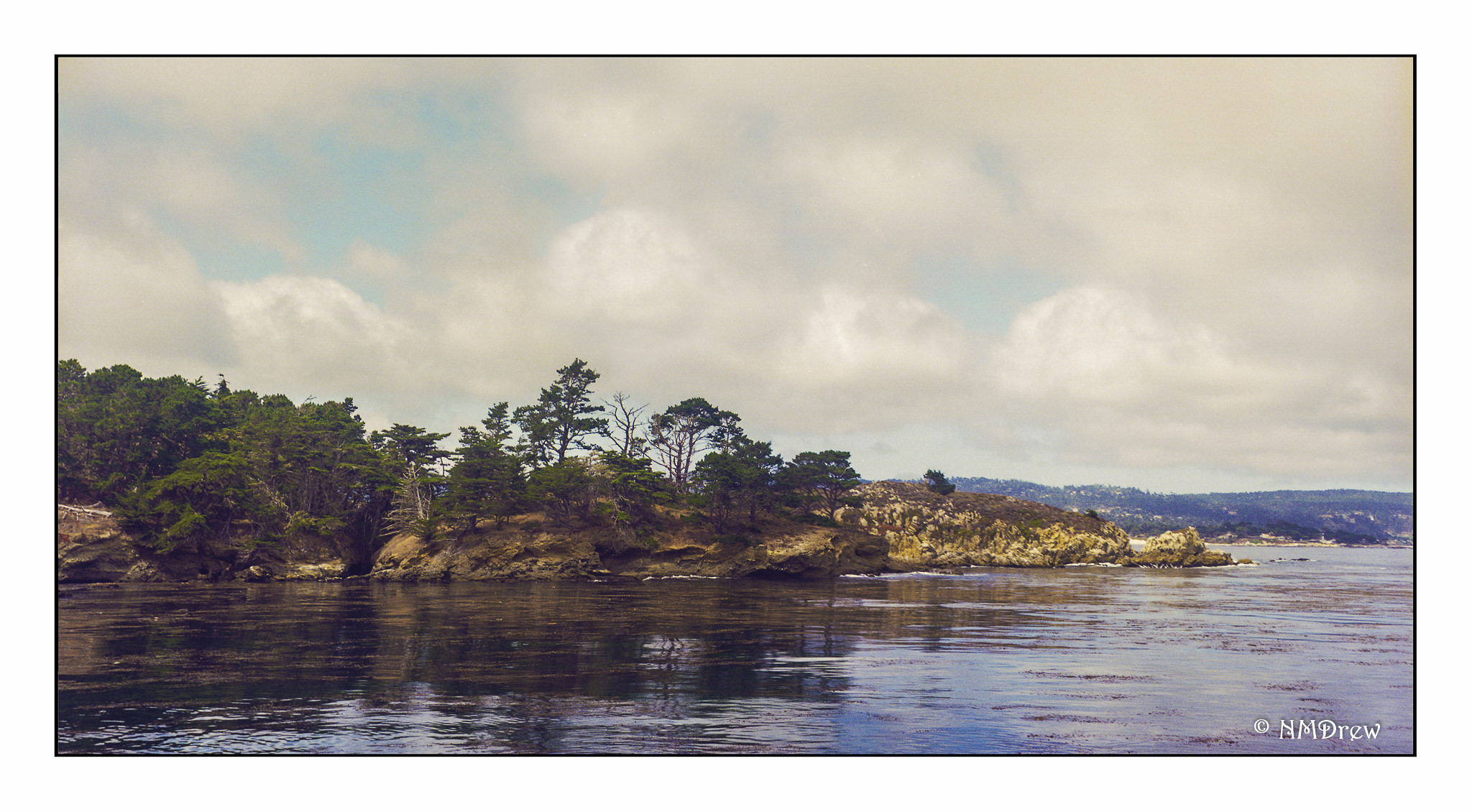
There is something so different in the quality of a photo taken with a film camera, rather than a digital camera. It is apparent even more so when it is done with an uncoated lens from 1937. The lens in question is a lovely Schneider Kreuznach Xenar 2.8, 75mm, taken using 1937 Welta Weltur camera. It is a folding camera that takes the still-available 120mm film. I used Ektar 100 by Kodak, and applied the Sunny 16 rule for manual exposures.
I have a 6×6 version with a 6×4.5 reduction mask. I thought I had removed the mask – but hadn’t. All my supposedly square images came out rectangular! I stitched two images together in PS6 and then tediously removed threads and dots of dust that were apparent even after scanning with Digital Ice on the Epson V600.
This photo makes me think of landscape paintings of the 1700s and 1800s – especially that turquoise sky. Mayhap a painting will follow.
 Ink, Yarn & Beer