White Dome Geyser

Out of all the geysers in Yellowstone National Park, this is by far one of my favorites.  It’s a small dome, probably about 10 feet tall (which is very tall, really, for a dome), but it spews a wonderfully unpredictable little geyser – or big geyser – depending on its mood.  This one is called White Dome – a perfect name for a real beautiful geyser.

Taken using an Olympus OM-1n, Oly 35-70mm lens, Cinestill 50 film, and scanned in a Pakon.

The View from Above

This is just one of many images shot with black and white film produced by the Japan Camera Hunter: JCH StreetPan 400. I used both orange and red filters, and the success shows in good contrast, for both long and short scale. The Oly OM-1n and 50mm lens are a wonderful travel combo – small, lightweight, and well made.

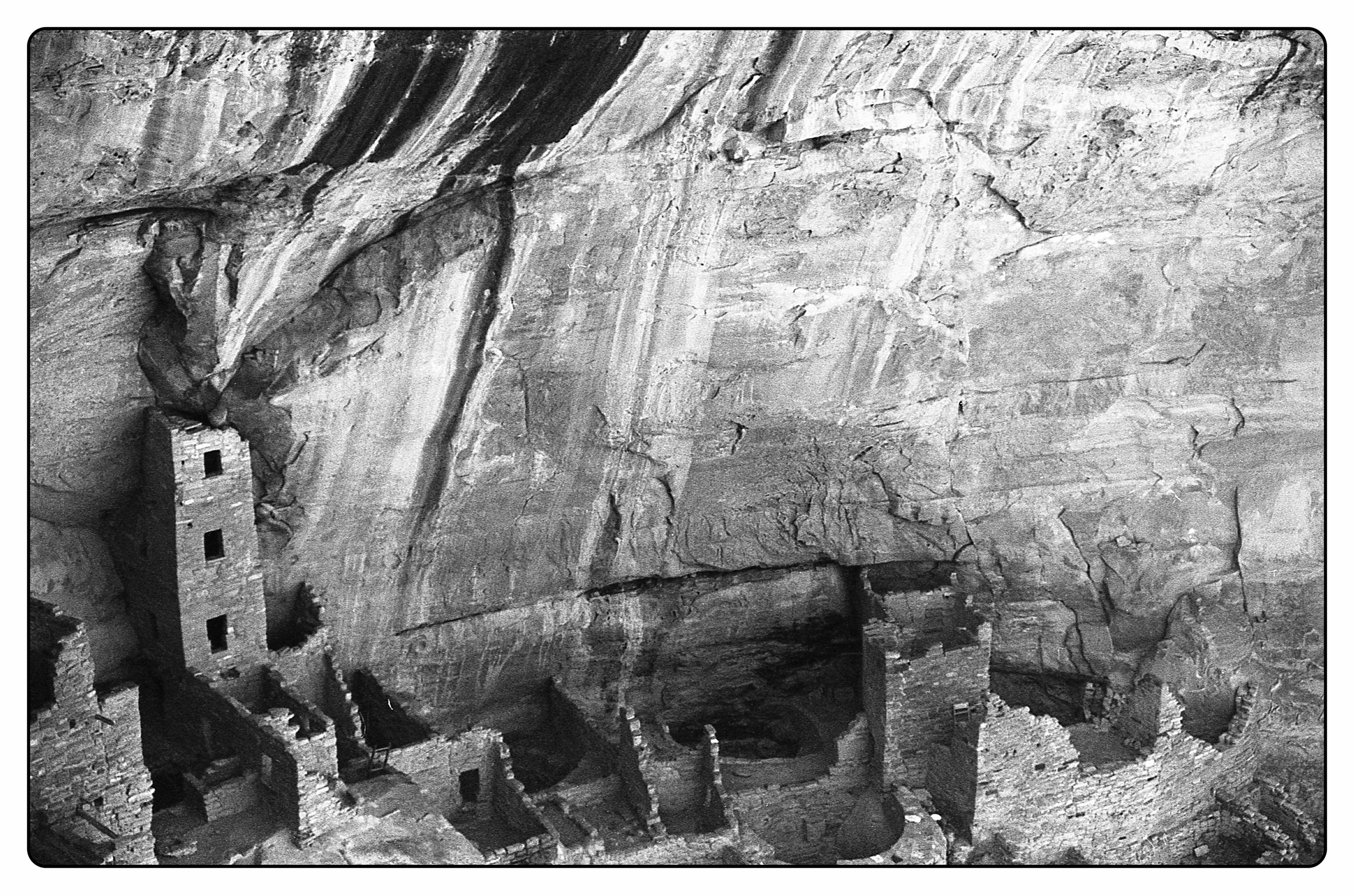
This is one of the cliff dwellings found in Mesa Verde National Park, in the Four Corners area, in Colorado. We spent a couple of days there, enjoying the rich history and beauty of the area.

The Southwest in Black & White

The last few days of July 2017 and the first few weeks of August 2017 were devoted to a family trip, leaving California and thence traveling through Arizona, Colorado, Wyoming, Utah, Nevada, and home.  In that time period we covered about 4000 miles, spending 2-3 days in each place.  There were four of us – my husband’s parents, my husband, and myself.  It was a family trip, to see places never before seen, as well as to see places where family ancestors lived and worked – specifically, Ft. Laramie, Wyoming.

On this trip, there were two photographers – my FIL and myself.  Tom has a Nikon D810 and D610; he brought the D610 along and shot numerous images, which I hope to see soon!  Myself, I brought along more toys than I should confess to, but enjoyed using all of them.  In particular, I brought along a new-to-me Olympus OM-1n, an OM 50mm f1.8 MC, and the OM 35-70mm f3.5-4.5.  Each has a 49mm diameter, so I also brought along UV, polarizing, orange and red filters, and used the latter two to see how JCH StreetPan 400 would work as landscape film.

It was gorgeous!  Combined with the Oly, I was incredibly pleased.  StreetPan comes in both 35mm and 120mm, so a lot of people will be really happy.

What I like about the StreetPan is that it is contrasty, yet has a good, long grey scale.  The orange and red filters helped to make the skies pop, and the landscape.  I didn’t have to do too much in post, perhaps modifying highlights and blacks to meet my own (artistic?) desires.  Detail was good, too.

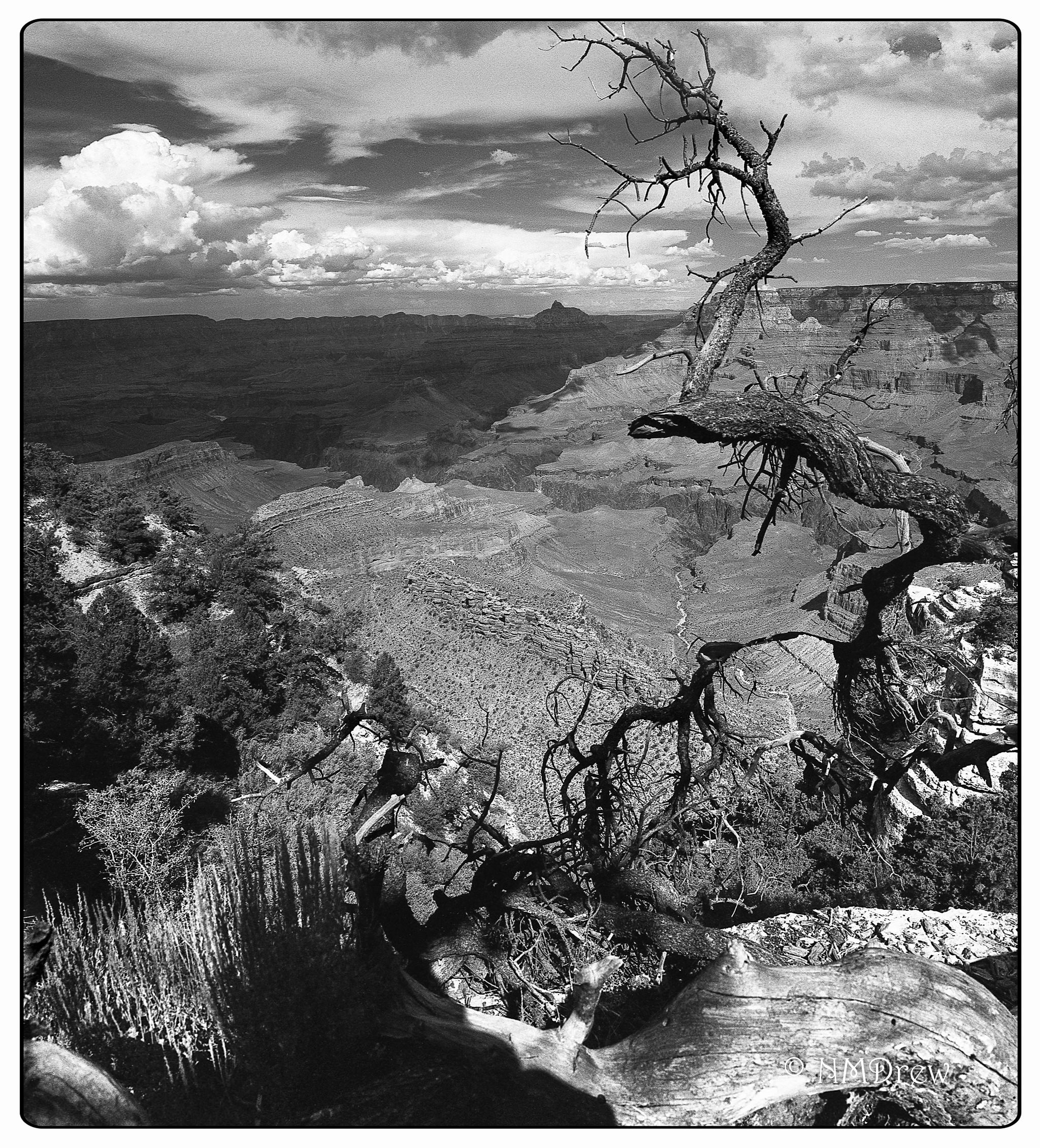
The image at the top is a panorama I stitched together in CS6; below are individual images which can give you a good idea about the beauty of this film for landscape.  These scenes were shot in the Mesa Verde National Park and the Grand Canyon National Park, both in Arizona.


Too often, black and white landscapes don’t interest me, and the reason is the difficulty in differentiating small details.  Dramatic landscapes don’t have to look dramatic, but they need something to make them dramatic.  This can mean contrast, composition, and a number of other elements.  In all honesty, I do not consider myself to be a good black-and-white photographer simply because I find it difficult to think in terms of value.  I see color before I see anything else, and certainly my gaudy photos show this tendency.  Therefore, using the filters and an already contrasty film produced a number of photos that pleased me no end.  This experience is whetting my appetite for more!


The Grand Grand Canyon

Needing to travel light, I took only my Chrome Book, my Nikon V3, the Olympus OM-1n, and the Olympus XA4.  I used up 3 out of 10 rolls of film, and probably blew one of those.  I thought I had used a 4th roll, and maybe I did, but cannot seem to find it.  I used a Chrome-OS based editor called Polarr, but found the Chrome Book a bit too small to do much editing.  I backed up all my images onto an external HD, a 1.5 TB “My Passport.”

The first stop on our trip was Flagstaff, Arizona, for two nights.  We stayed at the England House B&B to use as our jumping-off points for the Grand Canyon and Sedona.  Our hosts, Richard and Laurel, were full of great information, and sent us out to the Grand Canyon to a very specific spot from which we could peer into the depths of the Grand Canyon.  We made a few stops as we drove into the Grand Canyon National Park.

The first stop was the Desert View Watchtower designed by Mary Colter, who was quite an amazing woman.  If you have a chance to visit the Desert View Tower, take the time to do so.  Not only is the Tower a piece of fascinating architectural design and execution, the views are worthwhile.  Take the time to walk around it, find the little corners, and stop for a moment to appreciate the grandeur of the view and the vision of Ms. Colter.

From the Desert View Watchtower, we drove deeper into the park, following the specific directions from Richard and Laurel.  It is a pullout leading to a fire road, and about a 20 minute walk through a pine wood.  The air is aromatic, redolent with the spices of high desert plants – resinous and sweet.

Flowers and grasses grow between the pine trees, and old, dead trees have become architectural designs created by nature, with the details of their structure revealed in their craggy lines and intimate remains.

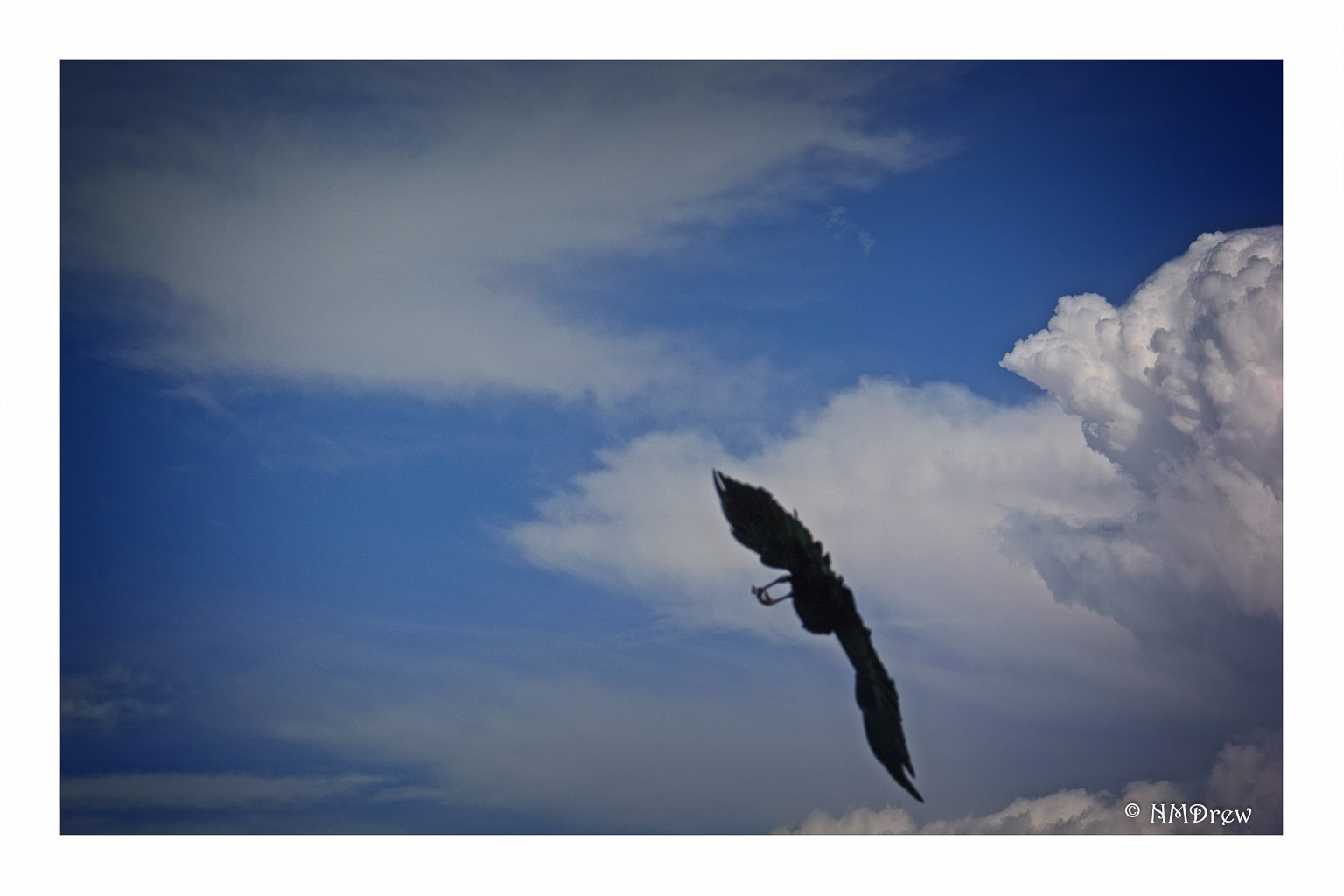
Finally, at the end of the road, a picnic area opens up at the very edge of the Grand Canyon, which drops below you a mile.  No fences protect you.  No one tells you not to jump.  You find a place to stop, and look, to hold on to.  Birds such as ravens and raptors fly above you, only to drop down into the Canyon.  The Colorado river, a deep muddy red, flows at the very bottom.  As the sun shifts and clouds move, the colors of the Canyon change.  It’s a mesmerizing, enchanting, and magical place – far too big and grand to be seen in one day.

I used the Nikon V3 with the 1 Nikon  10-100mm lens for most – if not all – of these images, with post in Lightroom and On1.

Vacation Choices #1: Olympus OM-1n

We are going to be on a longish road trip the last part of July and the first half of August. We are traveling throughout the west with family. Places to be seen include Arizona, Colorado, Wyoming, Nevada for the most part. We will see the Grand Canyon, Mesa Verde, Sedona, Fort Laramie, Yellowstone National Park, the Tetons, and places in between.

I am in a quandary – what cameras should I bring?? I want digital, and film, both 35 and 120mm. I have a herd of cameras, and only so much room. Now, I have to make some decisions.

I recently acquired the Olympus OM-1n and a 50mm f1.8 lens. Small and lightweight, discreet, easy to carry, simple to use, and it takes great pictures. Using Kodak UltraMax 400, I shot one roll, much of which pleased me for both color and clarity.  As you can see from the images below, it’s a pretty good little camera – much better than I had expected.

If you have any opinions, I sure would like to hear from you . . . I’ve got other cameras to discuss as well!