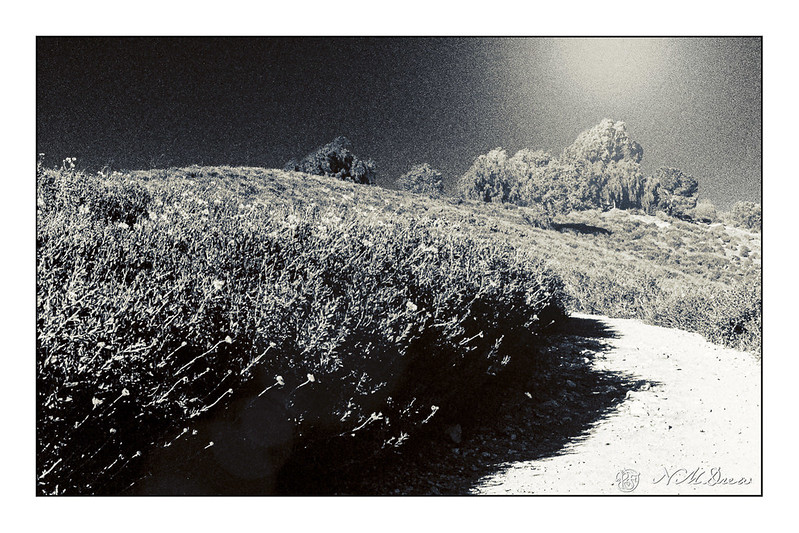
My world really doesn’t look like this, but sometimes it does feel like this!

My world really doesn’t look like this, but sometimes it does feel like this!

I have been soooooo busy with everything! People, projects, classes, etc., etc. I finally got out for a bit of a hike, and brought my camera along, too, loaded with Portra 400. I used my Olympus OM-1n, which is a favorite camera of mine. The lens was the 50mm I had attached to it. Interestingly, my tape that I put on any camera with film in it told me I had loaded the film on 3/6/2021, exactly one year to the day that I was out and about!
I am always rather “hmmmmm” about Portra 400. A lot of people like it, but in post I always need to do something to it. I probably should just not use it for anything but portraits since that is what it is intended for, but I don’t often take pictures of people.
Anyway, the hike was fun – and kind of scary since I went by myself and part of it was rather steep, with fall-offs that could be treacherous. Getting old is not fun, and losing a sense of independence in some areas is not where I want to be. However, prudence was there insofar as my husband knew where I was, and I had my phone.
This is a little sage plant, newly growing in the moist soil above a creek. I couldn’t get a really nice shot of it by itself, and that is when I set my exposure and took multiple images to stitch together. In the end, I liked this composition, and just messed with it until I got something I liked.
I have shot B&W film with a red filter, and a light yellow filter and have been pleased with the results. Recently I used an Orange 21 filter and got mixed results. The equipment was an OM-1n and Ilford FP4+ 125 asa film. The lens is a 50mm f3.5 Zuiko macro lens. I shot the film at 100 asa, but my battery was dead, so I did the Sunny 16 rule, and hoped that doing settings I think would work without a filter would be adequate. I did well with the yellow and red filters, but not so well with the orange. Admittedly, I still don’t “get” filters – I really need to study them in greater detail – but you (and I) can read about them here. And you can, of course, google all about them!
I take my film to a local lab to be processed, whether color, slide, or silver-based black and white. They do a fairly good job. I can have film pushed if I want it, too. I scan the film myself, whether 135 or 120, using either a Pakon scanner or my V600. The results are decent. I clean things up in LR or another program, depending on what I want. Sometimes I do more in post, such as noise reduction, vignetting, etc.
The Ilford FP4+ is considered to be an excellent film. When I scanned the pictures, they ended up with a rather reddish brown cast – was that the scanner, the processing, or the orange filter? You can see the totally unretouched photos below.


I am not really pleased with any of the above photos. The orange filter turned the red rose the same shade as the leaves. Contrast of light and dark disappeared. I plan to shoot another roll of FP4+, without a filter, to truly assess my like or dislike of this film.
Post-processing can change an image immensely. Noise can disappear, dust and threads on the film can be eliminated, and contrast and exposure adjusted. I do these digitally, just as you could do in a regular film dark room. Here are some of the images I could clean up – and some needed a heck of a lot of work, let me tell you!


I even managed to one into a color picture using preset in On1 Photo Raw 2019!
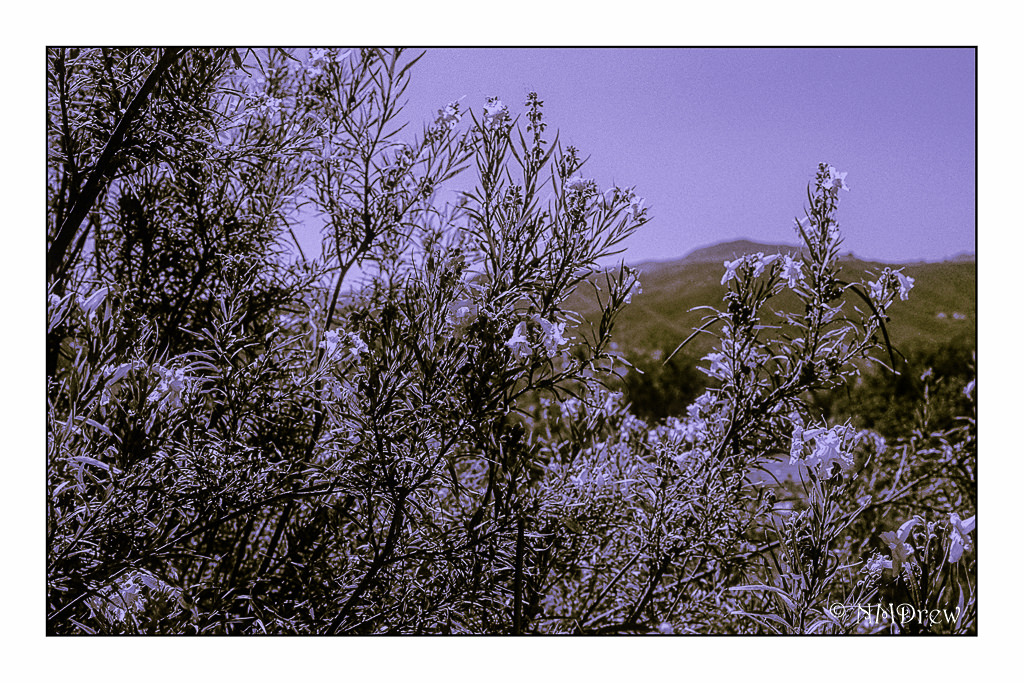
Crazy stuff! It will be interesting to try to reproduce this colored picture sometime in the future. Meanwhile, back to the film cameras!
This once was a black and white photo! Really! Look what post production playing produced . . .
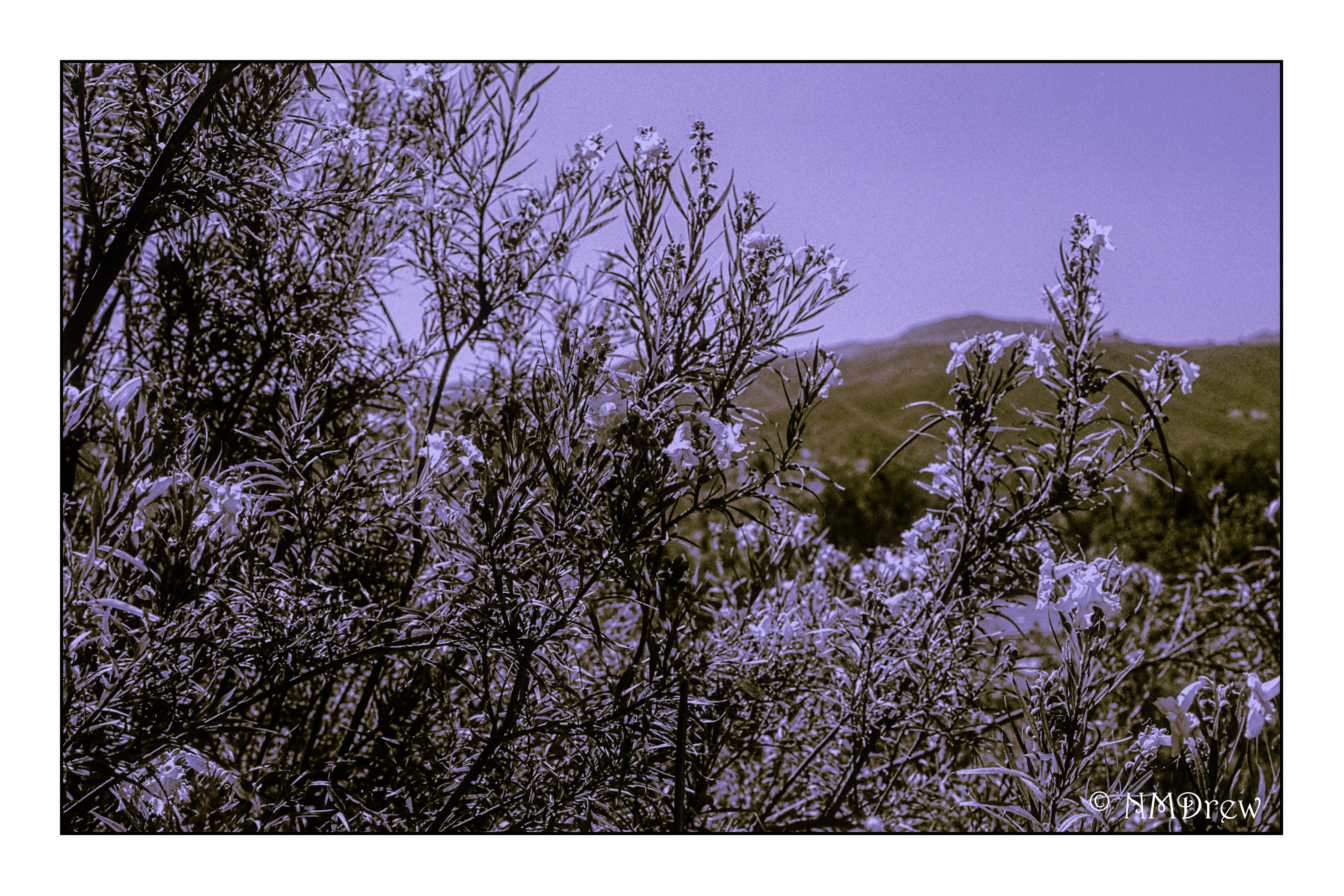
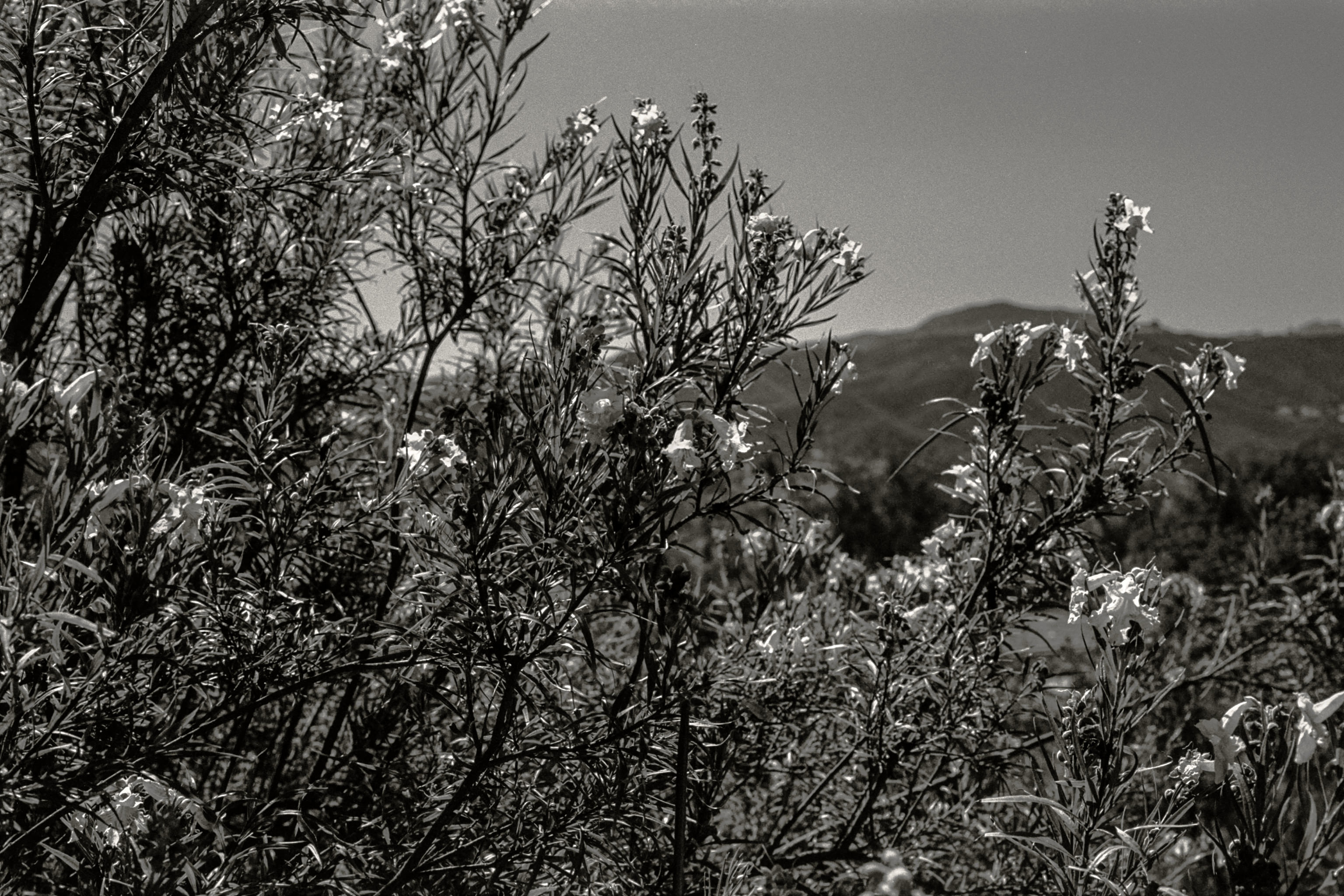
Below is the original black and white image, shot on Ilford FP4+ with an orange filter – an Orange 21 specifically – using an Olympus OM-1n and 50mm f3.5 macro lens.
This was the first pass with a preset I made in On1 Photo Raw 2019.
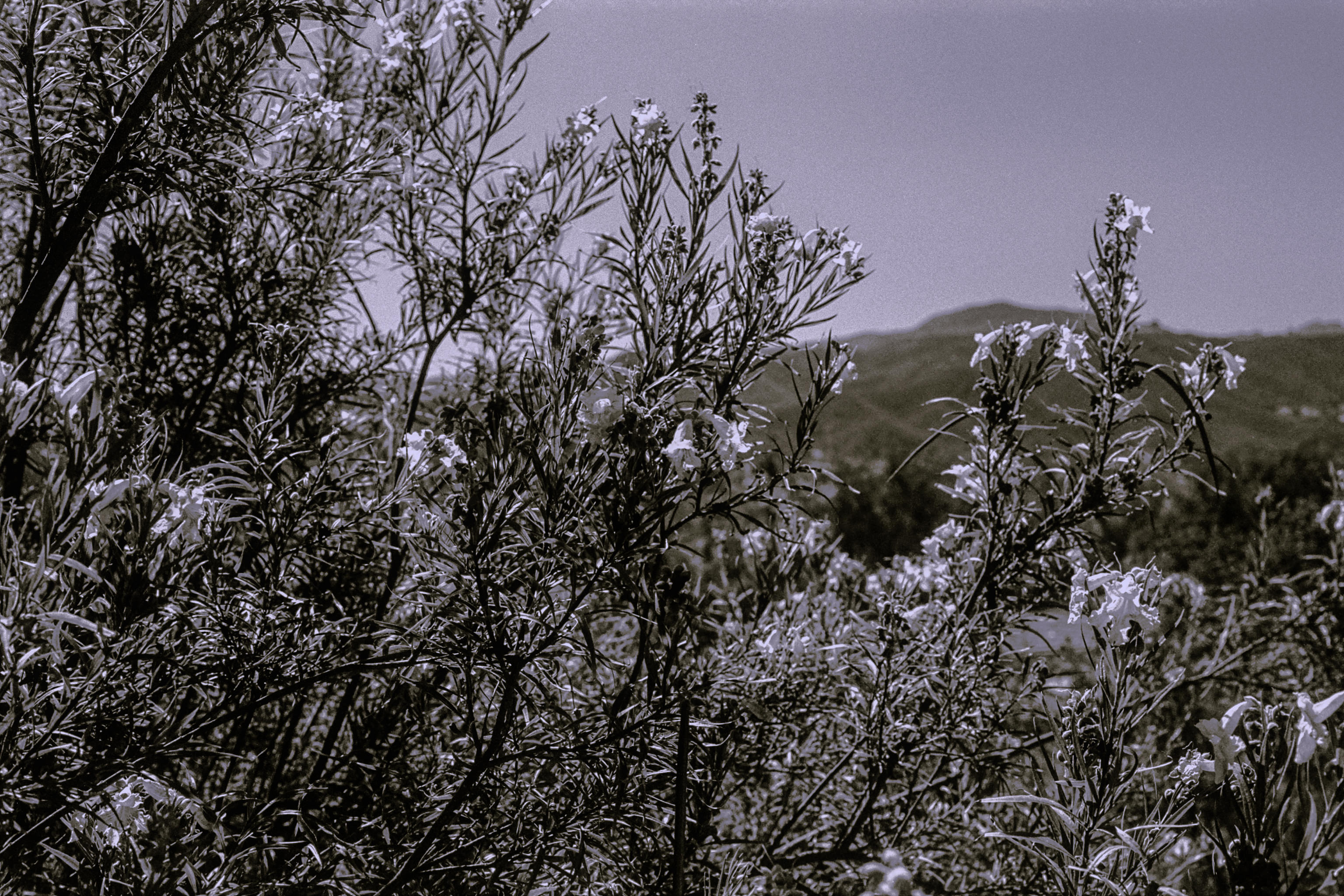
I added the same preset to the above a second time and got the very first one you see at the top.
I am not sure if I can replicate it, but plan on trying.
Meanwhile, I need to read a lot more about orange filters – some of the images came out ok, some great, and a lot were just worthless.
My historical vacation photos on film always ended up . . . as the backsides of deer. My first visit to Yosemite seemed to be image after image of deer butts. I had my first “real” film camera, a Canon A-1 (which I still have and is really beat up) and no idea how to use it. Or how to frame. Or anything. It was as annoying as hell, and I walked away from photography until the Nikon Hit Man loaned me his D70 years ago. Since then, I’ve returned to film, considerably more adept at avoiding deer butts than in the past.
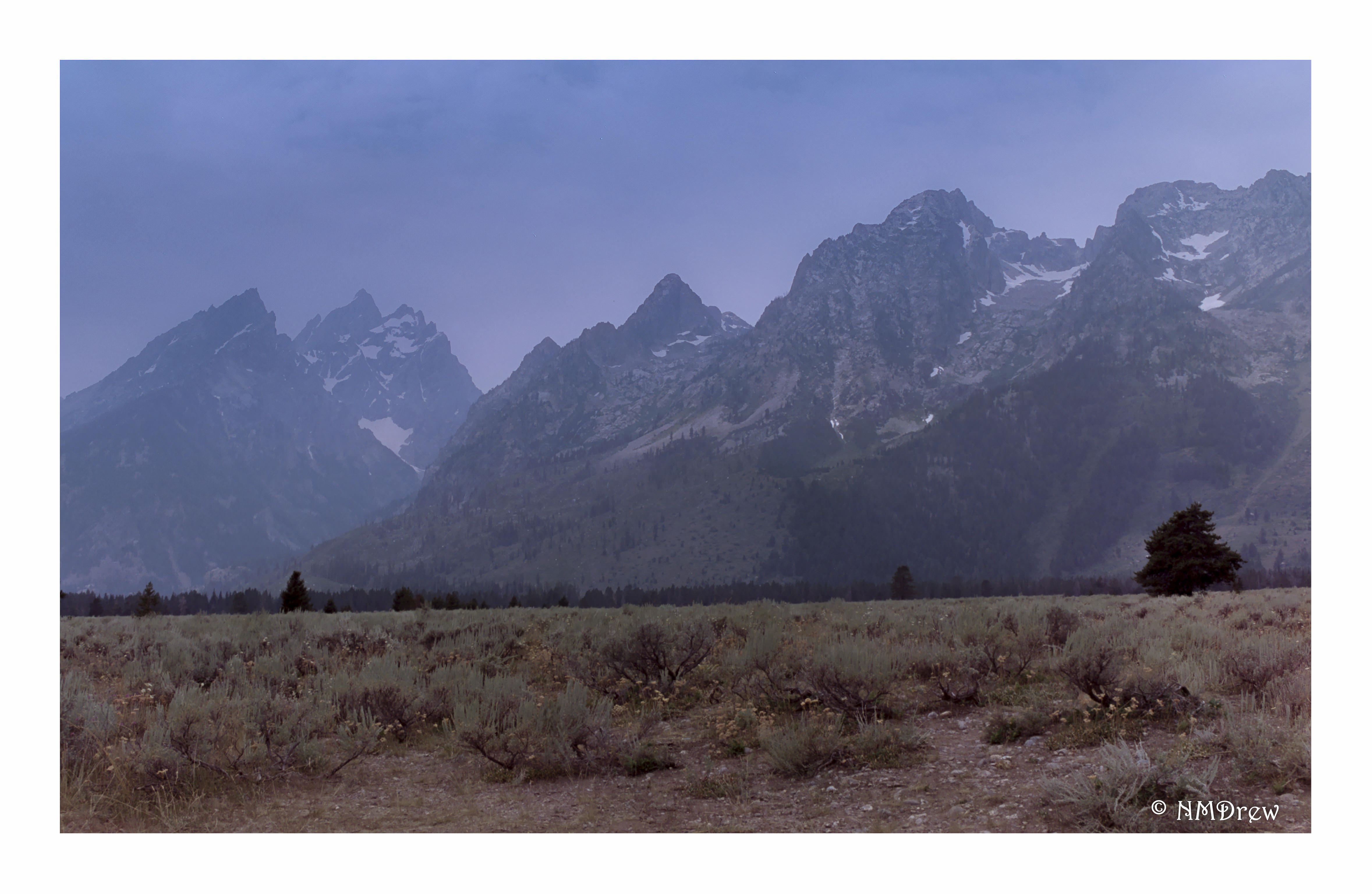
I am not sure where this was taken in the Grand Teton National Park in Wyoming, but I really liked the field of wildflowers, the edge of pine, and then the Tetons rising up from the valley floor. If I can, one day I want to spend more time truly exploring this area and hiking along the trails – possibly even higher up than we were.
I used the Olympus OM-1n, Cinestill 50, Olympus 35-70mm lens, and the Pakon to scan. This is a pano of 2 or 3 images stitched together in LR with some post.
 Ink, Yarn & Beer