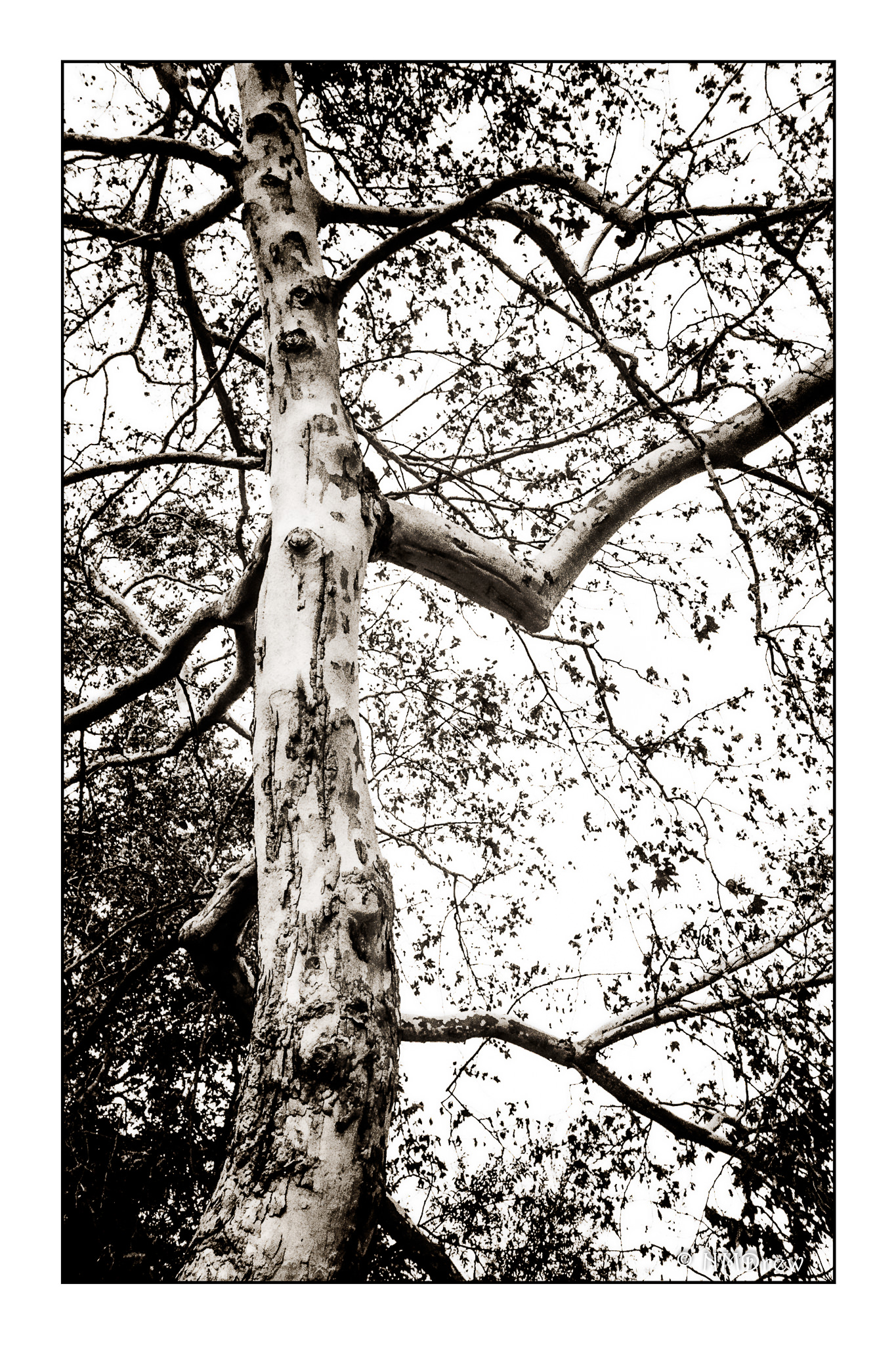
Trees – always something new to see.

Trees – always something new to see.
I have shot B&W film with a red filter, and a light yellow filter and have been pleased with the results. Recently I used an Orange 21 filter and got mixed results. The equipment was an OM-1n and Ilford FP4+ 125 asa film. The lens is a 50mm f3.5 Zuiko macro lens. I shot the film at 100 asa, but my battery was dead, so I did the Sunny 16 rule, and hoped that doing settings I think would work without a filter would be adequate. I did well with the yellow and red filters, but not so well with the orange. Admittedly, I still don’t “get” filters – I really need to study them in greater detail – but you (and I) can read about them here. And you can, of course, google all about them!
I take my film to a local lab to be processed, whether color, slide, or silver-based black and white. They do a fairly good job. I can have film pushed if I want it, too. I scan the film myself, whether 135 or 120, using either a Pakon scanner or my V600. The results are decent. I clean things up in LR or another program, depending on what I want. Sometimes I do more in post, such as noise reduction, vignetting, etc.
The Ilford FP4+ is considered to be an excellent film. When I scanned the pictures, they ended up with a rather reddish brown cast – was that the scanner, the processing, or the orange filter? You can see the totally unretouched photos below.


I am not really pleased with any of the above photos. The orange filter turned the red rose the same shade as the leaves. Contrast of light and dark disappeared. I plan to shoot another roll of FP4+, without a filter, to truly assess my like or dislike of this film.
Post-processing can change an image immensely. Noise can disappear, dust and threads on the film can be eliminated, and contrast and exposure adjusted. I do these digitally, just as you could do in a regular film dark room. Here are some of the images I could clean up – and some needed a heck of a lot of work, let me tell you!


I even managed to one into a color picture using preset in On1 Photo Raw 2019!
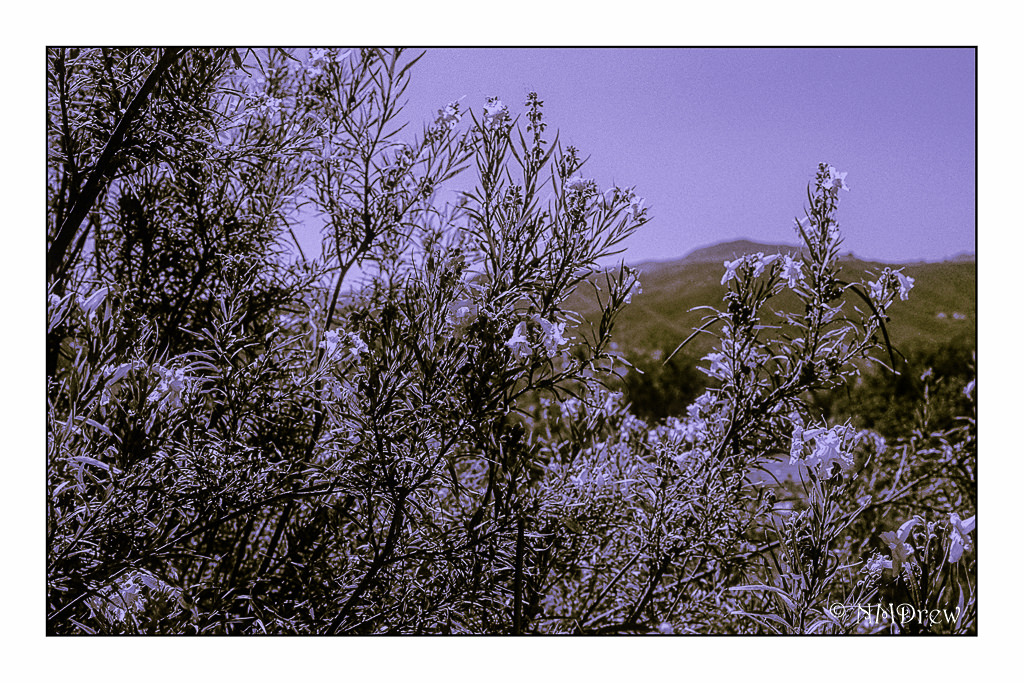
Crazy stuff! It will be interesting to try to reproduce this colored picture sometime in the future. Meanwhile, back to the film cameras!
Many people, myself included, as they age start to get rid of the possession’s they have accumulated throughout their lives. I am no exception, sort of.
To begin with, I am of the thought that to learn about something, you need to experience it. This can be done in a lot of ways, such as projecting ideas and thinking about ways in which people could respond, by reading, and so on. I like to learn things by doing. As a result, I have a lot of stuff. I have too many sewing machines, too many cameras, too many brushes, too many tubes of paint. I used to have too many spinning wheels, too many pairs of shoes, too much yarn. I’ve paired those last areas down quite a bit, but still wonder about other things.
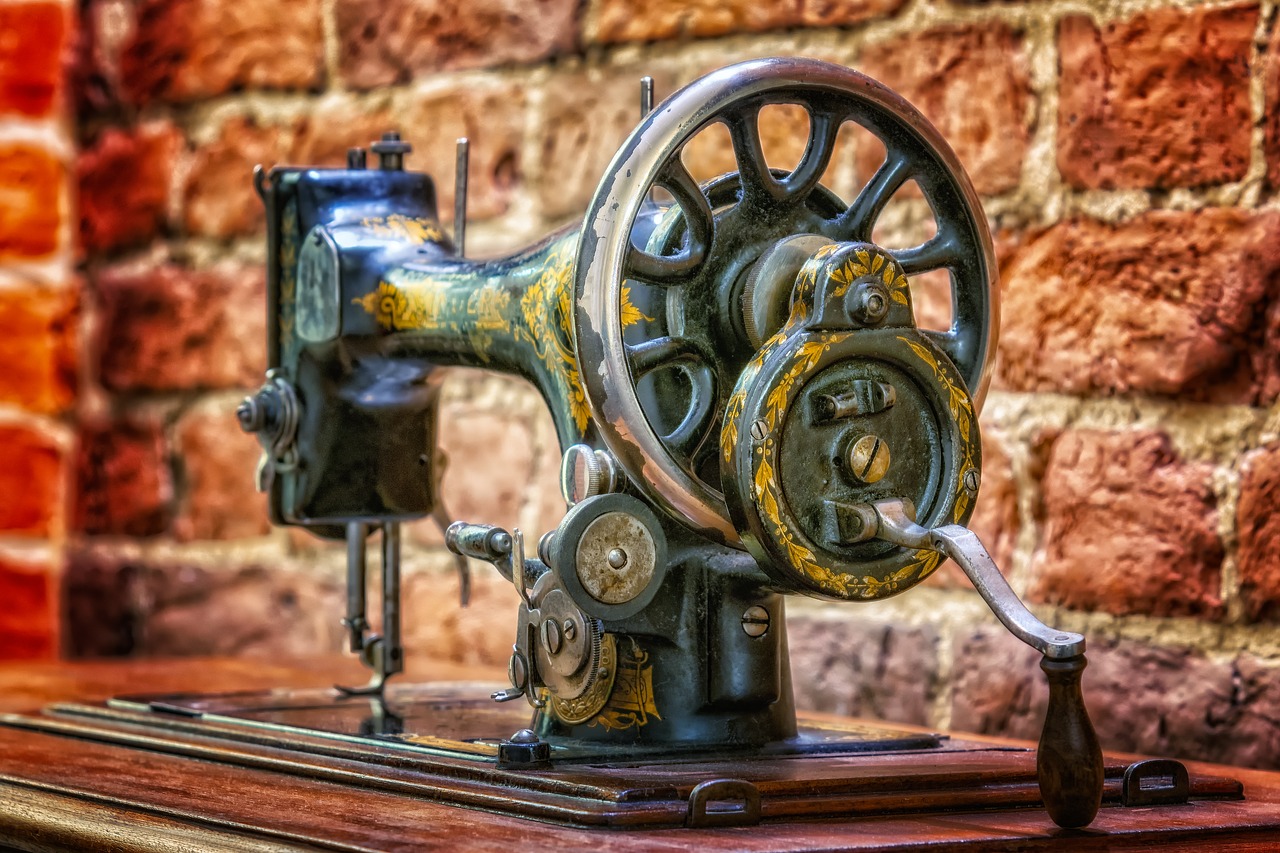
Let’s begin with sewing machines. Why do I have so many – or “sew many” as one might pun. Good question. The answer is simple: curiosity. I have a treadle machine with a vibrating shuttle and long bobbins. I still need to master it. There is a YouTube video I have tagged to watch. I have a Singer 99 handcrank I bought for buttonholes. I have a Kenmore 1030 that was a present from an old beau. I have a Featherweight 222K that I got because it was cute, little, and diverged from the 221 in that the feed dogs drop and the free arm is tiny, making it excellent for sleeves. I have a Janome 6500, a computerized machine that is a workhorse and big. I have a Presto II, also computerized, and lightweight for taking to classes, and using in a sewing table. There are others, too, that have cams and other features that simply make them interesting and different from others in the collection. I also have an non-working one that belonged to my mother – sentiment keeps it around.
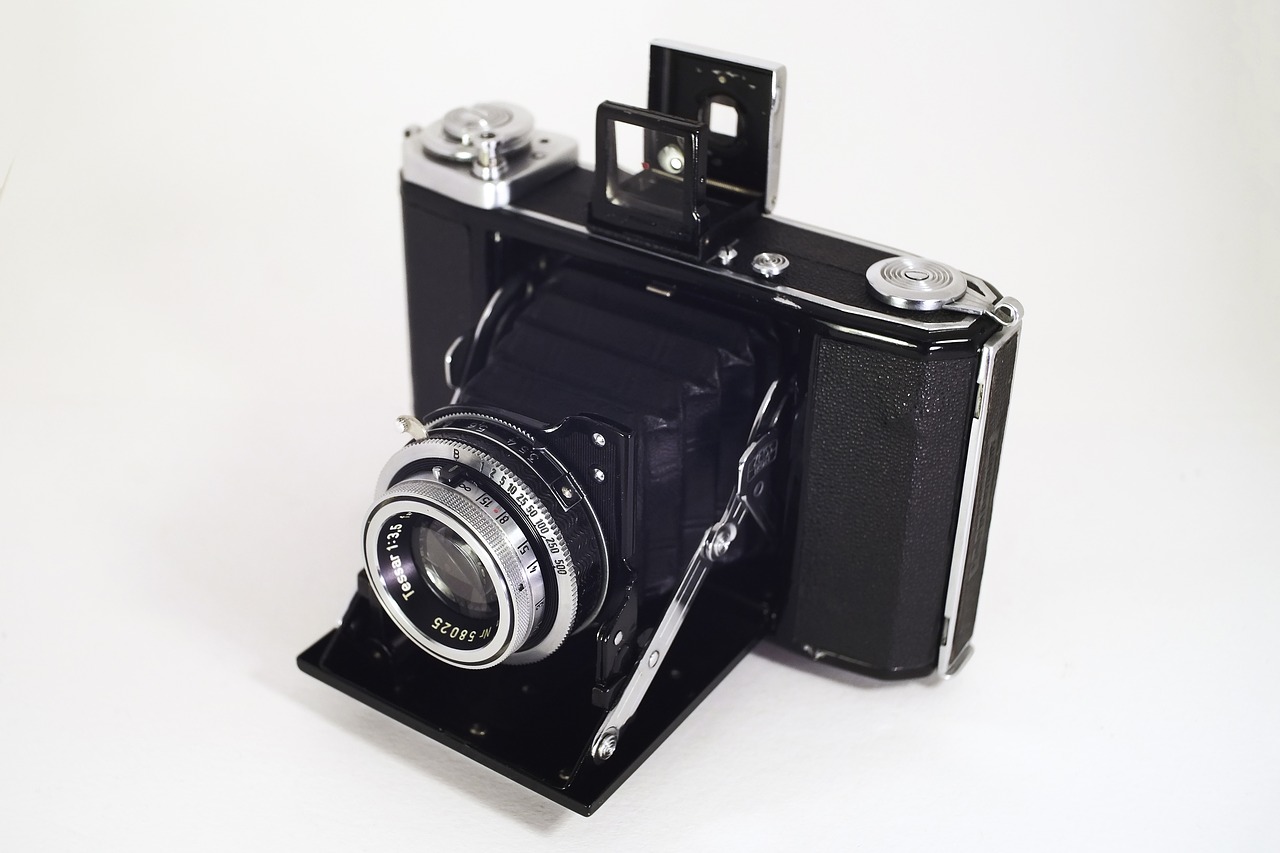
Next, photography. Over 10 years ago a very good friend loaned me his Nikon D70 so I could learn about photography without using film. It opened the door to enjoying and understanding photography as an art form. It cost me nothing to use except buying a card for the images. I had it for a year. In that year, I learned a lot and finally felt that film could be an adventure. I have a few digital cameras – Nikons all – a Df, D7000, V1, V3. I also have a lot of lenses, some autofocusing, some manual. I also have bought some dirt cheap film cameras, the FM2n, F3, F100, F90s. I also have some folding cameras from the 30s, in both 35mm and 120mm format, and a Yashica TLR. I have a rangefinder, which I am not at all crazy about. I have some Olympus cameras, too; an OM-1, OM-2, OM-4Ti, a Trip 35, and XA4. All of these cameras provide for different experiences. Lately I have acquired some 50s Agfas, such as the Silette, and these “newer” vintage cameras have their own charms and experiential value.
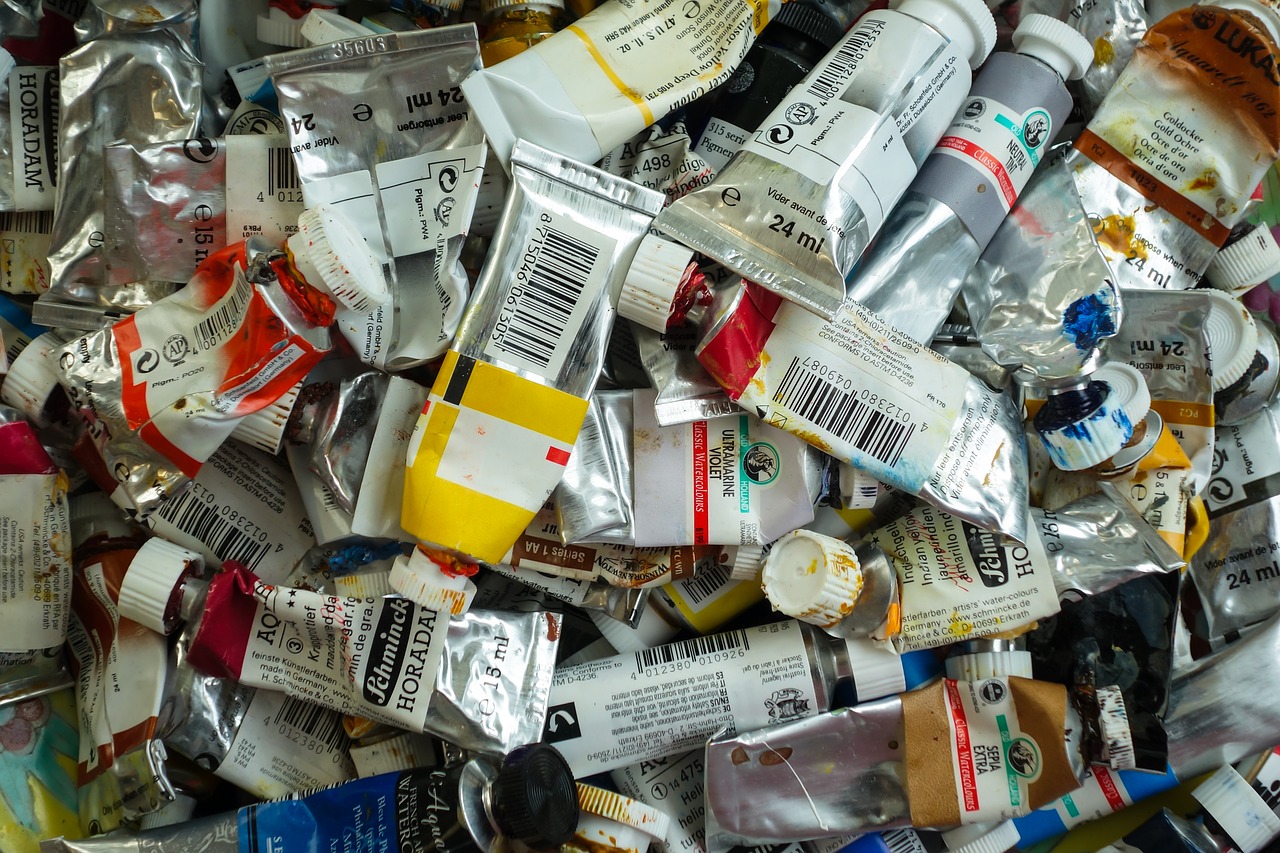
Finally, paint supplies. This really was the central point of this post! Many people say to work with a limited palette of colors – but color, for me and many others, are a siren’s song. There are so many luscious colors out there. The same color by this manufacturer is different than that manufacturer. How can anyone who loves to paint and loves color resist? I know I can’t! But, I do know, that if I don’t experience the color first hand, how can I determine its value in my palette?
On that note, I leave you. To me, all of the above have provided experiences that I could not have had otherwise. Yes, I have enough, and more than enough in many instances. However, the historical value of sewing machines and cameras is something I enjoy. The range of colors I have helps me to learn what I like and don’t like. All of them draw me at different times, and to experience them, today or a week later, or even months, is a joy. So, enough? Or, too much?
 Ink, Yarn & Beer