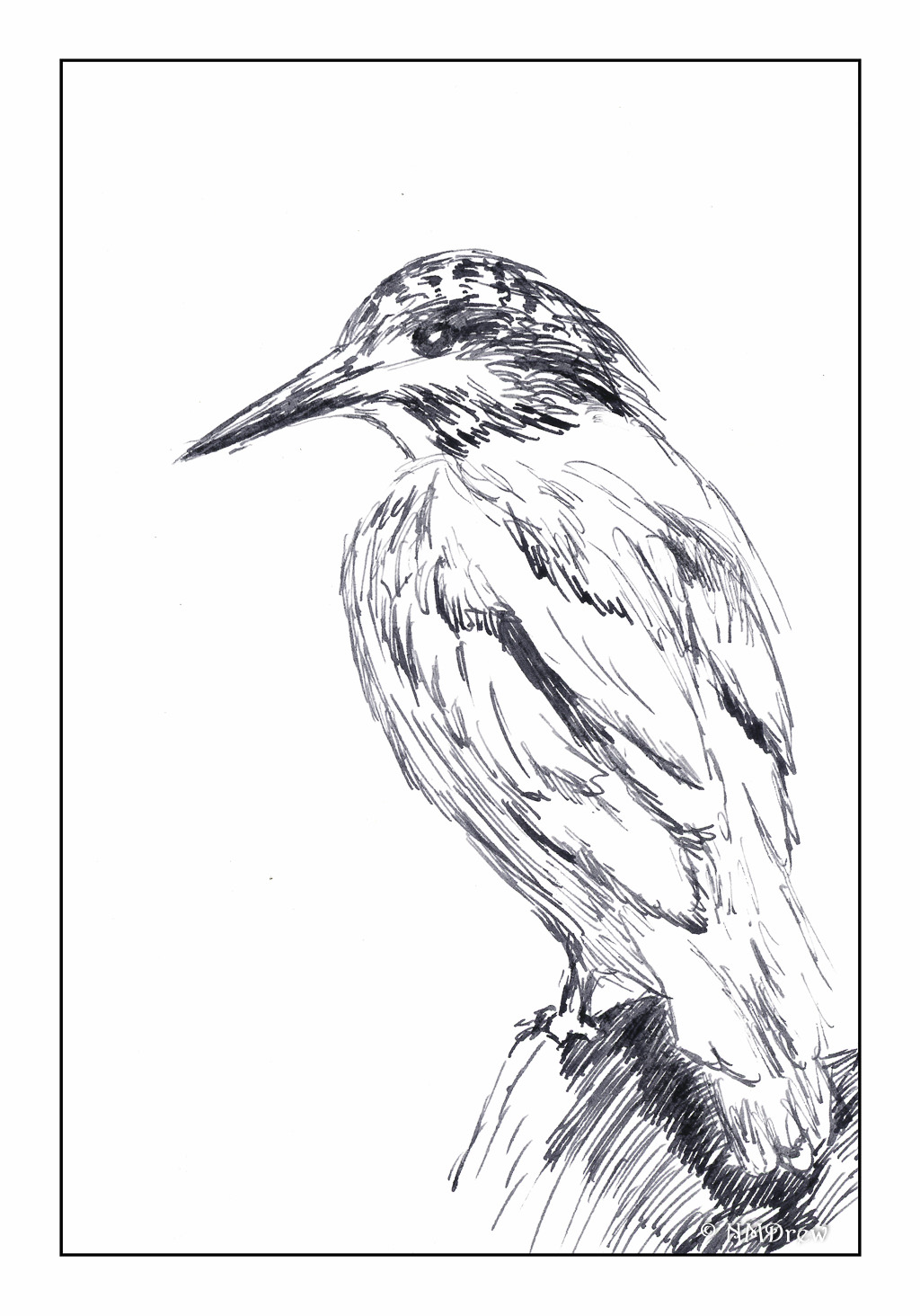
This morning I did a quick sketch of a kingfisher using iron gall ink using a dip pen. As you can see, there is a bit better variability in lines than when drawing is done with a quill pen (see yesterday’s post). Both have qualities I really like – expressiveness, boldness, delicacy. As I am used to using fountain pens, a dip pen is no problem once I learned how to control the amount of ink on nib. What must be remembered is how to load the nib, and as nibs are all different, a bit of testing on scratch paper helps.
At present, I am deciding if I want to colorize this drawing – which is why for now, it is not! If I do, I want to use very dilute but vibrant colors. It is my hope that the ink will shine through the paint without my having to re-ink parts of it.
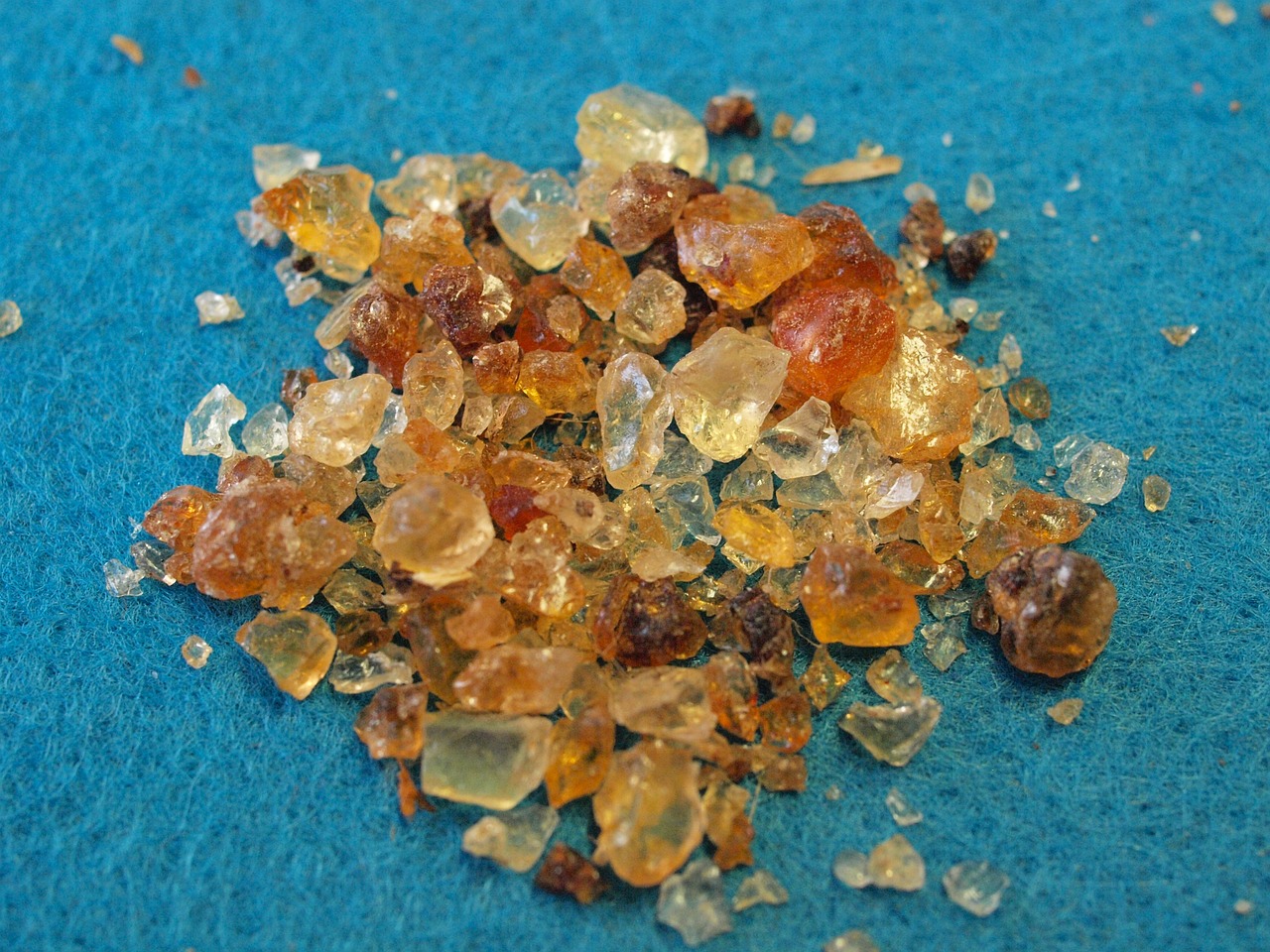
Today is the final day for adding ingredients to the iron gall ink. I added 25g. of gum arabic to the ferrous gallate (new name for the oak gall / ferrous sulfate heptahydrate solution) to create the final product of ink. Until the gum arabic is added, the solution is really just a solution or a liquid. My gum arabic was in a powdered form, so I simply placed it on top of the liquid in the jar, and shook it a lot. Since adding it, I am continuing to shake it. The gum arabic to the left is in its most common form – hardened sap. It has a jewel-like quality, I think – a lot like amber – and besides using it in ink, it is edible and has many uses in the food industry.
Gum arabic, the hardened sap of the acacia tree, is used a binder in ink, controlling the ink’s viscosity – how the ink flows. It adds more control into the ink’s behavior, such as eliminating or lessening feathering, bleeding or cracking when use on paper or parchment. An element of luminosity or shine is another characteristic it imparts to ink.
In addition to controlling viscosity, gum arabic helps the ink to adhere to the paper. The water in the ink evaporates, and left behind is the colored portion of the ink; it is the gum arabic which acts as a glue to stick the ink’s pigment to the paper.
An ink – or watercolor paint or gouache – needs the gum arabic to give it the right consistency or body to flow easily, but not messily, from the pen or brush. Other pigmented inks may also crack, and the addition of the gum arabic helps prevent this; I don’t believe that iron gall inks suffer from cracking.
Soon enough, the ink and quill will be put to the test of actually using it! Stay tuned . . .
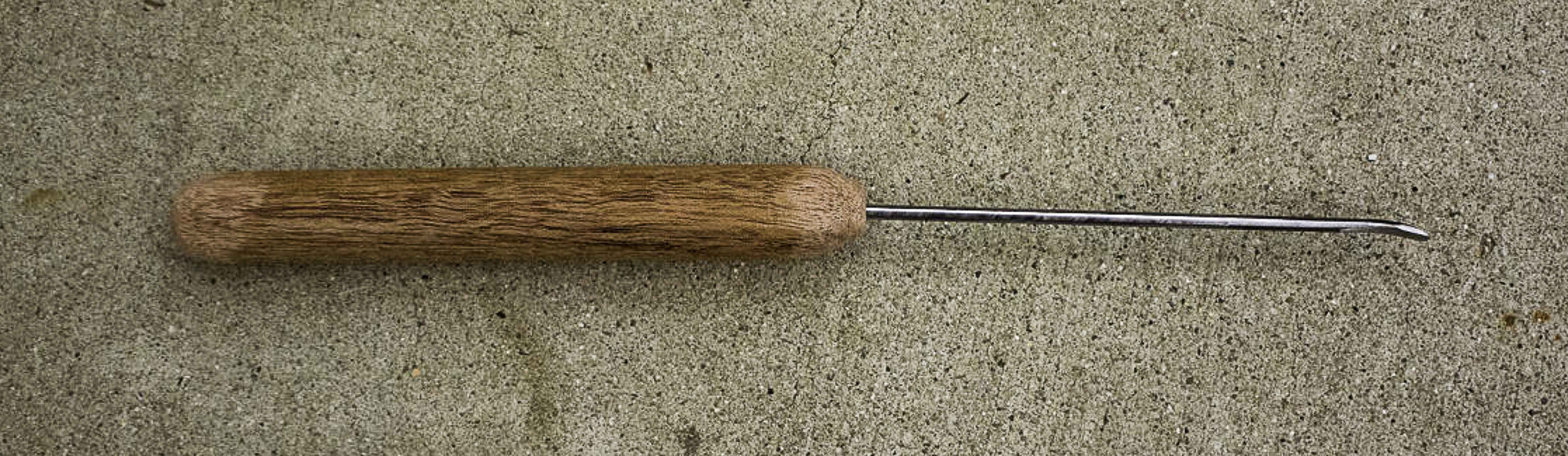
Early this morning, Josh and I went to the hardware store. We bought supplies for Thursday’s indigo dyeing adventure and a piece of steel wire to make a quill scraper, a tool used to scrape out the membranes inside the feather’s quill, which is where it attaches to the bird. Once home, Josh headed out to the garage, and within about 45 minutes produced a scraper, similar to the one found in yesterday’s quill cutting video with Mr. Ruud. All told, it measures about 8″ in length and is a dandy little item.
Quill scraper made with a piece of steel wire, inserted into a wooden handle. End shaped and bent. Total length is about 8 inches / 40 cm. Works very well!
And then, a bit of housework – dusting! It’s gotta be done – a bit of lunch, a nap, and onto the magic of adding Ferrous Sulfate Heptahydrate to my slightly fermented jar of oak galls.
Ferrous Sulfate Heptahydrate was not hard to find. I bought it from Amazon and had it within a day or so. The jar is about 113 g. – I need 50 g. for the ink. Thus, I weighed it out.
Bottle of chemical magick!
50 g. weighed out.
From here, it was time to add it to the oak gall mix, which has been out in the sometimes-sun since Saturday. I shook is multiple times everyday.
Settled oak galls in water (80 g. galls to 300 g. water).
The view from above . . .
And now – oh, this was so exciting and beautiful! – the addition of the Ferrous Sulfate Heptahydrate to the oak gall mixture!
Ferrous Sulfate Heptahydrate as it settled into the oak gall and water mixture. So lovely!
And now, shaken up, the dark ink of the Iron Gall Ink!
Shaken mixture of Ferrous Sulfate Heptahydrate and Oak Galls!
And now, another 24 hours out in the sometimes-sun. Stay tuned for the addition of Gum Arabic (25 g) tomorrow!
Yesterday’s post was about oak gall ink (which I may also refer to as “iron gall ink”), how it is made, some historical information, and what not. Today I will tell you about what I did, accompanied by my fine photography!
The Receipt: Take 80 g. oak galls, pulverize into fine powder, and dissolve in 300 ml. of distilled water. Place into jar, seal, and set out in the sun for 3 days.
300 ml. distilled water
80 g. oak galls
I weighed out 300 ml. water on my digital scale, followed by 80 g. of oak galls – which came to exactly 3 ounces! I put the galls into my non-used coffee mill, but the outside was so tough I took them out, placed them in a baggy, and took a 3 lb. hammer to them – well, Josh did the first honors of crushing the galls, and I immortalized him.
Oak galls in pint Ball jar.
3 lb. hammer to mete out crushing.
Pulverizing the oak galls.
The galls broke easily with the big hammer!
After the crushing in the baggy, the galls were placed in the coffee mill a second time and were pulverized into a powder.
Pulverized galls in coffee grinder.
Finely ground oak galls!
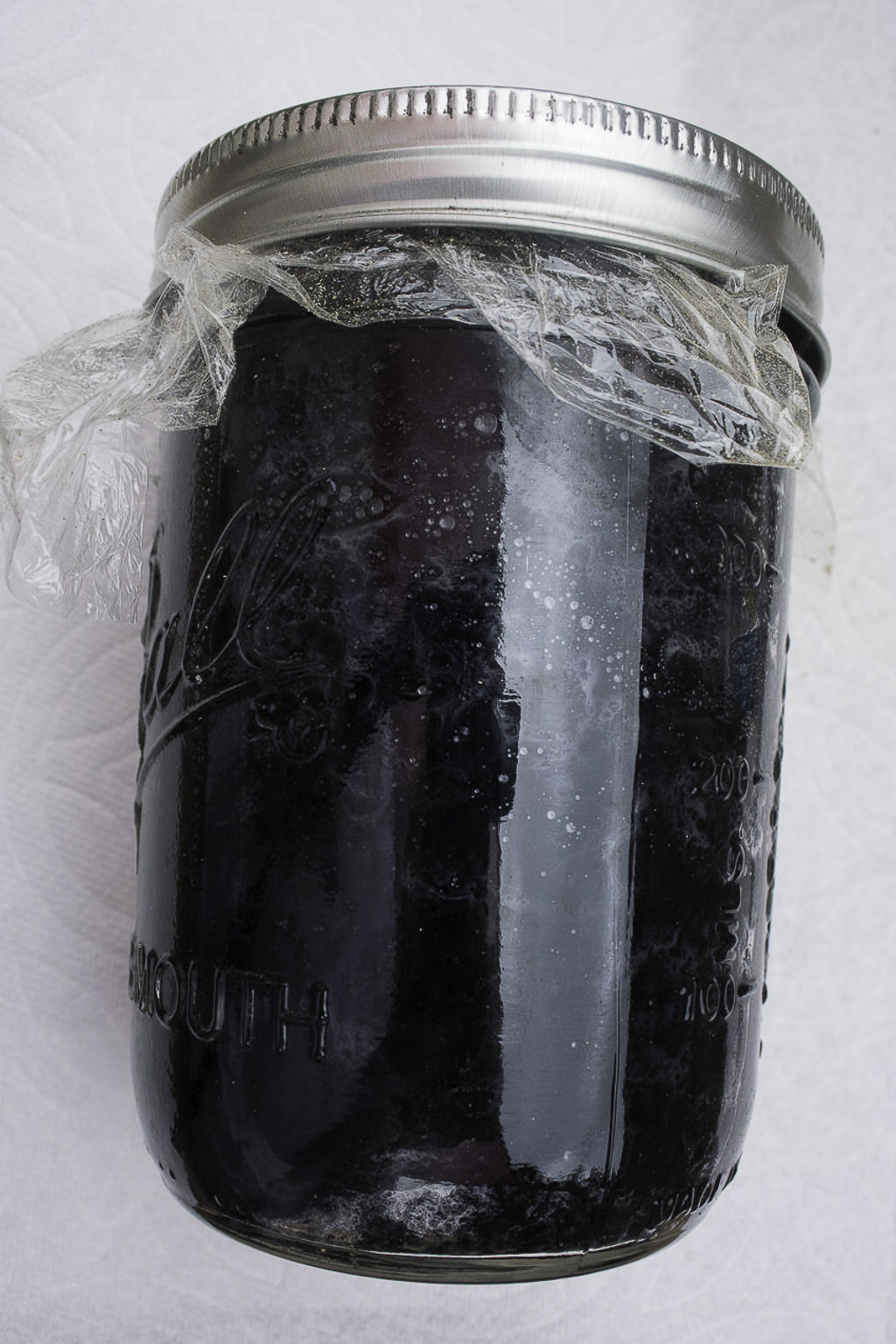
Thence, they were transferred to a pint Ball jar, water added and powdered stirred in. I placed a thin layer of plastic wrap between the lid and contents, shook it up a bit, and took it outside to enjoy the benefits of the sun for the next three days.
80 g. powdered oak galls in pint jar.
300 ml. water and oak galls in pint jar.
Mmmmm! Can’t wait to drink this!
Plastic wrap to prevent any possibility of reaction between oak gall – water mixture and metal lid.
Labelled and working on its tan(nin)!
Shaking will occur daily, as thought about, and on the 25th the ferrous sulfate heptahydrate will be added. Who knows if that step will work at all!
Note: To see the pictures larger, click on one in each group to work through a slide show.
If you were to google “oak gall ink” a bazillion links turn up. Videos, message boards, recipes, historical documents are revealed to the unwary. In particular, there are two ways in which oak gall ink – also known as “iron gall ink” – may be made. One involves the simple crushing of oak galls and then steeping them in water (distilled is probably the best choice as there are no chemicals to interact with the galls), and the other is a 2-month long ferment which gets (eww, gross) all moldy. I’m not sure the latter is up to my tastes, but I will give it a shot nonetheless. Today, though, is the “short version” – perhaps a process lasting a week or less.
There are two sites which I think give a good indication as to the process I plan to use. The first is this video from the British Library:
Crush oak galls into small pieces or grind into powder using a spice or coffee mill. Place into jar and cover with 300 ml. of distilled water. Place in sunny window 3-7 days (depending on your life and schedule). I plan to do 3 as per the recipe from the Schoenberg Institute. After 3 days, there should be a dark murky liquid in the jar.
On Day 3, add 50 g. of Ferrous Sulfate to oak gall mixture; replace in sunny windows for another day. On Day 4 add the Gum Arabic and leave for another day. On Day 5, strain the liquid into a clean vessel and voila, ink!
Thoughts and Concerns
My first concern is I am using ferrous sulfate heptahydrate, which is apparently a hydrated form of ferrous sulfate that dissolves more readily in water than the normal. My next concern is the ratio of oak galls to ferrous sulfate – it is 8:5, or much closer than the 5:1 and 3:1 ratios I have seen in other recipes. The more acidic the ink, the more destructive to pen nibs, quills, and paper. However, at this point, I’ll take it as the ferrous sulfate heptahydrate may not create such a strong acid.





 Ink, Yarn & Beer