Oh, Nick, You’re Such a Tool . . .

We all talk about “equipment” at sometime or another.  Evaluation of the tools we use is important simply because some tools are better than others.  Hammers are pretty simple items – you can use a shoe or a rock if necessary – but a well-balanced hammer in hand is quite nice to use.  Paint brushes, too, are tools.  Every artist has favorites, and ones which are okay, and others which you cannot wait to send to paint brush heaven.  There are surgical tools, gardening tools, big tools (cars and tanks), little tools (nail clippers), software.  A tool helps one accomplish a task more easily.

Without a doubt, lenses and a camera are tools.  For me, they have been tools for a while; I am still struggling with photography, deciding if it is a “yes” or “no” in my vision of creativity.  The fact is, it is a bunch of expensive tools, but not necessarily break-the-bank kind of tools.  Cameras and lenses are all individual in quality.  I’m just beginning to appreciate some of the more sophisticated elements of the Nikon camera.  I’m also enjoying the manual art of some of the lenses, and the mechanical and electronic and computer sophistication others display.  Software is another area for enjoyment because it can be the vehicle for the final creative effort, but I wonder if it will ever become something I really enjoy because I really don’t like sitting indoors at a computer for hours on end.  I probably will enjoy it as I master it.

I’ve acquired a few older lenses in the past year, ones which require manual focus, but which will interface with the aperture priority chip of the Nikon.  This means the camera can set the time for my exposure, based on whatever else I’ve dialed into the camera.  The other day, I picked up a lens which doesn’t do any of this.  It is big and heavy and produces lovely images.  It is a Vivitar Series 1 135mm f2.3 lens, and weighs at least a pound.

Last night, we went to dinner at Josh’s parents’ house, so while the light lasted, I played with the lens in the kitchen, garden, wandering around.  At times I pushed the ISO, other times I dropped it.  I had to think about a lot of things, and totally enjoyed it, looking at the LCD on the back of the camera to “chimp” over the picture.  Time, distance, focus, aperture – the old fashioned dance of the photographer with his equipment.

I’m not sure if it is me, but what I see in the older lenses is a very different quality of contrast and color than I see in my newer lenses.  I usually use my newer lenses on some variant of the automatic mode, so I wonder if that impacts things.  Maybe, maybe not.  I suspect some of the differences is in the glass and coatings used.  Older lenses seem to have a more mellow quality, as well as brighter, but not as harsh as newer lenses.  One day I wlll take the time to find out.

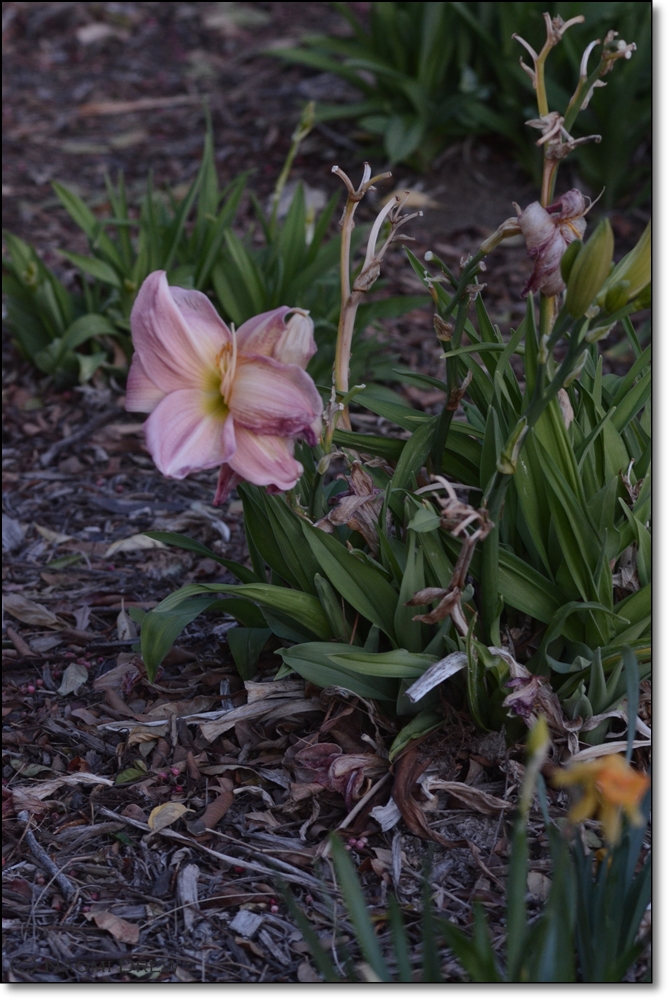
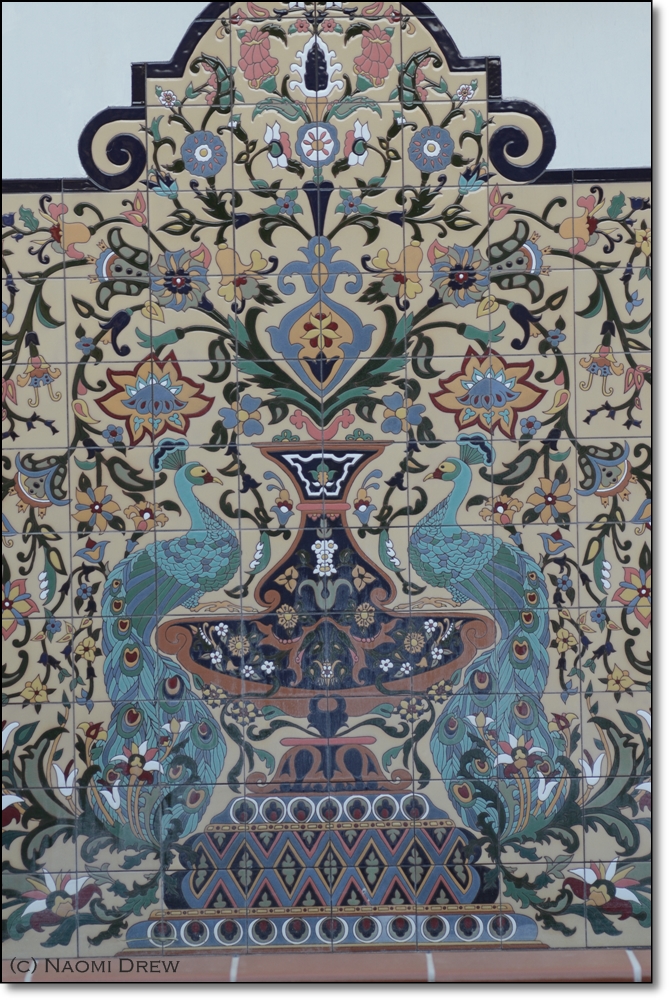
Today’s pictures on this post are taken with that new-to-me old lens.  You can see more of them if you want on my flickr page.  I didn’t post-process any of them, except to resize them and add my name.
More with HDR Express

One thing I find I like about HDR, if not pushed too far, is that it can create a good sense of the original light without a loss of detail. I still have 8 days left on my trial version of HDR Express, so that is the toy I chose to play with this morning. Yesterday’s picture shooting up into the tulip tree was the subject.

Manipulating images in other software, such as Photoscape or FastStone, allows me to lighten and darken them. I did this with the idea of merging multiple images in HDR Express, but HDR Express likes being boss, and reads the metadata from the same 3 images, and shuts its processes down – it realizes that you’ve got the same picture. That is a frustrating limitation. Removing all the metadata doesn’t change the situation. However! There is a work-around that is rather nice.

In Lightroom, open up the image you want, adjust the image so it is dark, and then right click on the image and export to HDR Express. It then pops open HDR Express, and HDR Express takes a few minutes, and creates 5 images, ranging from dark to light for your viewing pleasure. The differences are not immense, but if you watch the histogram on the upper right of the screen, you can see what the program is doing to your picture.

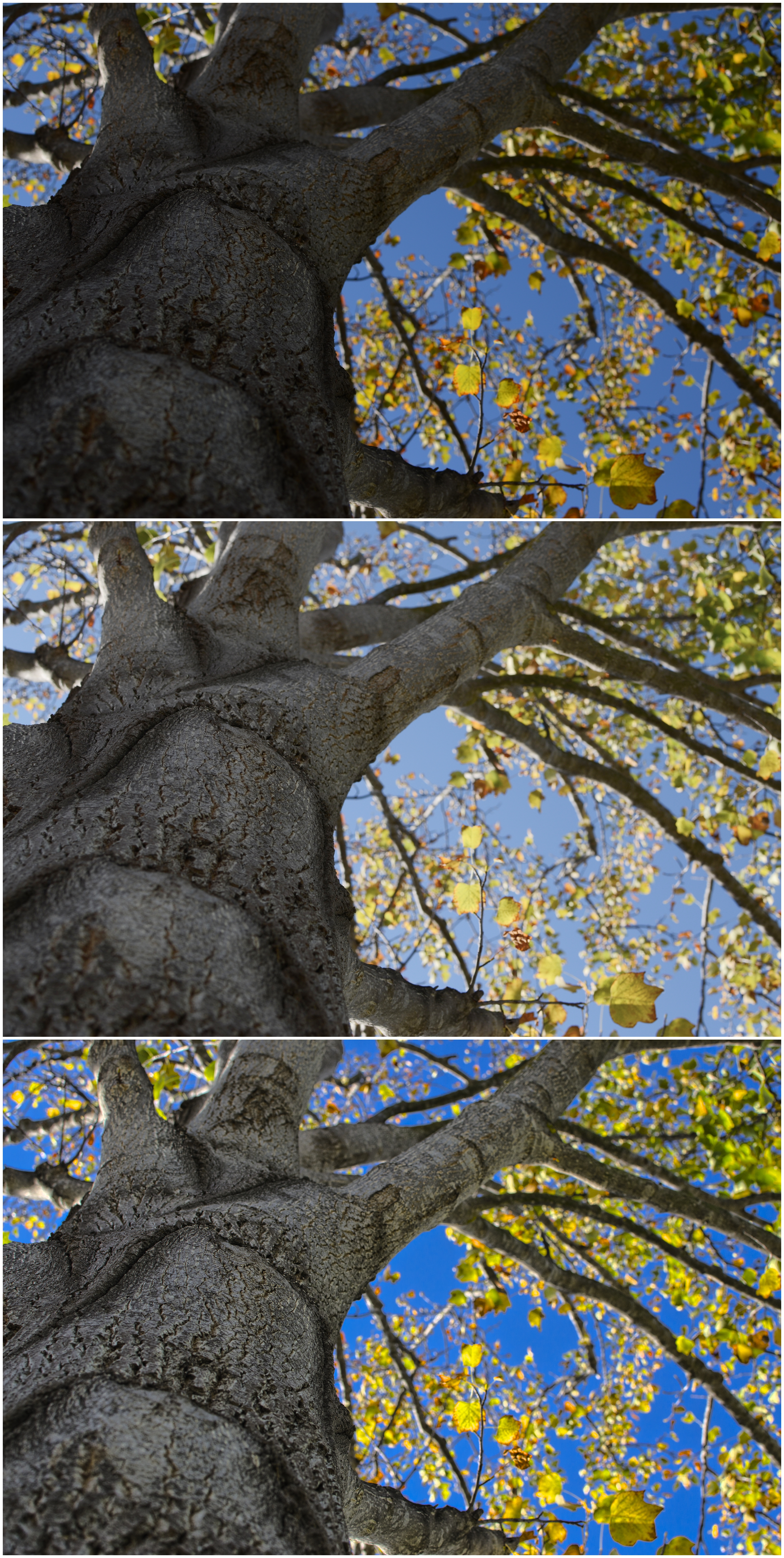
Below is a composite picture of the tulip tree out front. The top one is the original one I shot, which was dark to begin with, so I didn’t change it when I sent it to HDR Express via Lightroom. The middle one is my adjustment in Photoscape, which did a good job, but the intensity of the blue sky was a bit lacking. Finally, the bottom image is the one I exported to HDR Express, and it produced a rather pleasant image, with all the detail of the trunk, while retaining the colors of the leaves against that intensely blue sky I saw in my lens.

Top to Bottom - Original Picture - Lightened in Photoscape - HDR Express Image from Original

The Nikon Hit Man doesn’t like the idea of having to use lighting or post-processing to get the perfect image. I disagree.  Post-processing is often necessary, and has been done forever by artists in the darkroom – dodging and burning are forms of post-processing. The thing is, sitting at a computer putzing with software is pretty dull stuff, so for us restless souls, it’s something of a nuisance. In a darkroom, you are moving around, not sitting at a desk. Big difference. Modern technology has its points, but movement is not often one of them!

I am in agreement, though, with the Nikon Hit Man about the original image: it should be as perfect as possible. This means you think about it before hand (if you can) by choosing the right lens, exposure settings on your camera, and so on. Not always easy to do – or remember – because there are so many things you can forget as well! And that is why programs which allow image manipulation are assets to the photographer. Nonetheless, for people who like the physical realities of art, software is more challenging than trying out a new medium, and often far more frustrating.

Life isn’t perfect, but we adapt!

Oh, yawn . . .

I have really not been interested in looking at computers, being indoors, thinking, or writing.  The end of summer and beginning of autumn always puts me in a restless, unfocused mood.  Not a bad thing, if I just let it happen.  It’s a hibernation of sorts.  Then, life gets interesting again.

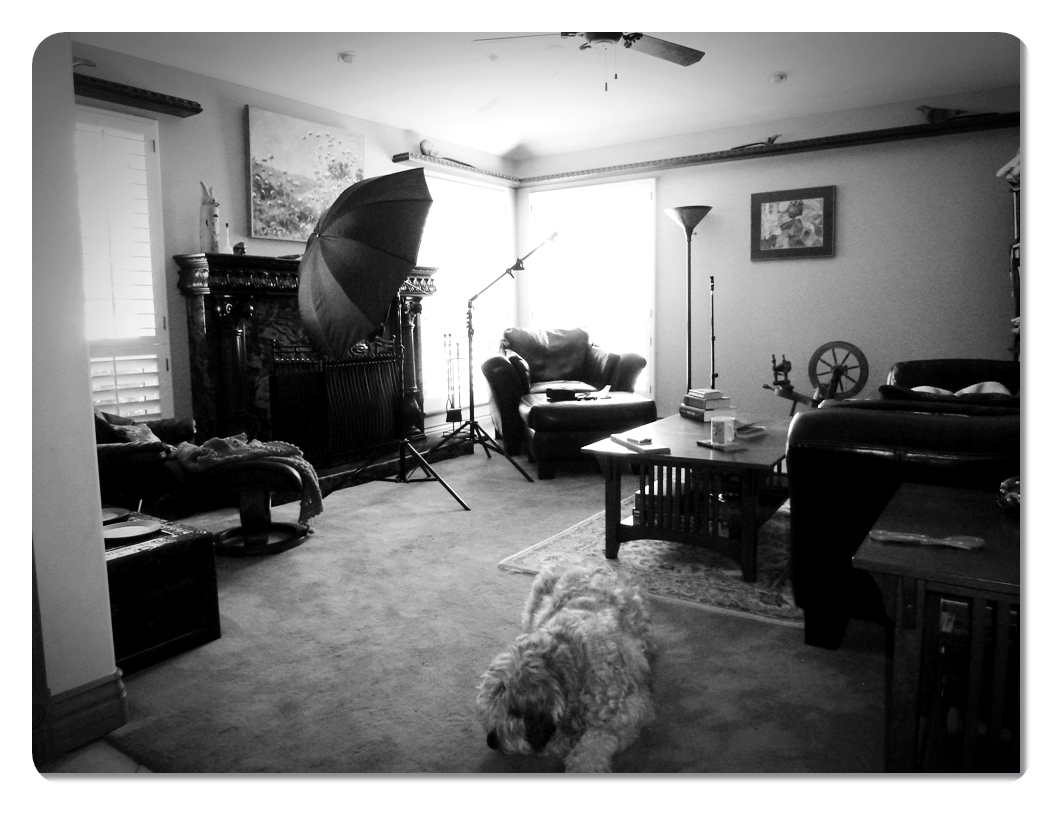
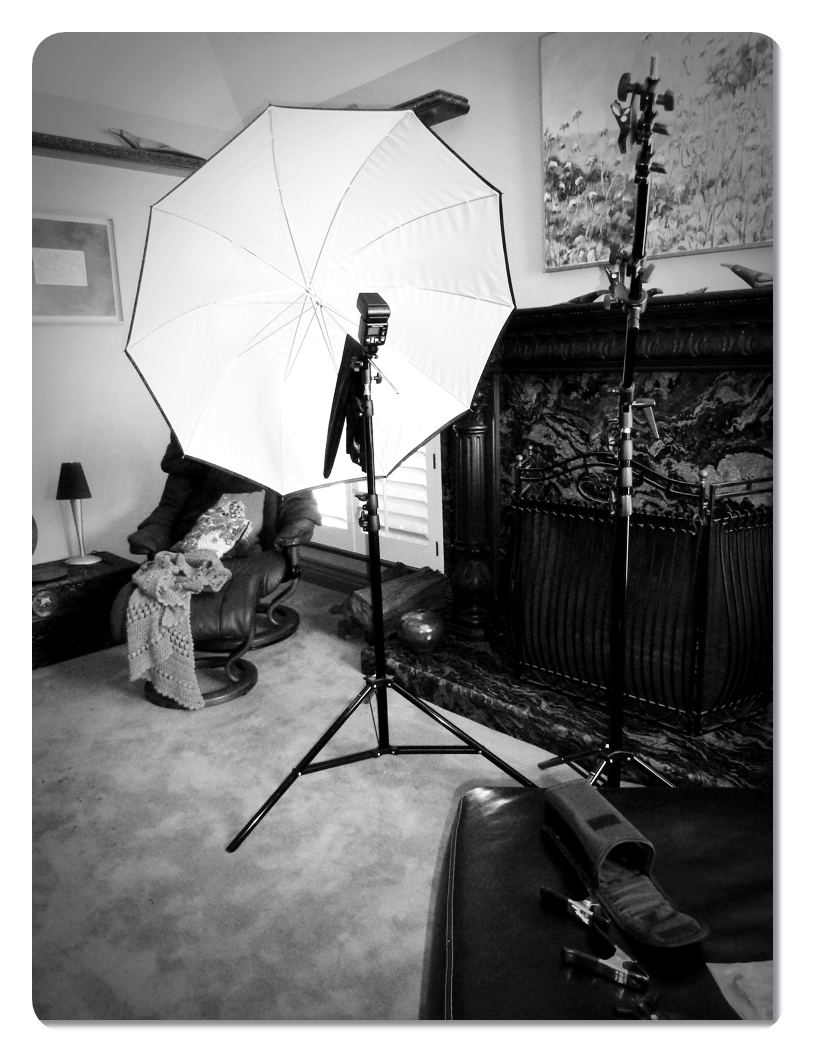
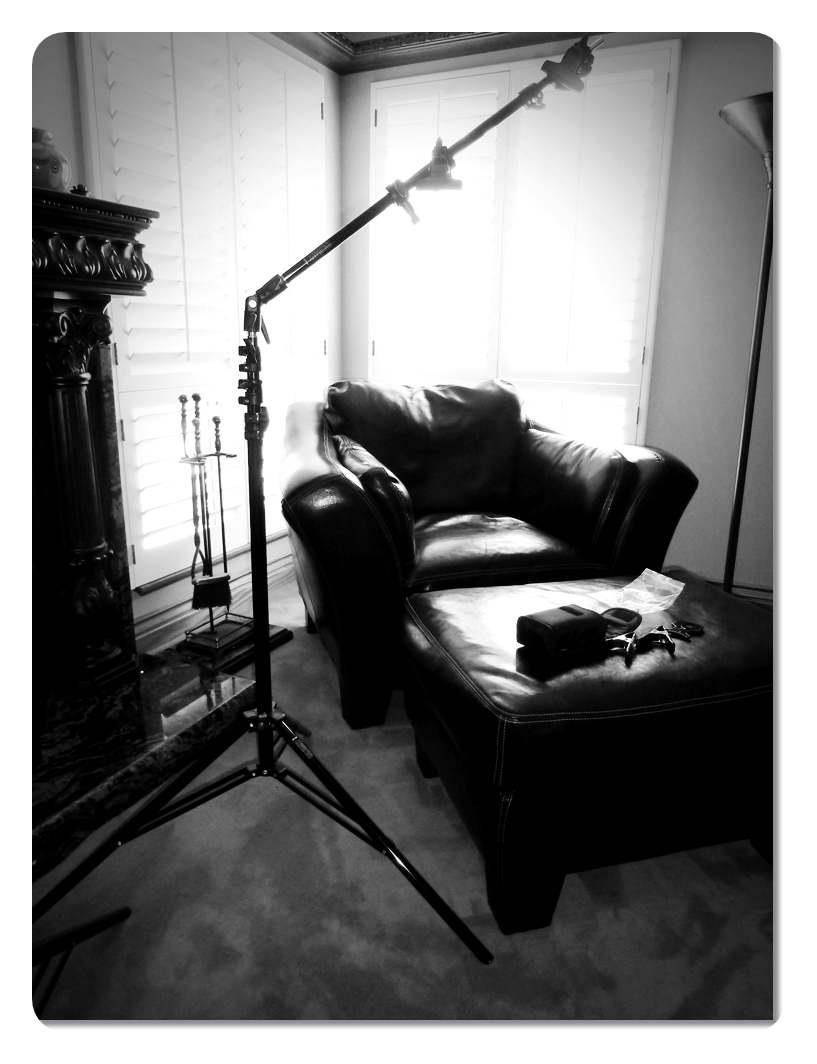
School was closed today, so I decided that as I have a birthday coming up, it was time to take the drive to downtown L.A., into the heart of Hollywood and environs, to venture to Calumet Photography for some lighting equipment.  The Nikon Hit Man came along.  We spent some money – but not a lot because we bought the Calumet brand – and came away with some very solid stuff for very little.  I had wonderful help from a beautiful, friendly woman, and she really made a confusing experience (for someone who has never bought this stuff) a pleasant and educational experience.

Here are the pictures I took after setting it all up in the living room.  Take a look – me, I’m going outside to read, and maybe take a nap!

Lighting Assignment

In last Monday’s class, we learned about lighting; for this week, we must produce some images with any one of the techniques we learned.  Of course, the first thing I did was to head to YouTube!  There are some really excellent photographers out there, but my favorite I came across was Jim Talkington, of Prophotolife.com.  He has about 33 videos online, both on the ‘tube and on his website.  I intend to study all his videos – I really learned a lot, even if my own photos do not show too much talent.

Below, are two of my favorites of the lighting study – a wine glass, and a paperweight.  On Flickr you can see the entire studies.

Hit Man for the Nikon Mafia

Ok, there really is no hit man.  More of a pitch man.  “This is why you need a Nikon.  Look at what you can do with a Nikon.  You really should get a Nikon.  Nikon is always ahead of everyone with their technology.”

I am giving myself several months to choose a DSLR with interchangeable lenses.  Right now there are so many new offerings just out, or out soon (just in time for the winter holidays), that it doesn’t make sense to buy one now.  Later, the reviews will be in, and the prices should drop.  Of course, there will be newer things as well later on.

My thoughts on cameras run in all directions.  Buy good glass, and not be too nutso over the body.  Buy small cameras which are easy to hold, and have good lenses.  Buy something that feels good in the hand with both large and small lenses.  In other words, try the camera on for size.

Nikons are what my friend who lent me his keeps telling me to get.  I think he has been using them for forty years!  Or, as a second choice, he says, get a Canon.

All well and good, but part of me just doesn’t want what everyone else has.  I’m rather ornery that way.  I was drawn to the micro 4/3 system when it first came out, but to date it does not seem as if any of them are really having superb lenses to go with them.  Nikon does have excellent lenses, as does Canon; not too sure about Sony or Olympus or Panasonic in their smaller cameras, though I do believe Leica lenses can work on the Panasonic.  There is argument, though, for and against the Japanese-made Leica glass versus the German-made Leica glass.  Eek!

One which has caught my eye very seriously is the Pentax K-5.  I like its really, really solid construction.  I drop things and spill things all over the place, so it sure does have appeal that way.  Another especially attractive element is the fact that the K-5 is backward compatible with all K-mount lenses.

An attractive smaller camera is the Panasonic Lumix GH2.  I really love my little ZS5 – it takes some really great pictures, and it is what has gotten me really interested in the DSLR world more seriously, especially using manual exposure factors.  For a point-and-shoot camera that fits in your pocket, it is phenomenal as far as I am concerned.

Sony is also interesting.  The Alpha 55 looks like it has a lot going for it, especially in size.  Good reviews are coming out about it, although opinions of its lenses vary.

Price is also a factor.  A good, used Nikon may be had, but there is always part of me which likes to buy something new.  However, that seems sort of silly at times – people are always selling off perfectly good techie toys because another model is out.  And, seriously, this may be the route I take, but I think I need to make a choice of camera itself (brand) before I buy lenses.  And that is where Sigma is interesting – it makes third-party lenses for most major camera manufacturers!

I’m willing to spend on good equipment – things made to last, that work well, that don’t become unfashionable in a few weeks time – all appeal to me.  I’m doing my research!  In the meantime, I am very lucky to have a Nikon D70 to play with.