Dang! Water!

dang-water

Over the last 24 hours, we got 4 inches / 10 cm. of rain.  Here, the soil is clay, and drainage is very poor.  As well, the infrastructure for handling massive amounts of water is not the best because we don’t get rain.

Rain?  What’s that?

We haven’t seen much in the past 6 years!  In our own back yard, we were flooded, literally, with inches of water creeping ever closer to the back patio doors.  Finally, Josh took a submersible pump and hooked it up; we pumped out about 1800 gallons based on a 2-hour run with 900 gallons / hour (about 3600 l. / hour).  He ran a hose from the back yard to the corner of the sidewalk, and the water poured into the street.  And this was in the dark of the night . . . 

20170217_184726

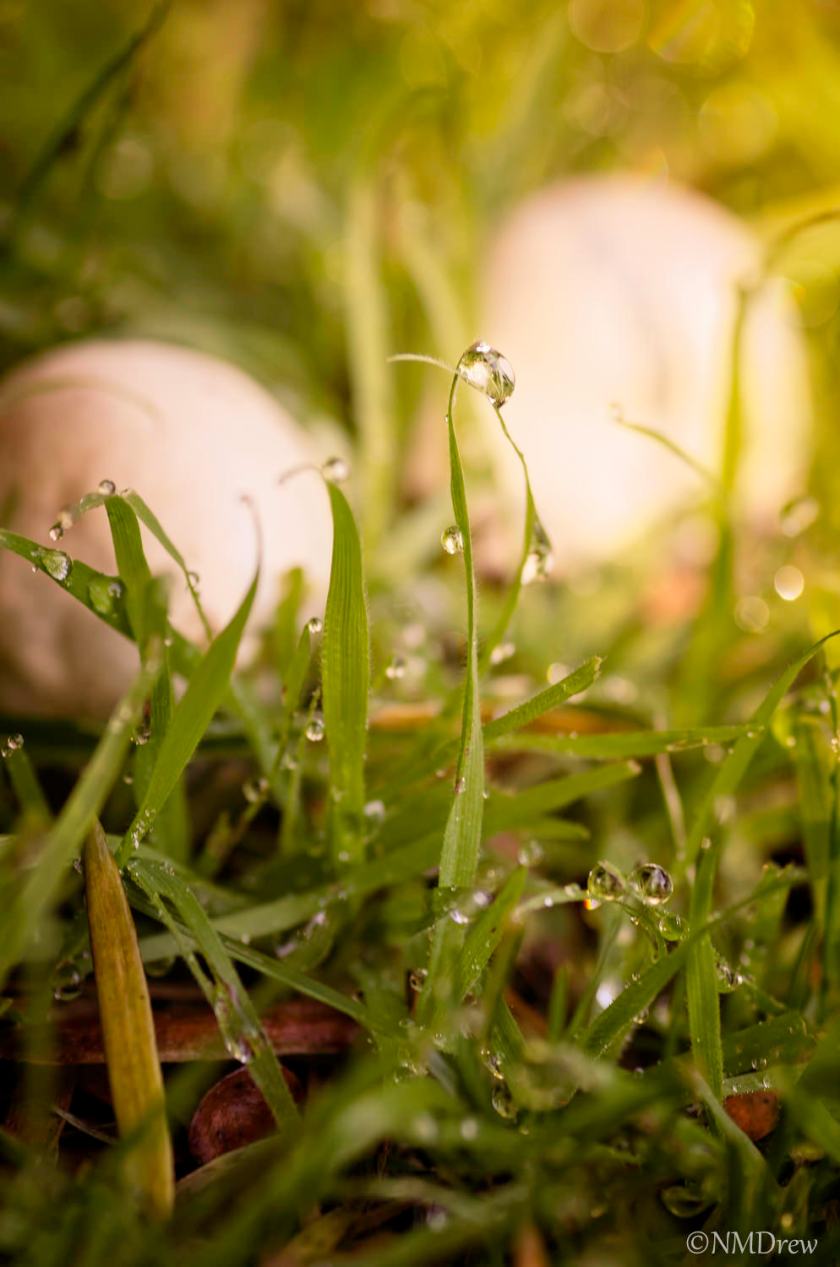
So, what do we get out of massive rain besides mudslides, flood damage, fallen trees, tipped-over fire trucks, and general chaos?  Greenery!  New flowers!  Mossy rocks!  Mud!

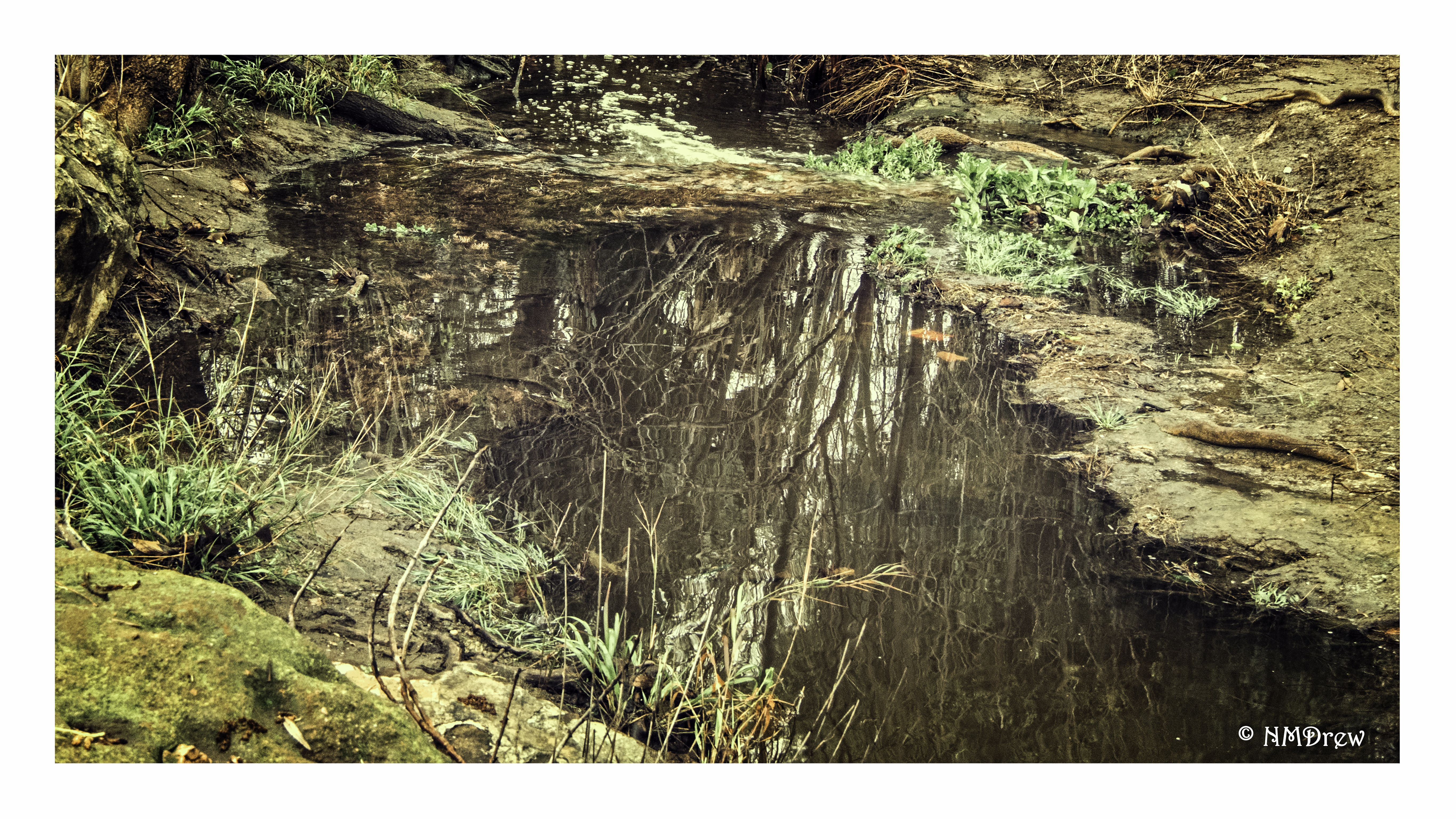
And to celebrate – and explore – I returned to the park I went to last weekend, different cameras in hand.  Just in a week’s time, new growth is more than evident – buds are now tiny, bright leaves; the water in the creek is a bit higher.  There were little changes, too, such as the mossy rocks are greener than before, more palm trees are dead(ish) – for which I say, “Hooray!” – and little mushrooms coming up from under the fallen leaves.

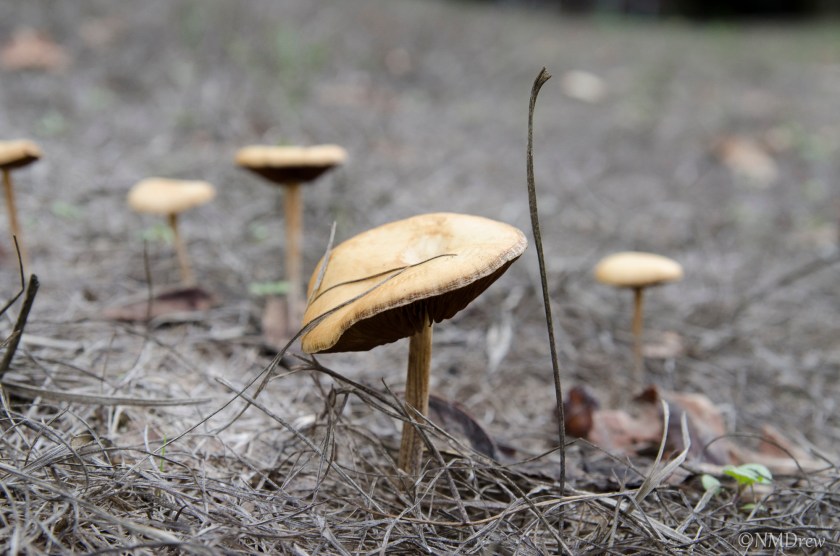
Mushrooms in the Leaves

And more rain is on the way!


The Making of the Mushroom

Making of the Mushroom - Original

I am not really sure how to write a tutorial for a software program, but I think it is interesting to read about people’s processes in photography, whether it is in approaching a shot or processing it later on. Often, I find, when I look at pictures with a bit of distance from the time of the shoot, other perspectives emerge. These include composition, points of interest, how to process. Of course, tomorrow, the same picture could become very different!

Above is the original picture. I shot it using a Tamron 17-50mm on my Nikon D7000. This was taken in the fields surrounding the Paramount Ranch in Agoura, CA. The day was rather dull and overcast, the lighting was not spectacular, and it was in the middle of the day. Lots of things about that day made for very poor lighting conditions.

This next picture is my first crop of the picture. The biggest mushroom was the one I liked the best. The bit of grass to its right is an eyesore, and I guess now I would be more inclined to squash it out of the way or just uproot it. Still, software can work its magic to remove it. I tried it in LR and did not like the results, so used the eraser in the Layers portion of Perfect Photo Suite 9 (PPS9).

Making of the Mushroom - First Crop

Moving along, once I had removed the grass in Layers, I also used Clone Stamp to copy some texture from other areas in the image to hide where the grass had been removed a bit more. From there, I moved to Effects. In Effects, like many of the video-makers I have watched on the OnOne tutorial site, the first Effect I choose is Dynamic Contrast, using the Natural formulation. A few adjustments here and then.

Next, I used Color Enhancer twice; the first was Darken Sky, and the second was Increase Color. Layer Opacity for each was adjusted to my liking.

Moving from Color Enhancer, I used Shadows Darker, Midtone Contrast Boost, and Lighter, adjusting each. From there, I went to Texturizer, using Earth (which seemed the best, and certainly appropriate given the conditions under which mushrooms flourish!). Finally, Vignette and Big Softy with a few adjustments.

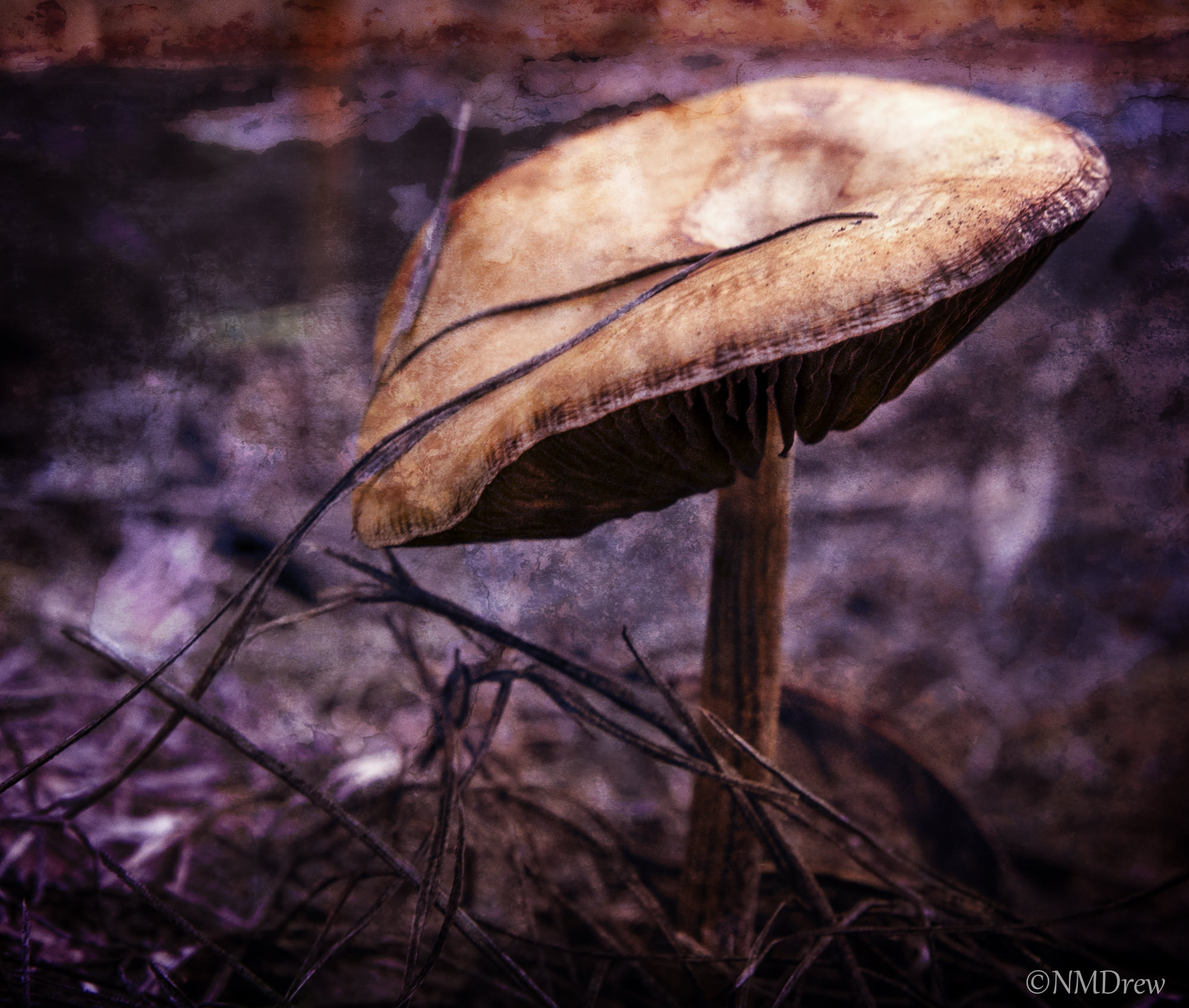
To me, the most important element of the post-processing was the use of the texture. The picture itself was okay, but not interesting to my eyes.

And below, the final result . . .

Mushroom