
I designed these mittens last winter, in February. I finally completed the pattern – it’s nice to have some time off to finish things! Also, I admit, sitting in front of the computer to learn photography software is quite a drag, and very frustrating . . . so I pulled out the needles, and have begun to knit again.

I wanted to have solid-colored thumbs on these mittens, and practice carrying long floats at the same time. It took a bit, and I learned, too, the need to randomize the stranding on the thumbs. When I didn’t, the yarn got stacked up in rows, and affected the final design. If you look closely at the picture, I did a boo-boo when I took the picture – you can see the thumb is rather puckered. The second mitten is much nicer.

The pattern is not too hard to follow, and but for beginners, the stranding may be a bit of a challenge. The carried yarn makes for warm mittens, and if you start now, you could have a pair for yourself – or a loved one! – in time for the December holidays. (Shameless plug, huh . . . )
If you are interested in buying the pattern, you can find them under “My Patterns” page, or find them here on Ravelry. Cost is $4.00.


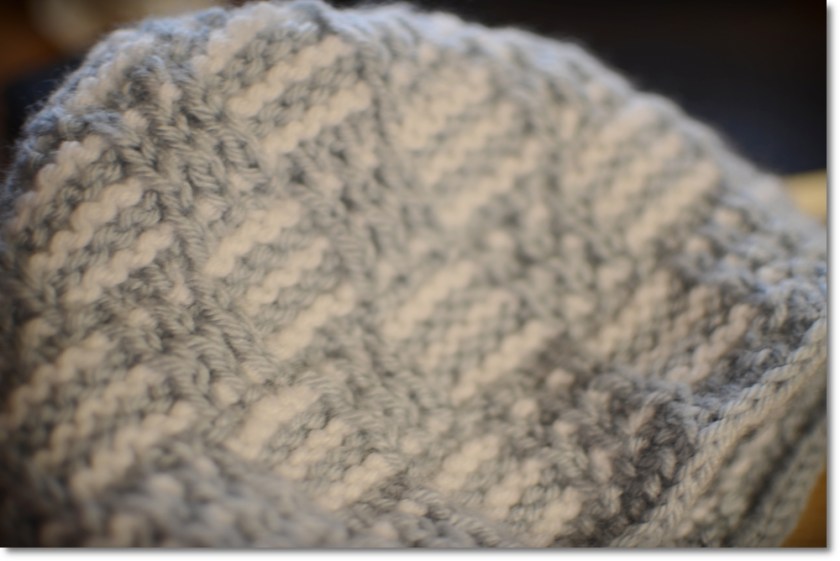

 I’ve done a lot of swatches, and the fact is the yarn I have for Josh’s sweater is simply too weirdly plied to allow for any texture to come through when knit up. The end result is pretty awful – a lot of work and nothing to show for it. However, this does not mean this yarn is not worth knitting up – it really is beautiful, has a soft feel to it when washed, and so the design process will ultimately be very simple – but not without adventures. I may do diagonal slash pockets and saddle shoulders. That should keep me busy! Cast-on is done, and 1×1 ribbing is commenced. This will carry up the button bands as well, with stockinette in between.
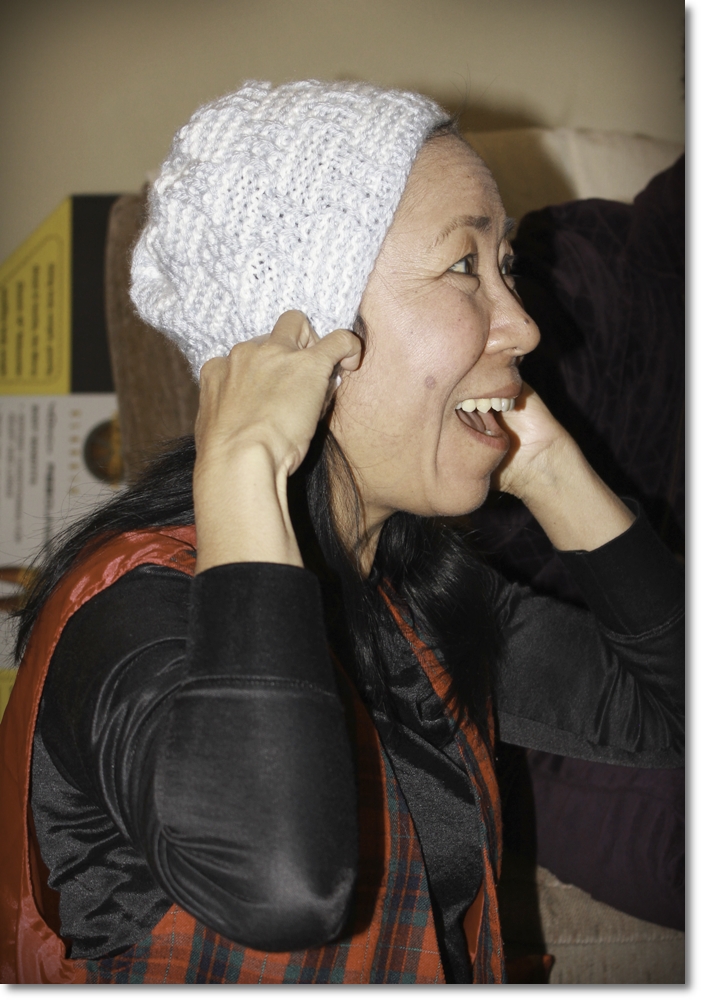
 The original pattern used Lamb’s Pride by Brown Sheep, which is a rather heavy yarn. The new versions used Paton’s Classic Wool in Aran Tweed, and is knitted on size 6 and 7 needles. Truthfully, I like this version a lot better – not as baggy – but some people like the bagginess of the original beret, so I have kept it, along with these newer versions, all in the same pattern, which is now 7 pages instead of two. You may go to the Patterns page to download it.
 A lot of people have downloaded the eyelet rib beret, and some have experienced some problems with it being much, much too big, especially in the ribbing area of the brim. Even though this beret is designed to be huge – for those of us with “big hair” – others seem to like the idea of a less humungous hat! Given that, I thought I would re-do the pattern a bit for worsted weight wool and slightly different shaping, as well as directions for a less baggy beret. Look for it in the next few days.
 Ink, Yarn & Beer