Modular Medium Format: Mamiya 645 Pro TL, Part I

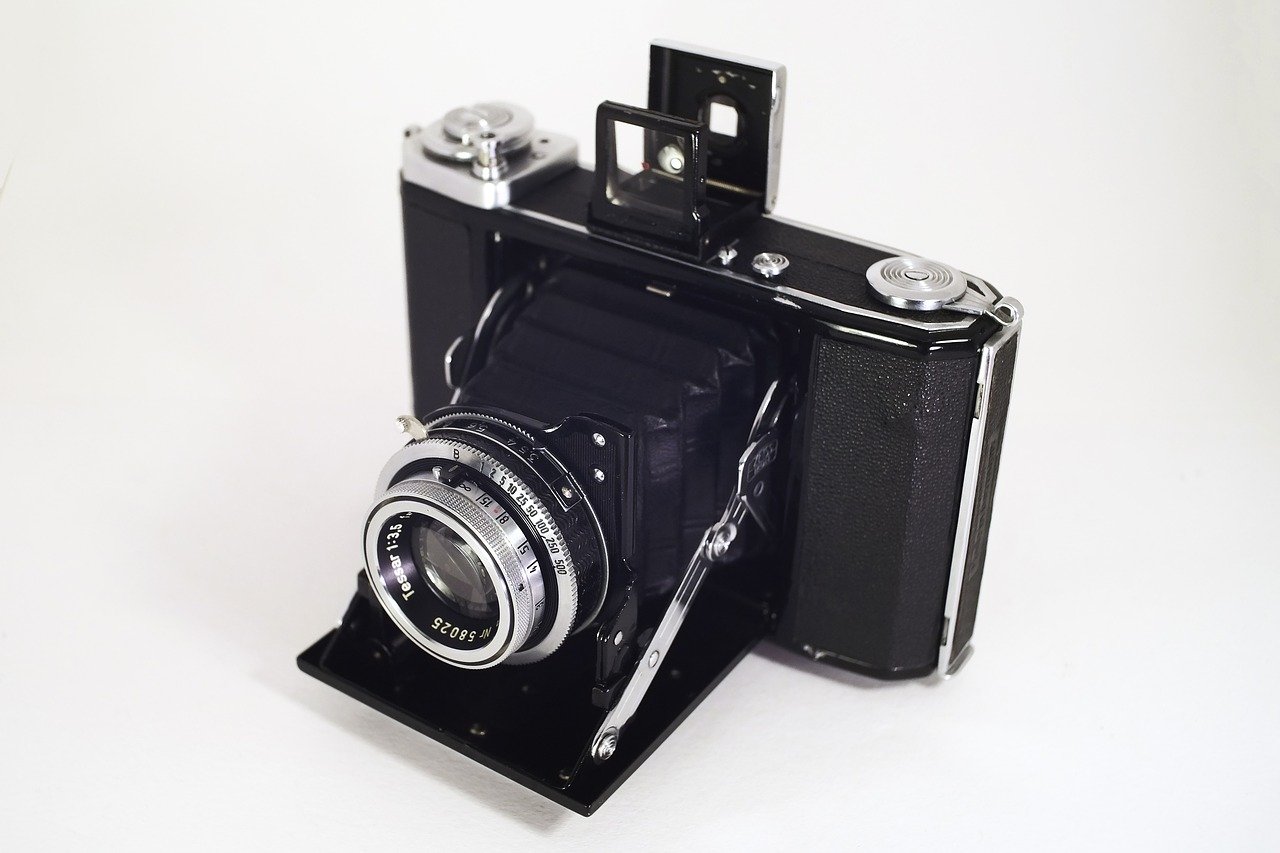
I have a number of medium format cameras, all but one being a German folder, and that one is the Yashica D TLR.  What I like about the folders is their compact size when folded up, their vintage qualities (not so vintage in the 1930s through 1950s I expect), and in particular their beautiful lenses.  The ones I have range in size from 6×4.5 with and without a mask, to 6×6, to 6×9.  All take 120 film.  The Yashica D takes 6×6 images and uses 120 film as well.  However, the drawback to all of these cameras is the limitations of their lenses in length and focusing capabilities – fixed and immutable as they say.  Yes, there are attachments, such as magnifying filters, but none of them can produce the variations available in a system allowing interchangeable lenses.

As a consequence, I have long been contemplating a modular medium format system, and ended up by chance or luck coming across a Mamiya 645 Pro TL with all the parts present in one package.  Numerous YouTubers have really excellent videos, from short to long, from cursory to extensive detail.  The video below shows the bits and pieces I have – it’s long, it’s detailed, but if you are really curious, follow along.  I learned the most about this camera from it, and have watched a number of times.

Truthfully, I just dove into the purchase.  I figured it would be best to get one all put together rather than trying to figure out what I needed.  Searching around online, I found a Mamiya from a reputable dealer with all the parts that I knew a modular system needed for a reasonable price:  A body, a lens, a film back, and a viewfinder.  It has a grip, too, instead of a crank to advance the film.  It’s big and heavy with everything attached – nearly 4 lbs to take a 6×4.5 image.  Is it worth it?  I’ll find out when my first roll of film comes back from the lab next week.

I spent about 3 days reading about each part and watching YouTube videos.  I gathered PDF manuals from around the net.  I fiddled and putzed.  I got frustrated and annoyed, too, as well as learned so much . . .

The fact is, there are a lot of parts available for the Mamiya 645 Pro TL.  It can be simple, it can be complex.  It can be small, it can be big.  Truthfully, I rather like small and light myself, and if I keep the critter (30 day return policy), I most likely will look for a waist-level finder and a crank to advance the film.  I read about the body, the viewfinder with its auto-exposure, the film cartridge, the grip, the lenses.  Everything has to be coordinated to work.

And when it doesn’t work?  Pull out that dark slide!

When I take it out, I have to keep it safe in a camera bag as I have no camera strap is available that works with it with the grip in place.  The Mamiya has proprietary lugs, and that is a nuisance.  With a crank to advance the film, Op-Tech (my favorite camera strap) Style B attachments work, but when the grip is attached, they do not.

So, what do I think about it so far?  I rather like it.  The grip has that wonderful noise only a grip or automatic film advance in a camera can achieve – a click, a whir – just like an exhaust in a classic sports car!  That aside, I really like medium format film photography the more I do it.  Those negatives are beautiful.  Scanning and editing them is not too big of a deal, and the addition of Negative Lab Pro makes them even better.  I hope at some point to develop them using the Lab-Box, both black and white and color.

There are definite aesthetics in the images produced from this camera.  You can find them on Flickr.  You can also learn a bit about people’s reactions to the camera itself.  I always like Max’s commentaries on various cameras found on his channel Analog Insights.  He doesn’t go into how to use a camera, but the experience of using a camera.  See what you think.

So there we are. Once I get the film back from the lab, I will have a better idea if the camera is worth keeping as I will know if the bits and pieces all work. It has automatic exposure with aperture priority using the viewfinder. I can switch to totally manual techniques. The film back advance works well from the sound of it. The lens is bright and clear, as is the viewfinder. The shutter curtain is not wrinkled. All seems fine mechanically and electronically – but the film will have the final say.

Yeah, another roll or two will be worth running through the Mamiya.
 

Spring Growth

Spring Growth

This is a post-production image from my first roll of film in the Nikon FM2N.  It is Fuji Superia Xtra 400, bought at the drugstore, developed at the drugstore.  Lens is a Vivitar Close Focus 28mm lens.

If you click on the image, a new one will come up.  If you have a magnifying glass for your cursor, click again, and the picture will blow up to the original size of the scan.  Kinda interesting?

The Eyes Have It

Josh 85mm +4

Every now and again we set out for several weeks, driving all the way, and stopping at various places to visit family, friends, and see the sights.  This year is a tour of scenic places, and places with character.  Because I want to take some good pictures, I have been going through my lenses and checking them for accuracy in focus.  Of course, some lenses are better than others, and some systems work better than others.

Josh 85mm +3

The Nikon D7000 has the ability to adjust the autofocus in different lenses, and store those manual adjustments in the menu, for up to twelve different lenses.  I have been going through all my autofocus lenses, rather painstakingly, to sort them out.  Only one is really out of kilter, and it could be that I just need to send it in to be refurbished by the manufacturer to factory specifications.  Needless to say, it will not be traveling with me!

Josh 85mm +2

There are a lot of ways to check the focus of a lens, so I won’t get into it here. The final test, though, is on the eyes of my victim.  His left eye is the one I use – don’t ask why, I don’t know!  Once I like what I see in the lens, I record it by naming the picture with the adjustment in the camera, the f/stop, and file it in a calibrations directory.  I’ve heard that lenses should be checked every 6 months or so, and certainly be checked out with any new camera.

50mm 2

Oh, Nick, You’re Such a Tool . . .

We all talk about “equipment” at sometime or another.  Evaluation of the tools we use is important simply because some tools are better than others.  Hammers are pretty simple items – you can use a shoe or a rock if necessary – but a well-balanced hammer in hand is quite nice to use.  Paint brushes, too, are tools.  Every artist has favorites, and ones which are okay, and others which you cannot wait to send to paint brush heaven.  There are surgical tools, gardening tools, big tools (cars and tanks), little tools (nail clippers), software.  A tool helps one accomplish a task more easily.

Without a doubt, lenses and a camera are tools.  For me, they have been tools for a while; I am still struggling with photography, deciding if it is a “yes” or “no” in my vision of creativity.  The fact is, it is a bunch of expensive tools, but not necessarily break-the-bank kind of tools.  Cameras and lenses are all individual in quality.  I’m just beginning to appreciate some of the more sophisticated elements of the Nikon camera.  I’m also enjoying the manual art of some of the lenses, and the mechanical and electronic and computer sophistication others display.  Software is another area for enjoyment because it can be the vehicle for the final creative effort, but I wonder if it will ever become something I really enjoy because I really don’t like sitting indoors at a computer for hours on end.  I probably will enjoy it as I master it.

I’ve acquired a few older lenses in the past year, ones which require manual focus, but which will interface with the aperture priority chip of the Nikon.  This means the camera can set the time for my exposure, based on whatever else I’ve dialed into the camera.  The other day, I picked up a lens which doesn’t do any of this.  It is big and heavy and produces lovely images.  It is a Vivitar Series 1 135mm f2.3 lens, and weighs at least a pound.

Last night, we went to dinner at Josh’s parents’ house, so while the light lasted, I played with the lens in the kitchen, garden, wandering around.  At times I pushed the ISO, other times I dropped it.  I had to think about a lot of things, and totally enjoyed it, looking at the LCD on the back of the camera to “chimp” over the picture.  Time, distance, focus, aperture – the old fashioned dance of the photographer with his equipment.

I’m not sure if it is me, but what I see in the older lenses is a very different quality of contrast and color than I see in my newer lenses.  I usually use my newer lenses on some variant of the automatic mode, so I wonder if that impacts things.  Maybe, maybe not.  I suspect some of the differences is in the glass and coatings used.  Older lenses seem to have a more mellow quality, as well as brighter, but not as harsh as newer lenses.  One day I wlll take the time to find out.

Today’s pictures on this post are taken with that new-to-me old lens.  You can see more of them if you want on my flickr page.  I didn’t post-process any of them, except to resize them and add my name.