
A “hussy” is a rather slutty woman in today’s parlance, but a few centuries back, a “hussy” was a shortened term for a “housewife” or “hussif” – in today’s terms, a sewing kit containing needles, thread, pins, spare buttons, scissors, whatever. They could be practical or fancy, depending on class and income, but the fact is, a sewing kit is a handy thing to have. I admit, I have fixed hems with scotch tape or a stapler, but good sewing helps many a problem! In fact, according to one source, the English troops were routinely issued sewing kits after returning from battle in rags, whereas their Russian counterparts were all supplied with a sewing kit, and could fix their uniforms on the march, or at least around the campfire!
As we make preparations to take a trip, I know I need something to keep me out of trouble – in other words, to keep from being bored. I like to work with my hands, but knitting can be cumbersome (i.e. a sweater), and truthfully, I am tired of socks. I make hats for presents off and on, but those are dull, too, after a while. I am thinking I may try to hand sew a blouse on our trip as we will be on a boat for a couple of weeks – and hand work with a good audio book is not a bad thing to have in quiet moments.
So, with the hopes my scissors and needles will not be confiscated at the airline, I will adhere to the TSA parameters for carry on luggage. If I lose my scissors, I will be surprised as per TSA the blades can be 4″ from the hinge. I am getting some little folding scissors – will that work? Anyway, to bring all this stuff in one convenient spot, I made myself a hussif . . . .
Click on the photos to see them in more detail if you want!
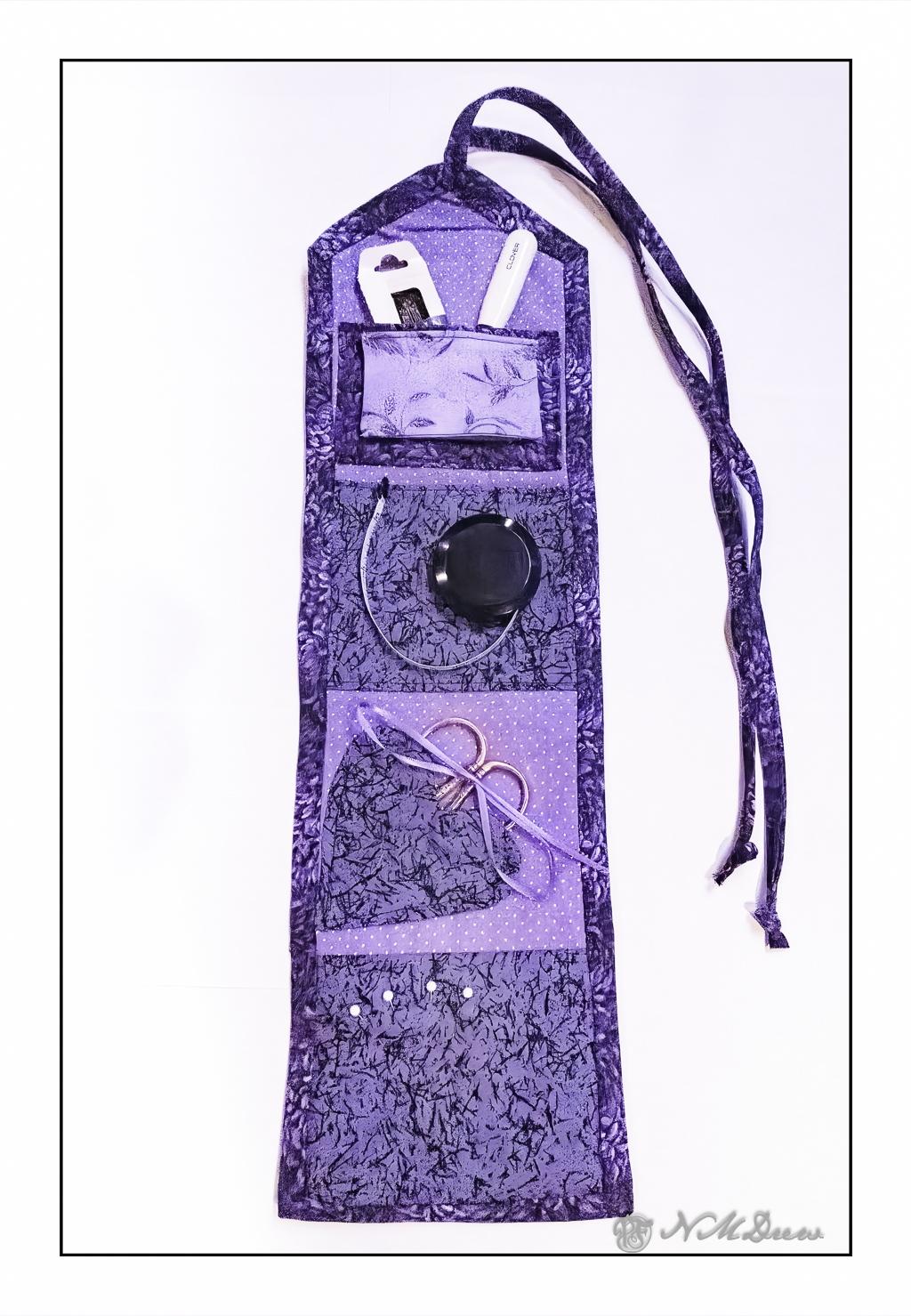
The nice thing about these hussies is that I can customize them! It took a bit of time to come up with a design – and fabric – and so on. To begin with, I had to decide on width and length – in the end, from top to bottom, it is about 16″ long and about 5″ wide. From top to bottom of the above picture you will see the ties to keep the hussif rolled up. Then, a pocket to hold needles and other thingies, but on top of that pocket is a needle book with felt to stick needles into (picture below). The second section, with the tape measure upon it, is simply a pocket to hold supplies. Below that is a pocket for my embroidery scissors with a ribbon to help keep them in place. Finally, the fourth section is a pin cushion of sorts, made with 4 layers of quilting batting to give it some loft.
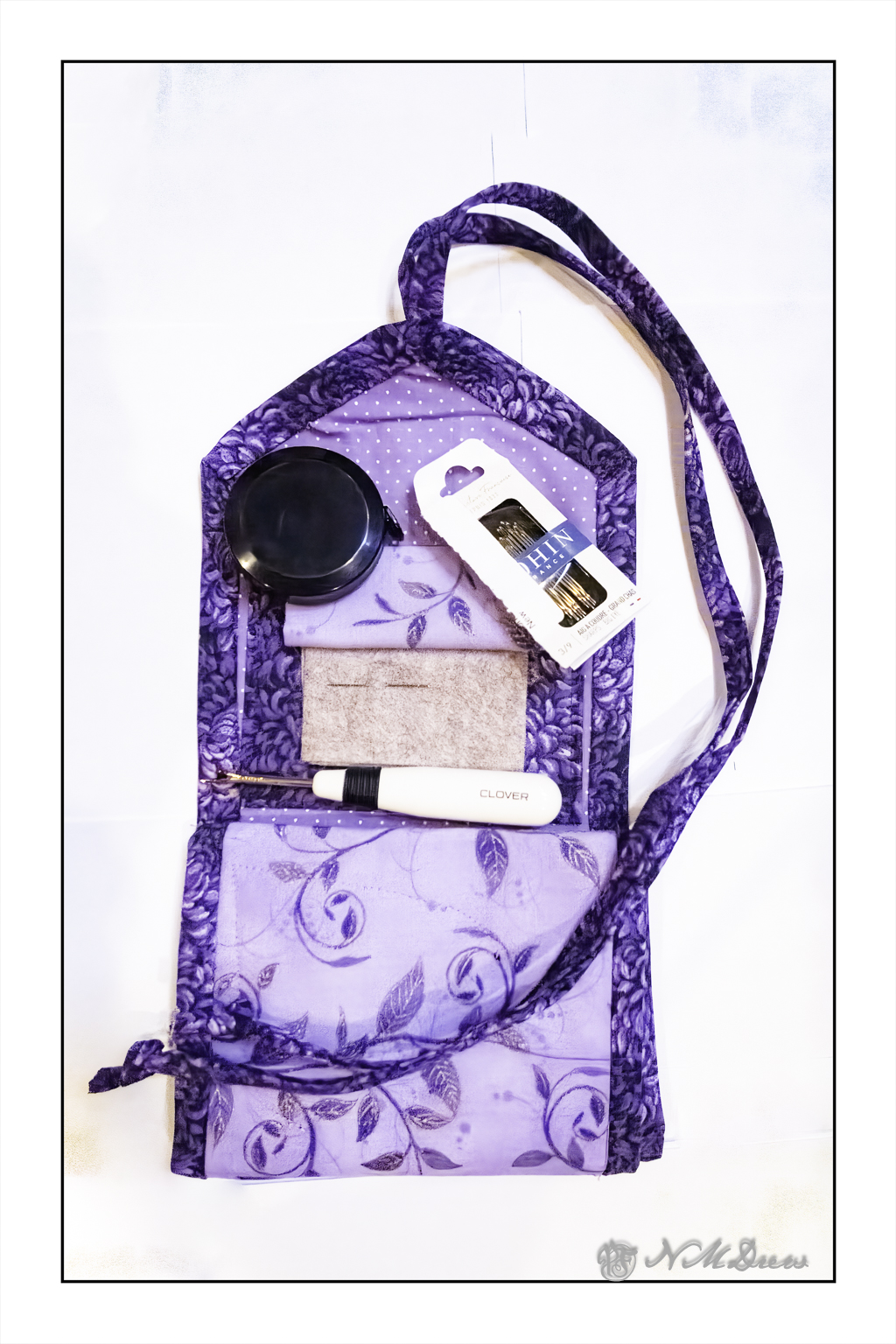
Above is the hussif with the lower to sections folded up, hiding the pin cushion and scissors pocket, and general pocket. The needle book is opened to show a needle in place. I have 3 pieces of felt here so different needles can be placed in them. I use needles with large eyes or the Clover self-threading ones – I can actually thread them quite easily! I recommend Bohin large eyes if you don’t want the Clover ones – other brands, too, are good. For hand sewing needles, get reputable ones. You will pay more, but trust me, 100 cheap bits of crap metal are not worth it!
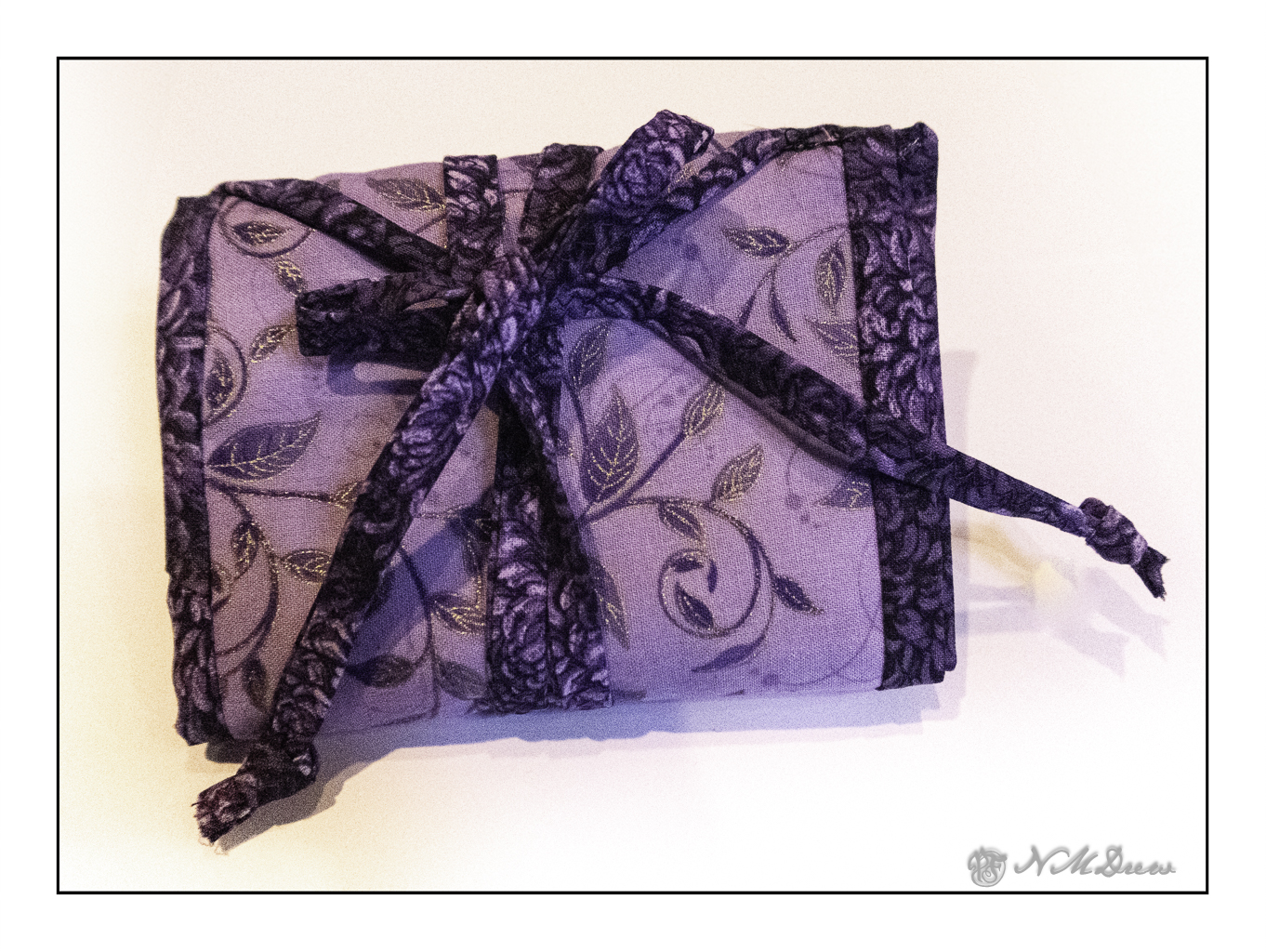
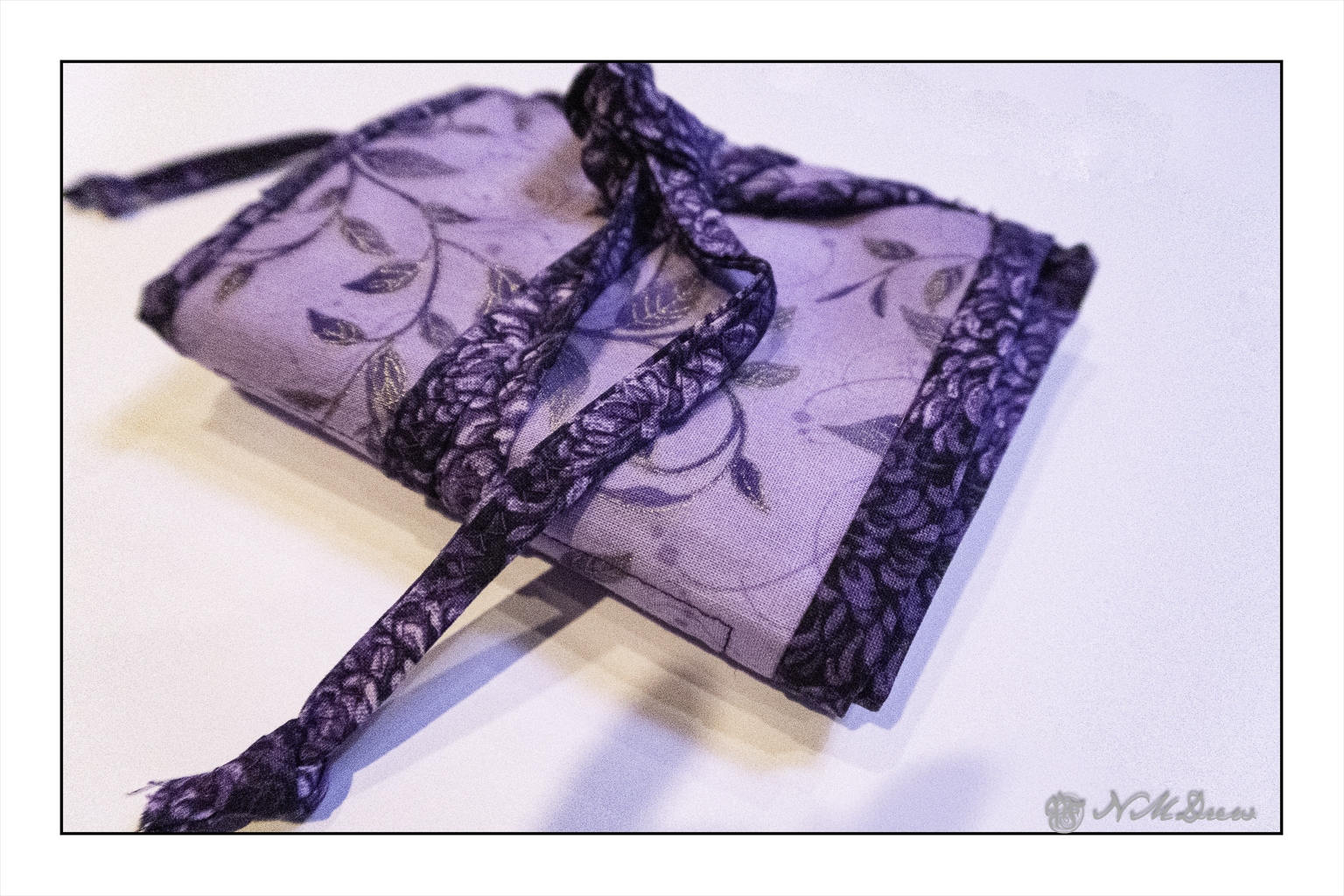
And here is the hussif rolled up on itself. It ties quite nicely to keep itself from falling apart. Below is another view of it tied up.
Making the hussif took some doing, and I played around with it for a few days, experimenting and sewing at the same time. I watched a number of YouTube videos on both hussifs and needle books. In the end, to put it simply, I did the following:
- Chose 4 colors of cotton quilting calico
- Used fusible interfacing
- Used cotton quilt batting for the pin cushion
- Cut 2 major pieces of fabric for front and back, about 6″ wide and roughly 18″ long. I fused the interfacing to the outer layer of hussif.
- I cut out the pocket – about 4×6″ – and doubled it up so that the fabric was 2 layers. I sewed a top and bottom seam, right sides together, and then placed the pocket on the unfinished body of the hussif – the binding would cover the raw edges.
- I cut out a heart-shaped pocket for my scissors, using 2 layers of fabric and, as with the pocket, sewed right sides together leaving a hole to reverse it. This was a bit of a challenge, but it came out okay in the end. I sewed it directly to the inner layer of fabric – I should have moved it over a bit, but that is for next time!
- The pin cushion is one layer of fabric laid over 4 layers of cotton quilt batting. I sewed the seam at the top and then folded it over the layers of batting, leaving all the raw edges to be covered with binding.
- The needle book and pocket at the very top were done after I did the binding. More in a bit here!
- I used non-bias binding on the hussif. I cut a very long length of 2″ wide fabric, sewing the pieces together to have plenty of material to go around. I created a double-folded strip from this – first folding the binding in half, ironing the hell out of it, and then opening it up and folding each edge to the midline. Essentially, this is quilt binding.
- The binding was sewn from the outside in, meaning I sewed the binding onto the back of the hussif. I used the first fold – at 1/2 inch – as the seam line. I pinned it to the edge of the hussif, and used mitred corners along the way. I then finished it by hand by folding it inward, pressing it again, and steaming it, and using whip stitches to keep the binding in place.
- Now, the top pocket and needle book! It drove me crazy. In retrospect, I would make the pocket as I did the one in the second section, beneath the tape measure in the first image. However, before doing that, I had to cut the felt and then place a bit of calico as a cover – this is to keep me from stabbing myself with needles.
- First step here – sew the needle book together. Then attach it to pocket. Then sew it onto the hussif. I will make the pocket first, attach the needle book to it, and then make sure the pocket stretches side to side before using the binding to cover the raw edges.
Yeah, this is wordy – but it is what I worked out while doing it. I watched videos on doing quilt binding – perhaps bias would be better next time – and made things up as I went. I spent about 3 days and 7-8 hours designing and sewing it. All told, the fabric and supplies ran about 18.00 USD. Scraps would have worked, too, or stuff from my stash, or even fat quarters, but I was in the mood for purple and lavender, and that is not in my stash!
I am pleased with this – frustrated as I was at times – but the creative experience and learning experience make it even more valuable to me. I have been wanting to make one for some time, and this may keep me from too much trouble in the not too distant future . . .
 Ink, Yarn & Beer