Yncke, Woll, & Bere

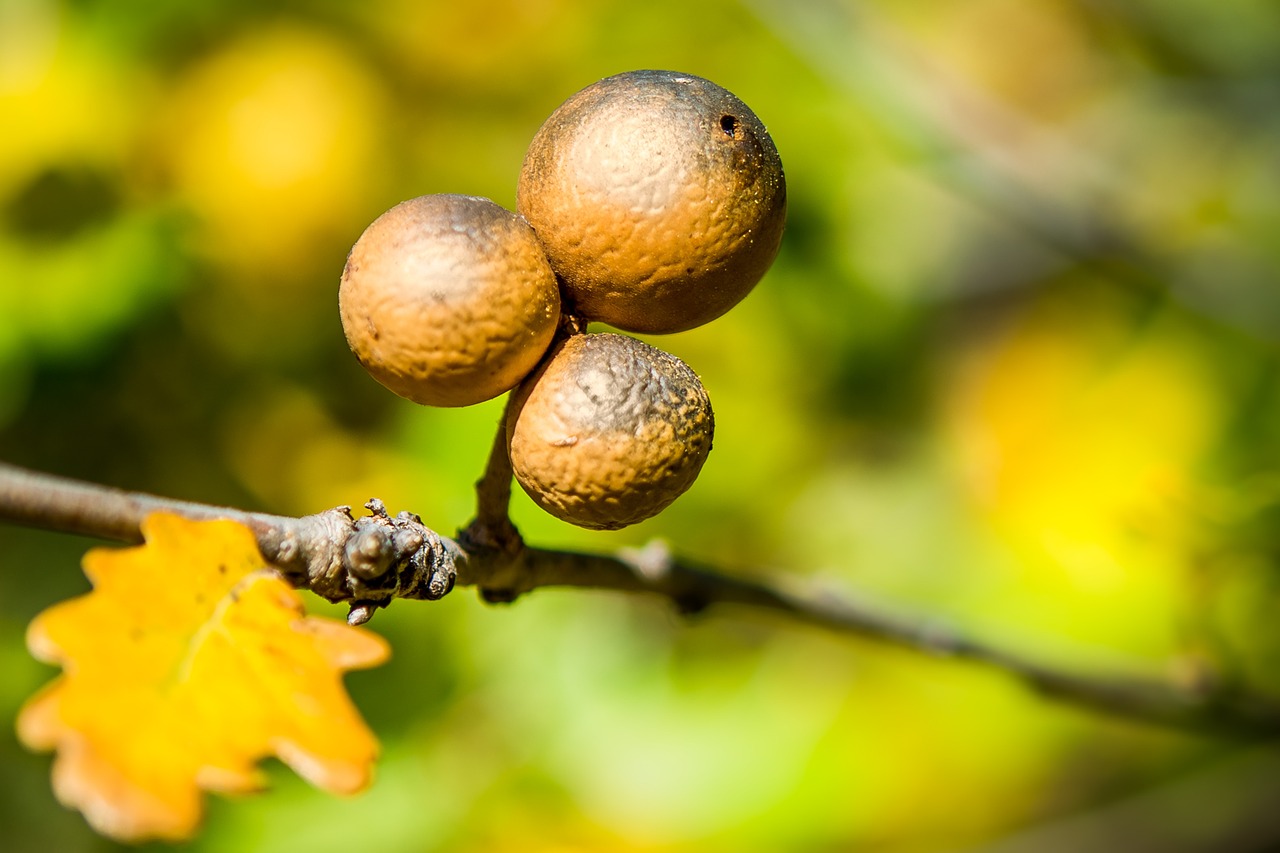
If you have read this blog for awhile, you do know that I have made iron gall ink on a number of occasions, as well as cut my own quills. I have tried my hand at learning Secretary Hand from the 1500s, but I never could get into it. Now, though, my iron gall ink needs replenishing, and soon enough I will get around to it – once the rains stop and I can let my galls and old wine ferment in the California sun. And, I do plan to make some red ink from sappan wood (sappen?), too, but that is for another day, when supplies show up.

I came across a recipe for ink in the form of a poem while looking up handwriting or copybooks from days of yore. It contains recipes for iron gall ink, but also ink made from lamp black (soot), which is what sumi ink is from, but also from wool! Wool?

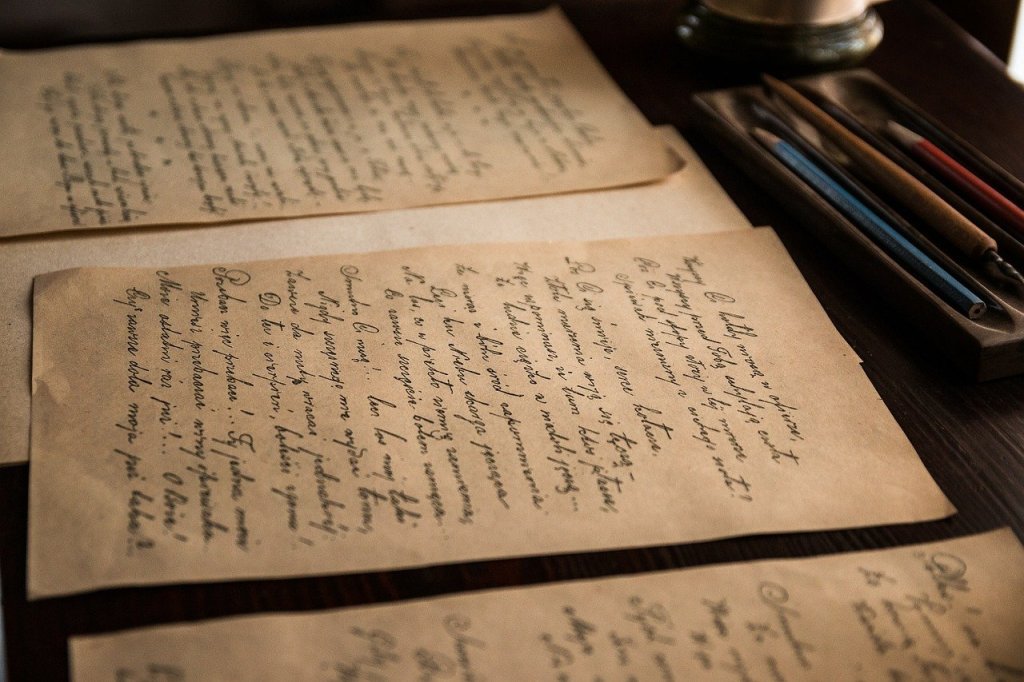
Purportedly from an English book of handwriting entitled A Book Containing Divers Sorts of Hands, by John (Jehan) de Beau Chesne (Beauchesne) and M. John Baildon, and published in 1571, here is an interesting bit of rhyme:

To make common yncke of Wyne take a quart,
Two ounces of gomme, let that be a parte,
Five ounces of galles, of copres take three,
Long standing dooth make it better to be;
If wyne ye do want, rayne water is best,
And as much stuffe as above at the least:
If yncke be to thick, put vinegar in,
For water dooth make the colour more dimme.
In hast for a shift when ye have a great nead,
Take woll, or wollen to stand you in steede;
which burnt in the fire the powder bette small
With vinegre, or water make yncke with all.
If yncke ye desire to keep long in store
Put bay salte therein, and it will not hoare.
Of that common yncke be not to your minde
Some lampblack thereto with gomme water grinde "

I did look up this book online and found many references to it, but not a digitalized copy could be found. I would love to see it. As well, hHow correct or incorrect this poem is as far as original spelling doesn’t matter – it is rather charming, as non-standardized English spelling can be.

What is good about this poem are the specific amounts for ingredients in the iron gall recipe, which perhaps I shall try. Stale beer can be substituted for wine, and the rest has proportions which can be worked out for larger or smaller amounts. “Copras” is known as “copperas” and that is simply ferrous sulfate. “Gomme” is gum arabic. “Galles” are the oak galls.

I found it interesting that vinegar is a better choice than water to thin ink that has gotten thicker with time – evaporation I expect – as well as adding salt (in an unknown amount) to keep it from getting mouldy. Wine helps, but perhaps the salt helps even more. The wool – woll, wollen – was the new source of ink for me! Research was required, and using Google, I came across this video.

I have a feeling I am going to give this a shot, using some odd fleece I have rather than woolen fabric. It will probably be best done outdoors, as the stench could be awful and the smoke could set off the smoke detectors. It is also probably a great way to recycle your old clothes, if you are really desperate for yncke.
Gum Arabic – The Last Ingredient

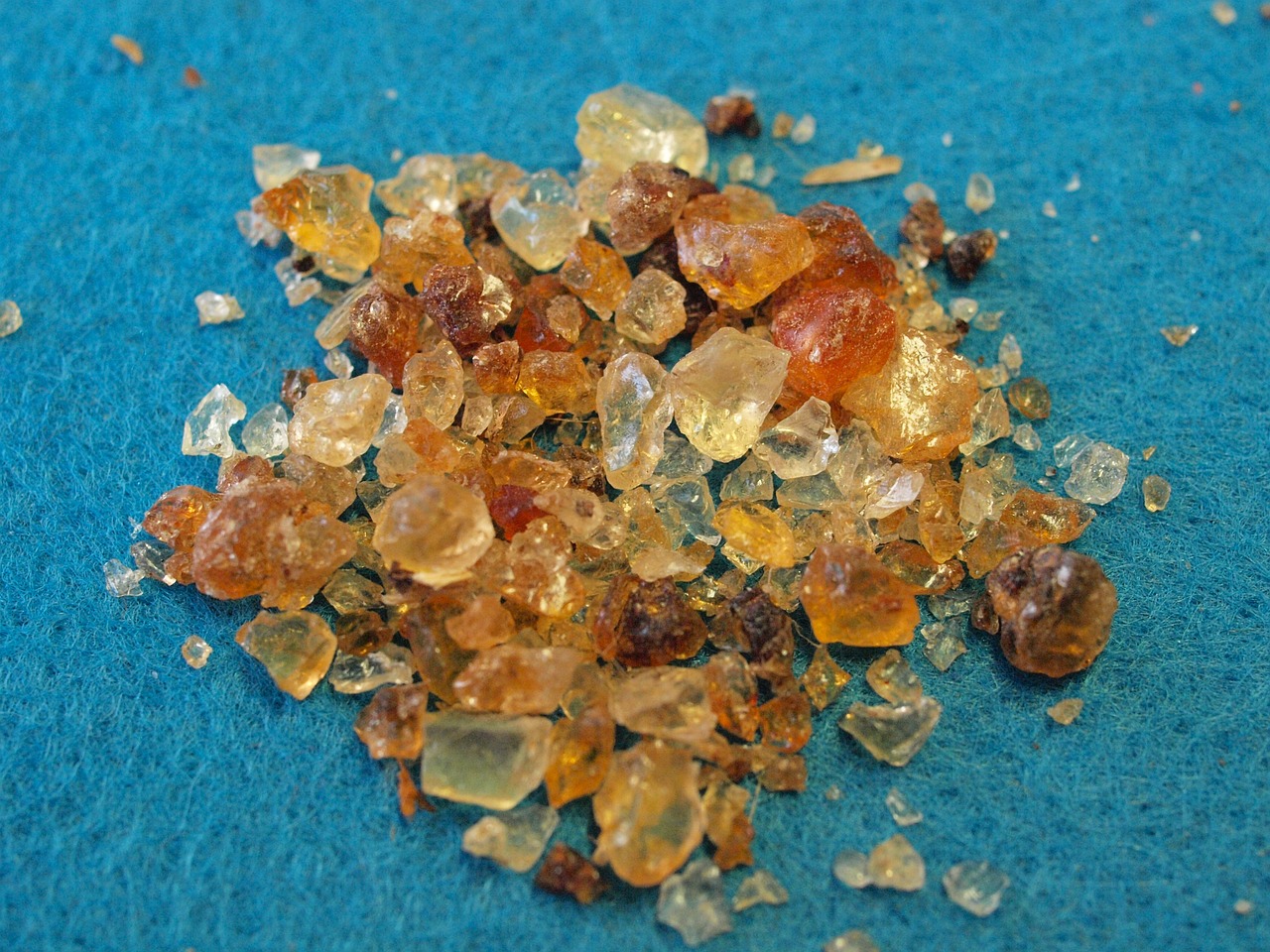
Today is the final day for adding ingredients to the iron gall ink.  I added 25g. of gum arabic to the ferrous gallate (new name for the oak gall / ferrous sulfate heptahydrate solution) to create the final product of ink. Until the gum arabic is added, the solution is really just a solution or a liquid. My gum arabic was in a powdered form, so I simply placed it on top of the liquid in the jar, and shook it a lot. Since adding it, I am continuing to shake it. The gum arabic to the left is in its most common form – hardened sap. It has a jewel-like quality, I think – a lot like amber – and besides using it in ink, it is edible and has many uses in the food industry.

Gum arabic, the hardened sap of the acacia tree, is used a binder in ink, controlling the ink’s viscosity – how the ink flows.  It adds more control into the ink’s behavior, such as eliminating or lessening feathering, bleeding or cracking when use on paper or parchment. An element of luminosity or shine is another characteristic it imparts to ink.

In addition to controlling viscosity, gum arabic helps the ink to adhere to the paper. The water in the ink evaporates, and left behind is the colored portion of the ink; it is the gum arabic which acts as a glue to stick the ink’s pigment to the paper.

An ink – or watercolor paint or gouache – needs the gum arabic to give it the right consistency or body to flow easily, but not messily, from the pen or brush. Other pigmented inks may also crack, and the addition of the gum arabic helps prevent this; I don’t believe that iron gall inks suffer from cracking.

Soon enough, the ink and quill will be put to the test of actually using it!  Stay tuned . . .


Oak Gall Ink: What To Do


If you were to google “oak gall ink” a bazillion links turn up.  Videos, message boards, recipes, historical documents are revealed to the unwary.  In particular, there are two ways in which oak gall ink – also known as “iron gall ink” – may be made.  One involves the simple crushing of oak galls and then steeping them in water (distilled is probably the best choice as  there are no chemicals to interact with the galls), and the other is a 2-month long ferment which gets (eww, gross) all moldy.  I’m not sure the latter is up to my tastes, but I will give it a shot nonetheless. Today, though, is the “short version” – perhaps a process lasting a week or less.

There are two sites which I think give a good indication as to the process I plan to use.  The first is this video from the British Library:

This next link is from the Schoenberg Institute for Manuscript Studies, out of the University of Pennsylvania Libraries.  I rather like the description, the detail, the grey kitty Chloe, and the historical evidence of a cat with inky paws on a manuscript.  Both are good reads, so take the time to travel a bit.

Receipt for Iron Gall / Oak Gall Ink

  • Oak galls:  80 g.
  • Distilled water:  300 g.
  • Ferrous Sulfate:  50 g.
  • Gum Arabic:  25 g.

Crush oak galls into small pieces or grind into powder using a spice or coffee mill.  Place into jar and cover with 300 ml. of distilled water.  Place in sunny window 3-7 days (depending on your life and schedule).  I plan to do 3 as per the recipe from the Schoenberg Institute.  After 3 days, there should be a dark murky liquid in the jar.

On Day 3, add 50 g. of Ferrous Sulfate to oak gall mixture; replace in sunny windows for another day.  On Day 4 add the Gum Arabic and leave for another day.  On Day 5, strain the liquid into a clean vessel and voila, ink!

Thoughts and Concerns

My first concern is I am using ferrous sulfate heptahydrate, which is apparently a hydrated form of ferrous sulfate that dissolves more readily in water than the normal.  My next concern is the ratio of oak galls to ferrous sulfate – it is 8:5, or much closer than the 5:1 and 3:1 ratios I have seen in other recipes.  The more acidic the ink, the more destructive to pen nibs, quills, and paper.  However, at this point, I’ll take it as the ferrous sulfate heptahydrate may not create such a strong acid.

Quill & Ink

I have always enjoyed ink and writing with pens.  Years ago – back in the days of my being just out of university – I fell in with a group of evil re-enactors.  Making things from scratch was the trend, and in that time period I learned to weave and spin and dye – the last two I still do – as well as to cut quills and the rudiments of calligraphy.  My Italic is still acceptable, and I can do a good Spencerian and Roundhand and a few others when pushed.  For some reason, it crossed my mind that I should re-learn how to cut feather quills, to write with a la Jane Austen, and from there it evolved into making oak gall ink.

And so, it has begun.  Supplies are in hand.  I have quills (turkey, not goose, but they are pinion feathers it appears) and the makings for ink:  oak galls, ferrous sulfate, and gum arabic.  Now, time to find instructions on how to cut quills (which I have) and recipes for ink.  Oak gall ink is very acidic, and thus not especially archival over the centuries – but who will give much thought to my musings in 300 years if they are still around?  Luckily, not too far from me is a feather wholesaler, and of course there are some excellent online resources; I also have a good supply of pen nibs from the last few centuries and nib holders, ranging from repousse silver to student plastic and wooden.

The fact is, I love making things and creating from scratch.  Quill cutting is an art, and one I was only beginning to master years ago.  I have never made ink, and am looking forward to it, using both “quick” methods, and “slower” ones wherein the oak galls ferment for a few to several weeks.  Meanwhile, I will look up inky recipes and begin my adventures into the 18th century . . .