Water Thaw – 4 (Final Version?)

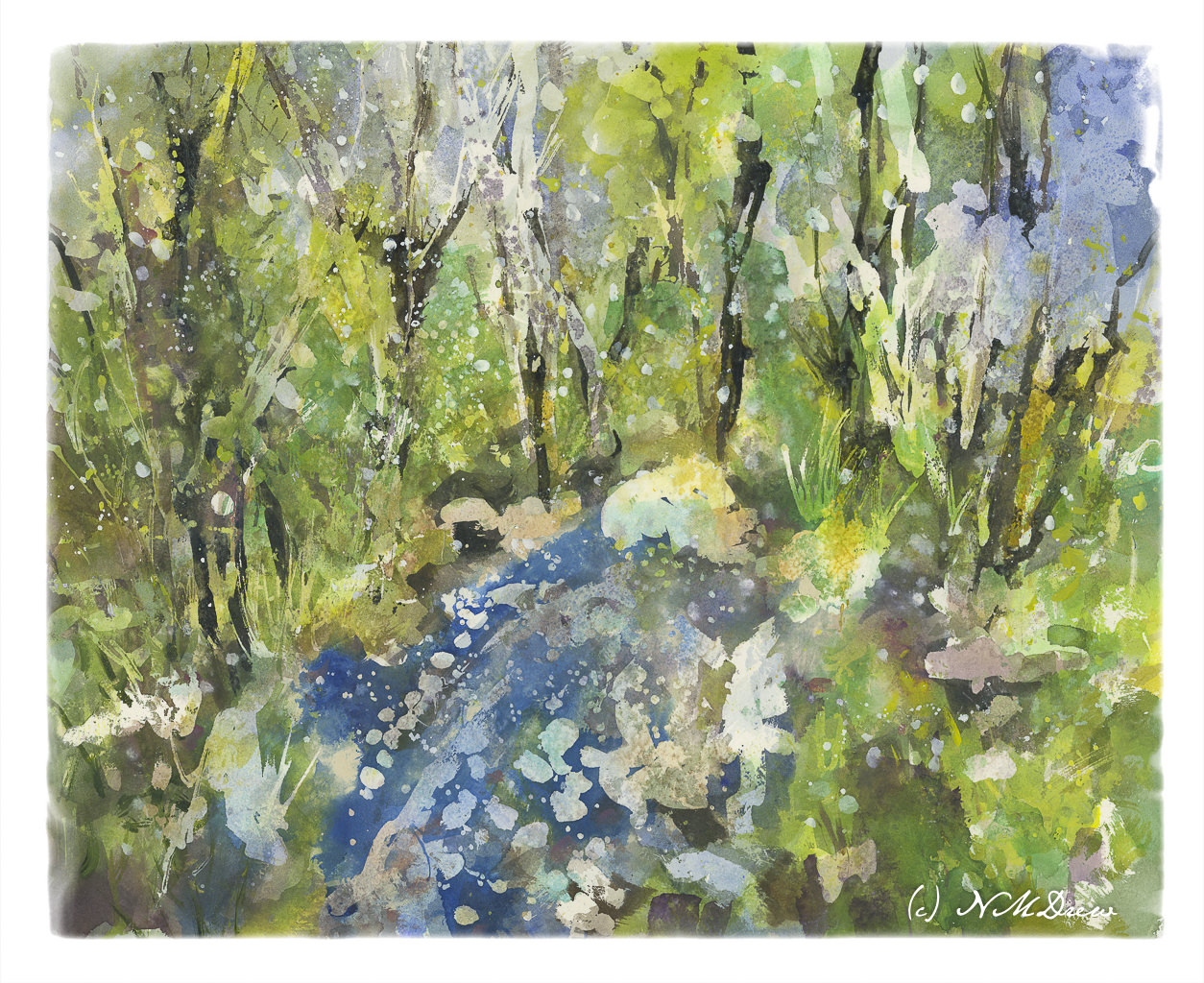
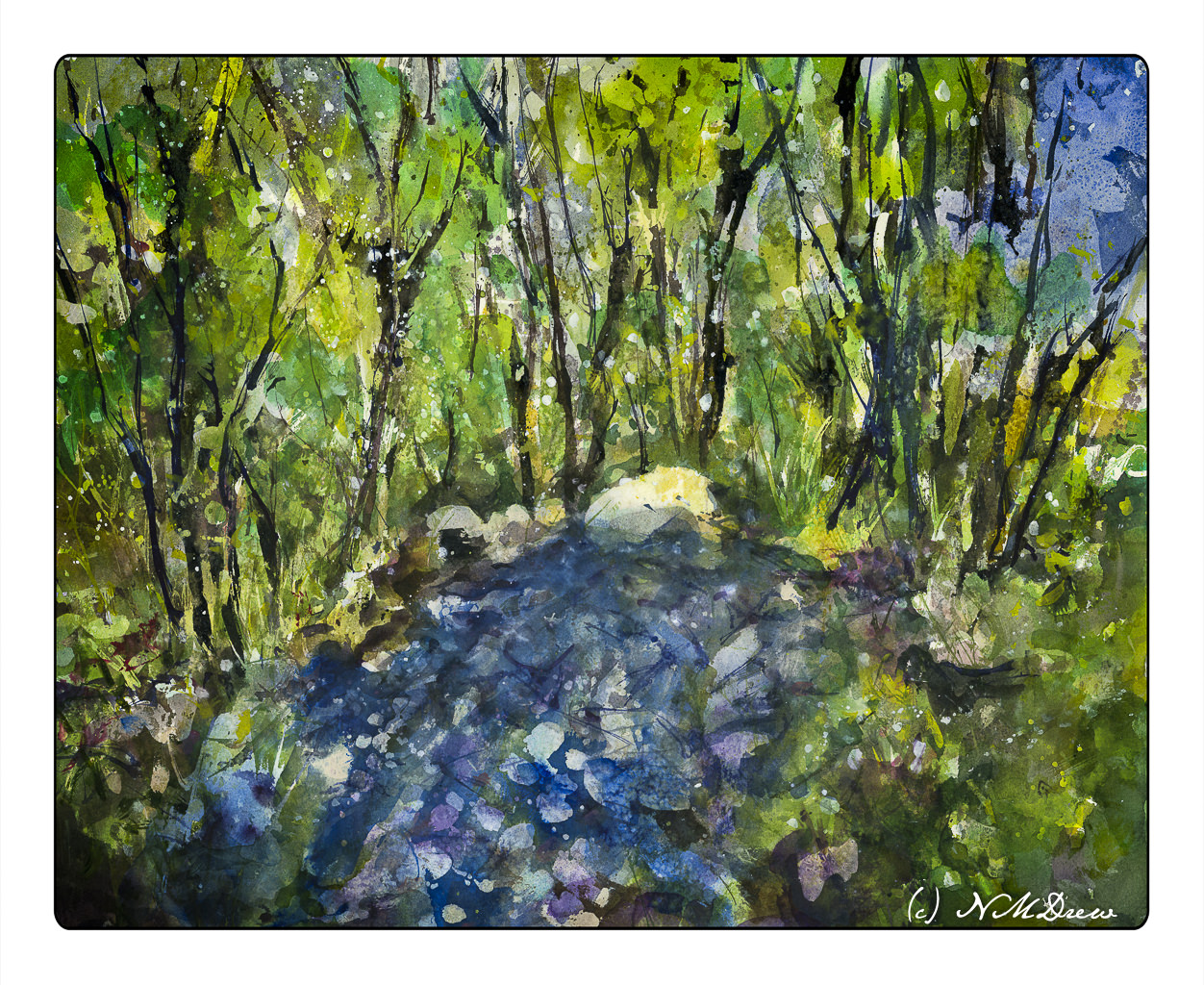
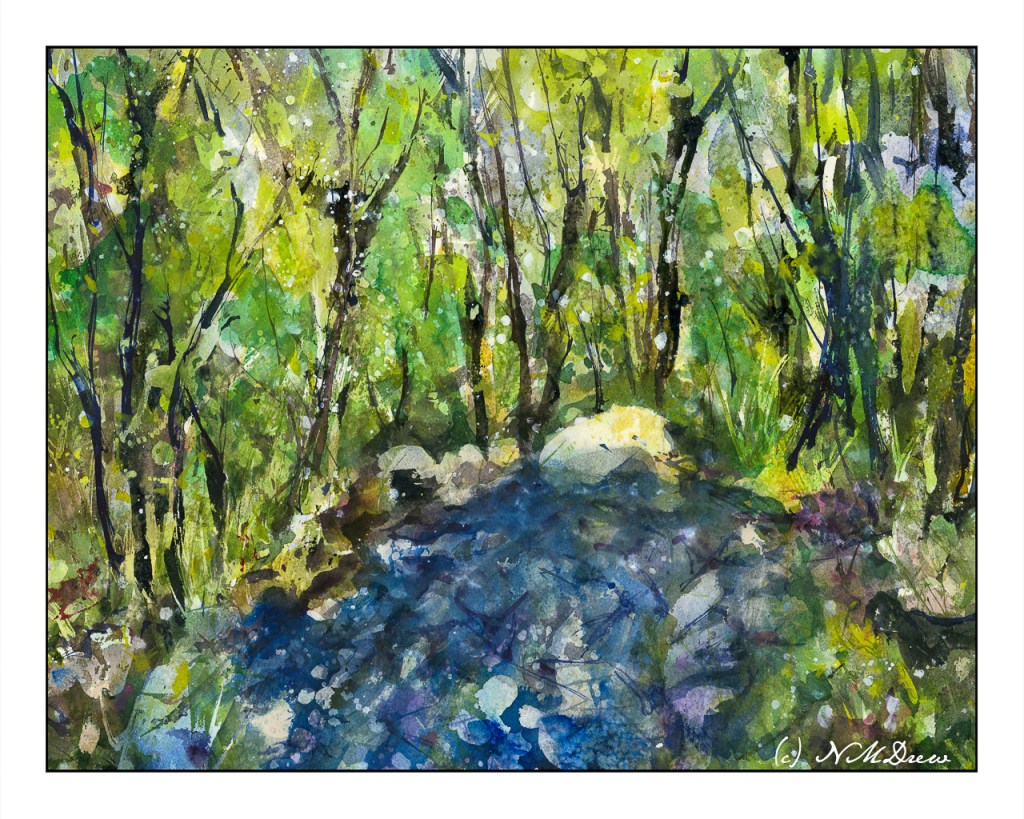
Water Thaw 4 – Final Version??

The end! Or is it?

Anyway, as I mentioned yesterday, more blue in the lower front, some other touches, and then let it sit overnight.

This morning I took another look at it, and the only way I can describe what I did was to refine it. I increased contrast in some areas to create harder edges. Other things were designed to lead the eye toward the center of the painting, toward the whitish rock at the top of the water. I also looked for areas that just didn’t look right, somehow too symmetrical or distracting. In the end, little bits here and there made it better to my eye. But – that was during morning coffee when I was trying to wake up!

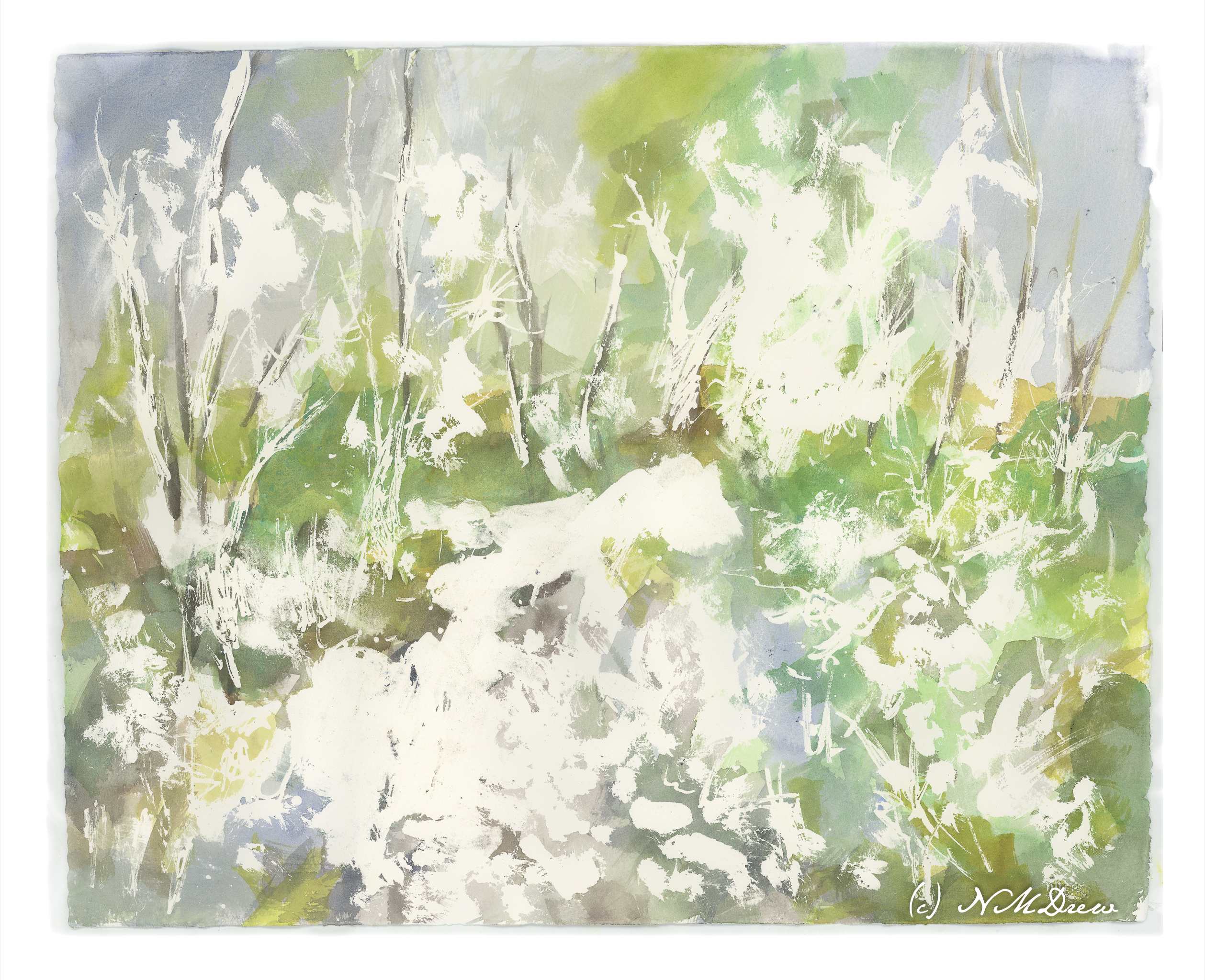
I have never worked on a painting – a watercolor – for this long a time period. Total time is probably 8-10 hours. Time was spent laying down frisket, colors, letting things dry. Then frisket was rubbed off. Water was sprayed at different times and salt sprinkled. Rubbing alcohol was also sprayed on. I think the last round of frisket took about 30 minutes to rub off, along with salt. The result, though, are transparent layers of color which I could not have accomplished otherwise.

While the perspective seems a bit off – or maybe we are looking down into the water from above? – I like this painting. It’s a new adventure for me in watercolor, and while bright, I don’t think it is overly so. I deliberately did not use any orange!! New ideas are coming to mind for painting in a transparent medium. Mood and impression work here for me – not realism, but suggestion. So, spring thaw, melting ice, new leaves.

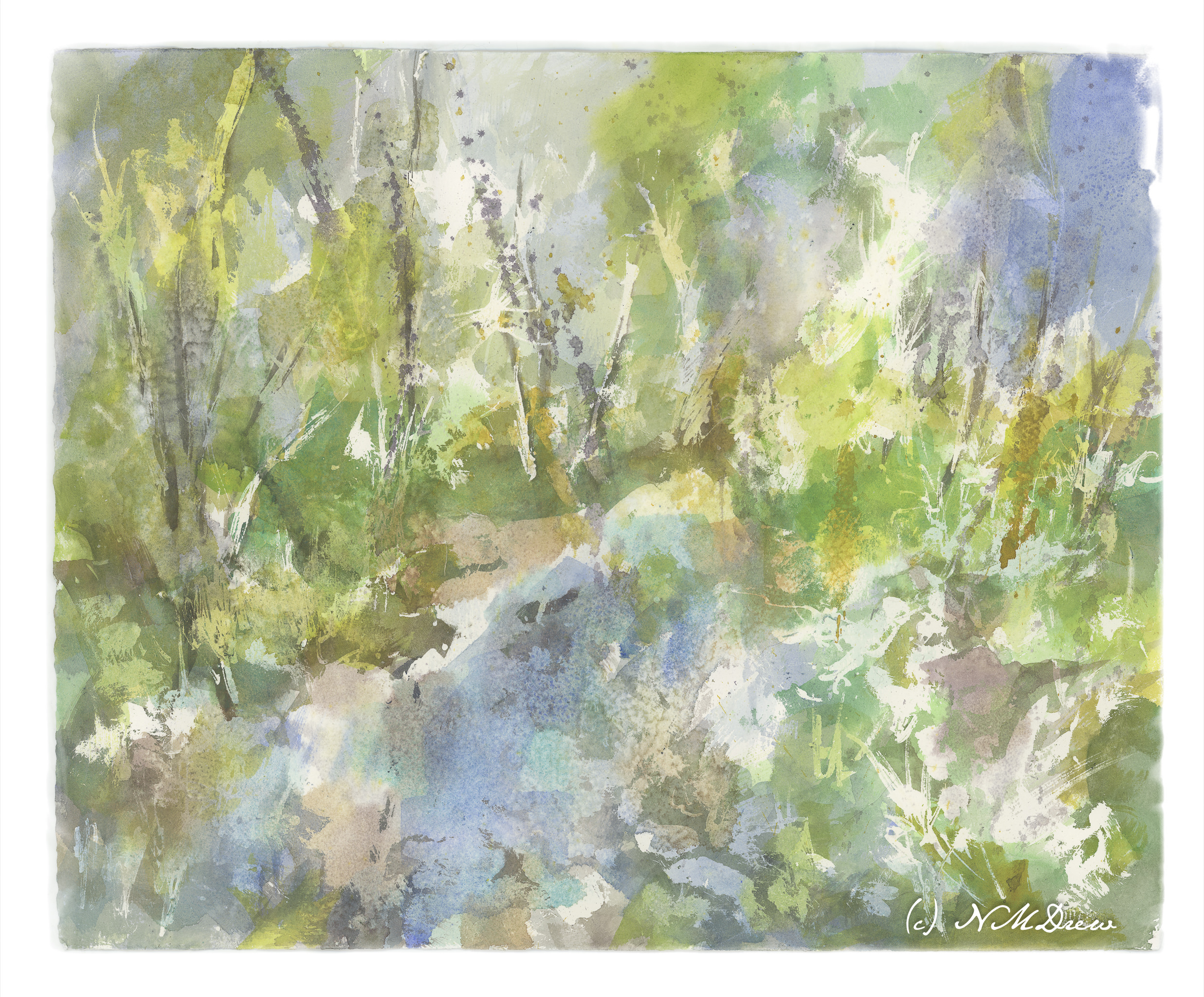
In this final version, I cropped it and changed the perspective a bit in Lightroom. Post-processing artwork is much like post-processing a photo, an din the printing industry it is done all the time. You can see the uncropped version in the gallery below.

Arches 16×20 140# CP, acrylic, gouache, watercolor.
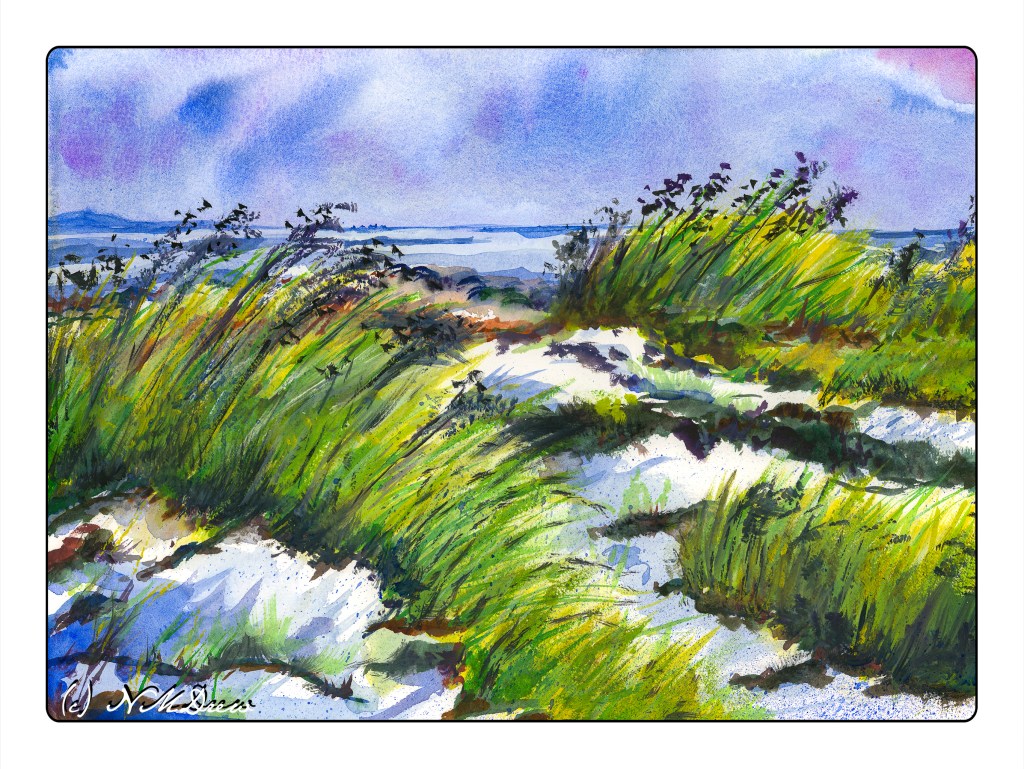
Winter’s Day in the Dunes

There are days which are blustery and cold, the wind whipping through your hair, and a walk on the beach, slogging through sand, and enjoying the wild freshness of the sea is not a bad way to begin a new year!

Wishing you and yours the best in 2022.

Keep Dreaming

Another “fantasy” (hence “Keep Dreaming”) painting. Another mixture of gouache – white and black only – and watercolors. As before, 16×20 CP 140# Arches paper.

Using a mixture of watercolor and gouache, with color coming from the watercolor and opacity and darks from the gouache, there is an ease of painting which acrylics cannot touch. The reason is that acrylics dry quickly, and I don’t really seem to have a lot of success with retardants.

I guess I should try acrylics mixed with a retardant a few times more than I have and give them a chance. Experience is the best teacher. The combination of gouache with the watercolor lets me remix my colors later (gouache can be re-wet) and gives an opacity that is not possible in watercolor. I like this combination but still think I should work a bit more with the acrylics. I am also considering trying oils once more. With oils, I know it would be a way to have the colors remain wet long enough to allow reworking areas. Odorless mineral spirits add to the allure of oils.

Anyway, I am having a lot of fun with these fantasy paintings. We all have a tropical isle of some sort to which we would like to escape!

Another tribute to the dreams of the Florida Highwaymen.

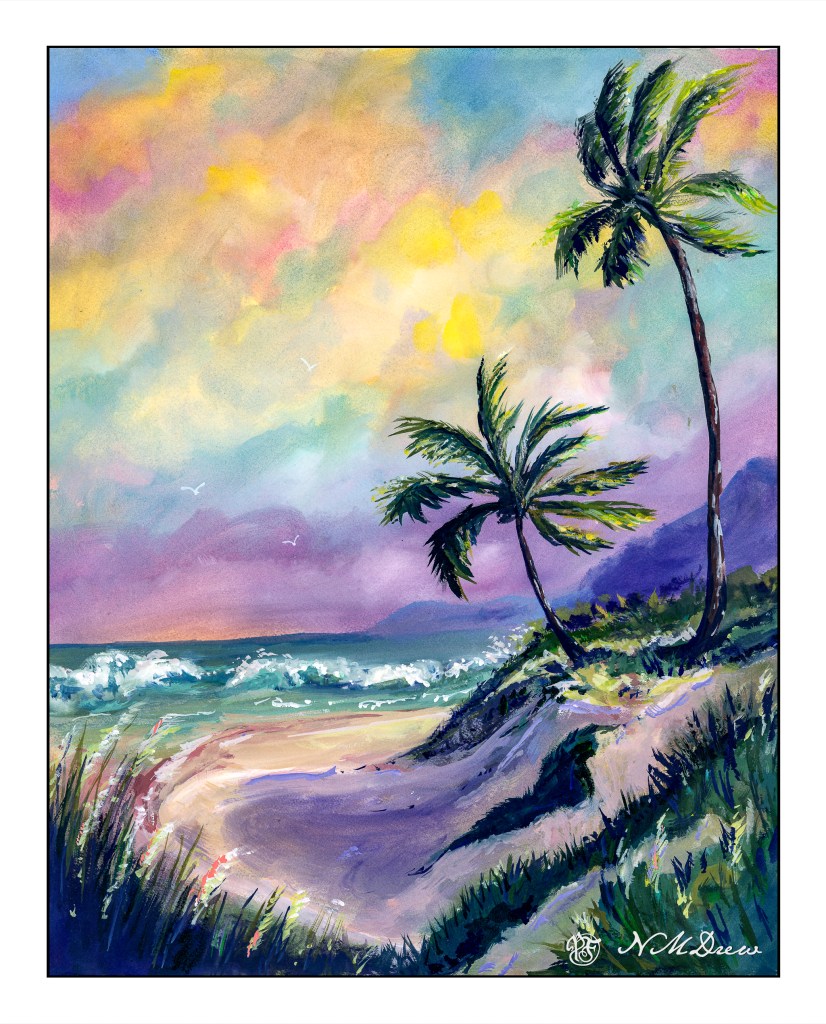
A Slice of Paradise

This is a tribute to the African-American painters of Florida known as The Highwaymen. Some of their numbers include Sam Newton, Alfred Hair, and so many others that I cannot name them all. In a time of racial unrest in the U.S., these painters somehow managed to thrive despite the Jim Crow laws of the South, and unfortunately, their work was not appreciated as it should be. However, today we know more about them, and can enjoy their work – the internet is so helpful in that regard.

I love bright colors and cheerful landscapes, and the tropics beckon. Palm trees are alluring and the brilliant light of these areas make colors more alive and intense. The Caribbean is filled with islands and azure seas, trade winds, towering clouds. States such as Florida, on both the Atlantic and Gulf sides, throughout the Gulf of Mexico and down along the coasts of Central and South America have such beauty in common.

The Highwaymen were not untalented amateurs. Some were self-taught, others learned from A.E. Backus. Each painter in this group sought an income otherwise denied them, as well as perhaps a way in which to express the beauty around them. Read up on them – they are a fascinating slice of art history.

As with the painting I last did, “Swamp,” this one is done with watercolors mixed with gouache on 16×20 inch 140# CP Arches paper. I used more gouache this time than I did with the last painting, and it was quite a challenge. I started out with bright colors and a totally different idea of a painting, but as I started blending the gouache with the watercolor, the gouache became a driving force. However, all color represented is simply toned with white or black gouache.

These artists worked in oil on masonite. Oils lend to blending colors more so than does acrylic paint, and I found that the gouache and watercolor worked similarly. I may try to do something similar in acrylic, and expect it will be a serious challenge as acrylics dry so quickly. Often The Highwaymen sold paintings still wet!

This is perhaps the most fun I ever had with a painting. I referred to paintings by some of the artists to see how they used color, photos from the internet of palm trees and Floridian sunsets. The composition is similar to a number of seaside ones, and I attempted to emulate the colors used by the painters for sand, sea, sky, and palms. I hope I caught some of the liveliness and spirit of The Highwaymen. I know I will be back to visit them, and Florida, again soon.

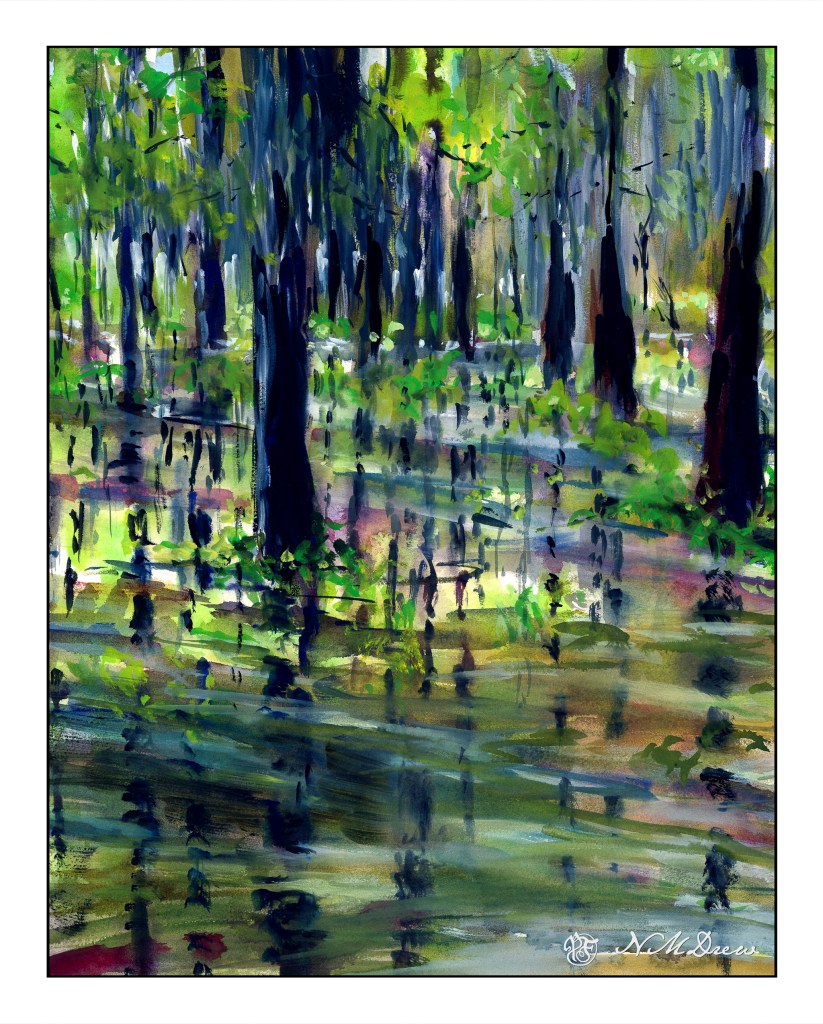
Swamp

Swamps are amazing ecosystems. They are forested wetlands and often serve as a barrier between a large body of water – such as an ocean – and the land. Many of the Southern states are home to a number of swamps, such as the Everglades and the Atchafalaya Basin. Unfortunately, we have lost a lot of what they once covered through changing the land with drainage, building of levees, and such. The value of these wetlands has been seen with the massive flooding and storm surges during hurricanes when waves travel miles inland, across former swamps now denuded of trees and other plants. Heavy damage to the land occurs, with homes lost, pig slop and sheep dips overflowing into water sources. With the land clearing, wildlife diversity is also lost. The swamps provide a wall between the sea and the higher, drier land, as well as add to the overall health of the planet and wildlife diversity.

Here, an impression of a swamp in Louisiana, specifically the Atchafalaya. Once more, I worked wet-into-wet. And, I added gouache, which I am beginning to find is a nice mix with watercolor. The gouache works especially well over the transparent pigments, giving solidity and depth where needed. Arches 140# CP, 16×20 paper was used.

The Atchafalaya Basin, or swamp, is the largest swamp in the US. It is home to bald cypress. over 200 species of animals, marshland, grasses, and a resting place for migratory birds. In the 1700s, after le Grand Derangement, the French settlers of “Acadia were forcefully resettled elsewhere. Many landed in Louisiana, creating a cultural enclave of Cajuns, Creoles, assimilating English-speaking peoples who married them, and now, Cajun music is to be heard worldwide. Acadian became Cajun – and if you know your French, you’ll see the linguistic change.

So, in doing all this wet-into-wet, I am having a lot of fun, loosening up, and by bringing in gouache, I am adding a different element to my painting. Combining them is worthwhile as there are qualities in each that add much to a painting.

This painting pleases me enough perchance to be framed and hung up!