
The Value of a Local Bookstore

Yesterday I did tasks and then ran away from home. I went exploring down roads I know and then went further. I found some hidden parks in the hills, covered in the remaining bright colors of the season’s rain. I will need to go back to investigate soon.

Before I went exploring I went to the last local remaining bookstore, part of a chain, complete with coffee and magazines and places to sit. There is a children’s section, music section, audio books, crime and SciFi fiction, manga, and novels old and new. Of course, there is history and politics and travel and nature and art and crafts. Lots of stuff.
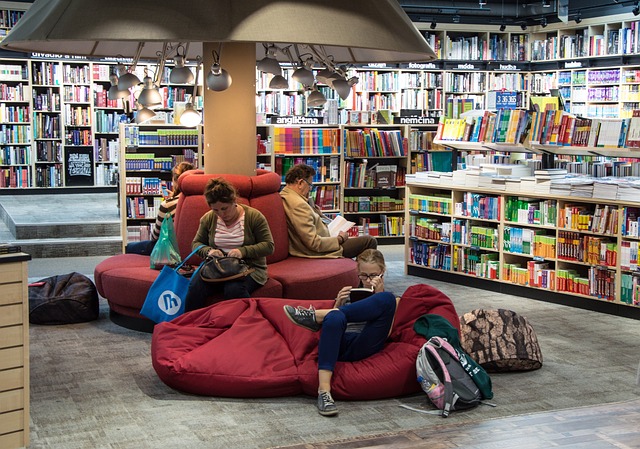
I haven’t been in a bookstore for awhile. I tend to head to the local library, and that in itself is a wonderful resource, and ours is especially nice. However, what does a bookstore have that a library does not? A bunch of new books recently published. It’s a feast for the brain and the eye – wandering around and looking at notes posted on the shelves with thoughts from staff and buyers about them, spying colorful titles or interesting titles.

With the onslaught of online buying, the bookstore is facing extinction, whether national chains or locally owned. Libraries are also being challenged with some US states authorizing the persecution and prosecution of librarians who allow books deemed unfit by a few for the delicate eyes and ears of children to be purchased or checked out. School libraries face the same issue.

Nothing like censorship to ruin good things. Some places have also had to ban the Bible, which is funny and ironic, because most of the censoring is being pursued by the religious right. I am surprised that bookstores aren’t being boycotted and persecuted, too. Or Amazon.

So, back to bookstores. I had forgotten how wonderful it is to just wander and look, and think, and consider what is currently out there. Bookstores are a valuable community resource and should be supported. It’s a blessing to live near one as well as to have libraries – cherish them while you can as they could disappear in your lifetime.

Fixing Things

I like the idea of being independent of experts as much as possible. Maybe being as self-sufficient as possible is a better way of expressing it  This way I don’t have to wait for someone to do something for me which I can do on my own. A lot of things are best left to the experts, but a lot of daily stuff doesn’t have to be that way.

The experts I absolutely insist upon are accountants for taxes (I used to get the 1040-EZ back with corrections as the English is nonsensical as far as I am concerned), auto mechanics, and doctors. Appliance repairmen are often overpriced and not as good (and inexpensive) as my husband.  He is good at figuring things out and fixing them. He can research things on the internet and then buy parts.  I am no good at fixing those kinds of things.

However, I do think about the things I can fix or figure out how to fix on my own.  I can deal with computers pretty well, software and hardware.  I can adjust small mechanical things.  I can sew clothes, cook, preserve food, garden, and jerry-rig a lot of stuff.  I can knit and weave and spin (oh, what a domestic I am!).  If I had hand-powered tools I could do a lot of carpentry, but I don’t like high speed electrical tools, except maybe drills. And handheld sanders.  Things that go too fast annoy me.

And, I do like sewing machines.  In the past few months I have bought two to work on.  One I got working, and then something went wacko, so I am going to have to get in touch with my mentor and have him help me out.  Another one had a stuck feed dog area, but that I figured out and with oil and heat got it working again.  Computerized sewing machines are not for me to fix, but the ones I have run beautifully, so I am not worried about those.  However, cam stacks and upper thread tensioners are things I might want to take a try at one day.

When I think of it, though, I don’t want to fix sewing machines a lot, like in doing it on a regular basis.  Instead. I want to know enough to make the little fixes they might need, and know enough about them to troubleshoot and fix issues.  I had to find this out by actually working on some machines.   That knowledge and experience is definitely a worthwhile skill to have.

I come from and married into a family where doing and making things is part of daily life.  My father could build a house, plumb and wire it, as well as sew and farm and build things out of metal and wood.  He was an engineer who designed air planes and fighter jets.  My mother could do a lot of things, too, more on the domestic front, but she studied engineering and was a television cameraman in the 1940s.  My married-into-family sew, knit, bead, build harpsichords and furniture from scratch, and bake and cook, manage TV news stations, do music and video editing, and build airplanes and cars from scratch.  These are all skills, old and new, that make for creativity and self-sufficiency.

Self-sufficiency and self-efficacy are intertwined and make for a happier life than relying on someone else to fix or prepare or supervise one’s life.  It doesn’t mean you are separate from everyone.  It means you are able to rely on yourself, rely on others, and others can rely on you.  Skills bring people together, and this, in turn, community and connection and interdependence.