Today I had planned to go to my painting class but when I got out of my car for a dental appointment this morning, I felt a sudden stabbing pain in my hip. So, I am staying home and have an appointment with my orthopedist tomorrow – this is just too weird, and having worked ER and radiology for years, it is a bit scary. Better safe than sorry.
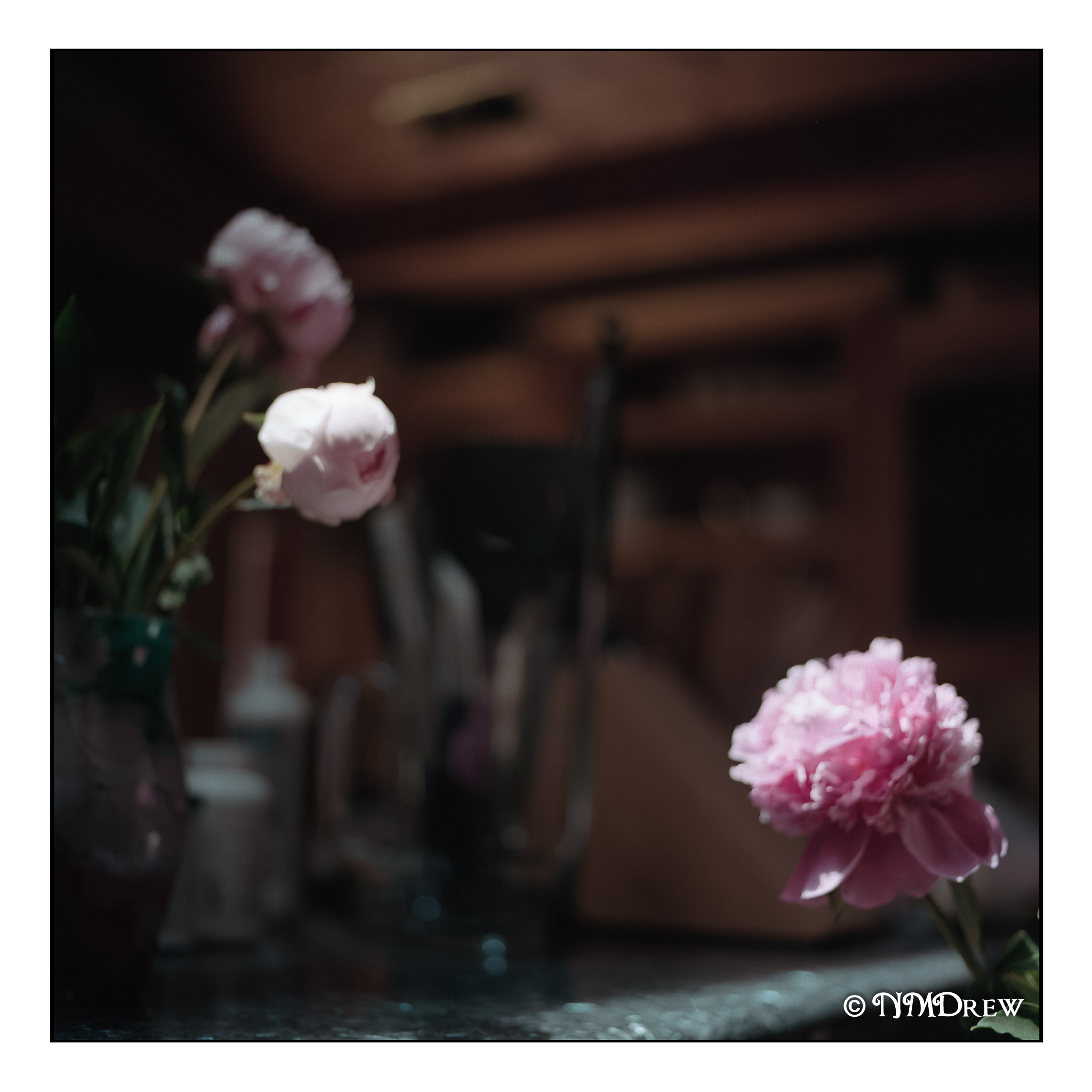
To amuse myself, I scanned some long overdue photos from some Fuji Pro 400H color film I took sometime ago and had processed. Truthfully, most of the photos were rubbish and rather horrid. I thought this photo matched my mood – gloomy, dark, and definitely not one of sunny cheer, which is what this day started out to be! Instead, the humor of it all – or perhaps irony – is here in this photo . . . because I have photographed this little creek in a local park and can honestly say I have seldom gotten one I really like. Sort of matches my mood.
Agfa Isolette, Fuji Pro 400H film, scanned on Epson V600.
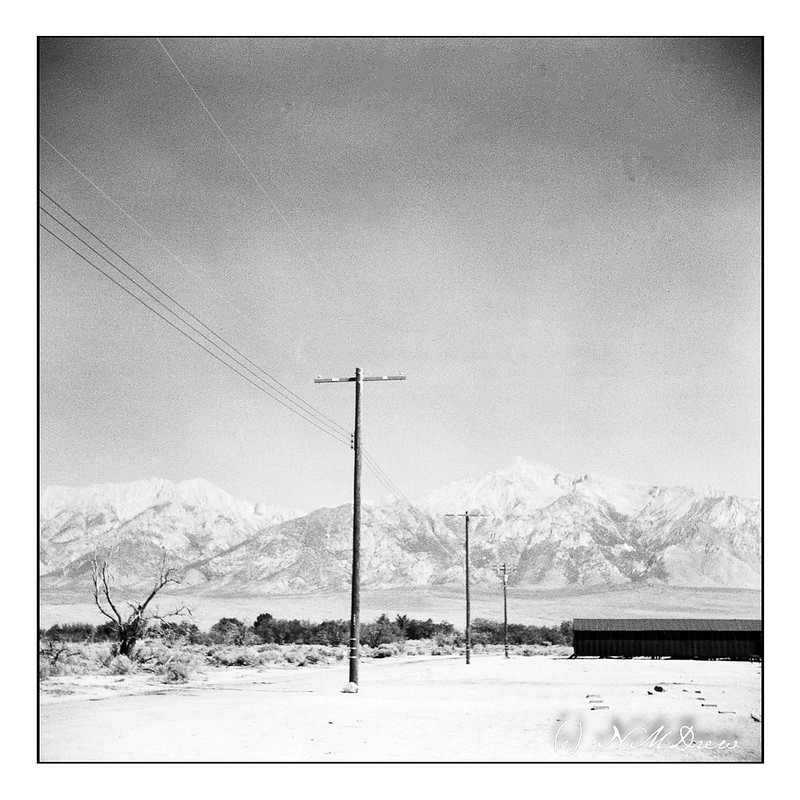
In 2021 we headed out on what was to be a 3 week long road trip. The first part was up the Eastern Sierra along Hwy. 395, stopping and staying in Independence, CA. One of the most notable places to see along this route was Manzanar National Historic Site – a not very nice part of US history. It is a Japanese internment camp which was built for imprisoning Japanese Americans, natives of this country, and therefore citizens, as well as immigrants.
I took along a digital camera, and a folding camera, the Zeiss Ikon Ikonta 521/16. Only now am I scanning the film – it took quite some time to finishing up the roll! I used Kodak TriX 400 and got twelve 6×6 images out of the roll, which is 120 film. To process the film, I took it to a local lab and then scanned it myself using the Epson V600 and Negative Lab Pro in Lightroom.
However, the trip ended when we got breakthrough Covid. We headed back home, sadly, but better safe than sorry, eh?
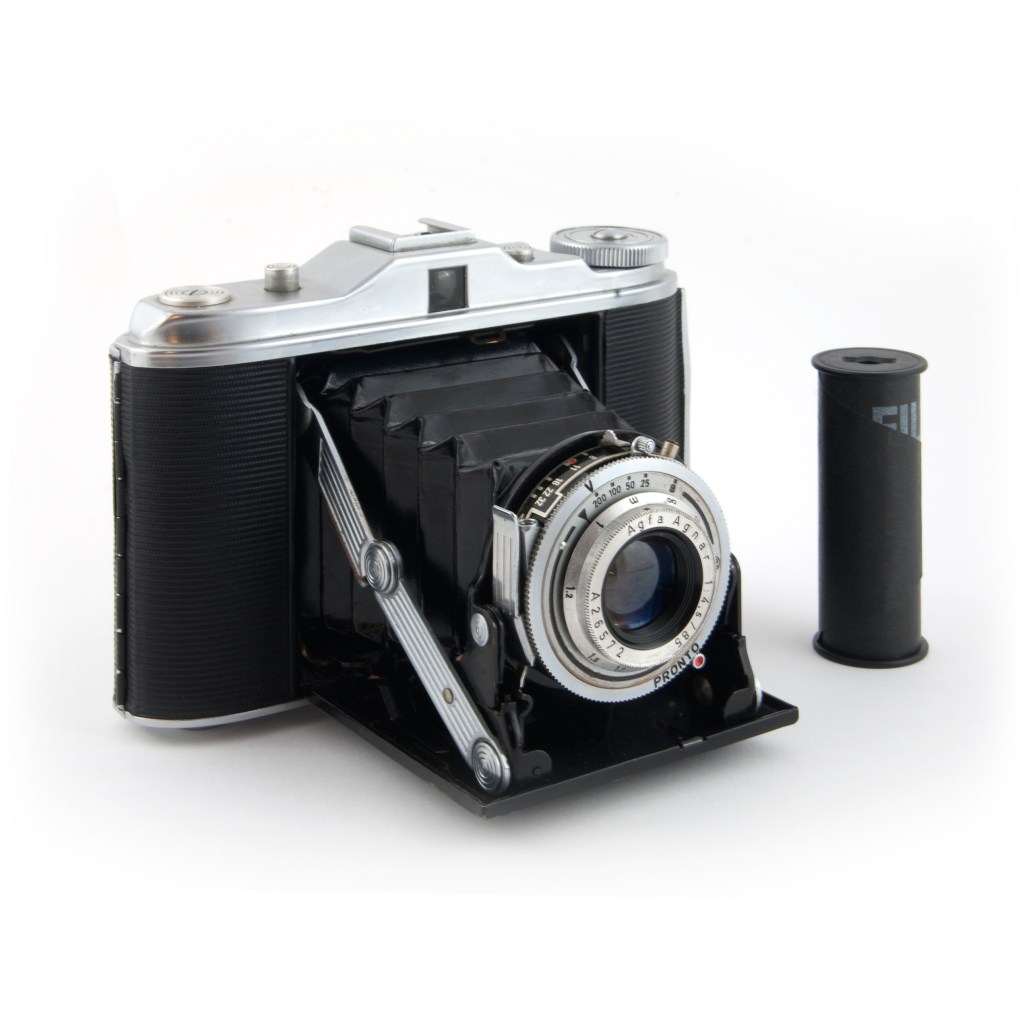
Image of an Isolette I, Agnar Lens, from Wikipedia
The Agfa Isolette was made over a number of years, sold in the US under the Ansco brand, and is a rather nice camera overall. The issue many of the later ones have is the fact the bellows have deteriorated. Apparently the later models had plastic bellows which developed pinholes and creating, of course, light leaks. I bought my Isolette II from Certo6, from whom I have purchased a number of vintage folding cameras and accessories. I have never been disappointed with the quality of cameras I have from Certo6, so here is a plug for Jurgen Kreckel!
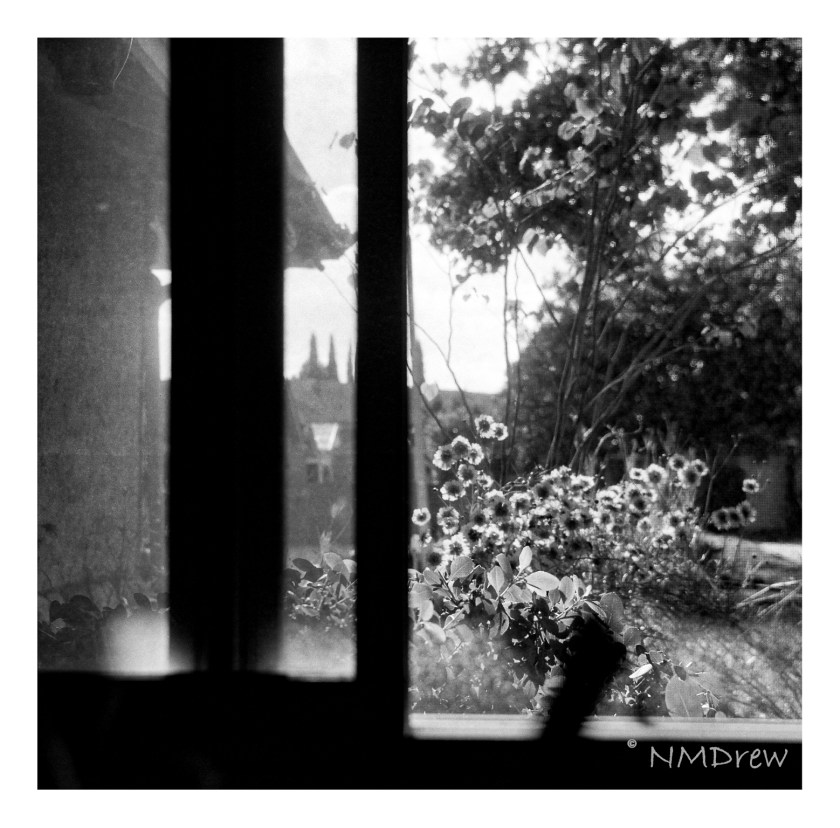
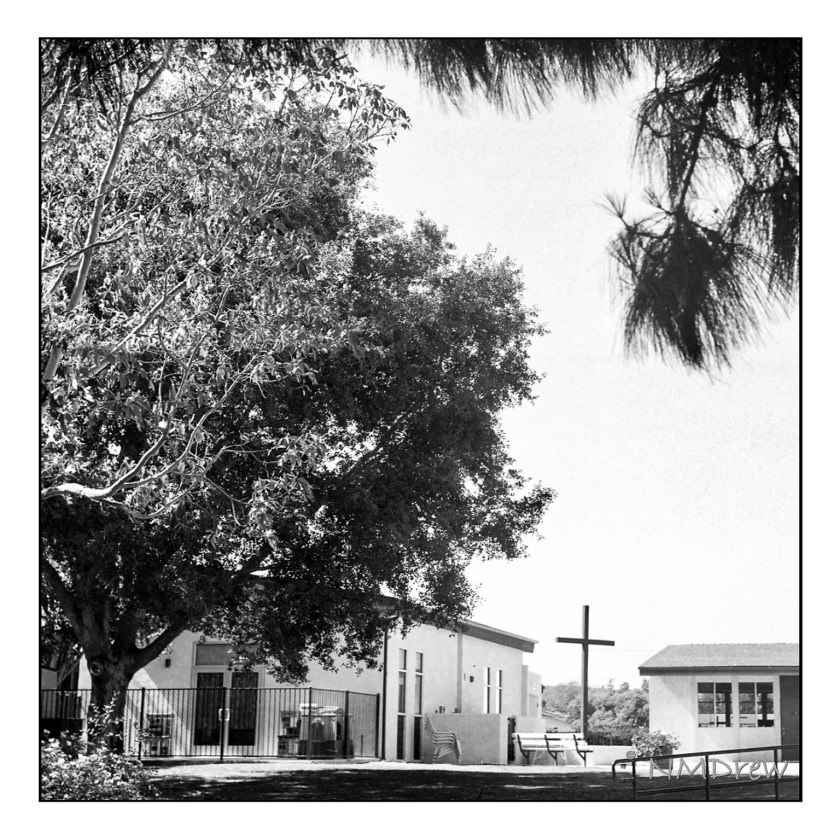
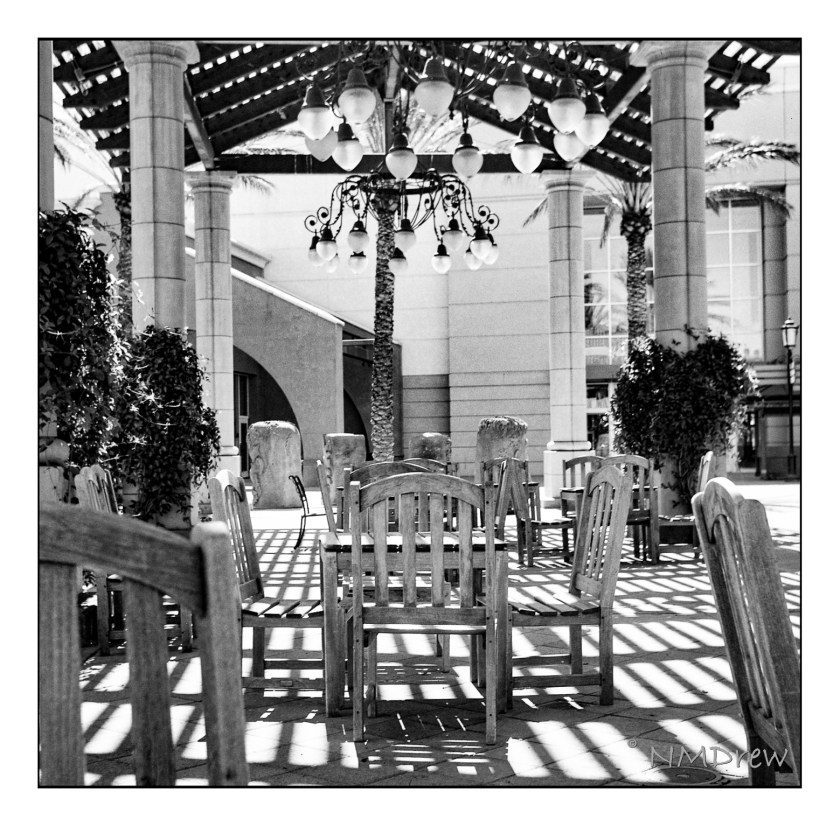
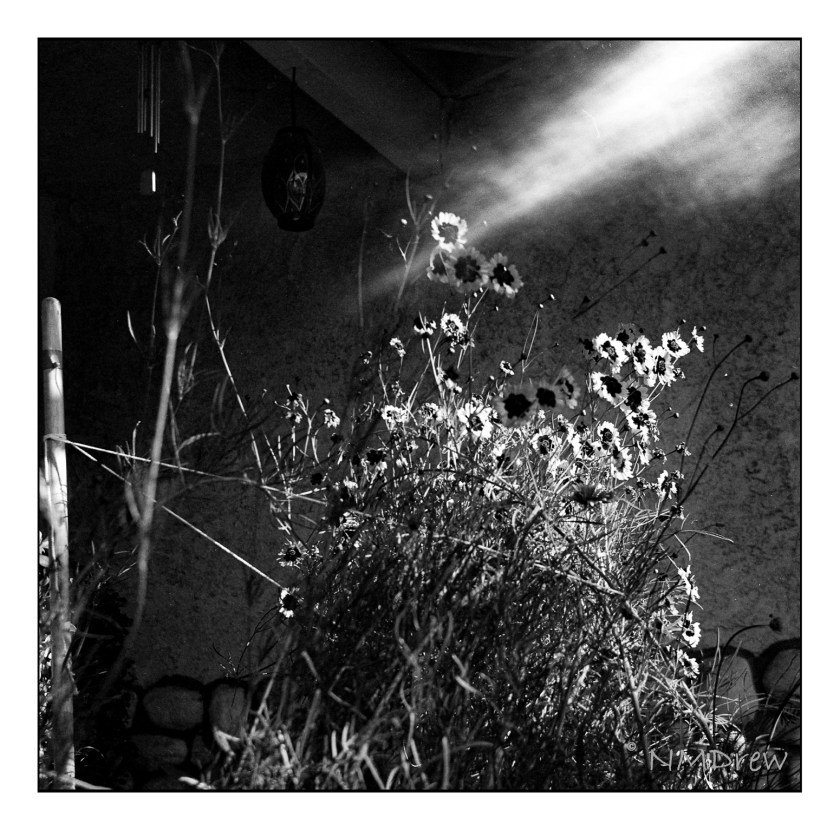
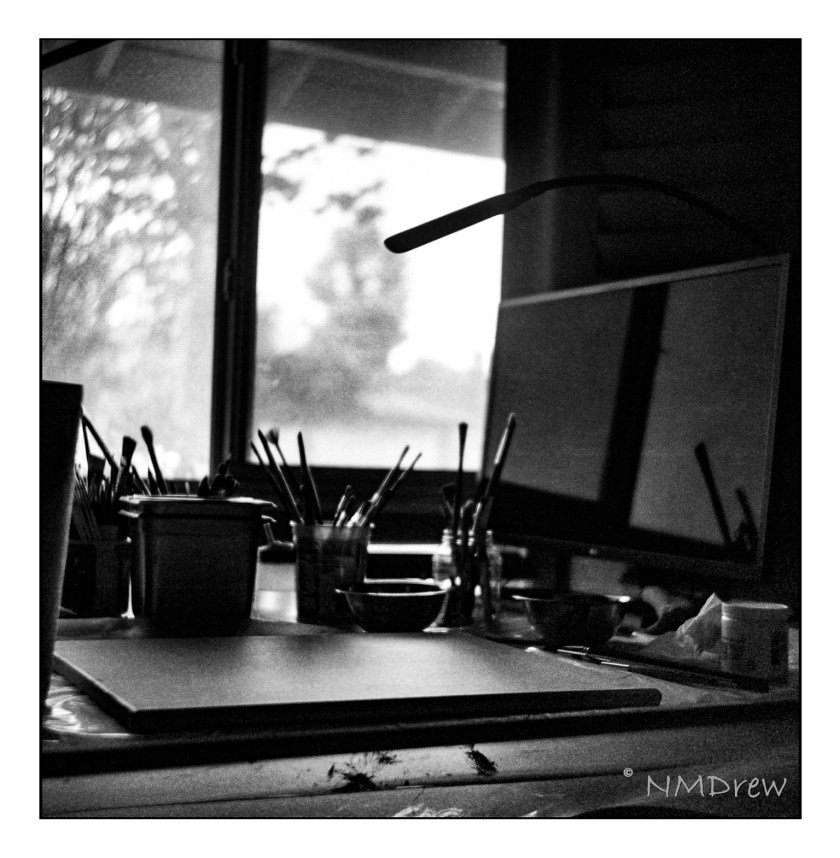
I don’t know about you, but I wander around with my interests – sometimes sewing or knitting, painting, spinning, then on to photography or drawing. It varies, in part with the weather, in part with my mood. Photography has taken a long time out of late, but with summer coming in and a pleasant spring ending, I decided it was time to re-evaluate and re-explore photography. So, with a new-to-me red skinned, black bellowed Agfa Isolette II, a roll of 120 Ilford XP2 Super 400 film, I spent a day wandering around the house and neighborhood, guestimating exposures as well as using a light meter. I got the images back a couple of days ago. All were usable, but below are the best of the lot (I think).
Up front, these photos are not SOOC – I did work on them in post. The Apotar lens is not in the same league as a Tessar, but it is a rather sweet lens. I think the issue more than anything could have been my fault in exposure. The details visible are the result of editing with LR and such, working to bring out detail, increasing contrast, and changing the image to meet my desired goals. Altogether, I like being able to take a folding camera with me – I had it in my pocket while I was oot-and-aboot.
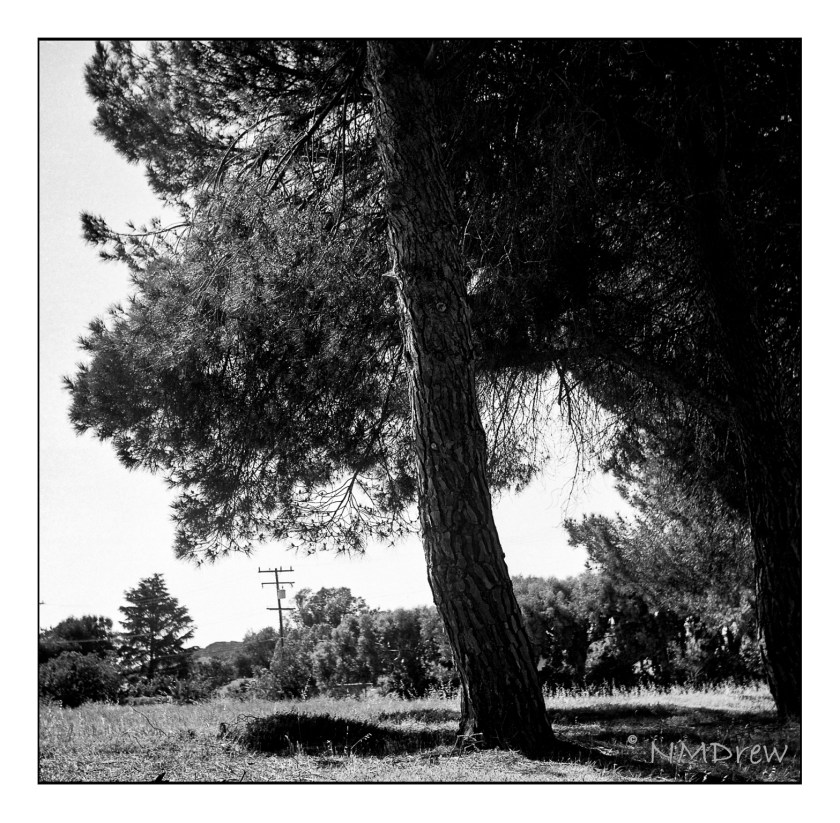
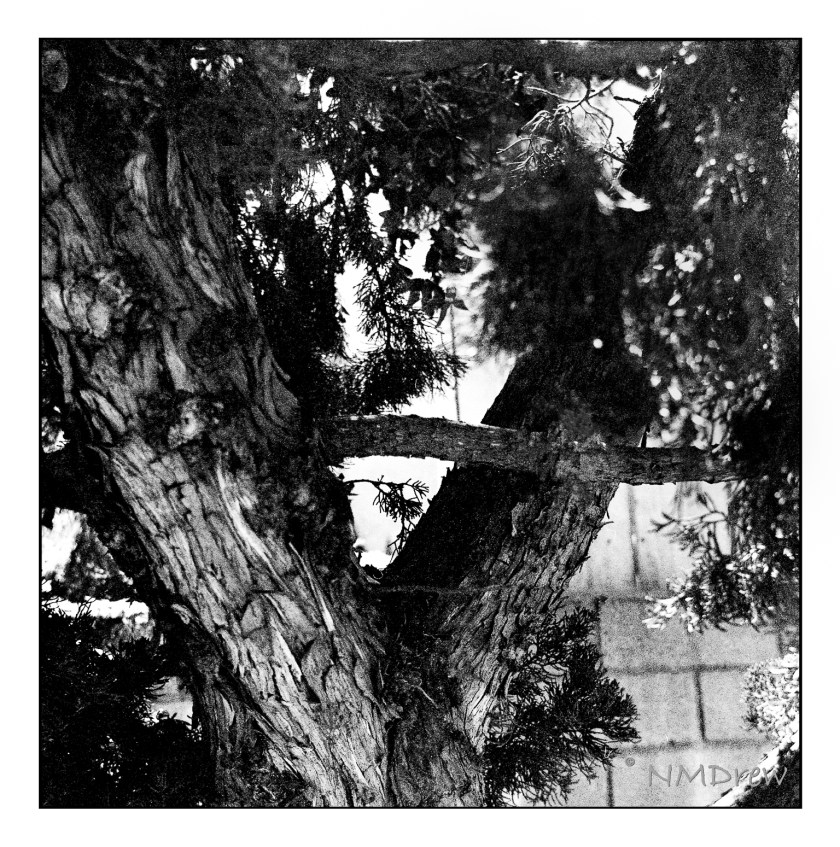
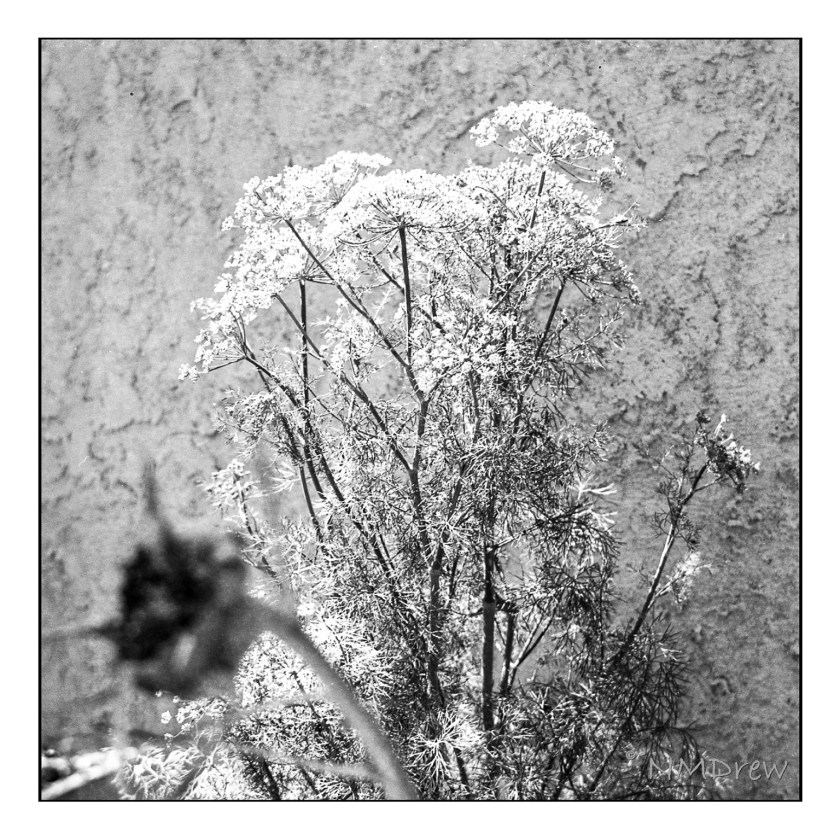
Sunflowers Empty FieldChurch SchoolPatio SeatingSunflowers and Sun FlareReady to WorkTree TexturesDill Flowers
The Apotar lens is uncoated (I believe) and as a result is prone to flare. You can see it in one of the sunflower pictures. I did not use a filter at all. In particular, I think the last one of the Dill Flowers would have benefited from a yellow, orange, or red filter; the dill flowers are yellow and similar to the foliage of the plant. When I looked for pictures to make, my goals were to look for small details, such as the dill leave, strong contrast, as with the trees, and texture, as in the bark.
Altogether, the camera worked beautifully, was simple and direct. Aperture, time, and distance all need to be determined by the user. I used the Sunny 16 rule for the most part and guestimated the distances. Outdoors the usual exposure was f/11, 1/100, and about 6-20 feet (2-6 meters). Inside, most likely f5.6, varying distance, and about 1/50.



 Ink, Yarn & Beer